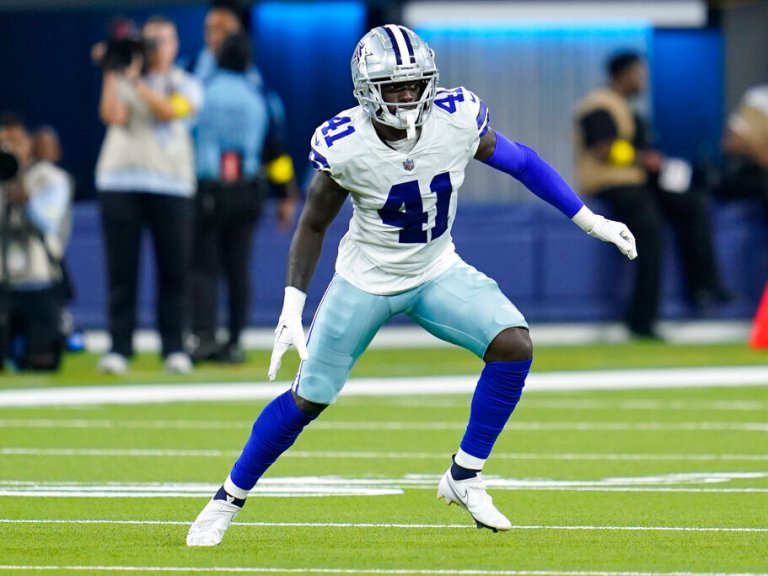
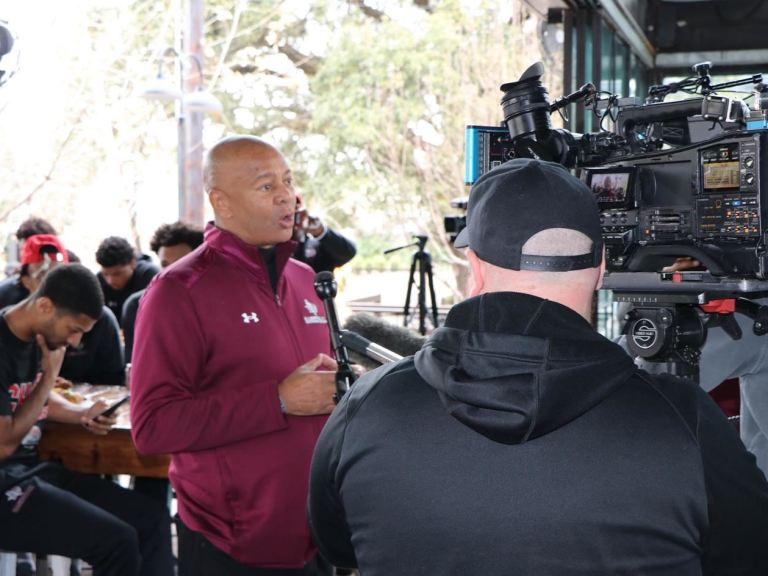
Police in Prosper, Texas, made the arrest, and Bell was booked on one felony count for the controlled substance and a Class B misdemeanor related to marijuana possession. He could face discipline under the NFL’s personal conduct policy, according to the report.
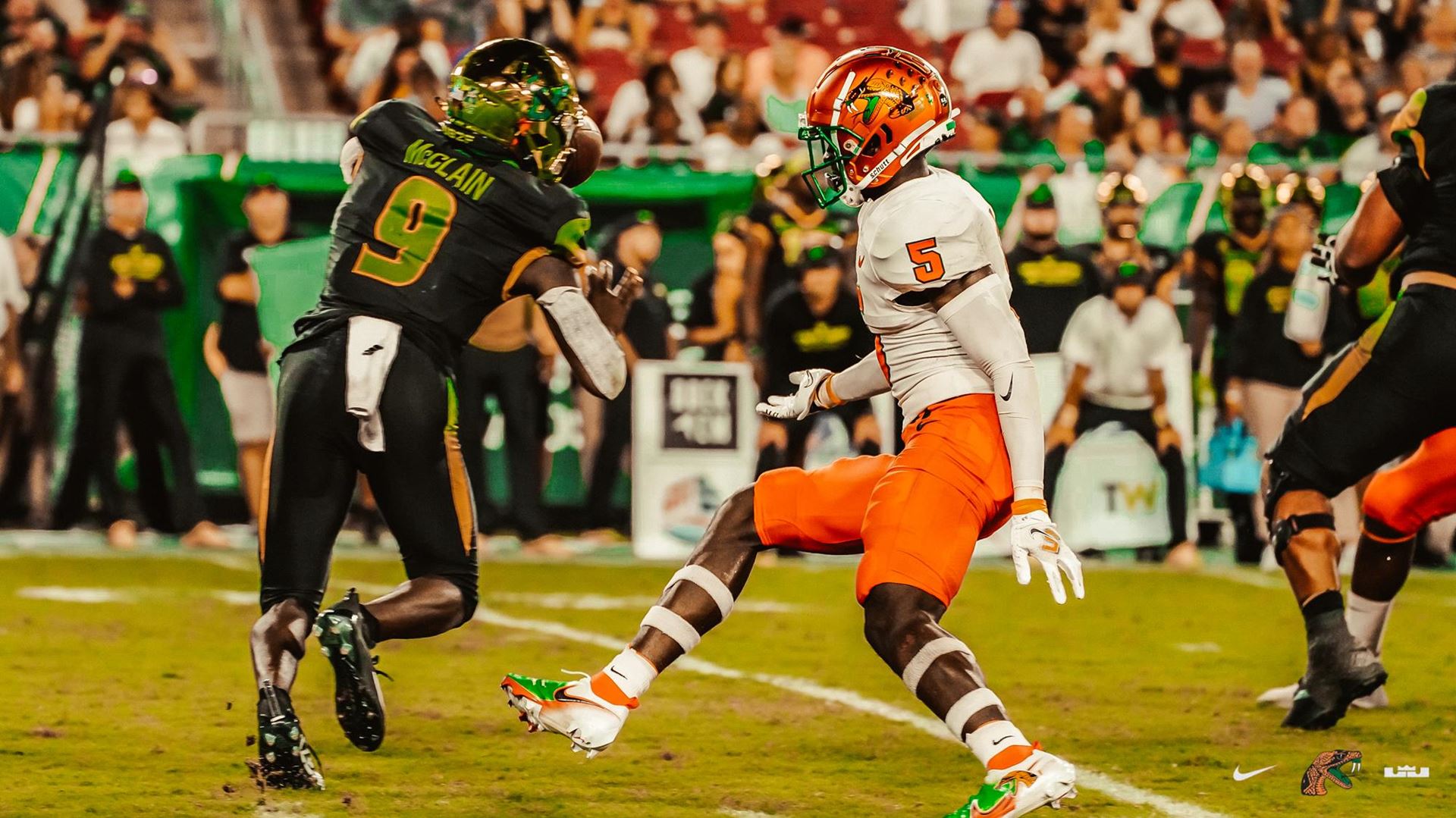
Bell, a FAMU product, has been one of the NFL’s most prominent HBCU alumni in recent years. He earned first-team All-SWAC and FCS All-American honors at FAMU and was later named the NFLPA’s 2024 Black College Football Pro Player of the Year.
Photo: Florida A&M Athletics
Bell joined the Cowboys as an undrafted free agent in 2022 after starring for the Rattlers, and he entered the NFL with a reputation as a versatile defensive back with playmaking ability.
On the field last season, Bell started three of 17 games and finished with 34 tackles, one sack, one pass deflection, and one quarterback pressure. He also added 10 special teams tackles
The penalties stem from deficiencies in academic infrastructure, according to school President Marva B. Johnson, who said she pledged to strengthen institutional support moving forward.
“Florida A&M holds its student-athletes to the same standard of excellence we hold every Rattler,” Johnson said in a statement. “These penalties reflect a failure of institutional infrastructure, not a failure of our student-athletes. We are committed to building the academic support structure this program has long deserved — and this administration will be accountable for delivering it.”
The NCAA determined FAMU’s four-year rolling APR score fell below the required 930 benchmark, resulting in the postseason ban.
The APR measures academic eligibility and retention among scholarship student-athletes and is calculated across a four-year average. The data used includes academic years prior to Johnson’s tenure and to the current athletic leadership and football coaching staff being in place.
FAMU had hoped NCAA waiver would help
Director of Athletics John F. Davis said the university accepts the NCAA’s findings and has begun implementing an enhanced academic action plan to correct structural weaknesses.
“We owe it to our student-athletes and the Rattler community to be transparent about where we are and where we are going,” Davis said. “The four-year rolling average that produced this outcome includes a period of significant transition — that context does not excuse the result. We are here to fix it.”
FAMU had hoped a conditional NCAA waiver used during the 2025 season would prevent further penalties, but its requirements were not met, triggering next season’s postseason restriction, he said.
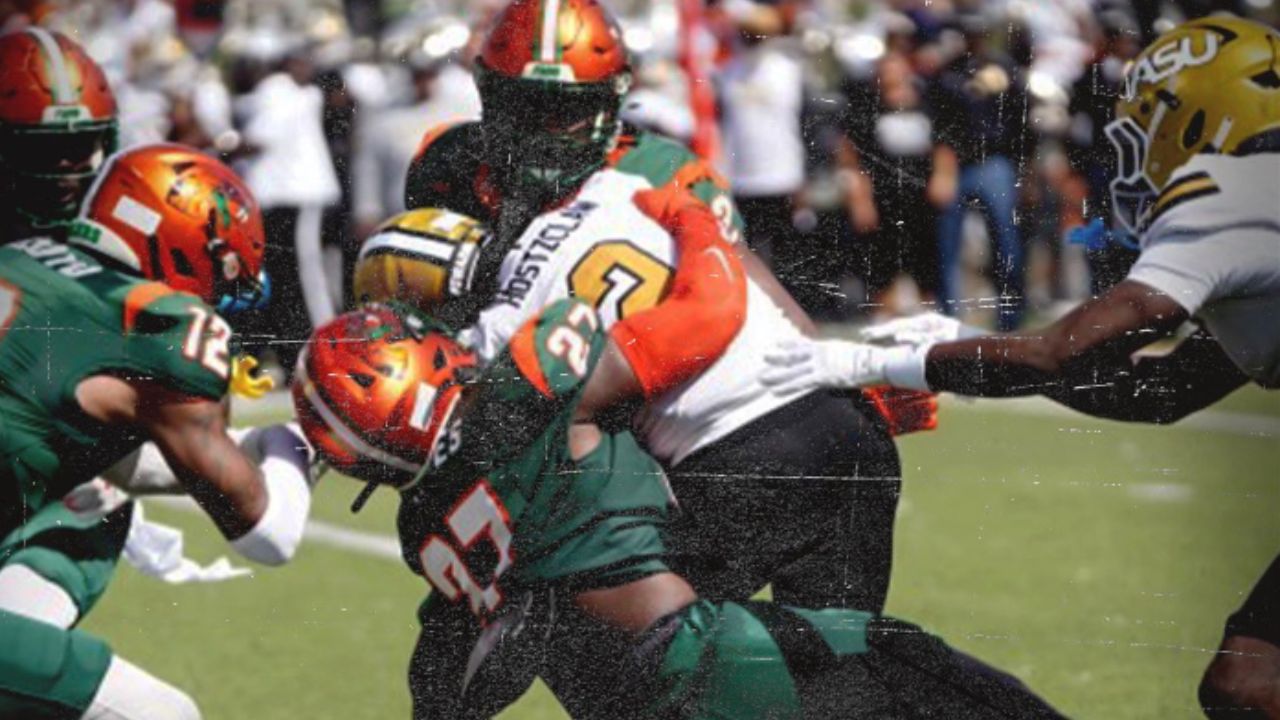
Photo: Florida A&M Athletics
School, team will be accountable
First-year head coach Quinn Gray Sr. said academic accountability remains central to his program, even amid the restrictions.
“Academics and football are not competing priorities in our program — they are the same priority,” Gray said. “We’ve put systems in place for execution and accountability every day. This ban doesn’t stop us from impacting lives or building toward our ultimate goal of earning degrees.”
The university has launched several steps to improve academic outcomes, including expanded compliance oversight, real-time academic tracking, and new protocols for early identification of at-risk student-athletes.
The Rattlers will still play a full regular schedule in 2026, beginning Aug. 29 at home against Albany State and ending Nov. 21 in the Florida Blue Florida Classic against Bethune-Cookman.
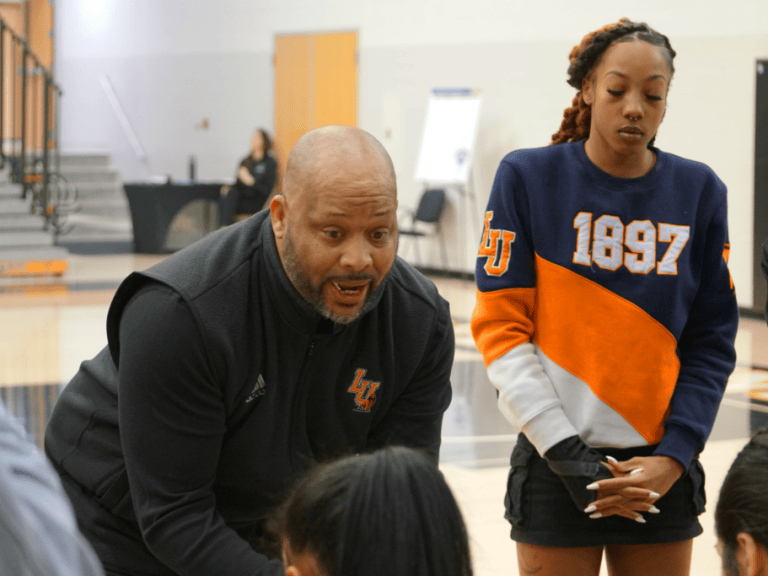
Wright most recently served as head coach at Langston, where he led the Lions to the NAIA men’s basketball championship game in 2024 and this past season. His record over four years at Langston was 121-21. Prior to Langston, he guided Talladega to the NAIA title game in 2022.
Wright’s overall coaching record over 16 years is 332-121.
Looking to fill their head women’s basketball coaching vacancy, the Allen Yellow Jackets are looking toward a familiar name that made his mark in the NAIA ranks.
Herod is a respected name in the HBCU landscape, having spent the past 14 years building championship-caliber teams.
This includes the past two years at Florida Memorial, turning the Lady Lions around from an 11-16 record the previous year to a 24-5 record in his first season.
In addition to claiming the Sun Conference Championship, Herod also led FMU to its first NAIA national tournament win in school history, beating Indiana Northwest 85-76 in the first round.
Before making his way to Florida Memorial, the HBCU coach served as head coach at Langston, leading the team to a 24-8 record and an NAIA tournament berth in 2024.
His most notable stint came during his legendary run at Talladega College, becoming the school’s career wins leader.
Herod produced a 171-68 overall record in his time at the helm, leading them to four NAIA national tournament berths.
This role became vacant when Allen moved on from former University of South Carolina basketball player Olivia Gaines after a two-season stint.
The Yellow Jackets finished this past season with an 18-10 overall record, succeeding Gaines’ first season in which the team went 18-9.
In addition, this marked the first time Allen has finished consecutive seasons with a record at or above .500 since 2019.
This article is one in a series of features produced in partnership with the Southwestern Athletic Conference, exploring the history of the SWAC from its founding in 1920 to the present day. The series will run during the months of April and May.
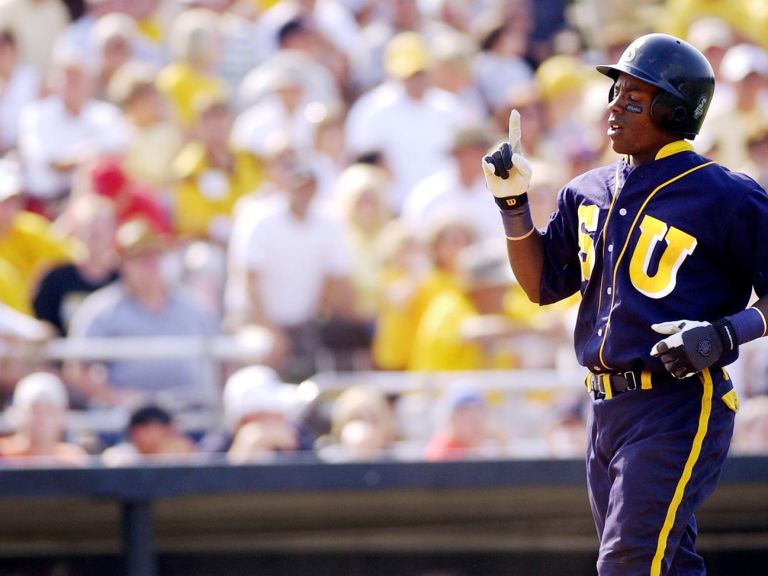
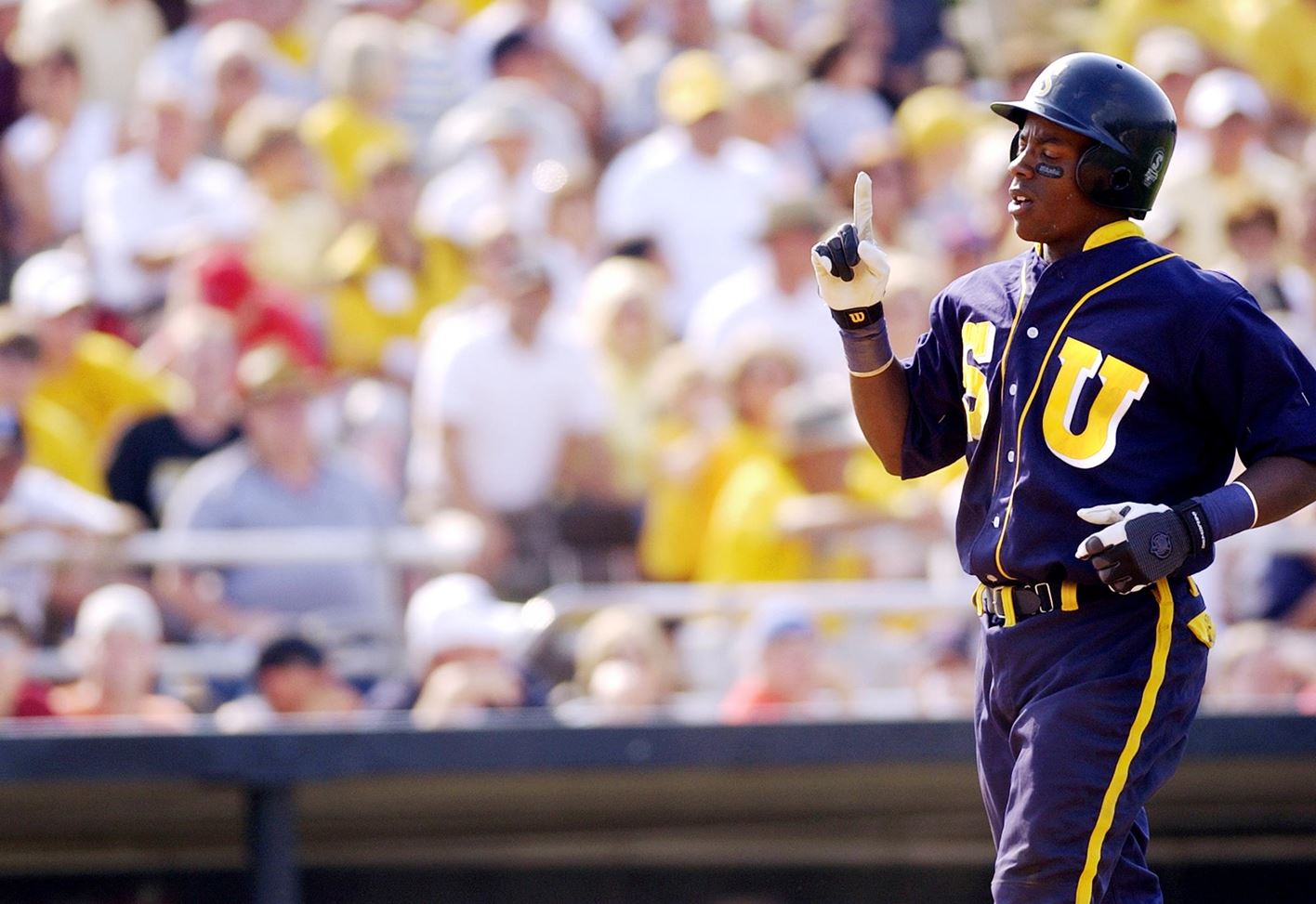
In modern-day SWAC lore, no one has been more successful or more decorated than a Southern Jaguar baseball player who put together a stellar career in the big leagues: Rickie Weeks Jr.
Weeks, a native of Altamonte Springs, Florida, came to Southern in 2000 and set out to become the NCAA’s premier hitter.
As a second baseman, he was a huge part of the Jaguars’ run of three consecutive SWAC championships from 2001 to 2003. In 2002, he hit a scorching .495, winning the NCAA batting championship, along with hitting 20 home runs.
Somehow, he managed to nearly duplicate those numbers the next year with a .479 batting average, 16 home runs, and 66 runs batted in.
Weeks’ hot bat earned him two of amateur baseball’s top honors, the Golden Spikes Award and the Dick Howser Award as college baseball’s top player in 2003.
Though great, Weeks was ‘never bigger than the team’
Legendary Southern coach Roger Cador told the Lafayette (La.) Advertiser of a story that highlighted Weeks’ unselfishness.
“Rickie was hitting third in the order with two men on,” Cador said of a SWAC tournament game against Alabama State. “Being the team player he is, he tried to bunt them over. I never gave him the sign; he did it because he knew the situation.”
After fouling off two bunt attempts, Weeks smashed a three-run homer. He repeated the same feat two games later.
Photo: Southern University Athletics
“This shows you what character he has,” Cador said. “He will never, ever be bigger than the team.”
Weeks’ hard work and selfless attitude were the talk of the 2003 Major League Baseball draft. The Tampa Bay Rays had the first pick, the Milwaukee Brewers the second.
The Rays chose Delmon Young, who went on to have a solid 10-year major league career.
The Brewers didn’t hesitate in choosing Weeks with the next pick, making him a rarity as a top-five MLB draft pick to come from an HBCU.
Weeks let his game speak for itself
The only HBCU player ever to be drafted higher than Weeks was another Southern Jaguar, Danny Goodwin, who was picked first overall by the California Angels in the 1975 draft.
“We are very pleased to get a player of Rickie Weeks’ ability,” Brewers scouting director Jack Zduriencik told the Associated Press at the time. “He is a pure hitter with tremendous speed and power, tools that will help him through our minor league system and to the major leagues.”
“You’re always going to have critics,” Weeks said about the pressure to perform. “You have to let the game speak for itself on the field.”
Weeks didn’t have to wait long, making his major league debut Sept. 15 that same year. His first Major League hit was a single off of Arizona Diamondbacks reliever John Patterson on Sept. 20, one of two hits he recorded in his short call-up.
After spending all of 2004 in the minors, Weeks was called up again by the Brewers early in the 2005 season and finished the season hitting .239 with 13 home runs and driving in 42 runs.
The numbers were good enough for Weeks to get National League Rookie of the Year consideration among players such as Ryan Howard and Jeff Francoeur.
Weeks finished tied with Colorado Rockies pitcher Jeff Francis for sixth in the NL Rookie of the Year voting.
Weeks’ best season with the Brewers was 2011, when he was named to the National League All-Star team. In that year’s game at Chase Field in Phoenix, Arizona, Weeks led off for the NL and scored a run in their 5-1 win over the American League.
For the 2011 season, Weeks hit .269 with 20 homers and 49 RBI as Milwaukee advanced to the National League Championship Series before losing to the eventual World Series champion St. Louis Cardinals in six games.
Weeks’ career lasted through the 2017 season. After a decade with the Brewers, he spent his last three seasons splitting time between the Seattle Mariners, Arizona Diamondbacks, and Tampa Bay Rays.
Since his retirement, Weeks has worked in the Brewers organization, first as a coach, then as an associate manager, and currently serves as special assistant for international scouting.
The awards have not stopped; he and Cador were both inducted into the College Baseball Hall of Fame in 2022. Weeks is also a member of the Louisiana Sports Hall of Fame and the SWAC Hall of Fame.
Looking back on his playing days with MILB.com, Weeks told Brendon Samson that his time on The Bluff is what gave him the boost to have a long and successful major league career.
“They’re always talking about in professional sports that it’s hard to make the big leagues, but at the same time, it’s hard to stay,” he said. “And I think the reason why I stayed is because of my time at Southern University.”
Alabama A&M quarterback Cornelious “Quad” Brown IV is back on the practice field for what will be another historic season for him.
The veteran signal-caller will suit up for the Bulldogs this fall in what will be his remarkable eighth season of college football.
Brown was recently granted a medical redshirt by the NCAA. He posted on his Instagram page, clearing the way for another year at Alabama A&M. He returned to spring practice this past week and is expected to play in the team’s spring game on Saturday.
Last season, his seventh collegiate year, Brown threw for more than 1,060 yards and accounted for 10 total touchdowns before suffering an injury that cut his campaign short. Now fully healthy, he’s once again primed to lead the Bulldogs’ offense heading into the 2026 season.
After stops at Georgia State and UT-Martin, Brown has brought his experience and poise to the Bulldogs, determined to make a lasting impact.
“It’s awesome,” head coach Sam Shade told Fox 54. “Like I talked about him last year — he’s such a leader. He just brings it every day, brings a lot of energy to our team, not just the offense but to the entire team.”
Brown joins former Northern Illinois player Kyle Pugh as college football players who have competed in at least eight seasons. Ex-Miami tight end Cam McCormick holds the all-time record with nine seasons played.
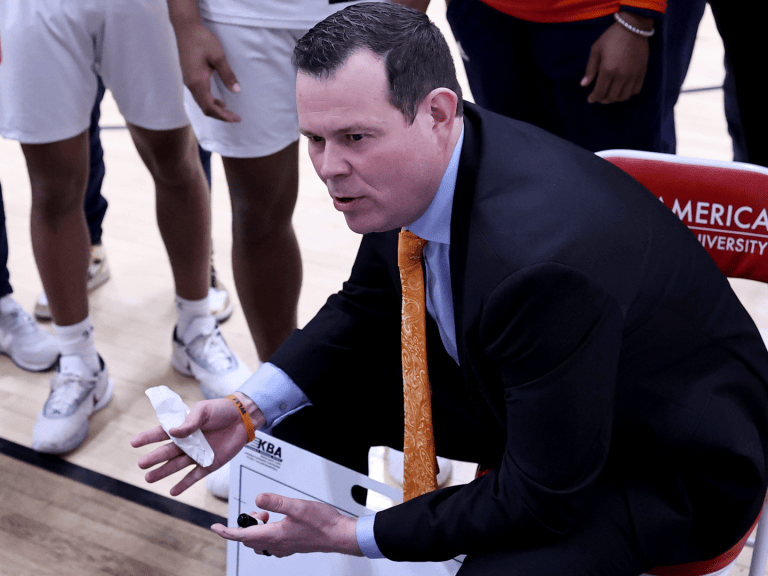
Winston-Salem State University has turned to a proven winner to lead its men’s basketball program, naming Lester “Jay” Butler as its new head coach.
The news of the hire was first reported by HBCU Gameday.
Butler, who spent the past 11 seasons at Virginia Union University, inherits a Rams program looking to recover from a 7-19 overall record and a 2-13 finish in the CIAA last season.
“Jay Butler brings a wealth of experience and a strong track record of success,” said Eric Burns, WSSU’s interim director of athletics, in a statement. “Throughout this national search, we sought a leader who could elevate our program competitively while developing young men both in competition and in life. Coach Butler embodies those qualities, and we are excited to welcome him to Ram Nation.”
Butler is a proven winner
At Virginia Union, Butler compiled a 372-239 career record highlighted by nine 20-win seasons, eight NCAA Division II tournament appearances, and multiple CIAA titles. This past season, he earned his third CIAA Coach of the Year award while guiding his team to the CIAA Team High Academic Award. In 2023, he was recognized as the HBCU Jerry Johnson NCAA Division II National Coach of the Year and the NCAA Atlantic Region Co-Coach of the Year.
Photo: Virginia Union Athletics
“I am honored to join Winston-Salem State University and lead this historic program,” Butler said. “WSSU has a proud tradition, passionate supporters and a strong commitment to student success. I look forward to building a championship culture that reflects the values of this university and prepares our student-athletes for success on and off the court.”
Butler’s appointment marks the beginning of a new era for the Rams, who continue to build on their legacy within one of the nation’s most competitive Division II conferences.
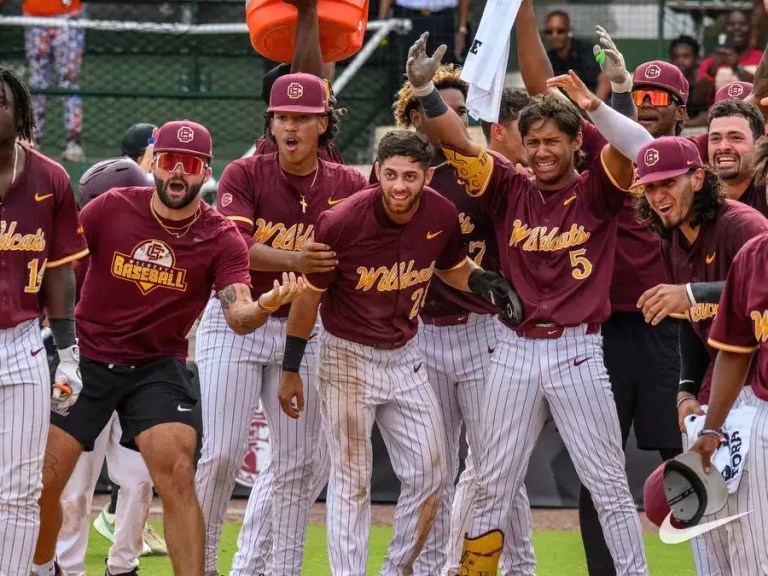
Bethune-Cookman baseball took down the defending College World Series champion, LSU, on Tuesday, a landmark win for the Black college.
The 10-7 victory by the best team in the SWAC proved once again that HBCUs can compete with the perceived top college programs in the country.
Amid the celebration, the online reaction after the historic win was quickly dominated by social media arguments about race and who should be allowed to represent HBCUs.
Social media reaction sparks debate over identity
Commenters took to Facebook and X, formerly known as Twitter, to suggest that Bethune-Cookman’s win over No. 24 LSU — a college baseball power — wasn’t worth celebrating because the majority of its roster was non-Black American.
The Wildcats, which compete in the SWAC (the only Division I baseball conference composed entirely of HBCUs), feature only three non-Latino American-born Black players on its current roster.
Go take a look at that HBCU roster bro. The win not gonna hit the same I promise you. HBCU sports have been infiltrated and I’ll leave it at that.
— TrellsUniverse formally TrellsWorld (@trellsuniverse) April 9, 2026
The majority of the roster includes players who were born in Aruba, Colombia, the Dominican Republic, or Venezuela, or were born in the U.S. and have Latin American heritage.
A serious conversation about that game has to move beyond roster screenshots to ask why many HBCU baseball programs now look different from their institutions’ historic missions, and why that change is not inherently contradictory.
That instinct misses the historical arc. HBCUs were created to educate Black students, but baseball has never been insulated from the recruiting realities that shape all college sports.
How recruiting reshaped HBCU baseball
As Black participation in baseball declined nationwide, HBCU programs increasingly leaned on Puerto Rico, the Caribbean, Latin America, and even white players to fill rosters and remain competitive.
Bethune-Cookman has been a prominent example of that shift for years, dating back to former coach Mervyl Melendez, who deliberately built recruiting relationships in Puerto Rico and transformed the roster with Latin players.
After leaving B-CU for Alabama State, Melendez’s Hornets roster was heavily constructed with non-Black players in a similar fashion.
But Bethune-Cookman and Melendez were and are not alone in recruiting rosters that do not exactly reflect the school’s demographics. SWAC baseball teams are littered with Hispanic and white players, too.
In 2016, Anscape reported that the percentage of black baseball players in the SWAC fell from 86.5 percent in the 1999-2000 season to 45.2 percent in the 2014 season, based on data available at the time.
Photo: Bethune-Cookman Athletics
During the same period, white players increased from 3.3 percent to 27.2 percent. Hispanic players increased from 2.6 percent to 23.1 percent, the website reported at the time.
At the college level as a whole, just 5 percent of players are Black, and outside HBCUs, that number falls to only 3 percent.
Major League Baseball’s Black representation made up only 6.2 percent of 2025 Opening Day rosters, up from 6.0% in 2024. The league’s largest non-white group is Latino at 28.6 percent, followed by “Internationally-born” at 27.8 percent.
Though organizations like Minority Baseball Prospects and MLB itself, through targeted efforts, are attempting to increase either Black participation in the sport or create a pipeline for HBCU players to get drafted, the current state of African-Americans in baseball isn’t what it was decades ago.
The recruiting problem is bigger than any one school. Youth baseball remains expensive, time-consuming, and structurally easier for families with more money and access.
That means HBCUs are often recruiting from a constrained pool, competing with everyone else for the relatively small number of Black players who remain in the sport.
The modern-day HBCU baseball roster mix is not evidence that B-CU or any other school has abandoned its identity. It’s more a reflection of the state of baseball itself. As proof of that, two HBCU baseball players — Caio Araujo of Alabama State, Justin Morales of Bethune-Cookman — played in this year’s World Baseball Classic for Brazil and the Netherlands, respectively.
Still, the criticism is not entirely to be dismissed. HBCUs carry a sort of cultural obligation that predominantly white institutions do not, and whose presence on the roster at an HBCU is never just a baseball matter; it is also a symbol.
For some HBCU supporters, seeing a largely Latino (even though many are Black Latino) lineup can feel like a disconnect, especially when Black male enrollment at HBCUs has been declining.
However, those rigid racial tests are wrong. Nobody who is a fan of the national champion University of Michigan basketball team is angry that none of the Wolverines starters were white Americans, despite whites making up 47% of the student population.
Black college baseball has evolved amid the economics of the game, conference divestment, and even the disappearance of teams at individual schools, further limiting HBCU participation.
I do not know why people are so taken aback that HBCUs have Latino players on their rosters. Especially the ones in Florida. Some old heads or lack or forward thinking is why some HBCUs can be behind.
The best HBCU baseball programs have built pipelines, developed players, and, in some cases, created platforms that help the sport remain visible to Black audiences even when rosters are racially mixed.
The state of Black baseball comes into focus
That is why Bethune-Cookman’s win over LSU matters beyond uneducated commentary. It demonstrates that HBCU baseball can still produce high-end competition, even while operating under different recruiting constraints than Power 4 programs.
Photo: Southern University Athletics
It also reminds us that HBCUs — though born in response to white segregation and anti-Black racism — have always been institutions for everyone. The diverse racial makeup of the student body, faculty, and even Olympic sports teams makes that so.
The fairest observation of Bethune-Cookman is not that its roster contradicts the HBCU mission, but that it lays bare baseball’s relationship with Black Americans at all levels.
The rule would permit student athletes five years of eligibility based on two windows: the athlete’s 19th birthday or their high school graduation.
This rule is apparently in line with Donald Trump’s executive order limiting athletes to five years of eligibility and one transfer.
The report states that “There would be limited exceptions, but they would not involve injuries, which has been a common reason for players to ask for extra eligibility.”
The NCAA is also seeking a limited antitrust exemption from Congress to prevent college athletes from suing for more eligibility.
As HBCUs have been among the hardest hit by the transfer portal and NIL era, this rule could help programs keep athletes or force them to decide whether the NIL/compensation era is a game worth playing.
The SWAC basketball season may have ended on the court, but the sideline game of musical chairs has just begun.
With Tony Madlock resigning from Alabama State, Mo Williams leaving Jackson State, and now Johnny Jones departing Texas Southern, three prime head coaching positions are available on the men’s basketball side.
The intrigue goes beyond just a simple opening of a Division I men’s basketball coaching opportunity, but also where these departed coaches are heading and the positions they are taking.
Williams is following his son, Mason, to Kentucky as an assistant coach, Madlock returns to Memphis to assist Penny Hardaway once again, and Jones, a member of LSU’s 1981 Final Four team and former Tigers head coach, returns to Baton Rouge alongside new (again) head coach Will Wade.
Yes, three men who were head coaches at HBCUs left to be assistants at PWIs on the Power 4 level. That is not an indictment of SWAC or HBCU basketball.
It proves that our schools are a hot commodity, even if these partnerships with name-brand coaches don’t last. It also just comes with this new territory of player and coach empowerment at the collegiate level.
Change in college basketball coaching is inevitable
The first thing we have to admit is that the days of four-year players playing for coaches who have been at a school for 20 to 25 years are effectively over. That is not just an HBCU reality; it is everyone’s reality.
North Carolina fired Hubert Davis less than five years after he ended Mike Krzyzewski’s run at Duke in the Final Four, and the guy who just won the national championship, Michigan’s Dusty May, was in the running until this past weekend to take his place.
The sooner we realize college sports are now a transient entity, the quicker HBCUs can adjust. Part of that process is identifying young coaching talent that can improve a program quickly and leave it in good hands for the next person.
Photo: Alabama State Athletics
Younger coaches relate to players better because they were not that far removed from being in their players’ shoes, and they also have the energy to research and master the new era of college sports.
Older guys like Jones and Madlock probably feel better serving as assistants without the head coaching responsibility. Williams (who is actually a year younger than me, damn) likely sees a way into a Power 4 job by assisting Mark Pope and having his son play for Kentucky in the process.
Once younger coaches are installed, give them room and the resources to run a program. When you have university support, such as the case for Winston-Salem State women’s coach Tierra Terry, wonderful things can happen. When you don’t have the support (see Delaware State and Jazmone Turner), bad things often happen.
That is why no one should lose sleep over three coaches moving on from the SWAC to the Power 4 level. The key is to build resources so the next coach can shine, and if they choose to leave, the program remains successful.
It can be done. It’s just up to HBCU administrations to see it through.