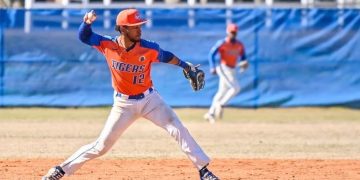

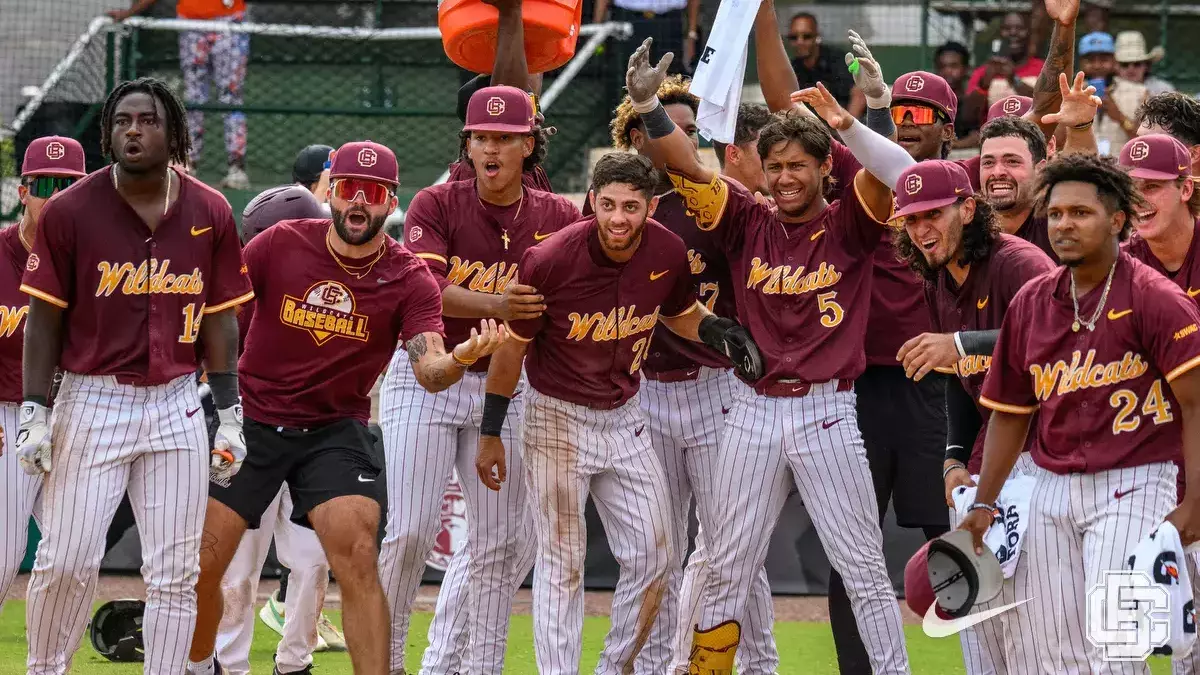
Bethune-Cookman baseball took down the defending College World Series champion, LSU, on Tuesday, a landmark win for the Black college.
The 10-7 victory by the best team in the SWAC proved once again that HBCUs can compete with the perceived top college programs in the country.
Amid the celebration, the online reaction after the historic win was quickly dominated by social media arguments about race and who should be allowed to represent HBCUs.
Social media reaction sparks debate over identity
Commenters took to Facebook and X, formerly known as Twitter, to suggest that Bethune-Cookman’s win over No. 24 LSU — a college baseball power — wasn’t worth celebrating because the majority of its roster was non-Black American.
The Wildcats, which compete in the SWAC (the only Division I baseball conference composed entirely of HBCUs), feature only three non-Latino American-born Black players on its current roster.
Whole lot of white dudes helping your “HBCU” win
— Somedude (@6foot1whiteguy) April 9, 2026

Go take a look at that HBCU roster bro. The win not gonna hit the same I promise you. HBCU sports have been infiltrated and I’ll leave it at that.
— TrellsUniverse formally TrellsWorld (@trellsuniverse) April 9, 2026
The majority of the roster includes players who were born in Aruba, Colombia, the Dominican Republic, or Venezuela, or were born in the U.S. and have Latin American heritage.
A serious conversation about that game has to move beyond roster screenshots to ask why many HBCU baseball programs now look different from their institutions’ historic missions, and why that change is not inherently contradictory.
That instinct misses the historical arc. HBCUs were created to educate Black students, but baseball has never been insulated from the recruiting realities that shape all college sports.
How recruiting reshaped HBCU baseball
As Black participation in baseball declined nationwide, HBCU programs increasingly leaned on Puerto Rico, the Caribbean, Latin America, and even white players to fill rosters and remain competitive.
Bethune-Cookman has been a prominent example of that shift for years, dating back to former coach Mervyl Melendez, who deliberately built recruiting relationships in Puerto Rico and transformed the roster with Latin players.
After leaving B-CU for Alabama State, Melendez’s Hornets roster was heavily constructed with non-Black players in a similar fashion.
But Bethune-Cookman and Melendez were and are not alone in recruiting rosters that do not exactly reflect the school’s demographics. SWAC baseball teams are littered with Hispanic and white players, too.
In 2016, Anscape reported that the percentage of black baseball players in the SWAC fell from 86.5 percent in the 1999-2000 season to 45.2 percent in the 2014 season, based on data available at the time.

During the same period, white players increased from 3.3 percent to 27.2 percent. Hispanic players increased from 2.6 percent to 23.1 percent, the website reported at the time.
At the college level as a whole, just 5 percent of players are Black, and outside HBCUs, that number falls to only 3 percent.
Major League Baseball’s Black representation made up only 6.2 percent of 2025 Opening Day rosters, up from 6.0% in 2024. The league’s largest non-white group is Latino at 28.6 percent, followed by “Internationally-born” at 27.8 percent.
Though organizations like Minority Baseball Prospects and MLB itself, through targeted efforts, are attempting to increase either Black participation in the sport or create a pipeline for HBCU players to get drafted, the current state of African-Americans in baseball isn’t what it was decades ago.
The recruiting problem is bigger than any one school. Youth baseball remains expensive, time-consuming, and structurally easier for families with more money and access.
That means HBCUs are often recruiting from a constrained pool, competing with everyone else for the relatively small number of Black players who remain in the sport.
The modern-day HBCU baseball roster mix is not evidence that B-CU or any other school has abandoned its identity. It’s more a reflection of the state of baseball itself. As proof of that, two HBCU baseball players — Caio Araujo of Alabama State, Justin Morales of Bethune-Cookman — played in this year’s World Baseball Classic for Brazil and the Netherlands, respectively.
View this post on Instagram
Still, the criticism is not entirely to be dismissed. HBCUs carry a sort of cultural obligation that predominantly white institutions do not, and whose presence on the roster at an HBCU is never just a baseball matter; it is also a symbol.
For some HBCU supporters, seeing a largely Latino (even though many are Black Latino) lineup can feel like a disconnect, especially when Black male enrollment at HBCUs has been declining.
However, those rigid racial tests are wrong. Nobody who is a fan of the national champion University of Michigan basketball team is angry that none of the Wolverines starters were white Americans, despite whites making up 47% of the student population.
Black college baseball has evolved amid the economics of the game, conference divestment, and even the disappearance of teams at individual schools, further limiting HBCU participation.
I do not know why people are so taken aback that HBCUs have Latino players on their rosters. Especially the ones in Florida. Some old heads or lack or forward thinking is why some HBCUs can be behind.
— UncleBryson 🕵🏾♂️ (@BrysonBradford) April 8, 2026
The best HBCU baseball programs have built pipelines, developed players, and, in some cases, created platforms that help the sport remain visible to Black audiences even when rosters are racially mixed.
The state of Black baseball comes into focus
That is why Bethune-Cookman’s win over LSU matters beyond uneducated commentary. It demonstrates that HBCU baseball can still produce high-end competition, even while operating under different recruiting constraints than Power 4 programs.
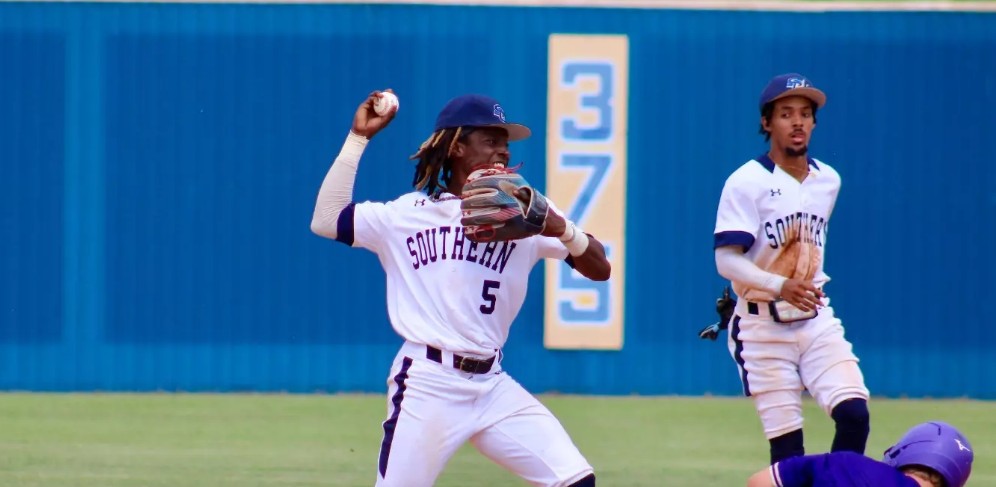
It also reminds us that HBCUs — though born in response to white segregation and anti-Black racism — have always been institutions for everyone. The diverse racial makeup of the student body, faculty, and even Olympic sports teams makes that so.
The fairest observation of Bethune-Cookman is not that its roster contradicts the HBCU mission, but that it lays bare baseball’s relationship with Black Americans at all levels.