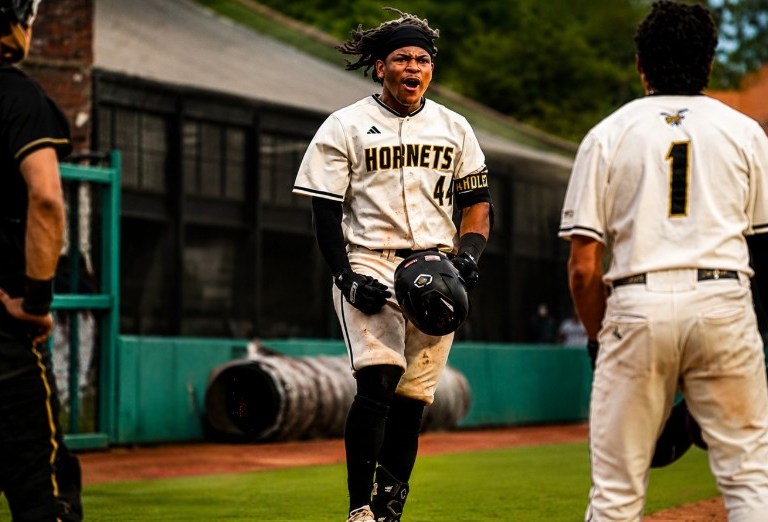
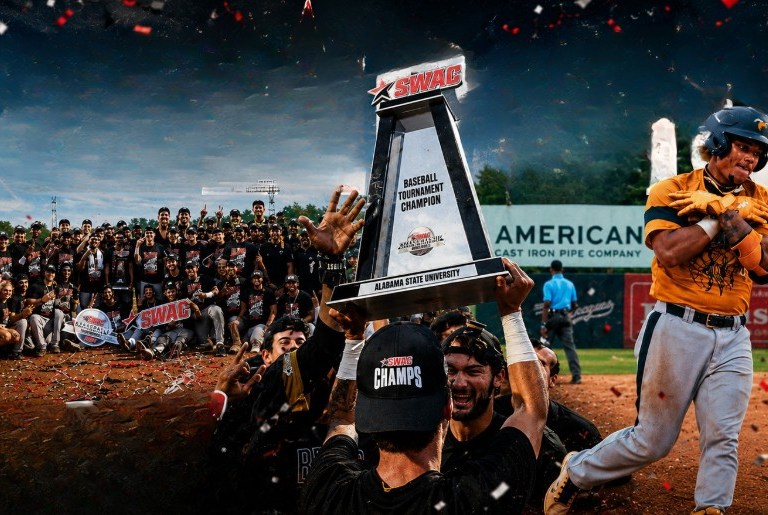
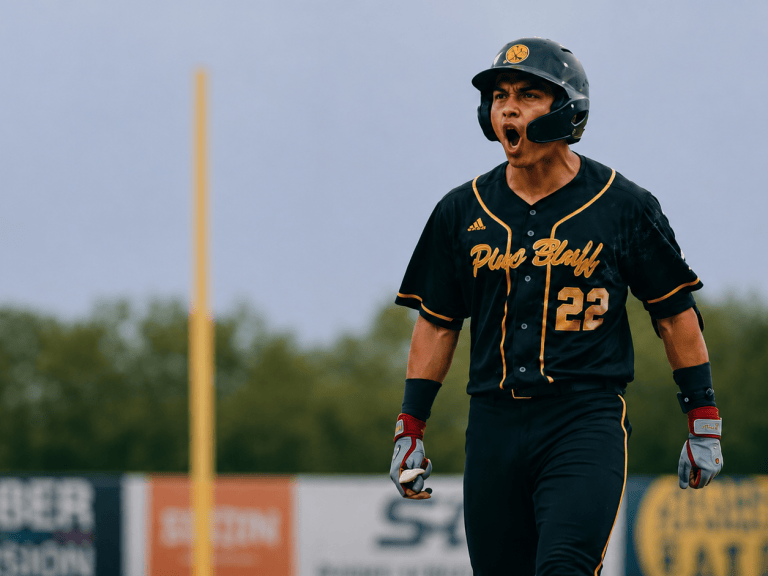
After going unbeaten through the SWAC baseball tournament en route to a conference championship, Alabama State knows where it will start the NCAA Tournament.
The Hornets learned on Monday that they will be placed in the Tuscaloosa Regionalas part of a field that includes national seed Alabama, Oklahoma State and USC Upstate.
Alabama State will play the Crimson Tide on Friday, May 29, at 7 p.m. on ESPN+. The Hornets secured their automatic bid as the SWAC champions with an 8-6 win in the championship game over Florida A&M.
Photo: Alabama State Athletics
What to know about Alabama baseball
Alabama (37-19) heads into the tournament as an at-large entrant and No. 7 national seed. The two teams faced off earlier in the season for a midweek game. Alabama won that game 2-1 in February in Tuscaloosa.
Alabama State, the only HBCU in the field, is in the NCAA Tournament for the third time in program history.
The SWAC title game was delayed by rain at multiple points on Sunday.
But the weather did not deny Alabama State a championship.
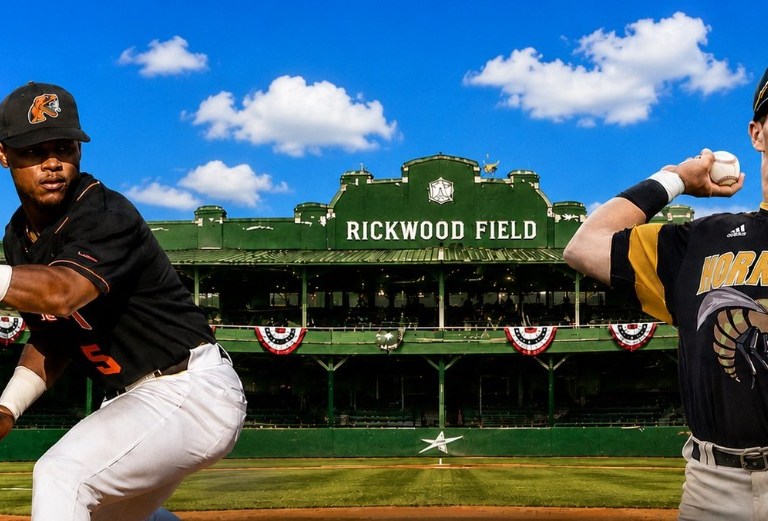
The Hornets survived a long week at Rickwood Field in Birmingham, Alabama, by scoring an 8-6 win over Florida A&M.
“I’m just proud for Alabama State,” said Hornets manager Jose Vasquez to SWAC TV after the game. “I’m not happy for myself. “I’m happy for them (the players) because they can continue to play baseball.”
Alabama State (34-21), which won its third SWAC Baseball Championship, built what looked like a comfortable lead behind a burst of offense in the middle innings.
Breydon Divine set the tone in the first inning with a single and a stolen base before scoring on Niguel Jenkins’ RBI hit. Florida A&M quickly answered, as Jackson McKenzie’s RBI double tied the game and hinted at the fight ahead.
Alabama State regained control in the third inning. Devin Chandler reached to open the frame, and Miguel Oropeza—who would later be named tournament MVP—came through with an RBI single to push the Hornets back in front.
The fourth inning gave Alabama State separation. Fabian Santana drove in a run, Chandler followed with another RBI hit, and Jenkins drew a bases-loaded hit-by-pitch to cap a three-run frame. At 5-1, the Hornets had momentum and breathing room.
Florida A&M trimmed the deficit in the bottom half, but the game’s biggest swing came two innings later.
With two runners aboard in the sixth, Trey Callaway delivered the decisive blow—a three-run home run to right-center that stretched the lead to 8-2. It was his lone hit of the afternoon, but it carried championship weight.
Florida A&M (30-23), which lost in the title game for the second consecutive season, chipped away in the final innings, scoring in the seventh and capitalizing on an Alabama State error in the eighth to plate two unearned runs. A sacrifice fly brought the score to 8-6, turning what once felt secure into a tense finish.
That tension landed squarely on James Peterson’s shoulders.
The Hornets reliever battled through traffic in the ninth, allowing two singles before locking in. A foul out steadied the inning, and a final fly ball to right field ended it—triggering a celebration for Alabama State and sealing Peterson’s seventh win of the season.
Photo: Alabama State Baseball/Instagram
Peterson tossed 4 2/3 innings in relief, while Jorhan LaBoy provided a solid start. Oropeza’s consistent production throughout the tournament earned him MVP honors, and he was joined on the All-Tournament Team by Peterson, LaBoy, and Santana.
“We’re a great team, and we bonded together well,” said Wallace. “That’s how we were able to win.”
Now, Alabama State turns its focus forward.
With the SWAC’s automatic bid secured, the Hornets will await their NCAA Tournament destination during Tuesday’s selection show. But after surviving Sunday’s test, they head into the postseason battle-tested—and still standing.
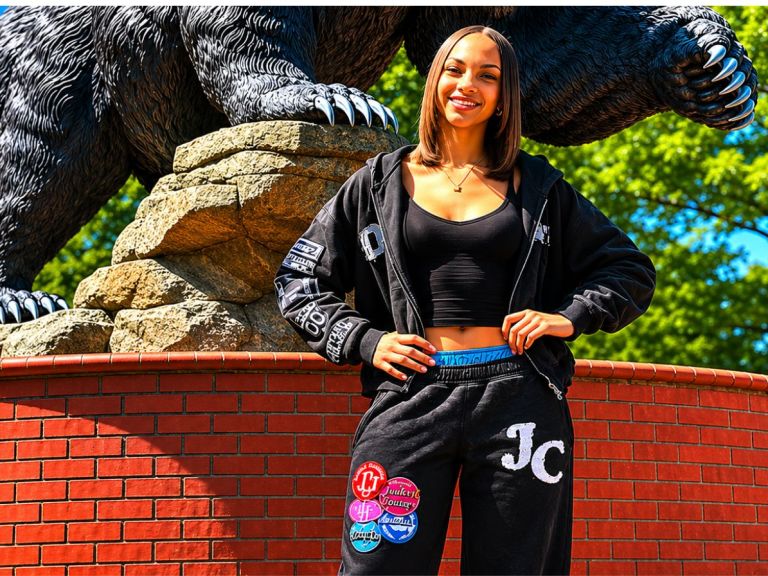
Livingstone College is mourning the loss of incoming volleyball player Kendall Cook, whose death was announced in a statement the school shared on social media.
Cook was set to join the Blue Bears for the upcoming season after transferring from Clark Atlanta. Though her time with the program was just beginning, the school emphasized the immediate and lasting impact she had already made.
She was 19. A cause of death has not been disclosed.
“With heavy hearts, we mourn the passing of Kendall Cook — a cherished member of our incoming 2026 Livingstone Women’s Volleyball family,” the statement read. “Kendall brought light, joy, and warmth everywhere she went. Her smile could brighten any room, and her spirit left a lasting impact on all who had the privilege of knowing her.”
The college also extended condolences to Cook’s family, friends, and teammates, noting that the “Blue Bear Nation stands with you during this difficult time” while pledging to honor her memory within the program moving forward.
Prior to her time at the collegiate level, Cook was a standout student-athlete at Frankfort High School. Frankfort Independent Schools also released a statement reflecting on her life and contributions.
“It is with profound sadness that we communicate the loss of one of our Panthers, Ms. Kendall Cook,” the statement read. “In the classroom, on the court, and on the field, Kendall was smart, kind, and beautiful. Our thoughts are with the family during this time of grief and sadness.”
No. 3 seed FAMU, which advanced to the title game by dominating Southern in a 5-1 victory on Saturday, will face No. 4 seed Alabama State at 3 p.m for the SWAC championship.
The Hornets (33-21, 25-10 SWAC) found their way to the championship round with three consecutive wins by scoring an average of 8.6 runs per game. Alabama State pounded Grambling State 10-0 in the opener and then topped Arkansas-Pine Bluff 8-7 before taking down the Golden Lions 8-5 to clinch a spot in the title game against the Rattlers.
Florida A&M (30-22, 22-8 SWAC) is riding a 9-game winning streak and enters the championship game having scored five or more runs in each tournament game.
Sunday will be the Hornets and Rattlers’ fifth matchup in 2026, with FAMU winning three of the four regular- season meetings. Alabama State beat Florida A&M 11-4 in the Andre Dawson Classic on Feb. 20. The Rattlers then returned the favor by sweeping a 3-game set in Tallahassee in March.
Both teams are playing for a spot in the NCAA Tournament. Florida A&M appeared in the 2025 title game against Bethune-Cookman that ended in an 11-9 loss to the Wildcats.
Florida A&M, which boasts the second-best ERA among SWAC pitching staffs, will try to limit the power of an Alabama State offense that has hit 56 home runs this season, including four in the conference tournament.
What channel is the Alabama State-FAMU SWAC Baseball Championship on Sunday?
Time: Sunday, May 24 at 1 p.m. CST
Streaming: SWAC TV
Players to Watch from Alabama State
Alabama State Athletics
INF Miguel Oropeza: 1-for-3, 3 runs batted in, 1 home run in Saturday’s 8-5 win
3B Trey Callaway: 2-for-5, 1 RBI, 1 in Saturday’s win over Arkansas-Pine Bluff
SP Jorhan LaBoy: 5 innings pitched, 0 runs, 5 hits, 4 strikeouts during Wednesday’s 10-0 over Grambling State
Players to Watch from Florida A&M
Photo: Florida A&M Athletics
INF/P McKenzie Jackson: Hit for the cycle in the Rattlers 15-6 over Southern
INF William Brown: .444 BA, 3 RBI in SWAC tournament
SP Caleb Granger: 6 innings pitched, 1 ER, 4 hits, 3 strikeouts in win over Texas Southern
This one had everything—momentum swings, big innings, and a knockout punch when it mattered most.
In a back-and-forth elimination game that refused to settle down, Arkansas-Pine Bluff delivered the final blow, erupting late to take down Bethune-Cookman 13-8 and stay alive in the SWAC Baseball Tournament on Saturday.
The Golden Lions matched every Wildcats surge before breaking the game wide open with a seven-run eighth inning, turning a tight contest into a runaway and ending Bethune-Cookman’s season for good.
Now, UAPB turns its attention to a 3 p.m. semifinal rematch with Alabama State, needing two straight wins to reach the championship against either Florida A&M or Southern.
From the jump, the Golden Lions set the tone.
Zach Wieder sparked things with a leadoff single, Aaron Grant followed, and before Bethune-Cookman could settle in, the bases were loaded. Nick Hockemeyer drew a walk to bring in the game’s first run, giving UAPB an early edge and a clear message: they came ready to swing.
Even when Bethune-Cookman surged ahead—using a big sixth inning to build an 8-3 lead—UAPB never blinked.
Instead, they chipped away.
Arkansas-Pine Bluff never stopped battling
In the seventh, Jose Vasquez’s hustle and awareness put him in scoring position, and the lineup did the rest. Grant and Lazaro Alvarado delivered back-to-back doubles, trimming the deficit to just two runs and setting the stage for what came next.
Then came the eighth inning. And everything changed.
It started simply enough—Vinny Saumell with a single, Konner Giddley with a double. Then Vasquez ripped a two-run double down the line to tie it at 8-8. Just like that, a new game.
Moments later, Weston Gingerich gave UAPB the lead. Wieder kept the pressure on. The bases loaded. Two outs.
Golden Lions bats were relentless
And then the floodgates burst.
Zyon Hamilton came through with a clutch two-run single, aided by a defensive miscue, and Saumell slammed the door with a two-RBI knock that capped a seven-run avalanche. Dugout? Electric. Momentum? Gone—for Bethune-Cookman.
Ballgame.
Saumell led the charge with a 3-for-5 day and timely hitting. Grant matched the energy with three hits of his own, while Hamilton and Vasquez delivered the biggest blows when it mattered most. And Giddley handled the small details that kept rallies alive.
On the final day of the NAIA Outdoor Track & Field Championships, HBCU athletes racked up several podium finishes, including many who claimed a spot in the top three of their respective events.
The day was highlighted by a trio of Voorhees athletes who each finished in the top four of the men’s triple jump, including sophomore Jayden Burris, who won the National Title with a meet record 16.32m mark (teammates Jaylen Burris and Michael Tatnall finished third and fourth, respectively).
This was one of three events in which Voorhees has someone place in the top five as Zaireon Skinner clocked in third in the men’s 200 (20.76s) and the men’s 4×100 relay team finished fifth (40.30s).
Voorhees ended the NAIA Outdoor National Championships tied for fourth in the overall team standings with 44 points.
Elsewhere, Rust’s Kaden Andrus was the best HBCU performer on the track, clocking in a time of 14.02 seconds in the finals of the men’s 110 hurdles, claiming second place in the event.
Xavier University of Louisiana’s Jaheene Bell also put up a second-place performance, posting a 50.46-second time in the men’s 400 hurdles.
Bell’s teammate, Rochelle Jeffries, was the best women’s performer of the day, taking home third place in the women’s 100-meter hurdles in a personal-best time of 13.86 seconds.
Finally, Talladega sprinter Anthony Gentles came in sixth in the men’s 100m final, clocking in at 10.51 seconds.
In the relays, Dillard finished in fifth in the men’s 4×100 relay and sixth in the women’s 4×100 relay, while Voorhees came in fifth in the women’s 4×100 relay.
The final day of the NAIA Outdoor Track & Field Championships was a prosperous one for Voorhees athlete Jayden Burris, claiming the Triple Jump title in a historic performance.
With a winning mark of 16.32m, Burris set a new NAIA championship record that previously stood for 45 years. He finished 0.85m ahead of the athlete in second place.
Burris nearly didn’t make it out of the first round of jumps, recording fouls on his first two attempts. In danger of being eliminated from the field, he clocked a 16.22m mark on his final jump of the first round to advance to the finals.
Already holding the measurement to beat with his final first round jump, Burris posted his championship record setting jump on the first attempt of the finals, securing the win in a landslide.
The sophomore athlete entered the triple jump championship field as the overwhelming favorite, entering as the number-one ranked participant with a season-best of 16.35m.
Having also took part in the long jump, where he entered as the fifth-ranked athlete, Burris’ run in that event ended abruptly after recording fouls in all three of his first-round attempts, failing to make it to the finals as a result.
His brother, Jaylen Burris, who claimed second-place in the long jump with a mark of 7.68m, finished in third place in the triple jump after posting a 15.39m attempt.
Meanwhile, Michael Tatnall, the triple jump champion at the 2024 NAIA Outdoor Track & Field Championships, finished in fourth at 15.16m.
This is the second time this season the Voorhees trio has claimed three of the top four spots in a National Championship in the triple jump, having done so at this year’s Indoor Track & Field Championships (Jaylen in second, Jayden in third, and Tatnall in fourth).
The Hornets stormed back from a five-run hole to pull off an 8-7 win over Arkansas-Pine Bluff at Rickwood Field on a soggy day.
ASU looked all but out of it entering the late innings, trailing 7-2 in a game that started in the morning, paused for hours due to weather, and didn’t resume until early evening.
But when play picked back up, so did Alabama State’s fight.
Hornets overcame slow start
Sparked by timely hitting and relentless pressure, the Hornets erupted for six runs across the seventh and eighth innings to flip the game on its head and stay unbeaten in the tournament.
The comeback began in the seventh. With the bases loaded, Miguel Oropeza delivered the first big blow, ripping a three-run double to center field that trimmed the deficit to two. Moments later, Trey Callaway came through with an RBI single to make it a one-run game and shift the momentum fully into Alabama State’s dugout.
Then came the defining swing.
In the eighth inning, after Alex Espaillat reached and advanced into scoring position, Devin Chandler stepped to the plate and delivered the knockout punch — a two-run home run to left field that gave Alabama State its first lead since the opening inning.
Alabama State used late-inning magic
Chandler finished 2-for-4 with three runs scored and two RBI, leading a Hornets offense that refused to fade. Oropeza added four RBI in a clutch performance, while Callaway and Jackson Williams each chipped in key hits.
🐝 Devin Chandler sends that ball back to Montgomery and the Hornets complete the comeback! Hornets take the victory 8-7 and punch their ticket to the next round! 🔥 #SWARMAS1#HornetNationpic.twitter.com/gknFSxoRmd
— Bama State Athletics (@BamaStateSports) May 23, 2026
Earlier in the game, Alabama State jumped out to a 2-0 lead in the first inning behind RBI singles from Oropeza and Williams. But Arkansas-Pine Bluff answered quickly and eventually took control, capitalizing on defensive miscues and stringing together timely hits to build what seemed like a comfortable lead.
Zach Wieder paced the Golden Lions with multiple RBI, while Vinny Saumell’s solo home run in the seventh pushed the lead to 7-2, just before the Hornets’ rally began.
On the mound, Camden Matthews slammed the door in the ninth, retiring Arkansas-Pine Bluff in order to seal the comeback victory. He earned the win in relief, improving to 3-0 after tossing four innings and allowing just one earned run.
The NAACP’s recent call for Black student-athletes to consider where they play collegiate sports has put HBCUs — fair or not — in a political tug-of-war.
Earlier this week, the organization announced the “Out Of Bounds” campaign, which calls for Black student-athletes and stakeholders to withdraw financial support from public universities in states that have moved to limit, weaken, or erase Black voting representation.
The push follows a U.S. Supreme Court decision that struck down Louisiana’s congressional map as an unconstitutional racial gerrymander, a ruling civil rights advocates say weakens protections for Black voters.
The campaign is targeting flagship public institutions in South Carolina, Georgia, Mississippi, Louisiana, Texas, Florida, Tennessee and Alabama.
“The NAACP will not watch the same institutions that depend on Black athletic prowess to fill their stadiums and their bank accounts remain silent while their states strip Black communities of their voice,” NAACP CEO and president Derrick Johnson said in the organization’s statement.
The campaign also calls to action Black athletes to make three considerations, including:
Black athletes and recruits are asked to withhold commitments from targeted programs, to ask coaches and athletic directors about their universities’ positions on voting rights, and to visit and seriously consider HBCUs.
Current college athletes are asked to use their platforms to elevate the issue, to ask institutional leadership for public statements opposing racial vote dilution, and to consider all available options under the transfer portal.
Fans, alumni, donors, and consumers are asked to stop purchasing tickets, merchandise, and licensed apparel from targeted programs and to redirect that spending to HBCUs — their athletics programs, scholarship funds, NIL collectives, bands, and alumni foundations.
A call for politicial leverage — and limits
At Prairie View A&M, football coach Tremaine Jackson said the idea of athletes using their influence to drive change is welcome—but expecting widespread buy-in without structural investment is unlikely to result in a sustained movement.
“I think it’s good that we teach our young people the influence and the power that their decisions have,” Jackson told HBCU Sports. “But don’t ask those kids to make that kind of sacrifice if you’re not willing to invest in the places you’re asking them to go.”
A report by Inside Higher Ed, using federal data on state spending from 1987 to 2020, found that 16 of the country’s 19 historically Black land-grant universities were underfunded by their states by $13 billion.
Jackson, who is in his second season at Prairie View after leading the Panthers to a SWAC championship in 2025, pointed to the widening financial gap between Power Four programs and HBCUs, particularly in the era of name, image and likeness (NIL) compensation and revenue sharing.
He noted that elite recruits often face choices between six-figure NIL deals at major programs and far smaller opportunities at HBCUs.
Photo: Prairie View Athletics/X
Jackson has previously been candid that Prairie View can’t offer NIL deals comparable to those at in-state Power 4 schools like Texas or Texas A&M, or at nearby Houston, which can offer athletes millions to compete.
That was underscored by Panthers men’s basketball coach Byron Smith, who revealed during the program’s NCAA Tournament run that “We’re not paying one player on our team.”
“In recruiting, kids are asking: How much am I getting paid? What does the facility look like? What are my opportunities?” Jackson said. “If LSU is offering $275,000 and an HBCU can offer a fraction of that, it’s hard to expect an 18-year-old—and their family—to turn that down.”
Jackson added that while the NAACP campaign is worthy of spotlighting long-standing inequities that impact Black citizens, many recruits are likely disengaged from the political issues driving it.
“A lot of kids we recruit aren’t even registered to vote,” he said. “If it’s not in front of them every day, they’re not focused on gerrymandering or legislation. They’re focused on their immediate future.”
True HBCU investment versus idealism
The Prairie View coach was blunt about what he believes would need to happen for a true shift toward HBCUs.
“If lawmakers believe in this, then go first,” Jackson said. “Invest real money into HBCU athletics—facilities, staffing, nutrition, NIL—so these schools can match the experience. Then the kids will come.”
Without that commitment, he warned, the burden falls unfairly on athletes.
“It’s easy to ask a kid to give something up when you’re not giving anything up,” he said. “That’s not fair.”
Jackson suggested it would require a near-universal movement among elite athletes to disrupt the current power structure.
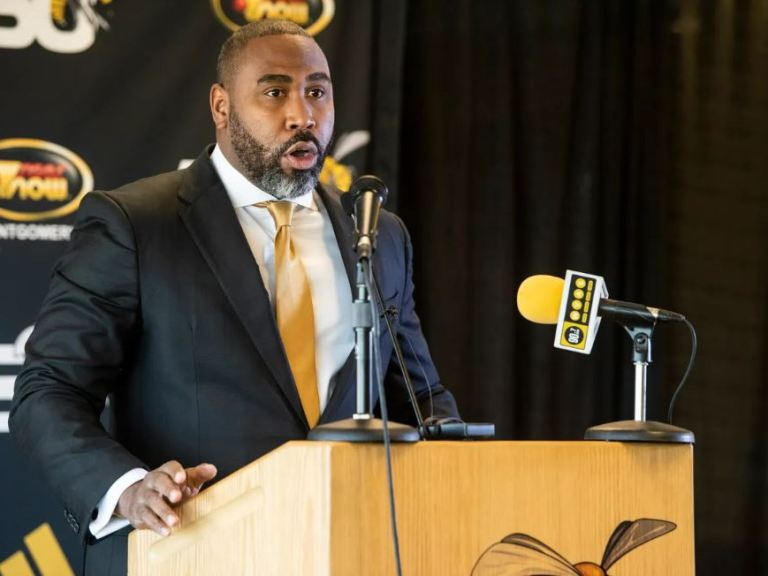
At Alabama State, athletics director Dr. Jason Cable sees the moment differently. He views it as a chance for schools to elevate the HBCU experience.
“I’m a proponent of student-athletes coming to HBCUs,” Cable said. “If this becomes a motivator, then so be it. But the most important factor is making sure people understand the value we provide.”
Cable emphasized that HBCUs have long been intertwined with social movements, noting Alabama State’s role in the Civil Rights Movement and that its campus was a hub for planning the Montgomery Bus Boycott.
Photo: Jason Cable/Alabama State Athletics
That history, he said, makes it difficult to separate athletics from broader societal issues.
“HBCUs have always been a focal point in movements involving African-American rights,” he said. “That connection isn’t new.”
Cable also pushed back on the notion that HBCUs cannot offer high-level athletic experiences like blueblood schools if all of a sudden Black colleges became a destination.
“We don’t have horrible facilities. That’s a false narrative,” he said about a school that’s produced professional sports talent. “Our resources may be smaller in scale, but that doesn’t mean the experience is less than.”
In 2012, Alabama State opened a $62 million football stadium. The array of athletic facilities also includes a $7 million weight room.
How to put recruiting realities and movement into perspective
Still, Cable acknowledged the financial realities shaping modern recruiting. Power conference schools, bolstered by NIL collectives and revenue-sharing models, often have a built-in advantage.
Rather than leaning into political messaging on the recruiting trail, Cable said Alabama State will continue to focus on its core pitch.
Photo: Congressional Black Caucus
“We approach it the same way—we believe what we offer is enough,” he said. “If other factors influence decisions, that’s up to the individual.”
Overall, the NAACP’s campaign has drawn support from some lawmakers and activists who see college athletics as a powerful economic engine capable of possibly influencing policy.
College athletes have led campaigns in recent years, using their platforms to push for social change. In 2015, Missouri football players
In 2015, a group of Black players on the Missouri football team proclaimed they would stop participating in football activities until university system president Tim Wolfe resigned over how he handled reported racial incidents on campus.
Former Mississippi State running back Kylin Hill said he wouldn’t play for the Bulldogs until the state flag was changed.
But as both Jackson and Cable suggest, translating that leverage into a sustained movement toward HBCUs will require more than messaging.
It will demand alignment between political advocacy, institutional investment, and the personal realities facing athletes and their families.
Whether the overtures spark a meaningful shift or become another moment in the history of sports-driven protest may ultimately depend on who is willing to act first—and what they are willing to put on the line.
William Davis, a former HBCU football star who later moved on to the FBS level, died of gunshot wounds to the chest.
TMZ, which reported the news this week, indicated it was unclear whether Davis was a homicide victim or sustained self-inflicted injuries.
Authorities in Virginia, where Davis passed away, have not officially determined the manner of death.
Sam Houston State University, where Davis was set to play the 2026 season, announced his death last Saturday but did not initially disclose a cause.
Davis had committed to the school after entering the transfer portal in January.
William Davis the HBCU football player
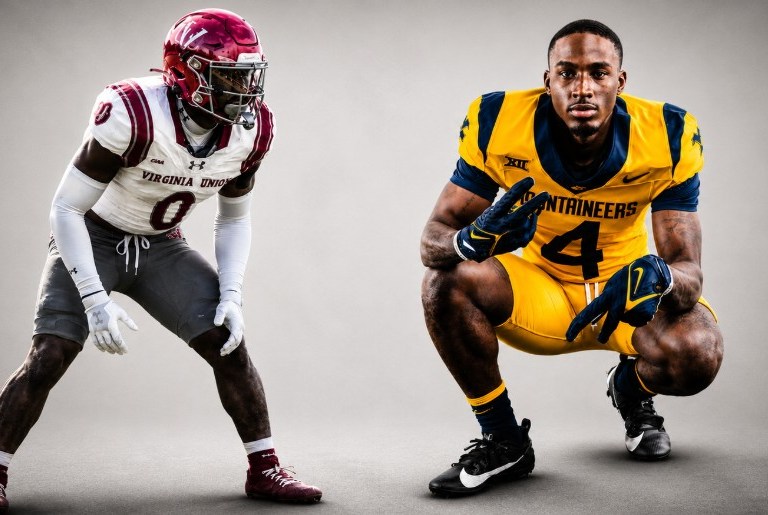
Davis began his career at Virginia Union, a Division II HBCU, where he developed into a consistent presence in the secondary. Over 36 games, Davis built a reputation as a dependable defensive back before earning an opportunity at the Power Five level after earning All-CIAA honors in 2024.
He transferred to West Virginia ahead of the 2024 season and appeared in just one game for the Mountaineers. Seeking a larger role, Davis re-entered the transfer portal and ultimately landed at Sam Houston State, positioning himself for what would have been his seventh collegiate season.
Now, instead of preparing for another season, those programs—and the teammates and coaches who knew him—are left mourning a life and career cut short far too soon.
As investigators continue to determine exactly what happened, Davis is remembered for the journey he carved through the college football ranks and the promise he carried into the next chapter of his career.