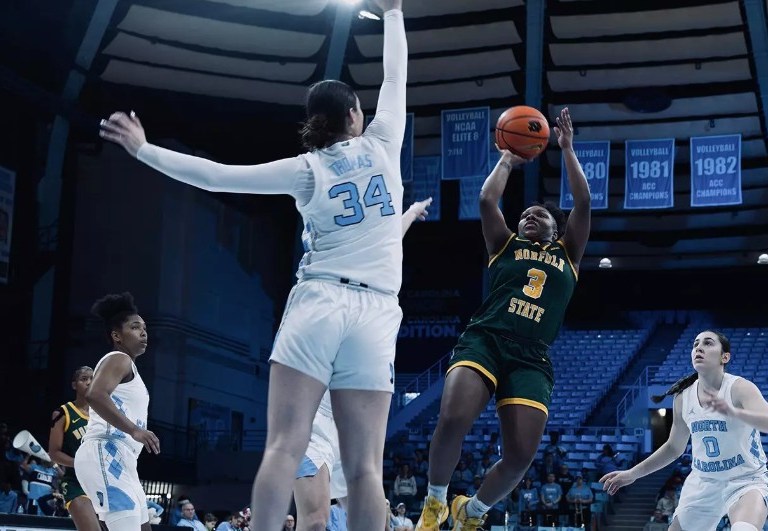
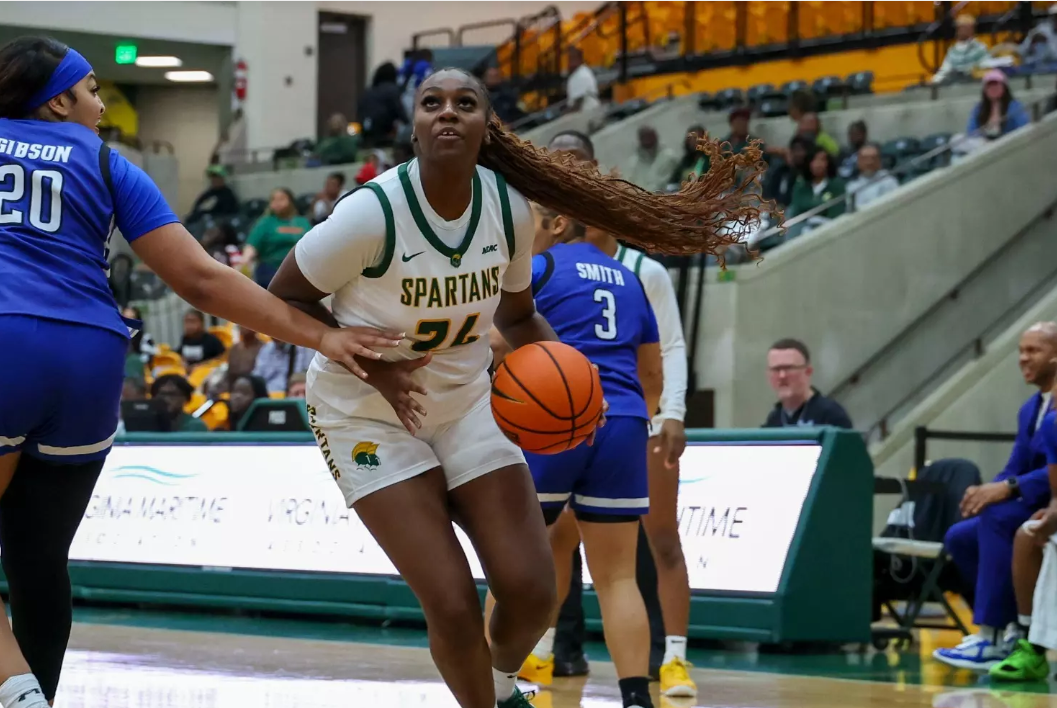
Norfolk State will first travel to Chapel Hill to face the Tar Heels at Carmichael Arena on Dec. 21, 2026. The return matchup will bring North Carolina to Echols Hall during the 2027–28 season, marking a significant moment for Spartan fans eager to see elite competition on their home floor.
Tipoff times for both contests will be announced at a later date.
What series with UNC women’s basketball means for Norfolk State
For athletics director Melody Webb, the series represents more than just two games on the schedule.
“This home-and-home series with North Carolina is another important step for our women’s basketball program and the university,” she said in a statement.
“Competing against a nationally ranked program like UNC reflects our commitment to elevating Norfolk State athletics and providing our student-athletes the opportunity to play at the highest level. We are also excited to bring that level of competition to Echols Hall for our fans and campus community.”
Photo: Norfolk State University Athletics.
The upcoming matchup will be only the second meeting between the two programs. Their previous encounter came during the 2024–25 season, when North Carolina secured a 90-47 victory in Chapel Hill.
Still, the Spartans are building momentum in ways that go beyond wins and losses. Hosting a program of UNC’s caliber underscores Norfolk State’s growing reputation and scheduling strength. The Tar Heels, who finished last season 28-8 and advanced to the NCAA Sweet 16 before falling to eventual No. 1 seed UConn, bring national credibility and high-level exposure.
Spartans will also host Duke
North Carolina will also become just the second ACC program to play inside Echols Hall, joining Duke, which is set to return to Norfolk in the upcoming season. For Woods, those opportunities are critical to the program’s long-term growth.
“I would like to express my gratitude to coach Banghart for her ongoing dedication to scheduling HBCU games on the road,” coach Jermaine Woods said. “This provides our team with valuable opportunities to compete against top-tier opponents at home, significantly enhancing our revenue prospects.”
Norfolk State enters this new chapter following an 18-15 finish in the 2024–25 campaign
University president Dewayne Tucker acknowledged that he received the letter May 29, with signatures from men’s basketball coach Nolan Smith, women’s basketball coach Candice Dupree, football coach Reggie Barlow, track coach Chandra Cheeseborough, volleyball coach Donika Sutton and softball coach Genee McRath.
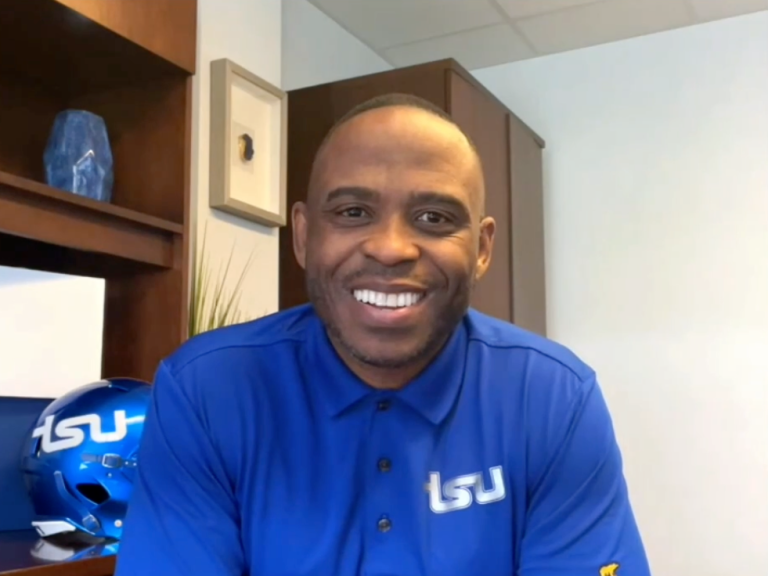
“The only statement I would make at this stage is that we are aware of the concerns raised by coaches and we take these things very seriously,” Tucker said. “We will be reviewing the concerns, and that’s pretty much all I can talk about right now.”Tennessee State Athletics
“This Vote of No Confidence is not rooted in personal grievance, but rather in a collective belief that the department can and should operate at a higher standard consistent with the values, mission, and potential of Tennessee State University,” the letter reads.
Why Tennessee State coaches gave no confidence vote
Several concerns include inconsistent communication and lack of operational transparency, uneven allocation of resources and support among programs, lack of clear departmental vision, structure and accountability.
The letter also outlines concerns about the direction of the Athletic Department, as well as proper support across the several programs at Tennessee State. Additionally, there were issues about collaboration on the well-being of student-athletes.
Allen was hired by then-president Glenda Glover in 2020 to replace the retiring Teresa Phillips.
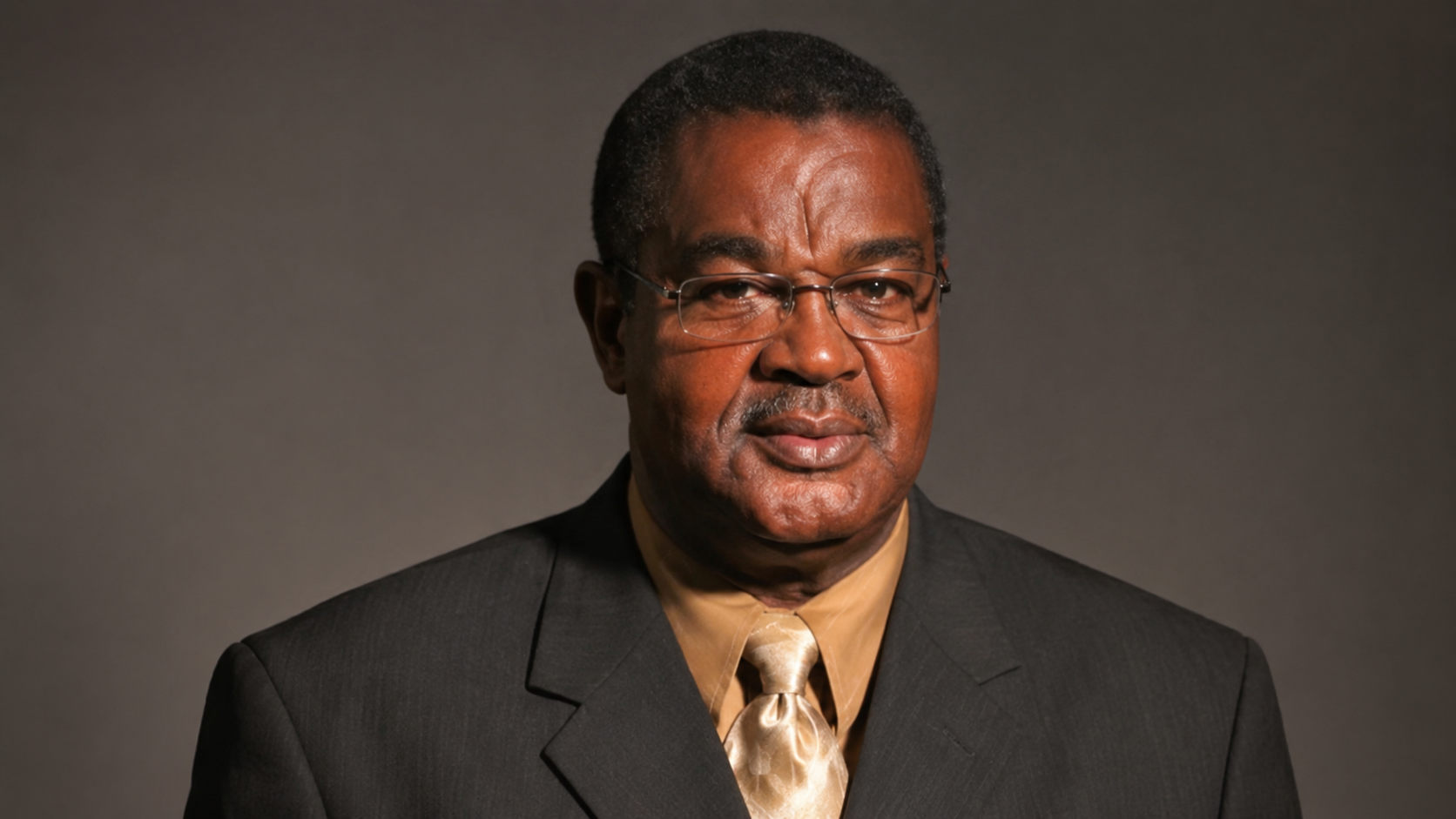
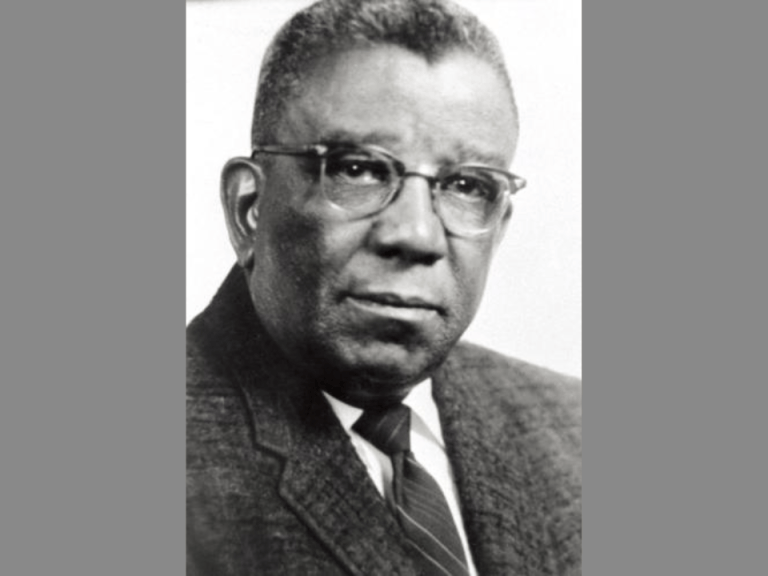
Four iconic figures in HBCU football are once again stepping into the national spotlight.
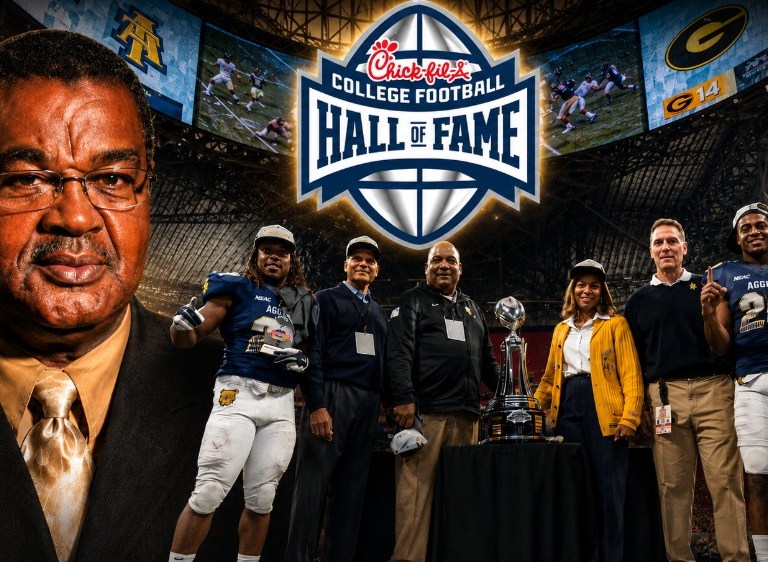
Gideon Smith, Bill Hayes, Eddie Hurt, and Rod Broadway have all been named to the 2026–2027 College Football Hall of Fame ballot, released Monday by the National Football Foundation—an honor that underscores the lasting impact each has had on the game.
The National Football Foundation on Monday released this year’s list of 80 major college players and nine coaches eligible to be selected for the Hall of Fame’s class of 2027. The latest class will be announced in January.
For the HBCU community, the announcement is both recognition and affirmation.
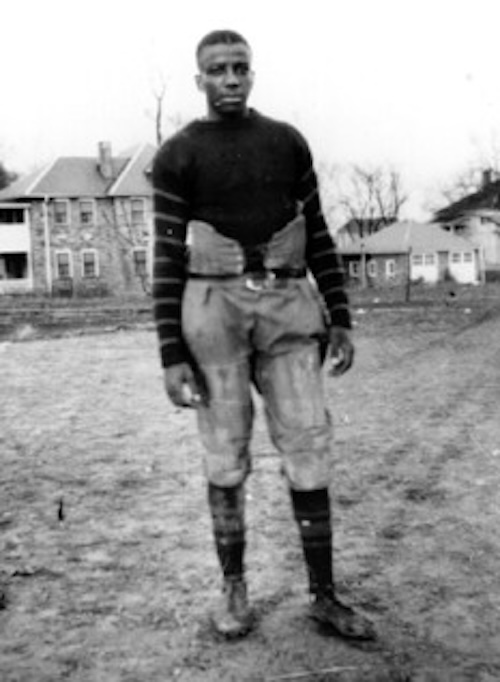
Smith built an undeniable HBCU powerhouse
Smith built his legacy at Hampton in the early 1920s, where he established one of the most successful runs in program history. Under his leadership, the Pirates became a consistent force, known for discipline and execution.
He also compiled an impressive 97-46-12 record, the most victories amassed by any coach in the first 90 years of Pirates football.
Smith’s tenure as Hampton’s head football coach saw the program capture its first black college national championship, that coming with a 5-1 record in just his second year as head coach in 1922. That 5-1 mark was the beginning of an eight-year span in which the team lost no more than two games in any season.
Smith’s influence helped elevate Hampton’s profile and laid a foundation that continued long after his tenure.
Bill Hayes was the standard of excellence in the CIAA and MEAC
Bill Hayes, Winston-Salem State
Hayes’ career stands as a model of sustained excellence. He guided Winston-Salem State to three CIAA championships and five CIAA Southern Division crowns.
After a successful 12-year stint at WSSU, Hayes led North Carolina A&T to two Black National Championships and was named MEAC Coach of the Year twice in 15 seasons that saw the program win 106 games.
Hayes’ ability to win across different programs and eras solidified his place among the most respected coaches in HBCU football.
Morgan State was nearly unbeatable under Eddie Hurt
Hurt’s impact dates back to the early development of Morgan State football.
How good were the Bears under him? Well, Hurt led Morgan State to 14 straight CIAA championships, 54 consecutive wins from 1931-1938, and six Black National Championships.
Hurt’s success as a football coach was due in part to his background in mathematics. He would often diagram plays on the backs of envelopes or milk cartons as the games unfolded, according to one account.
A foundational figure, Hurt helped shape the program during a time when opportunities in college athletics for Black coaches and players were limited. His contributions extend beyond wins, helping define the identity and direction of HBCU football in its formative years.
Rod Broadway won everywhere he went
Photo: North Carolina A&T athletics
Broadway represents a more modern era of dominance. A proven winner, he won a conference and Black National title at stints at North Carolina Central, Grambling State, and North Carolina A&T.
It was at NC A&T that Broadway was most dominant. The Aggies won two of the first three Celebration Bowl games ever played, and he ended the 2017 season — his final in college football — with a 12-0 record.
This article is one in a series of features produced in partnership with the Southwestern Athletic Conference, exploring the history of the SWAC from its founding in 1920 to the present day. The series will run during the months of April and May.
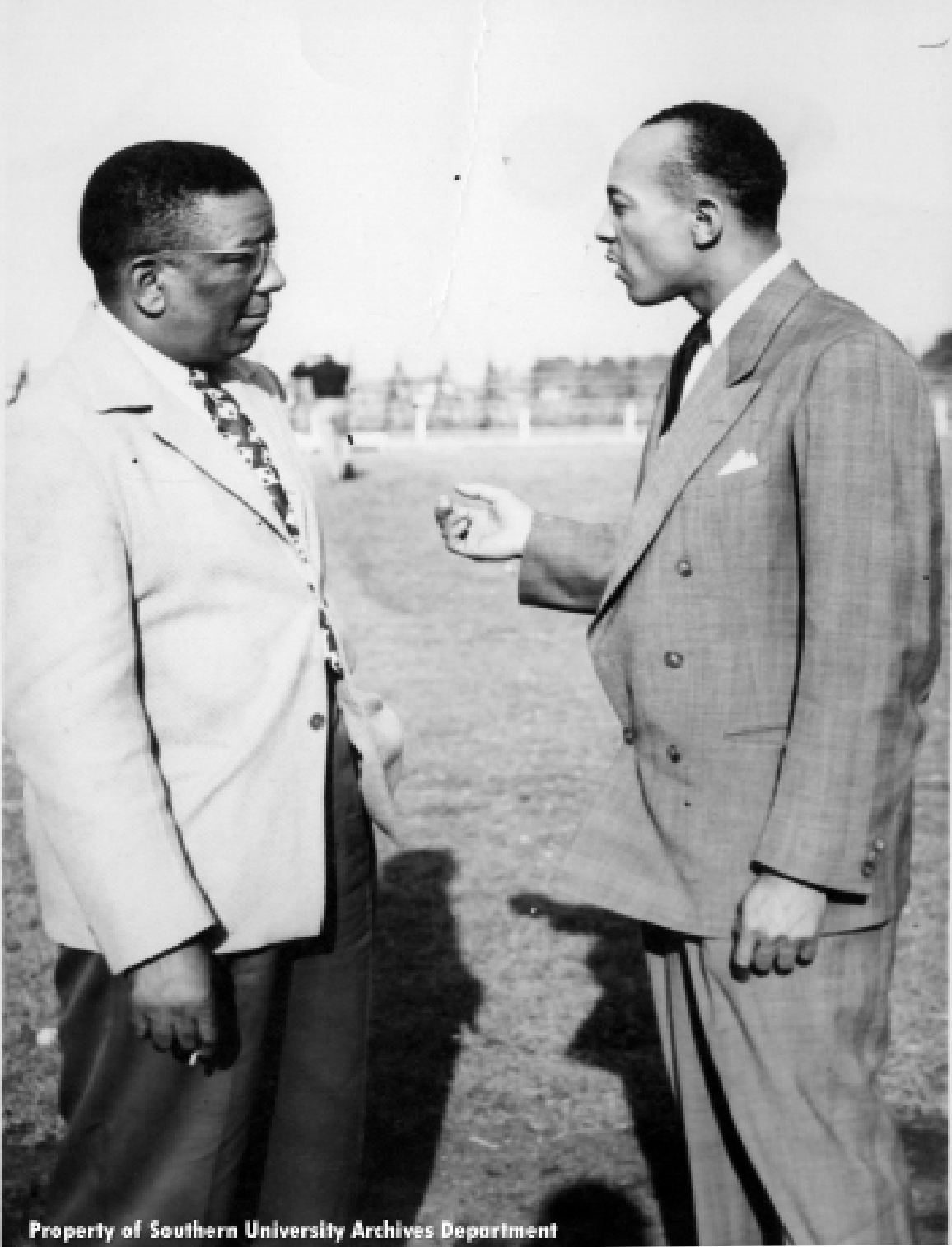
It could be argued that Arnett “Ace” Mumford is one of the greatest college football coaches you have never heard of — at least outside of HBCU circles.
Ace Mumford won six Black College National Championships, including one at Texas College in 1935 and five at Southern University in 1948, 1949, 1950, 1954, and 1960. His record at Southern was 169 wins, 52 losses, and 14 ties. He coached for nearly four decades, compiling a career record of 233-85-23 across stops at Jarvis Christian, Bishop, Texas College, and Southern. And yet, outside the HBCU community and the Southern University faithful, most people are unaware of his name.
A long way from Buckhannon
Mumford was born in Buckhannon, West Virginia, in 1898. It was a small Appalachian town where Black children simply did not have access to a school. So at seven years old, he left home and moved in with relatives about 90 miles away just to go to school.
He eventually graduated from Wilberforce University in 1924 and immediately began coaching. His first job came at Jarvis Christian College in Texas, followed by a stint at Bishop College, where he coached football, basketball, and baseball simultaneously. By the early 1930s, he had taken over as head coach at Texas College, and it was there that Southern University officials first took notice of Mumford, under circumstances no one saw coming.
Mumford’s Texas College team made the trip to Baton Rouge to face Southern, in a game the Jaguars lost. After the game, a Southern University dean accused Munford’s players of stealing items from the school. Mumford did not argue, and he did not protest. Instead, he ordered every player off the bus and had them display their personal belongings right there on the spot until the missing items were located.
The people at Southern were watching. They were witnessing a man who commanded his players’ respect, held them to an extremely high standard, and refused to let the moment become a distraction. In 1936, Southern called on Mumford to become the school’s head football coach, and he would not leave for 25 years.
Building something that had never been done
Photo: Southern University Athletics
What Mumford built at Southern over the next two and a half decades was unlike anything the SWAC had seen before.
His system was built around a scheme that put a premium on quickness and precision over raw power. He was a perfectionist who ran practice deep into the night, drilling the same play over and over until it was right. When darkness fell, and visibility dropped, he did not call it a day—he used a white football so his players could see it clearly and keep working.
His philosophy on game management was unique. His teams almost never attempted field goals. In one stretch, Southern made just three successful kicks across an entire decade. Mumford believed in moving the chains and finishing drives. Settling for three points when seven were available was not in his vocabulary, and the scoreboard reflected it. His 1946 team went 9-2-1, won the conference title, and outscored opponents 390-95.
Then came the stretch that cemented his place in SWAC history. Three consecutive black college national championships from 1948 to 1950, which were anchored by a 38-game unbeaten streak that ran through the 1951 season. He would add two more national titles in 1954 and 1960, bringing his total to five at Southern alone. Over the course of his tenure, his teams produced more than 40 All-Americans. He also served simultaneously as Southern’s athletic director, and in 1941, he coached the Jaguars basketball team to a black college national championship, making him one of the rare coaches in HBCU history to claim titles in multiple sports.
The standard Ace Mumford left behind
Off the field, Mumford’s influence was just as lasting.
He was known throughout the SWAC as a coach who treated his players’ education as seriously as their performance on Saturdays. He made it clear that obtaining a degree came first and that the purpose of the program extended beyond wins and losses. It was a standard that shaped how Southern University carried itself for generations after he was gone, not just in athletics but in how the institution understood its responsibility in competition.
“He had one of the finest minds in football. I learned a lot from him,” legendary Grambling coach Eddie Robinson said of him. “He was a coach’s coach. He was on top of everything. He was very innovative. He worked for perfection.”
Mumford died on April 28, 1962, not in a hospital bed and not in retirement. He died on a track, directing a meet. It was said of him that he died in his cleats, and for a man who gave nearly four decades to his athletes, there is something fitting about that.
The honors came, eventually. He was inducted into the College Football Hall of Fame in 2001. Southern University named its football field after him. His name appears in the halls of fame across eight different organizations, and a life-sized statue was unveiled on the Southern campus in 2016.
With the NCAA Division I Track & Field Preliminary round in the books, here is a list of every HBCU athlete who punched their ticket to Eugene for the Outdoor Track & Field National Championships.
Men
110 Hurdles
Jason Holmes, North Carolina A&T
It was a strong performance for North Carolina A&T men’s athletes at the East preliminaries, accounting for four of the six individual qualifiers, while also sending both relay teams to Nationals. Among those returning Outdoor National Championships is Jason Holmes, making his second career appearance and first since 2024. Holmes secured his spot by clocking a 13.41-second time in the quarterfinals, finishing third in his heat and eighth among all qualifiers.
Leonard Mustari, Florida A&M
Joining Holmes in the men’s 110 hurdle field is Florida A&M’s Leonard Mustari, making his first trip to Eugene, Oregon for Outdoor National Championships. Mustari put forth a career-performance to clinch his spot in the semifinals, running a personal-best 13.53 seconds to snag the final qualifying entry.
400 Hurdles
Isaiah Taylor, North Carolina A&T
Isaiah Taylor, one-half of the Taylor brothers for North Carolina A&T, breezed through the first two rounds of the 400 hurdles to cement his spot in Nationals. Taylor had the best qualifying time of all athletes in the first two rounds, clocking in at 48.71 seconds in the quarterfinals. This is the second straight year he has qualified for the Outdoor Championships in the 400 hurdles.
Xzaviah Taylor, North Carolina A&T
His brother, A&T junior Xzaviah Taylor, made it through the quarterfinals with the third-fastest time in the quarterfinals of 48.82 seconds. This will also be his second straight National Championship appearance in the 400-hurdle field.
4×100/4×400 Relay
North Carolina A&T
It was a great day for the North Carolina A&T men’s relay teams in the quarterfinals, clinching a berth at Nationals in both the 4×100 and 4×400 relay. On a 4×100 team that included 110-hurdle qualifier Jason Holmes and 100m quarterfinalist Jalen Booth Mitchell, the Aggies made it in as an auto qualifier, finishing second in their heat with a season-best time of 38.84 seconds. The 4×400 team also posted a season-best to make it in as an auto bid, crossing the finish line in 3:01.22.
Long Jump
Justin Walker, Alabama A&M
Alabama A&M long jumper Justin Walker was the first HBCU athlete to punch their ticket to Eugene, advancing on the first day of the East preliminaries. Walker snuck into the long jump field by posting a personal-best mark of 7.67m, securing the final qualifying position.
Triple Jump
Xavier Partee, North Carolina A&T
Another North Carolina A&T athlete who is making his second appearance at the Outdoor National Championships is triple jumper Xavier Partee. The junior Aggie posted the second-best measurement in the triple jump field of 16.26m, setting a new personal best.
Women
200m
Yahnari Lyons, Howard
Whereas North Carolina A&T dominated the East preliminaries on the men’s side, Howard did so on the women’s side, accounting for three of the seven individual qualifiers. This includes Yahnari Lyons, the only individual HBCU athlete (man or woman) to clinch a spot in a non-hurdle track event. Lyons posted the sixth-best time in the quarterfinals of the 200m field in 22.72 seconds.
100 Hurdles
Tashina Alase, Southern
The SWAC 100-hurdle champion, Tashina Alasa, also had a strong performance in the quarterfinals to make it into the National Championship field. She finished atop her heat in 12.74 seconds to make it in as an automatic qualifier, making the trip to Eugene for the first time in her career.
400 Hurdles
Cenaiya Billups, Howard
The first of two Bison to qualify in the women’s 400 hurdles, Cenaiya Billups came through with a personal-best to secure her spot. She paced her heat in 55.09 seconds, making it past the preliminaries for the first time.
Aniya Woodruff, Howard
Returning to the National stage for the second straight year is Howard senior Aniya Woodruff. Like Billups, Woodruff also clocked a personal best time to win her heat, finishing in 55.43 seconds.
4×100 Relay
Howard
For the third straight year, Howard will field a team in the women’s 4×100 relay at the Outdoor National Championships. The Bison claimed the final automatic qualifying time in their heat, posting a season-best 43.23 seconds.
Florida A&M
Although Florida A&M finished just behind Howard for the last automatic bid, they got in as the fastest time qualifier in the field. The Rattlers also recorded a season-best of 43.31 seconds.
High Jump
Spirit Morgan, North Carolina A&T
North Carolina A&T high jumper Spirit Morgan will compete at the Outdoor National Championships for the second straight year. Morgan tied for the best jump in the field of 1.82m (technically finishing second because of attempts needed).
Triple Jump
Olivia Dowd, North Carolina A&T
Another North Carolina A&T field athlete returning to the National stage is Olivia Dowd. Dowd cemented her second straight National Championship appearance with a personal-best mark of 13.23m, ranking eighth amongst the field.
Daedrian Beville, Alabama State
Rounding out the list of HBCU qualifiers is Alabama State’s Daedrian Beville. The only HBCU freshman to punch their ticket to Eugene, Beville snatched the final qualifying spot with a 13.21m jump.
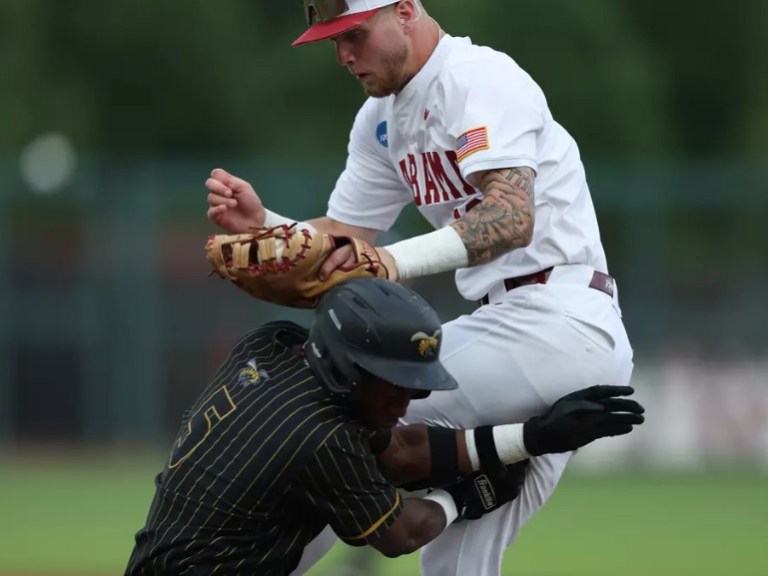
Alabama State didn’t just show up Saturday—they nearly made history.
For nine innings and then some, the Hornets went toe-to-toe with Oklahoma State.
What unfolded felt less like a typical No. 4 vs. No. 2 NCAA Tournament regional matchup and more like a heavyweight fight that just wouldn’t end—until the Cowboys finally escaped with an 8-7 extra-inning win.
From the jump, the Hornets made it clear they weren’t interested in playing the role of underdog.
Alabama State starting pitcher James Peterson held the Cowboys scoreless through the first three innings before running into trouble in the fourth.
Alabama State didn’t respond to adversity like underdogs
It was in that inning that Peterson gave up a grand slam to Colin Brueggemann for the first runs of the game.
Oklahoma State added two more runs in the sixth to build what seemed like an insurmountable lead.
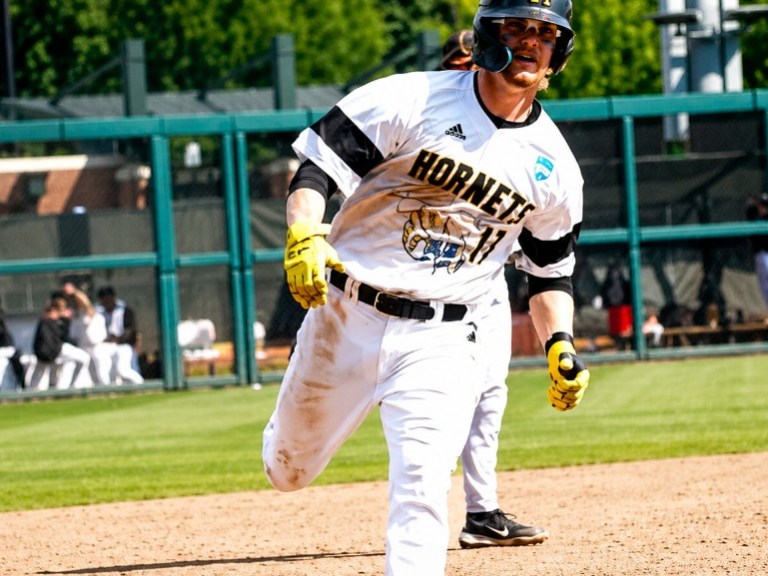
Still, Alabama State never let the game slip away. The Hornets responded in the bottom half of the frame on a two-run homer by Niguel Jenkins that trimmed the deficit to 6-2.
Alabama State picked up a single run in the seventh before answering dramatically in the eighth, bookended by a Cale Clark two-run bomb –his first of the season — to tie the score at 6.
— 11Point7 College Baseball (@11point7) May 30, 2026
Hornets were on verge on upset in extra innings
Oklahoma State broke the tie with a run in the 10th. Alabama State scratched across a run on a bases-loaded walk. With the bases still jammed, Devin Chandler struck out swinging on a 3-2 pitch that sent the game into the 11th inning.
Oklahoma State ESCAPES. Extra innings in Tuscaloosa
— 11Point7 College Baseball (@11point7) May 30, 2026
The Cowboys went ahead for good on a Kollin Ritchie solo homer.
The Hornets had one last chance.
One more inning. One more rally.
But the magic ran out just short of the finish line.
Still, even in defeat, Alabama State walked off that field having made a statement. They didn’t just compete—they proved they belong on this stage. The Hornets out-hit Oklahoma State 11-5 on the afternoon and had a real chance to win in the late innings.
Against one of the nation’s established programs, the Hornets showed grit and the kind of fearless approach that defines postseason surprises.
The scoreboard may read 8-7, Oklahoma State.
But anyone who watched knows Alabama State was right there—one swing, one bounce, one moment away from rewriting the script entirely.
This article is one in a series of features produced in partnership with the Southwestern Athletic Conference, exploring the history of the SWAC from its founding in 1920 to the present day. The series will run in April and May.
The SWAC has had several leaders in the conference’s long and storied history who have made positive changes, and one of its most transformational leaders was already a game-changer before he got the commissioner’s job.
A native of Aliquippa, Pennsylvania, Dr. James Frank had long been an administrator of note in college athletics when the SWAC named him commissioner in 1983.
A standout athlete at Lincoln (Mo.) University, Frank worked as a basketball coach and professor at his alma mater before taking on larger roles in the New York amateur athletic system in the 60s. He was also the first dean of students of Medgar Evers College in Brooklyn before Lincoln came calling again.
This time, Dr. Frank was to serve as president of Lincoln, which he did for eight years.
A Trailblazing Promotion
Photo: NCAA
Then in 1981, the biggest assignment of his career to date came calling.
The NCAA named Dr. Frank, previously the organization’s secretary-treasurer, its new president, making him the first (and to date, only) Black president of college sports’ major governing body.
Even in the early 80s, the question of having a Black man running organizations was always asked, but Frank maintained he didn’t have very many problems in his two years on the job.
“Well, it meant I had reached a certain level of acceptance from my colleagues,” Frank said of his nomination to the presidency. “It showed the NCAA was willing to accept a person with the ability, and the color of his skin did not matter. I can’t vouch that it made everybody happy, but I never once received any indication that I was not welcomed.”
In his two-year stint as president of the NCAA, Dr. Frank oversaw women’s sports and championships, becoming NCAA-sanctioned events, and helped create the Minority Opportunities and Interest Committee, as well as the controversial Proposition 48 initiative that set eligibility guidelines for incoming freshman student-athletes.
“Title IX made it clear that you should make provisions for women in your organization,” Dr. Frank told The Beaver County (PA) Times in 2016. “That was a no-brainer, so to speak, for me. I pushed for women to be included in the NCAA. They had their own championships, and they were a bit hesitant about coming into the NCAA because they felt all the provisions should be taken by men.
“Of course, schools had to open up their pocketbooks and start spending money on women’s sports. I certainly thought it was the right thing to do, and that made it much easier.”
The SWAC calls on James Frank
As Dr. Frank was reshaping the national college sports policy landscape, the SWAC was looking for a new leader to take the conference to the next level.
Even as the strong tradition of schools such as Grambling, Southern, Alcorn State, and Jackson State had long been the SWAC’s calling card, the changing landscape of college athletics in the 80s required more.
With that in mind, Dr. Frank became commissioner in 1983 and set about laying the groundwork for the SWAC to become a notable NCAA institution. He increased corporate sponsorships, championed SWAC coaches and administrators for NCAA committee spots, and recruited Arkansas-Pine Bluff to return, as well as adding Alabama A&M as a new member.
Dr. Frank stepped aside as commissioner in 1998, then returned for an interim stint in 2000 as the conference underwent organizational changes.
A life and career well lived
Frank reflected on his life and times with the satisfaction of knowing he helped change not just the SWAC’s fortunes, but those of college athletics as a whole.
“It meant a great deal to me,” he said. “Simply, because I was able to work with people who were willing to bring about the change. I was one of the people who was in a position to persuade, to talk, to do whatever was necessary to bring about the change.”
The changes James Frank made led to several honors. He is enshrined in the National Black College Hall of Fame, the Lincoln University Hall of Fame, and earned two major awards: the James Corbett Award in 1998 for devotion to college athletics and the Gerald R. Ford Award in 2007, honoring his advocacy of college athletics.
The SWAC has also honored Frank by naming their headquarters after Dr. Frank, as well as the James Frank Cup, awarded to the SWAC school with the most success during the athletic/academic year.
James Frank passed away Jan. 26, 2019, at the age of 88. A life well lived, he was remembered fondly by those who came after him in leadership roles.
“Throughout his memorable career, Dr. Frank spearheaded positive and impactful change, championing diversity and inclusion in college sports,” then-NCAA president Dr. Mark Emmert said. “He holds a special place in NCAA history, serving as both the first African-American and the first college president to hold the positions of secretary-treasurer and membership president.”
“Dr. Frank’s impact and legacy with the NCAA and the Southwestern Athletic Conference is truly remarkable. He was a true pioneer in the field of collegiate athletics, and his vision and legacy continue to positively impact countless student-athletes both past and present,” SWAC commissioner Charles McClelland said. “The Southwestern Athletic Conference will forever be indebted to Dr. Frank and his contributions to the SWAC.”
Alabama State left Friday night’s NCAA Tuscaloosa Regional matchup with plenty to process, but not a shortage of belief.
The Hornets’ 21-3 loss to Alabama told one story. But head coach Jose Vazquez saw another—one rooted less in the opponent and more in missed execution at critical moments.
“Alabama has a really good team,” Vazquez said after the game. “But for us to be in that ballgame and have an opportunity to beat them, we just have to be better.”
Alabama State competed early before miscues
For a brief stretch, Alabama State showed it could be.
After Miguel Oropeza’s home run trimmed the deficit to 3-2, the Hornets had momentum—and a chance to steady the game. Instead, defensive miscues and uncharacteristic mistakes opened the door for Alabama to break things wide open.
“We were hoping to put up a zero right there,” Vazquez said. “We just needed to make plays. Very uncharacteristic of our team.”
On the night, Alabama State committed four errors, which extended innings and led to multiple Crimson Tide runs.
“When you’re playing teams like this, you’ve got to play clean baseball to give yourself a chance,” he said. “We didn’t do that.”
Still, the Hornets’ message after the loss was not about panic—it was about perspective.
Despite the scoreline, Vazquez emphasized that a loss is a loss, whether by one run or 18. What matters now is how Alabama State responds.
“We’re better than that,” he said. “We’ve faced adversity all year. Tomorrow is just another game.”
That mindset is anchored in belief—both in the team’s resilience and in the unpredictability of baseball itself.
“Baseball is a weird game,” Vazquez added. “I’ve seen teams do it. I believe in my guys.”
For Oropeza, the SWAC Baseball Tournament MVP, that belief has been built over months of work. His home run provided one of the few bright moments Friday, but his focus remains on the bigger picture.
“We’ve been working hard since the beginning,” Oropeza said. “In the field, in the weight room, in the classroom—everywhere. That hard work has paid off.”
Now, it faces its next test.
Alabama State turns the page quickly, preparing for an elimination matchup against Oklahoma State at 2 p.m ET.
“We’re not done,” he said. “We’re going to come out, compete, and battle.”
In 2026, the rivalry takes center stage once again with a national audience watching.
Set for Sunday, Sept. 6 at 12 p.m. EST, the Labor Day Classic will be broadcast live on ESPN2, giving the historic SWAC clash a prime platform early in the college football season.
It is the first time since the 2019 season that the matchup will be a non-night game.
For decades, Prairie View A&M and Texas Southern have delivered high-energy, emotion-filled battles that extend far beyond the gridiron.
Prairie View, Texas Southern enter Labor Day Classic riding high
Last year’s meeting added another chapter to the rivalry’s storied history, and expectations are already building for what 2026 could bring. Prairie View beat Texas Southern in a 22-21 thriller. The Panthers would go on to win the SWAC West and SWAC championship and make the program’s first-ever appearance in the Celebration Bowl.
Texas Southern is considered to be a contender in the division after winning seven games last season.
Both programs are looking to make early statements in SWAC play, and a win in this spotlight matchup could set the tone for the rest of the season.
The national television slot on ESPN2 also signals continued recognition of the importance of HBCU football on the broader college sports landscape. Games like this not only showcase talent but highlight the traditions, pageantry, and community that make HBCU matchups unique.
For fans, alumni, and supporters, the Labor Day Classic will once again be about more than just football. It will be about the enduring energy of a rivalry that continues to define both teams.
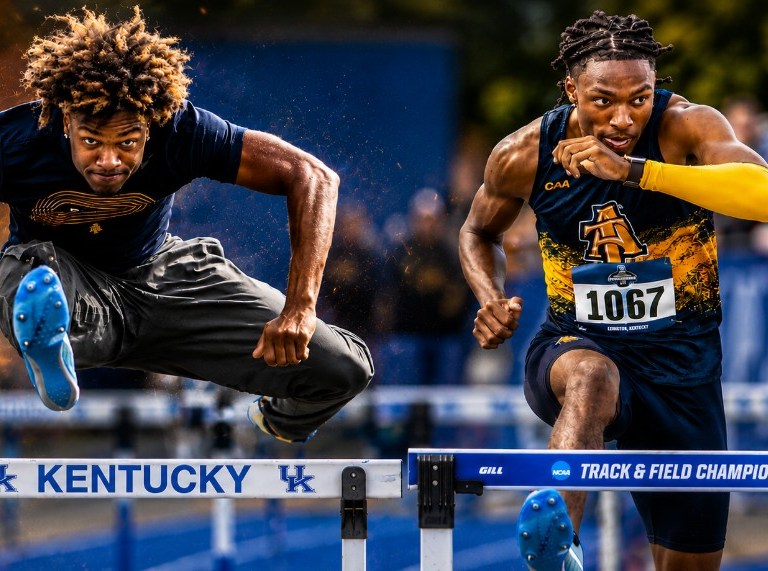
North Carolina A&T’s Taylor twins are quickly turning the NCAA Track and Field Championships into a family affair.
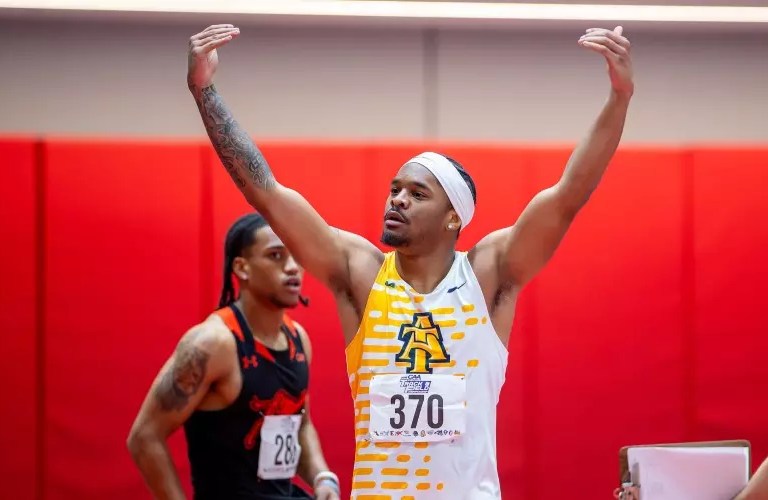
Xzaviah Taylor looked in control early in the fifth heat Friday, appearing poised to secure a win. While he didn’t take the top spot, the Aggies standout still delivered when it mattered most, clocking 49.756 to finish seventh and advance to the East Regional quarterfinals.
It marked just the second time in his career he’s dipped under the 50-second barrier, reinforcing his consistency at an elite level.
But once again, it was his twin brother Isaiah who edged him at the line.
Running in the sixth heat, Isaiah Taylor continued his late-season surge with a breakout performance, placing third in 49.753—a personal record and his first time breaking 50 seconds.
The performance not only secured his place in the next round but also extended a recent trend: Isaiah has now finished ahead of Xzaviah in back-to-back races, including his victory at the CAA Outdoor Championships at Elon just two weeks ago.
What makes the moment even more compelling is the bounce-back factor. After a disappointing showing in the 110-meter hurdles earlier in the meet, Isaiah responded with one of the best races of his career, showing both resilience and momentum at the right time.
Survive and advance 🫱🏽🫲🏼 One step closer to Eugene as four of the Aggie men advance to Friday’s quarterfinals 😤#AggiePride 💙💛 pic.twitter.com/iJFaLFFICR
Now, with both brothers advancing, the spotlight shifts to the quarterfinals, where the Taylor twins will once again share the track—this time with even higher stakes.
They’re scheduled to compete Friday at 7:25 p.m., each chasing a spot in the semifinals, adding an extra layer of intrigue to A&T’s postseason run.
For the Aggies, it’s a win-win. For the Taylors, it’s personal — in a good way.