
This article is one in a series of features produced in partnership with the Southwestern Athletic Conference, exploring the history of the SWAC from its founding in 1920 to the present day. The series will run during the months of April and May.
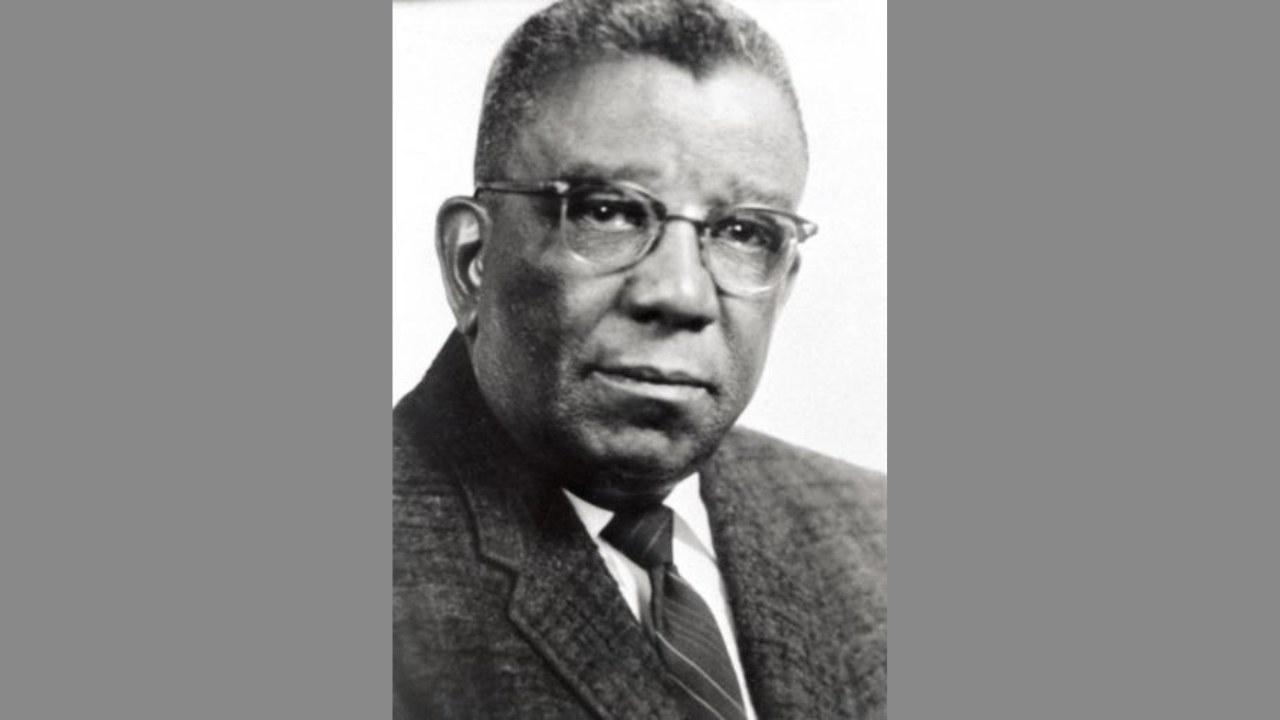
It could be argued that Arnett “Ace” Mumford is one of the greatest college football coaches you have never heard of — at least outside of HBCU circles.
Ace Mumford won six Black College National Championships, including one at Texas College in 1935 and five at Southern University in 1948, 1949, 1950, 1954, and 1960. His record at Southern was 169 wins, 52 losses, and 14 ties. He coached for nearly four decades, compiling a career record of 233-85-23 across stops at Jarvis Christian, Bishop, Texas College, and Southern. And yet, outside the HBCU community and the Southern University faithful, most people are unaware of his name.
A long way from Buckhannon
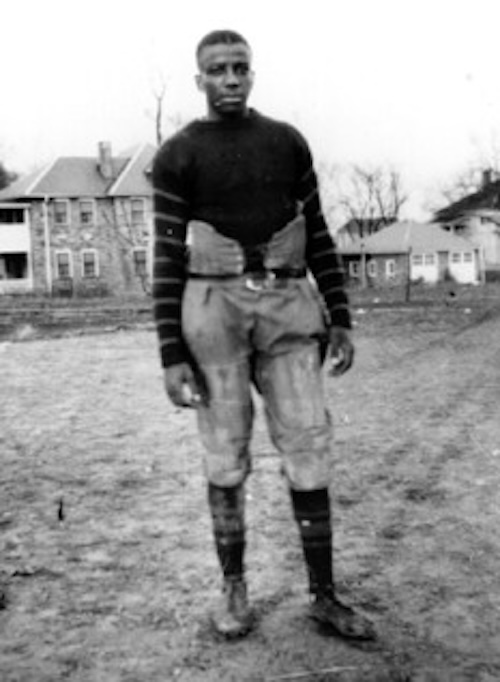 Mumford was born in Buckhannon, West Virginia, in 1898. It was a small Appalachian town where Black children simply did not have access to a school. So at seven years old, he left home and moved in with relatives about 90 miles away just to go to school.
He eventually graduated from Wilberforce University in 1924 and immediately began coaching. His first job came at Jarvis Christian College in Texas, followed by a stint at Bishop College, where he coached football, basketball, and baseball simultaneously. By the early 1930s, he had taken over as head coach at Texas College, and it was there that Southern University officials first took notice of Mumford, under circumstances no one saw coming.
Mumford’s Texas College team made the trip to Baton Rouge to face Southern, in a game the Jaguars lost. After the game, a Southern University dean accused Munford’s players of stealing items from the school. Mumford did not argue, and he did not protest. Instead, he ordered every player off the bus and had them display their personal belongings right there on the spot until the missing items were located.
The people at Southern were watching. They were witnessing a man who commanded his players’ respect, held them to an extremely high standard, and refused to let the moment become a distraction. In 1936, Southern called on Mumford to become the school’s head football coach, and he would not leave for 25 years.
Building something that had never been done
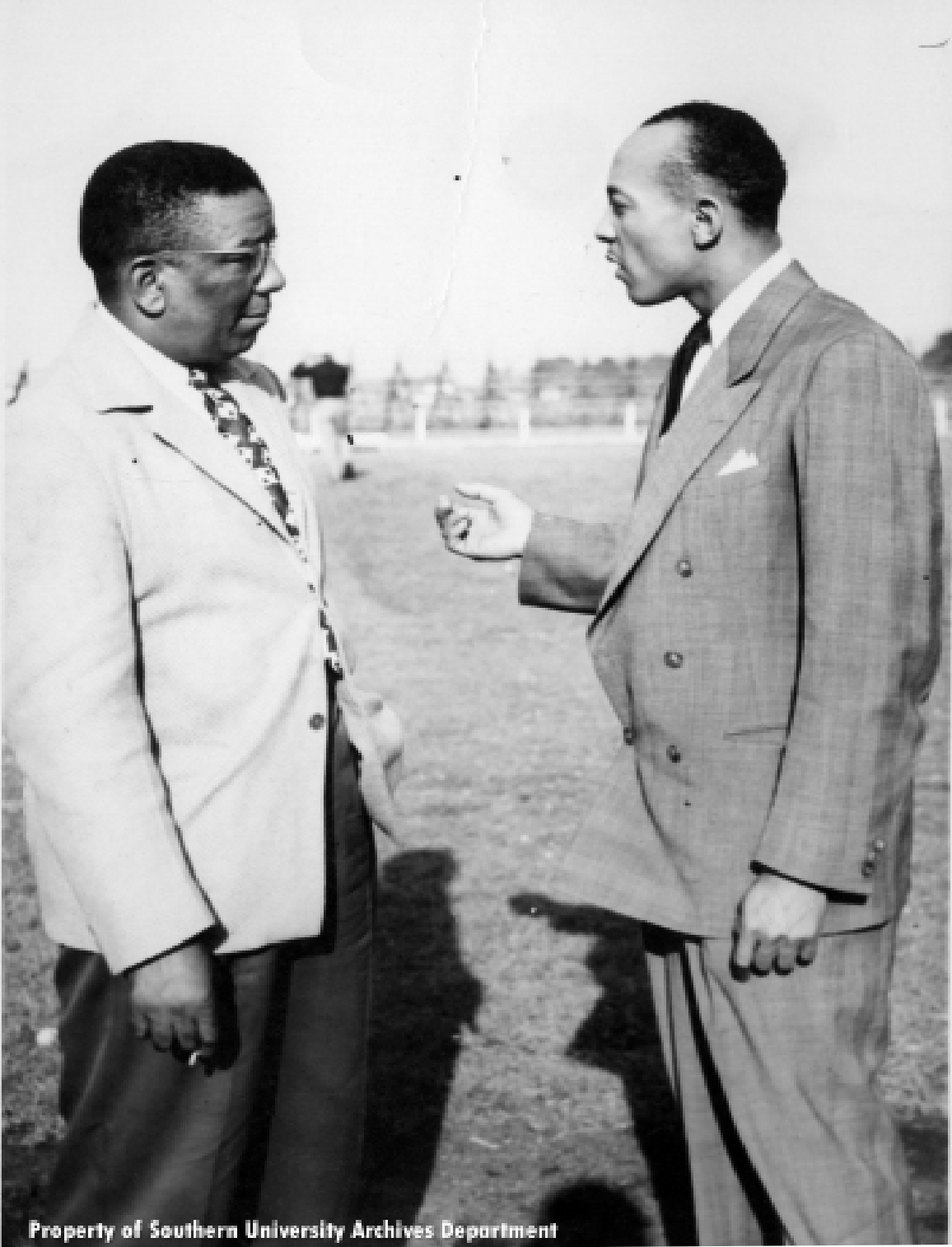
What Mumford built at Southern over the next two and a half decades was unlike anything the SWAC had seen before.
His system was built around a scheme that put a premium on quickness and precision over raw power. He was a perfectionist who ran practice deep into the night, drilling the same play over and over until it was right. When darkness fell, and visibility dropped, he did not call it a day—he used a white football so his players could see it clearly and keep working.
His philosophy on game management was unique. His teams almost never attempted field goals. In one stretch, Southern made just three successful kicks across an entire decade. Mumford believed in moving the chains and finishing drives. Settling for three points when seven were available was not in his vocabulary, and the scoreboard reflected it. His 1946 team went 9-2-1, won the conference title, and outscored opponents 390-95.
Then came the stretch that cemented his place in SWAC history. Three consecutive black college national championships from 1948 to 1950, which were anchored by a 38-game unbeaten streak that ran through the 1951 season. He would add two more national titles in 1954 and 1960, bringing his total to five at Southern alone. Over the course of his tenure, his teams produced more than 40 All-Americans. He also served simultaneously as Southern’s athletic director, and in 1941, he coached the Jaguars basketball team to a black college national championship, making him one of the rare coaches in HBCU history to claim titles in multiple sports.
The standard Ace Mumford left behind
Off the field, Mumford’s influence was just as lasting.
He was known throughout the SWAC as a coach who treated his players’ education as seriously as their performance on Saturdays. He made it clear that obtaining a degree came first and that the purpose of the program extended beyond wins and losses. It was a standard that shaped how Southern University carried itself for generations after he was gone, not just in athletics but in how the institution understood its responsibility in competition.
“He had one of the finest minds in football. I learned a lot from him,” legendary Grambling coach Eddie Robinson said of him. “He was a coach’s coach. He was on top of everything. He was very innovative. He worked for perfection.”
Mumford died on April 28, 1962, not in a hospital bed and not in retirement. He died on a track, directing a meet. It was said of him that he died in his cleats, and for a man who gave nearly four decades to his athletes, there is something fitting about that.
The honors came, eventually. He was inducted into the College Football Hall of Fame in 2001. Southern University named its football field after him. His name appears in the halls of fame across eight different organizations, and a life-sized statue was unveiled on the Southern campus in 2016.