MEAC women’s hoops preseason favorite Howard falls at UMES

Screenshot 2026 01 10 162513
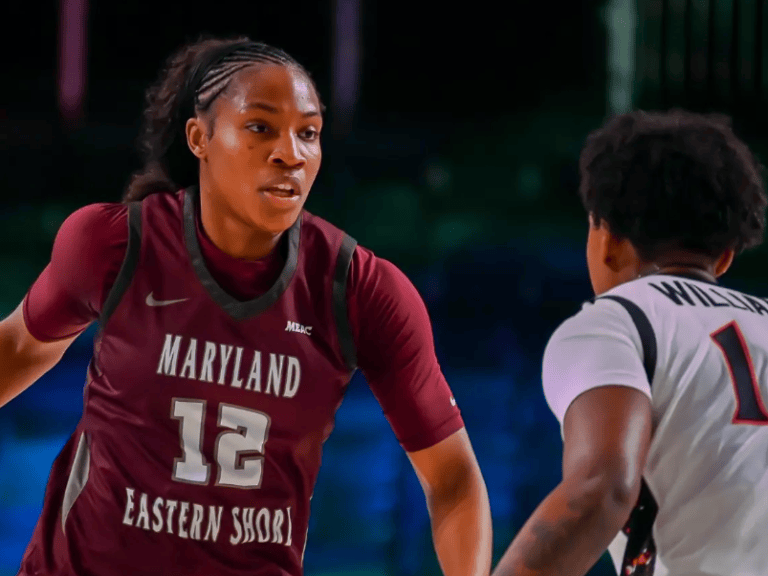
The first week-plus of MEAC basketball has seen some stunning results and Saturday’s women’s game at Maryland Eastern Shore provided another.

Senior forward Brianna Barnes‘ basket with 1:29 left in the fourth quarter was the difference as the Fighting Hawks stunned preseason conference favorite Howard 62-56, improving to 3-0 in MEAC play and 9-10 on the season. After the win, Maryland Eastern Shore stands alone in first place in the conference standings.

Barnes’ winning basket came off of a steal by Kaliya Perry, who found the senior for two of her game-high 22 points to give UMES a 55-53 lead.

After two Kalise Hill foul shots pushed the Hawks’ lead to 57-53, Howard guard Ariella Henigan nailed a three-pointer to pull the Bison (12-7, 2-1 MEAC) within a point with 30 seconds left, but Howard would not score again and four free throws from Barnes and one from Dakieran Turner closed out the scoring.

Zennia Thomas led Howard with 18 points and Henigan added 11.  Hill joined Barnes in double figures for UMES with 11 points.


New Savannah State coach is setting a championship or bust bar out the gate

Blue And White Corporate Virtual Meeting Zoom Virtual Background 8

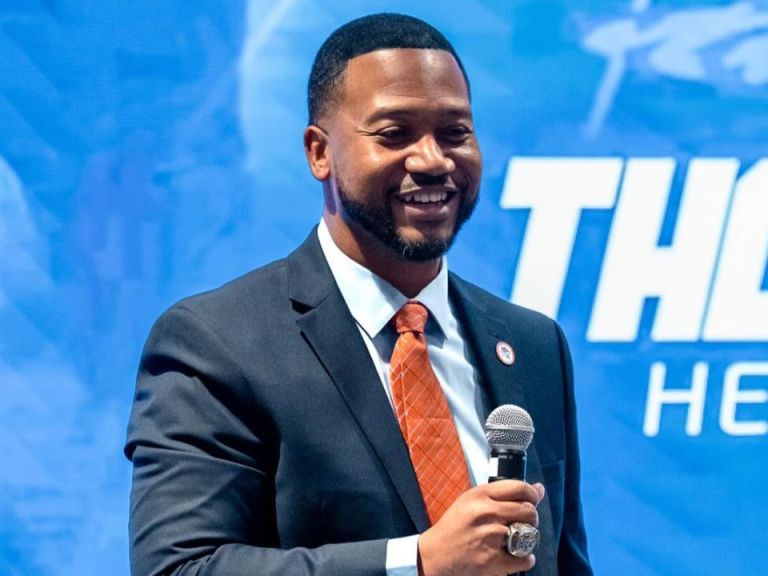
Thomas Howard wasted no time setting the bar high for Savannah State football.

The newly appointed head coach openly stated that nothing short of a championship will meet his expectations in year one.

“Expectations are to win a championship in the first season,” Howard said on Thursday, underscoring a sense of urgency that leaves little room for lengthy rebuilds.

Howard comes to Savannah State with an extensive resume that includes developing some of the top defenses at the HBCU level.

Most recently, he served as the defensive coordinator and linebackers coach at Fayetteville State, where he helped guide the Broncos to a 6–1 record in Central Intercollegiate Athletic Association play.

His defense ranked among the nation’s best, finishing top 15 in rushing defense, top five in sacks, and top 10 in tackles for loss, while leading the CIAA in all four categories, including interceptions.

Photo: Savannah State

With the changing landscape of the SIAC, Howard believes the timing presents an opportunity for Savannah State to move quickly into contention after a 4-6 season in 2025.

Howard emphasized that reaching that goal will hinge on assembling the right roster and staff, describing his immediate focus as talent evaluation and acquisition.

“There’s a chance if we get the right guys in here in order to do that, and so that’s what I’m tasked with right now on the staff,” he explained, noting that work is already underway to identify and bring in players who fit his vision.

For the first-year head coach, the process is simple in theory but demanding in execution: build a staff, recruit aggressively, and move fast.

“We’ll get to work with that so that we get the right guys in here and we can move forward so we can win all those championships early,” Howard said, offering a glimpse of the ambitious standard he plans to bring to Savannah State football.

SWAC East champion Jackson State bolster defense with FBS transfer

Blue And White Corporate Virtual Meeting Zoom Virtual Background 7
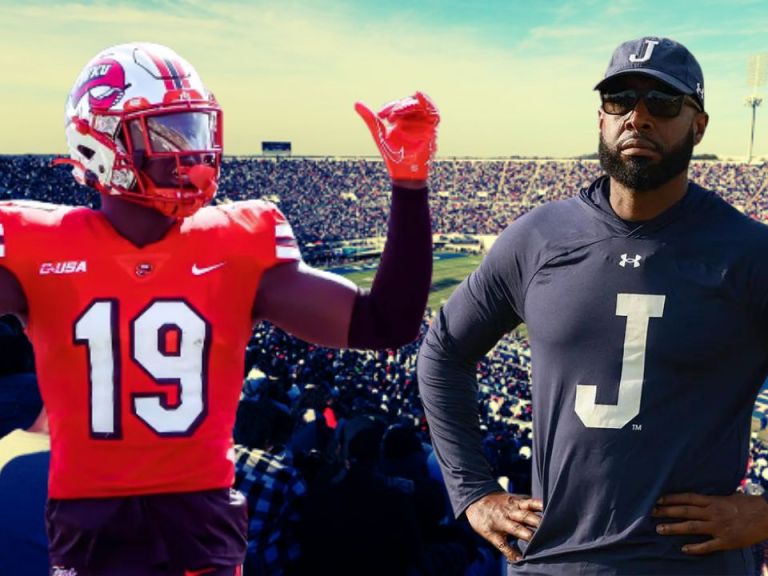
Jackson State football continued its offseason roster overhaul this week, securing two significant defensive transfers as head coach T.C. Taylor looks to sustain momentum after winning the SWAC East.

The Tigers landed Tennessee State linebacker Micah Gay, who tallied 71 tackles, 5.5 tackles for loss, two interceptions, and a fumble recovery during the 2025 season.

Joining him is Virgil Marshall, a defensive back from Western Kentucky who recorded 41 tackles, four pass breakups, two tackles for loss, and an interception.

The additions bolster a defense that will look to fill the void left by several key departures, including All-SWAC rusher Ahmad Miller. Taylor and his staff have made clear their focus on reloading through the transfer portal, which remains open through January 16.

Fans have shown growing excitement online as Jackson State continues to host potential transfers, with more visits expected in the coming days. The new commitments underscore the program’s determination to return to the SWAC Championship and take the next step in 2026.

HBCU defensive back to sign with Lane Kiffin and LSU from transfer portal

Untitled Design 7
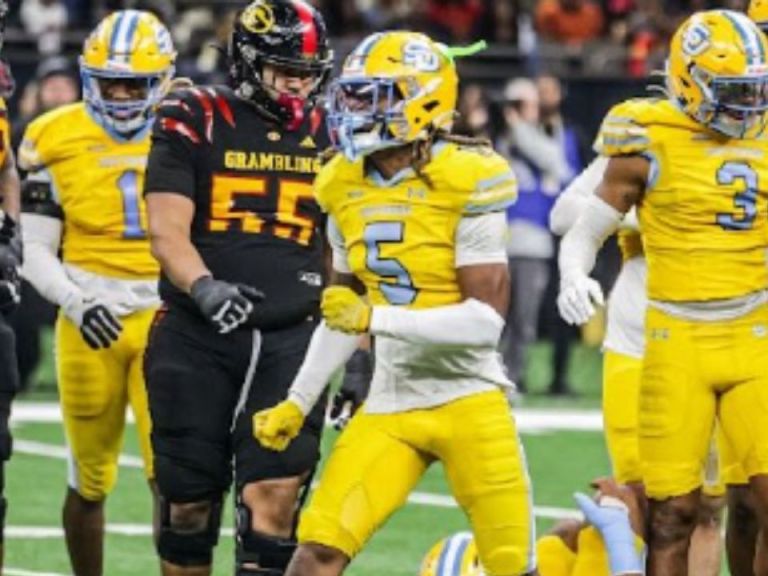
Baton Rouge native and former Southern University defensive back Treylan James has committed to Lane Kiffin and the LSU Tigers, announcing his decision publicly on Friday as he prepares to join the program for the 2026 season.

The move keeps the versatile safety in his hometown while giving LSU another presence on the back end of its defense.

James, a 6-foot-3, 190-pound redshirt sophomore, is coming off a productive 2025 campaign at Southern, where he totaled 26 tackles, 3 tackles for loss, and 5 pass breakups for the Jaguars before entering the transfer portal on Jan.2.

The season marked his first year back in Baton Rouge after an earlier stop at Prairie View A&M, where he appeared in 10 games over two seasons and recorded 16 tackles as he adjusted to the college game.

His latest move to LSU signals both his development and the Tigers’ willingness to mine the portal for experienced defensive backs with college production and multiple years of eligibility remaining.

For Kiffin and his staff, James offers length, physicality and scheme flexibility on the back end, with experience at safety and the size to match up with bigger receivers and tight ends in space, according to LSU analysts.

For James, the commitment represents a full-circle moment: from overlooked high school prospect to HBCU contributor to Power Four defensive back, all without ever leaving his hometown.

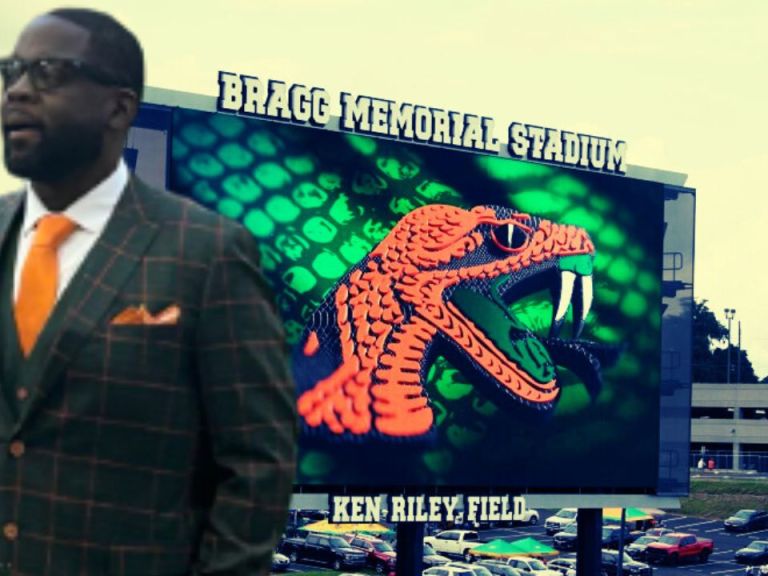
All in and back home: Quinn Gray’s Return sparks new era for FAMU football

Untitled Design 6

Introduced to the song “Don’t Call It A Comeback” by L.L. Cool J, Quinn Gray didn’t need a script. He didn’t need polish.

What he needed—and what he delivered—was heart.

“This is a dream come true for me,” Gray said on Friday, pacing the stage and scanning a sea of green and orange faces. “Because I’m home, I won’t be as politically correct either.”

It was part homecoming, part revival, and fully a rallying cry as the former Florida A&M quarterback officially took the reins of the program he once led on the field.

With emotion cracking his voice and conviction in his stride, Gray introduced himself not as a former record-setting signal-caller, but as a national championship-winning coach intent on restoring FAMU to the top of the SWAC after a 12-12 record during two unsatisfying seasons under James Colzie.

“I am not the 19-year-old Quinn Gray that played against Youngstown State,” he said. “I am a leader of men who’s gonna take this program back where it belongs—at the top. Not just of HBCU football, but all of FCS.”

Coming Full Circle and Restoring the strike

Gray’s story is one Rattler Nation already knows by heart: a Jefferson County native who found his purpose on The Hill, starred under legendary coach Billy Joe, and went on to lead Albany State to a historic 12-win season and a deep run in the 2025 Division II playoffs.

Gray’s message quickly turned from nostalgia to mission.

He challenged fans to join him in matching that attitude of urgency. “I’m not waiting three years to ask for help,” he said. “I need it now.”

Gray’s respect for history anchored much of his talk. He invoked names like Jake Gaither, Rudy Hubbard, Ken Riley, Billy Joe, and Willie Simmons—all standard-bearers of Rattler past greatness.

“If you don’t understand the foundation you stand on,” he said, “how can you build on it?”

Behind the challenge was an unmistakable plea—for commitment, resources, and presence. The new coach didn’t mince words about facility needs, recruiting realities, or the evolving NIL landscape.

“That building over there’s been standing since 1982,” Gray said. “We can keep putting lipstick on the pig if we want. But it’s time to do better for our young people. They deserve that.”

He promised a program defined by love, accountability, and academic focus—and one that rewards effort with the honor of walking onto Ken Riley Field. “You earn the right to play in Bragg Stadium,” he said. “And that orange and green means something.”

Before stepping away to meet recruits, Gray left the crowd with one final assurance: “I’m excited, y’all. But nobody’s more excited than me—except my wife. Because I’m home.”

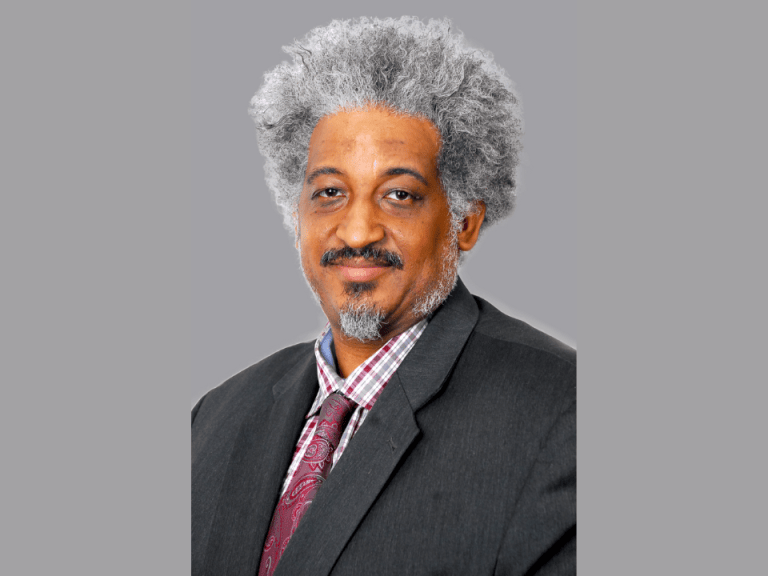
What HBCU fans miss: Dr. Kenyatta Cavil on NIL, metrics, and leadership

Kenyatta Cavil
For more than two decades, Dr. Kenyatta Cavil has operated in spaces most fans never see, quietly shaping conversations around HBCU athletics from behind the scenes.

In a wide-ranging discussion with Kenn Rashad during the HBCU Sports 12-hour Pod-a-Thon, Cavil unpacked the realities of NIL, leadership, and decision-making in Black college athletics, explaining why emotion so often outweighs data and why that disconnect matters.

“We have too many people saying things because they feel it,” Cavil said, “versus really understanding how to deal with metrics that tell the stories.”

Drawing on his background in engineering, academia, and consulting, Cavil also provided valuable insight into why presidents and athletic directors are often reluctant to share information publicly.

“Most times, it’s not about justification,” he explained. “It’s about self-preservation.”

The conversation revisits the early days of HBCU online communities, when platforms like HBCU Sports helped connect fans, institutions, and media long before the advent of social media, while challenging audiences to better understand how decisions are made today.

What follows is an honest look at what many fans don’t see and what HBCU athletics will require moving forward.

Watch the full video.

HBCU coaches and high schools must work together for greater good

Screenshot 2026 01 08 162233
HBCU football programs are still in flux thanks to the transfer portal, which is open for one more week as of Friday.

The portal’s effect on college football isn’t limited to just the current group of collegiate players, but also high school players hoping to be recruited.

According to Morgan State director of football operations Gerald Huggins II, high school coaches should look within for answers regarding today’s recruiting climate.

“HS Coaches; You share some of the blame for the current recruiting landscape,” Huggins posted on X Wednesday morning. “Having worked at a DII and FCS HBCU program, I see how we’re treated compared to other institutions when we come into your building.”

Huggins followed with another post, saying “When we decide to go the portal route, those top guys you hid from us need a home, because the schools you rather cater to dropped them, and now it’s “does anybody recruit HS anymore?

We’re not a priority until we’re your only option.”

Huggins’ statements were met with a mix of backlash and agreement from high school and college coaches alike, which begs the question: was Huggins right in his assessment?

I can’t say he’s wrong, that’s for sure.

The dismissal of HBCU athletics programs is the culmination of a 50-year project known as desegregation, or integration if you prefer.

When major Division I programs (which have now consolidated to the Power 4/Group of 5) started recruiting Black kids in the 70s, Black College sports suffered greatly.

Fast forward to 2026 and it’s genuinely a surprise when an athlete in any sport with a three-to-five-star ranking considers an HBCU.

This is a problem that has many causes. Some HBCU coaches are so turned off by the treatment they receive at some high schools that they may write off them off. 

There’s also the “street agent” aspect that Texas Southern football coach Cris Dishman mentioned as a lot of parents and athletes have “advisors” (in quotation marks for a reason) who have little interest in doing what’s right for the kids; they just want to be seen.

That mostly comes at the expense of HBCUs because these “agents” feel our athletic programs are inferior to PWI mid-majors and the Group of 5/Power 4 level.

While the problem has many causes, are there solutions? A few, in fact.

From the coaches and recruiters’ side of it, relationship building is key. While not an athlete (worth talking about anyway) or a coach, my experience as a journalist has shown me that you must build strong relationships with sources such as coaches, athletes and administrators so you can do your job as a reporter.

HBCU coaches will need to build relationships with high school coaches, administrators, parents and so on but only the ones who are interested in doing so. 

As the old saying goes, “Go where you’re celebrated, not where you’re tolerated.”

On the other side, high school stakeholders should be willing to give HBCUs a chance instead of dismissing the athletics programs, education and experience as inferior. 

The ultimate goal should be 1) a great education 2) plenty of playing time and 3) finding a school that is willing to pay the most for said education.

As the portal turns, college coaches will likely need to resume strong relationships at the high school level and high school coaches must remain open-minded about where they can and should go.

This new era of college athletics is here to stay. It would be beneficial to HBCU and high school coaches to work together to survive a game that only a select few can play at this point and time.

Which Division I HBCU league had the best non-conference record?

Chris Mosley
As the 2025 FCS football season closed, final conference records painted a familiar picture of power balance across the subdivision.

But for followers of HBCU football, the real storyline came further down the standings.

The MEAC posted a 12–14 mark, finishing eighth out of fourteen conferences — a respectable showing that placed it ahead of the Southland, SoCon, and notably, the SWAC, which ended the season at the bottom of the standings with a 4–11 record.

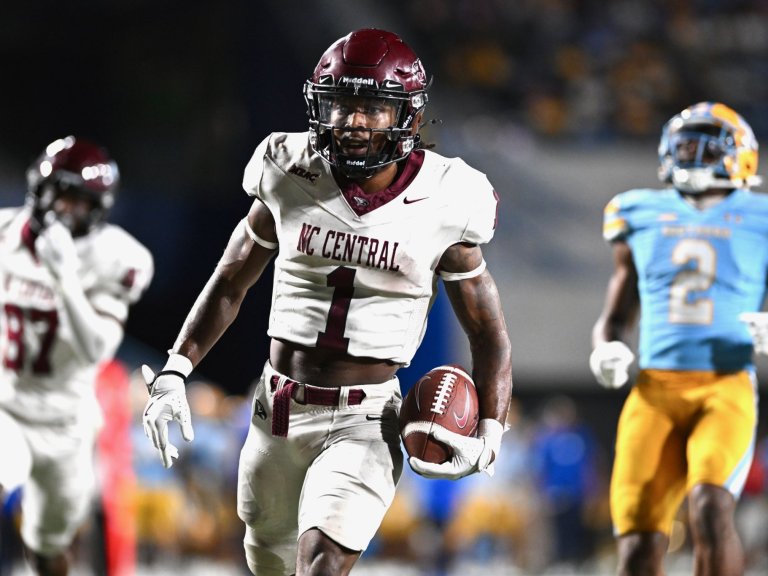
MEAC programs such as Delaware State, South Carolina State and North Carolina Central managed key non-conference victories that buoyed the league’s overall standing.

The conference’s disciplined defenses and improving offensive consistency kept it competitive in interleague matchups.

Meanwhile, SWAC teams, struggled in cross-conference contests, managing only four wins against FCS opponents.

While both conferences continue to serve as vital cultural and athletic cornerstones in Black college football, the gap in on-field performance remains a challenge.

The MEAC’s slight edge in 2025 may reflect its smaller size and tighter competitive balance, whereas the SWAC is top-heavy.

As the 2026 season approaches, both conferences will look to strengthen their national profiles  reassert their legacies with stronger non-conference showings.

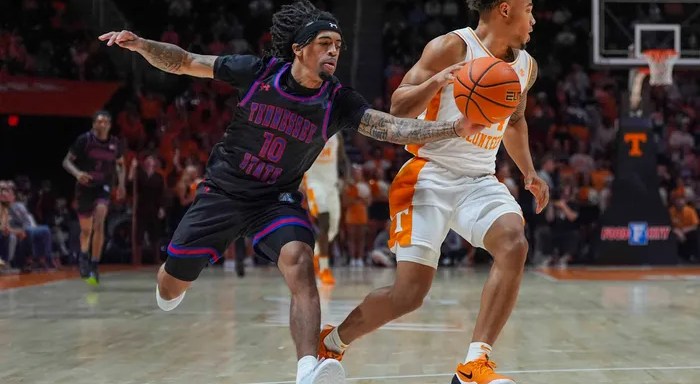
A 6th-year senior who transferred four times is ‘winner’ Tennessee State needed

Harris Tennessee State
Sixth-year guard Dante Harris is closing the final chapter of a college basketball journey that has taken him from the Big East to the ACC to Tennessee State.

When first-year head coach Nolan Smith evaluated his roster ahead of his inaugural season at TSU, one need stood out above the rest: a floor general.

Smith wanted someone who had seen the game at its highest levels, someone comfortable in hostile gyms and late-game situations, and someone who could help anchor a program being built day by day. Harris, who previously played for Smith when he was an assistant coach at Memphis, fit that vision.

“Dante is a winner,” Smith said during a postgame interview with Main Street Media of Tennessee reporter Blain Kellar. “He’s been in big games and tough environments. That experience matters.”

With Harris leading the way, Tennessee State is 9-5 overall and 3-1 in Ohio Valley Conference play as of Wednesday.

Harris’ unconventional path to an HBCU

Harris’ path to Tennessee State has been anything but conventional, even by the standards of the transfer portal era. The 2025–26 season marks his sixth year of college basketball and his fourth stop — Georgetown, Virginia, Memphis and now TSU — with two of those stops connected by Smith.

Photo: Georgetown Athletics

Harris briefly returned to Virginia before transferring again, joining Memphis in December 2024. The midseason move required quick adjustments, but he became part of a veteran group that captured the American Athletic Conference championship. Smith, then an assistant with the Tigers, had already seen firsthand the impact Harris could have on a team beyond the box score.

That established trust helped guide Harris to Tennessee State, a program seeking stability and leadership as Smith stepped into his first head coaching role.

Read the rest of the story at tsutigers.com.

SWAC champion Prairie View non-conference schedule is a gauntlet

Untitled Design 5
Prairie View A&M is wasting no time testing the mettle of its defending SWAC champions.

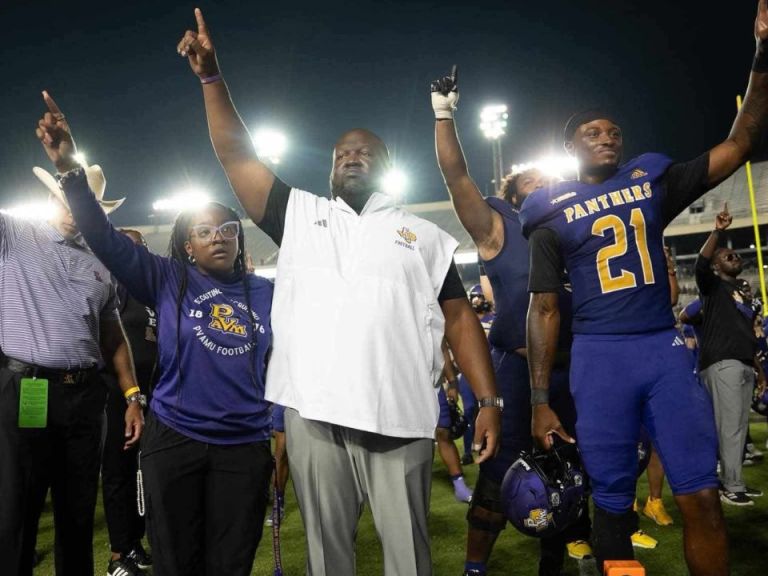
The Panthers, which fell just short of winning the HBCU national championship after a loss in the Celebration Bowl to South Carolina State,  unveiled a nonconference slate that reads like a gauntlet, headlined by a September road trip to a Big 12 power and showdowns against FCS playoff teams.

The graphic released by the program highlights four dates: an Aug. 29 opener against Tarleton State, a Sept. 12 matchup with Baylor, a Sept. 19 meeting with Stephen F. Austin, and an Oct. 24 contest with East Texas A&M.

Each opponent represents a different style and challenge, giving Prairie View an early-season schedule that mirrors a playoff bracket more than a warmup calendar.​

The design underscores the message that Prairie View is not easing into its title defense but embracing the target on its back with a schedule that could sharpen the roster long before conference play begins.​

After all, head coach Tremaine Jackson said before last season that he wanted Prairie View to be an elite FCS program.

Tough tests, big stages

Facing Baylor in mid-September offers the program a marquee stage, exposure for its playmakers, and a measuring stick against a tradition-rich FBS opponent.

The other Texas matchups, including Tarleton State and Stephen F. Austin (FCS playoff qualifiers) and East Texas A&M, keep the Panthers locked into regional bragging rights battles that often spill over into recruiting and transfer-portal perception.​

Photo: Prairie View athletics/X

By front-loading the year with physical, high-profile games, Prairie View positions itself to be battle-tested when it turns back to the SWAC grind. If the Panthers navigate the nonconference slate with momentum, the program’s bold scheduling could set the tone for another championship push.