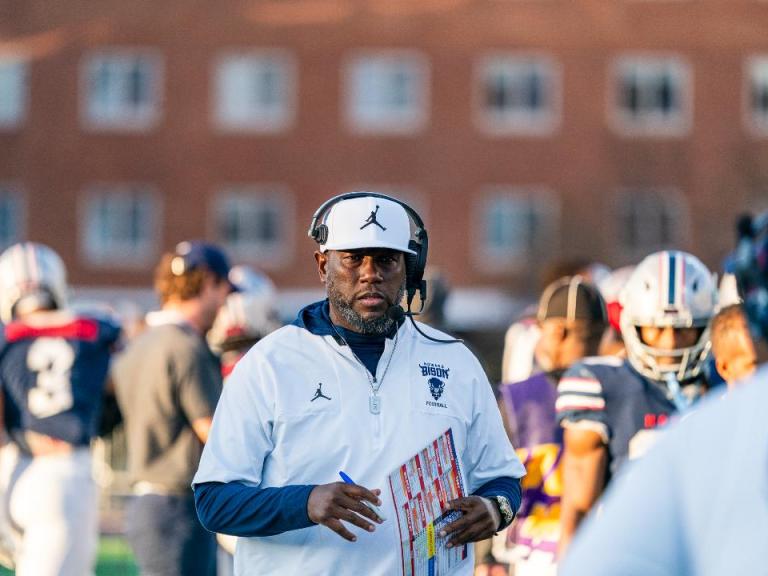
Larry Scott surprisingly exited Howard for the familiar confines of the FBS in the offseason.
The former Bison coach, who led the program to a pair of MEAC titles and a trip to the Celebration Bowl, is now an assistant at Auburn under Alex Golesh.
Scott recently explained why it was the best decision for him to leave the HBCU for an SEC job.
“It was a tough decision,” Scott told the Montgomery Advertiser earlier this month. “It was a real tough decision, because it not only impacted me and all the young men that we’ve had a chance to bring in there and recruit there, but other coaches and other support staff and people in their lives. The impact that one person’s decision has on a lot of different people obviously comes with a heavy burden, and it was very cumbersome for me.”
In the two seasons that followed their Celebration Bowl appearance, the Bison combined for a 9-15 overall record, including a 3-7 conference record.
Before taking on the role of head coach at Howard, Scott served multiple stints as a tight ends coach over a span of 13 years. These include stops at his alma mater, South Florida, Miami, Tennessee, and Florida.
Scott added that he felt Howard had reached its peak under his direction. The Auburn opportunity, he said, offered both a return closer to his home state of Florida and a chance to work at what he considers one of college football’s elite programs.
“An opportunity to coach at Auburn University, a place that is capable of playing for national titles, year in and year out,” Scott said. “The brand that is Auburn, and then the people.”
Howard will roll with former Bison quarterback Ted White as head coach for the 2026 season.
The Rams ended the regular season portion of the schedule unbeaten at home after a 78-40 win over Shaw.
The victory also marked a historic milestone for the program, which won a regular-season record 22 games and finished the home slate 13-0.
Makayla Waleed led a balanced WSSU attack with 18 points, while Kierran Walker added 14. The Rams shot 40.6 percent (28-of-69) from the field, connected on seven of 24 attempts from beyond the arc, and converted 15 of 20 free throws. They also dominated the glass with 38 rebounds and forced 24 Shaw turnovers.
Winston-Salem State wasted no time setting the tone, jumping out to an early 8–0 lead behind a pair of early buckets, including a Walker three-pointer less than three minutes into the game. Another triple by Walker extended the margin to 15–6, and the Rams carried a 24–13 advantage into the second quarter.
In the second frame, the Rams’ pressure defense and fast-paced offense blew the game open. Two free throws from Ah’Kiyah Pye pushed the lead to 28–13, and a late floater from Alana Biosse capped a 21–5 run, sending WSSU into the break with a 45–18 cushion.
The Rams continued to pour it on in the third, outscoring the Bears 19–6 to take a commanding 63–24 lead and cruised to the finish.
With the win, Winston-Salem State remains firmly atop the CIAA South standings as the postseason approaches.
Both the Howard men’s and women’s basketball teams were stunned by Maryland Eastern Shore last month in close losses at the Hawks’ home gym.
The Bison made sure there was no doubt at Burr Gymnasium as the women won 66-45 and the men took home a 79-53 win.
The Howard women now lead Norfolk State by a full game and UMES by two in the MEAC basketball standings.
After a Kalise Hill steal and basket to the tie the game at 19 late in the first quarter, Howard led the rest of the way, highlighted by a 25-7 third quarter advantage that gave them a 52-28 lead going into the fourth.
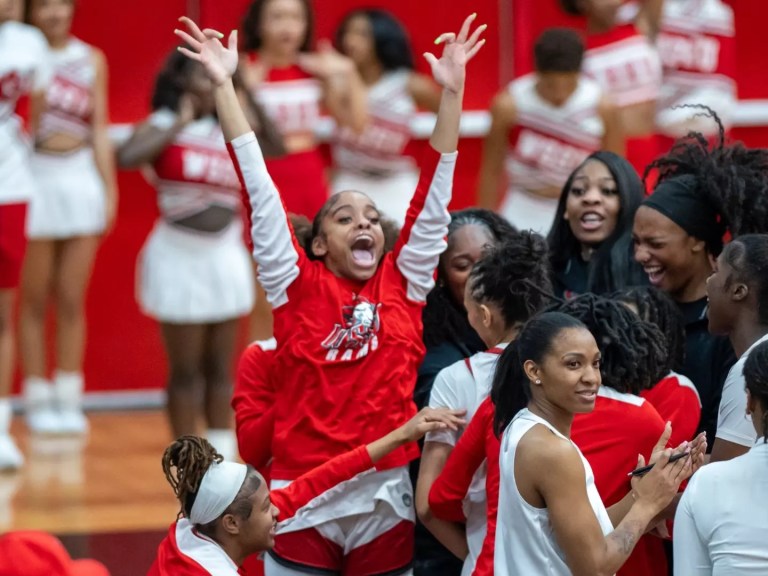
Don’t look now, but Howard is back on top of the MEAC. The Bison were working on all cylinders in a 66-45 take-down of Maryland Eastern Shore.
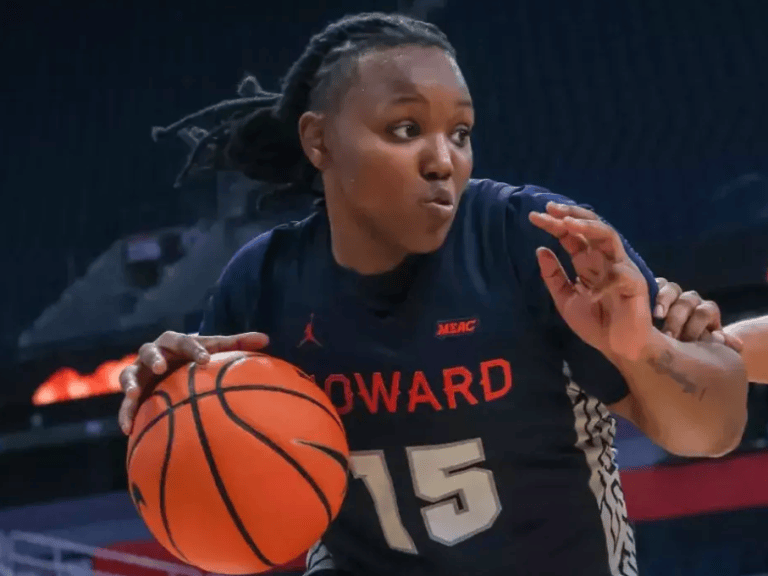
Sophomore guard April Edwards led the Bison (19-7 overall, 9-1 MEAC) with a game-high 15 points. Zoe Stewart and Zennia Thomas joined Edwards in double figures with 14 and 10 points respectively.
Lainey Allen scored 12 points to lead UMES (14-13 overall), who has lost two MEAC games in a row to fall into third place at 7-3.
The men’s game featured more of the same as Howard (16-10 overall, 6-3 MEAC) overcame a brief 4-3 deficit to lead by as many as 16 (41-25) in the first half after a Travelle Bryson putback and free throw.
The Bison put the game away with a 16-5 run to start the second half and opened a 77-47 lead on a Cedric Taylor III basket with three minutes remaining in the game.
Taylor, a transfer from Morehouse College, led Howard with 22 points, while Bryce Harris and Bryson contributed 17 and 16 points respectively.
UMES (8-18) has lost five MEAC games in a row after a 4-0 start. They were led by Trey Brown with 14 points.
The Bulldogs (16-9 overall, 12-1 SWAC) trailed briefly early before seizing control with a 24-8 run to close the first quarter. By halftime, AAMU had built a 43-20 cushion and never looked back, cruising to a season-series split with the Devilettes (4-19, 3-9 SWAC).
Kalia Walker led four Bulldogs in double figures with 22 points, adding three rebounds, two assists, and two steals. Coriah Beck recorded a double-double with 18 points and 11 rebounds to go with six assists and three steals.
Aniya Palmer nearly notched a double-double of her own with 13 points and nine boards, while Jaida Belton added 12 points and a team-high 13 rebounds.
Sydney Thompson paced Mississippi Valley with 12 points and two steals, and Ariel Jefferson chipped in 11 points.
AAMU’s defensive pressure set the tone early as the Bulldogs forced turnovers and cashed in transition opportunities during a 14-0 first-quarter run. Belton’s inside presence and Beck’s backcourt efficiency fueled A&M’s surge in the second quarter, pushing the lead past 20 points.
The Bulldogs continued to roll after halftime. Beck knocked down a three-pointer to open the third, and Rakiyah Beal’s transition basket extended the margin to 50-22. Despite a brief MVSU burst from long range, Alabama A&M’s balanced scoring and dominance on the glass carried it to a 68-45 lead entering the final period.
AAMU’s reserves closed out the rout, holding the Devilettes to just 10 points in the fourth quarter while stretching the advantage to as many as 41 points in the final minutes.
Winston-Salem State University fired its basketball coach just hours before the Rams were set to play their regular-season home game.
Corey Thompson will not be on the bench when the Rams host Shaw at 4 p.m. today after he was officially let go by the school, according to multiple reports.
School officials announced the decision Saturday afternoon in an email to alumni from interim athletics director Eric Burns, HBCU Gameday reported.
“During this transition, Assistant Coach Tony Jones will serve as Interim Head Men’s Basketball Coach,” Burns wrote. “Coach Jones brings valuable experience, a deep understanding of our program, and a strong commitment to the development and success of our student-athletes.”
Photo: WSSU Ram Nation/YouTube
Burns added that the university will begin an immediate search for Thompson’s permanent replacement.
Thompson’s last game as Rams coach was a 70-69 loss versus Claflin on Thursday night.
Thompson was in his second season leading his alma mater. He signed a four-year contract in July 2024 worth $125,000 annually, which ran through July 2028. The move leaves two years remaining on his deal, according to the Winston-Salem Journal.
Thompson replaced longtime coach Cleo Hill Jr., who had led the Rams to two CIAA championships during his tenure at the program.
WSSU is 7-15 overall and 2-11 in the CIAA this season. The Rams have gone 11-37 and 4-25 in the CIAA under Thompson.
Trent Middleton Jr. was a star among them for one night at NBA All-Star weekend in Los Angeles.
With North Carolina A&T trailing Hampton 70-68 late in what was an entertaining NBA HBCU Classic, Middleton drove the paint and hit a reverse layup with 4.5 seconds in regulation to tie the score before knocking down the foul shot for the lead.
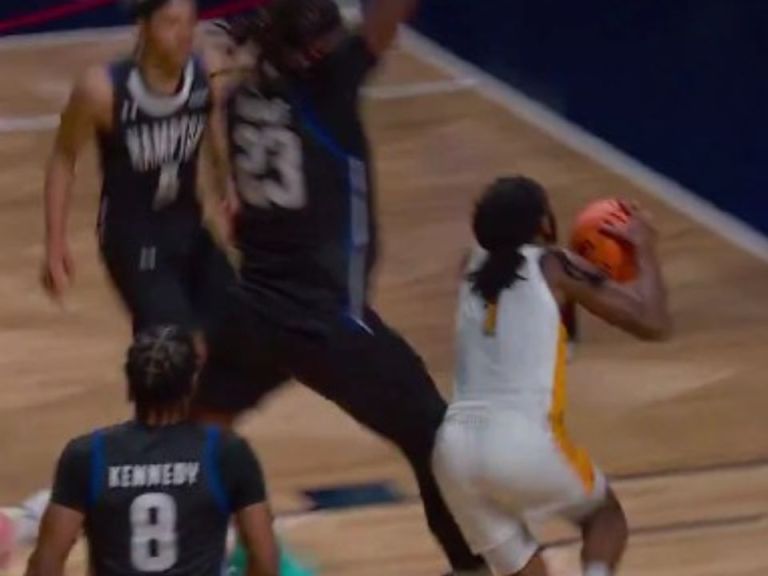
The SWAC issued fines and player suspensions following an altercation between the Mississippi Valley State and Alabama State women’s basketball teams on Thursday in Montgomery.
The league said a review determined both programs violated the conference’s code of ethics and conduct through acts of unsportsmanlike behavior.
As a result, four players were disciplined for their roles in the incident.
Two Mississippi Valley State players and one Alabama State player received one-game suspensions, while a second Alabama State player was suspended for two games.
The conference did not publicly identify the players involved or detail their specific actions.
“The Southwestern Athletic Conference upholds an extremely high standard of good sportsmanship and does not condone unsportsmanlike behavior of any kind,” the league said in its statement. “We will continue to work diligently to provide our member institutions with the necessary guidance and resources to support good sportsmanship and healthy competition at all times.”
In addition to the suspensions, the SWAC levied $25,000 fines against Mississippi Valley State and Alabama State, citing league bylaws and sports regulations.
Photo: Alabama State Athletics
The penalties mirror recent conference actions in other altercation cases, in which the SWAC has paired player suspensions with institutional fines of the same amount, the SWAC said.
“Alabama State Athletics does not condone the actions that took place during tonight’s contest against Mississippi Valley State University,” the department said in a statement attributed to athletic director Jason Cable, vice president of intercollegiate athletics. “Sportsmanship, discipline, and respect for the game are core values of our department and our institution. The behavior displayed does not reflect the standards and expectations we hold for our student-athletes, coaches, or program.”
They turned things around in the second quarter, with their most efficient shooting output, outscoring the Lady Panthers 10-0 in the paint in the period.
With both teams struggling from the field in the second half, it was WSSU’s ability to get to the free-throw line that made the difference, hitting 10 of its 12 free throws in the half.
The free-throw differential played a significant role in the Rams’ outscoring the Panthers 34-15 in the second half on their way to victory.
Winston-Salem State is now tied atop the CIAA South with Fayetteville State, each holding 6-1 records in division play.
As it currently stands, Fayetteville State would get the edge in a tiebreaker scenario, with a +1 point differential advantage in its two meetings against WSSU.
The Rams will continue their battle for the division’s number one seed when they host Shaw on Saturday.
But it isn’t automatically a disaster for HBCU football or its pro prospects.
No HBCU invitees to Indianapolis feels like erasure, especially when the league still leans on HBCU alumni on active rosters every fall. Yet this year’s zero is better understood as a loud data point in a trend line, not a final judgment on whether HBCUs still produce NFL talent.
HBCU representation at the combine has been shrinking for years, dipping to one invitee in 2025 — Alabama A&M lineman Carson Vinson — and only three in 2024. The talent pipeline has not dried up; it has been re-routed by the transfer portal, NIL money, and the gravitational pull of Power Four programs that actively recruit HBCU standouts.
That context matters because a combine snub does not mean HBCU players have no pro path; it means the traditional, centralized path is serving them poorly, and other avenues are already opening.
After all, players from all non-FBS leagues historically have not been scouted or drafted in large numbers. In that sense, the outrage should focus less on the number “zero” and more on how the league and its partners redesign the evaluation process in response.
Alternative stages are getting stronger
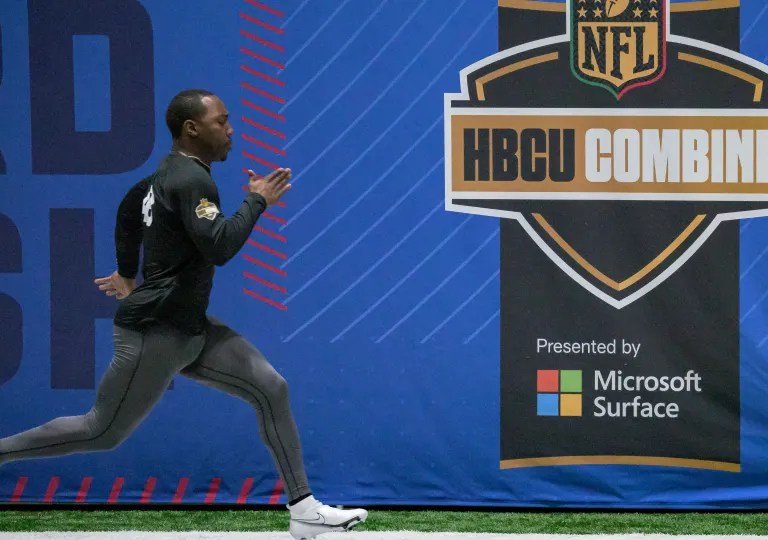
The combine has never been the only on‑ramp to the NFL, and for HBCU players, it increasingly is not even the primary one. Events built specifically around Black college football — the HBCU Combine, the HBCU Legacy Bowl, and related showcases — have grown into credible scouting hubs with all 32 clubs represented, full medicals, and NFL Network exposure.
Those platforms were created precisely because the main combine historically under‑served HBCU prospects; this year’s omission only reinforces their relevance, not their redundancy.
Former HBCU football players such as Xavier Smith used the platform to help springboard him onto an NFL roster with the Los Angeles Rams.
For current HBCU seniors, the lack of an Indy invite can function as a clarifying signal: your route is through all‑star weeks, HBCU‑centered showcases, and high‑traffic pro days, not a four‑day TV event designed for blue‑blood brands.
If there is a “good news” angle to a zero‑invite year, it is that it removes the NFL’s ability to hide behind tokenism. One or two HBCU names sprinkled onto the invite list can be framed as progress; none at all exposes how superficial the system remains for non‑Power programs.
That starkness has already prompted pointed criticism from HBCU advocates like agent Rasheeda Liberty, who called the situation “a reflection of systemic issues” in how teams scout beyond the major brands and demanded more in‑person visits, relationship‑building with HBCU staffs, and intentional investment in discovery.
Public pressure of this kind is often the catalyst for policy changes inside Park Avenue and personnel departments.
Led by Vincent and others, the league studied how NFL teams scouted HBCUs following the 2021 draft. What was found is that there were not enough eyes evaluating players.
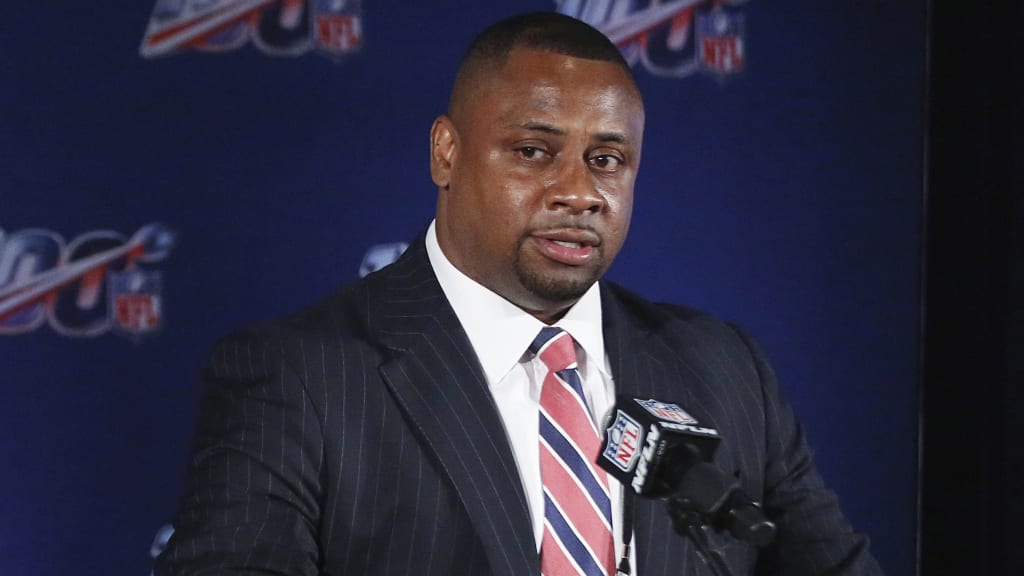
Troy Vincent, Executive Vice President of Football Operations for the NFL, has worked to get more HBCU athletes exposure.
A league-backed scouting committee was instituted to help identify the top 150 draft-eligible HBCU players. The four longstanding Black college football conferences — CIAA, MEAC, SIAC, and SWAC — were added to the NFL video exchange program, which provides all 32 teams with a database of college game film.
The league has already endorsed an HBCU‑specific combine and partnered with the Senior Bowl on HBCU initiatives, acknowledging that the old evaluation model left too many players unseen.
A zero‑representation year sharpens that argument and gives HBCU coaches, agents, and administrators a simple rallying cry: if the centralized gate is effectively closed, then teams must expand their scouting footprint, not their excuses.
Reframing ‘disrespect’ as a pivot point
This moment also challenges HBCU programs to double down on their own platforms and storytelling.
The transfer portal has already shown that when HBCU players dominate, Power Four schools will come calling — and NFL scouts will happily evaluate those same athletes once they are wearing different logos.
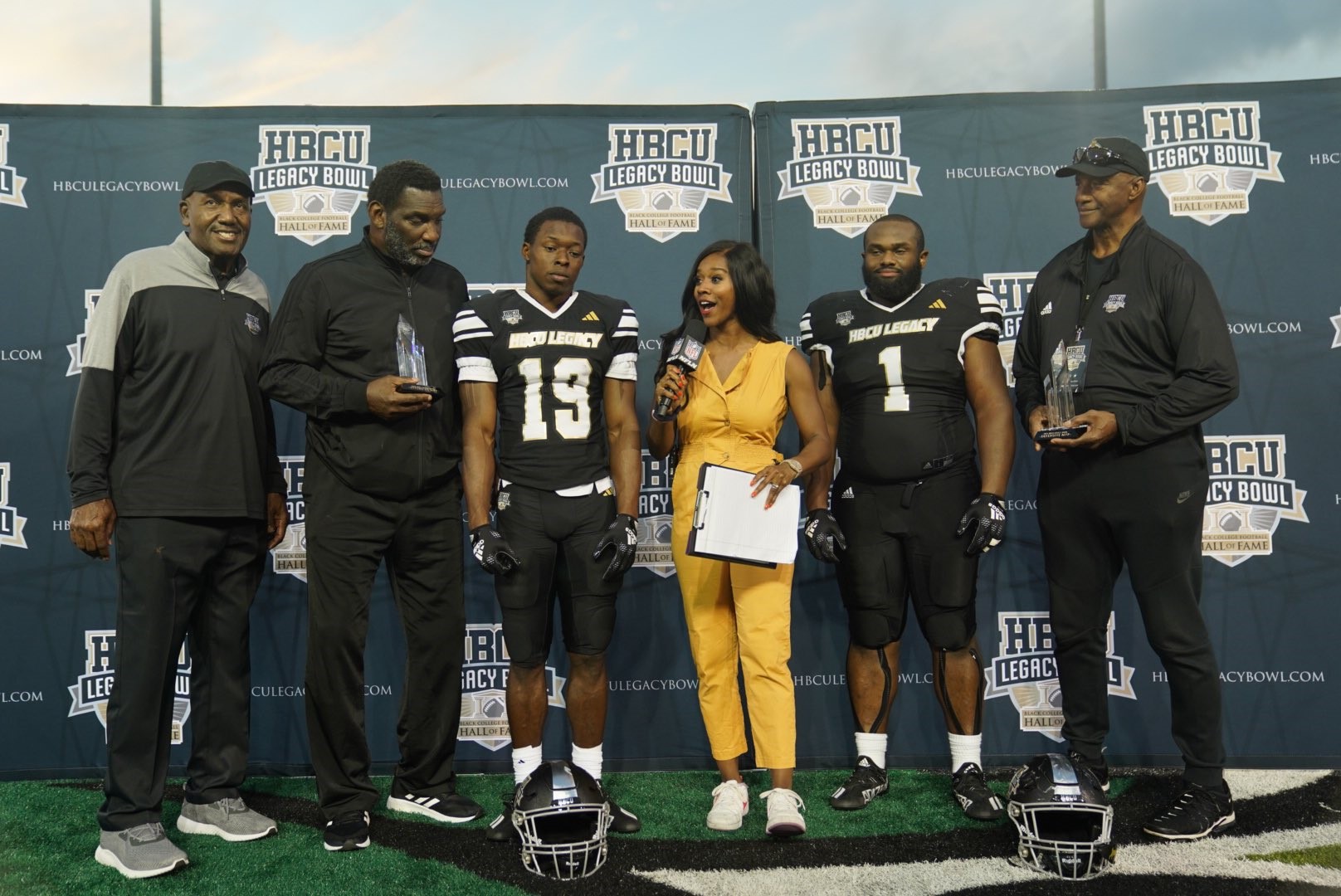
If HBCU stakeholders can turn New Orleans into February (HBCU Legacy Bowl week) or select campus pro days into “can’t‑miss” stops on the scouting calendar, they gain something the combine will never provide — home‑field advantage over their own narrative.
Photo: HBCU Legacy Bowl/Twitter
None of this minimizes the sting of seeing zero HBCU names on a 319‑player list, or the very real systemic gap that Liberty and others are calling out.
It does, however, argue against viewing this year purely as a setback and instead as a pivot point: proof that waiting for incremental inclusion at the NFL Combine is a losing strategy. The league has already acknowledged that “the talent is there” and that exposure must be accelerated for HBCU prospects; the question now is whether stakeholders use this flash point to demand and design a better evaluation infrastructure.