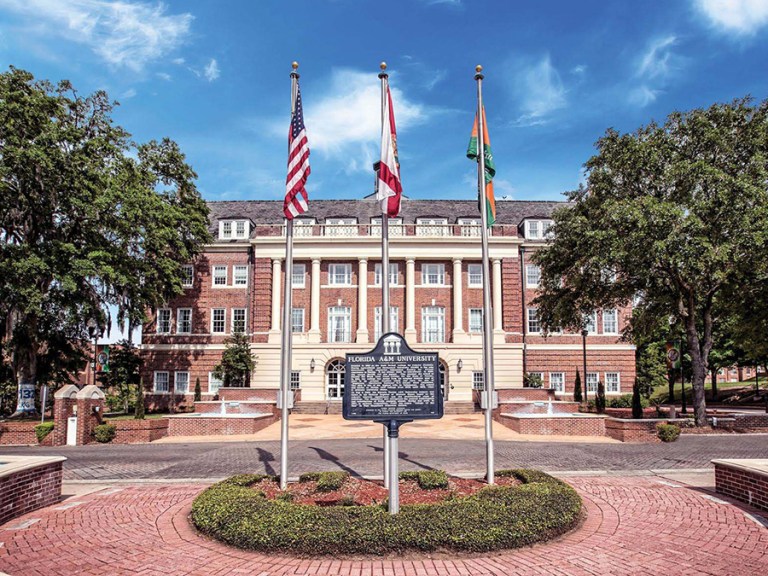
A Florida A&M University College of Law student alleged that school officials ordered her to scrub the word “Black” from Black History Month materials, citing state anti-DEI laws, only for university leaders to call it a misguided staff mistake.
Aaliyah Steward, a FAMU law student, told an Orlando TV station that she was directed to abbreviate “Black” in a Black History Month flyer and avoid terms like “women” to comply with Florida legislation signed by Gov. Ron DeSantis and backed by the State Board of Governors.
“We couldn’t use the word ‘Black’… I was very angry and baffled because this is a Historically Black College and University,” Steward said, describing the directive as “kind of insane.”
Photo: Florida A&M University
FAMU quickly pushed back, labeling the incident a “staff-level error” that exceeded legal requirements.
President Marva Johnson, J.D., issued a statement affirming the school’s commitment as Florida’s only public HBCU: “The University unequivocally confirms that the use of the word ‘Black,’ or the phrase ‘Black History Month,’ does not violate… Florida Senate Bill 266,” she wrote, noting ongoing celebrations including a new exhibition at the Meek-Eaton Black Archives and the annual Harambee Festival on Feb. 28.
Interim Dean Cecil Howard echoed the clarification in a campus-wide message, meeting with affected students and consulting a higher education law expert who ruled the words permissible.
“What occurred was a staff-level error… It has been corrected, and I take full responsibility,” Howard stated, announcing new review protocols, including his personal oversight of promotional materials and alignment with main campus standards.
FAMU emphasized protections for student groups like the Black Law Students Association under the regulations, urging students to use grievance channels for concerns.
FCS conference realignment is reshaping the landscape of the subdivision, particularly after football power North Dakota State agreed to make the FBS jump.
The ripple effect will be wide when the changes officially take place on July 1, with eight of the 13 FCS leagues undergoing some form of change and the national lineup projected to settle at roughly 127 or 128 FCS programs by the start of the 2026 season.
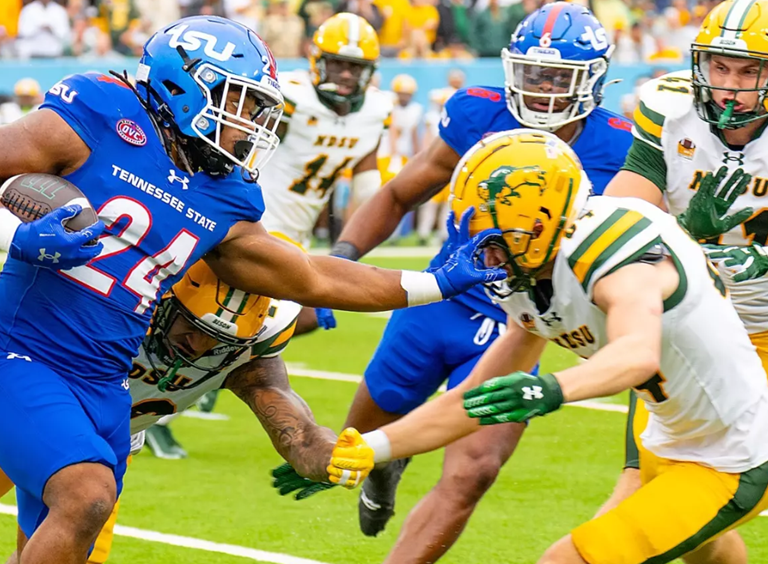
These shifts will have some impact on three HBCU programs — North Carolina A&T, Hampton and Tennessee State — with implications for travel, recruiting, scheduling, and their long-term paths to contention.
North Carolina A&T: CAA road gets no easier
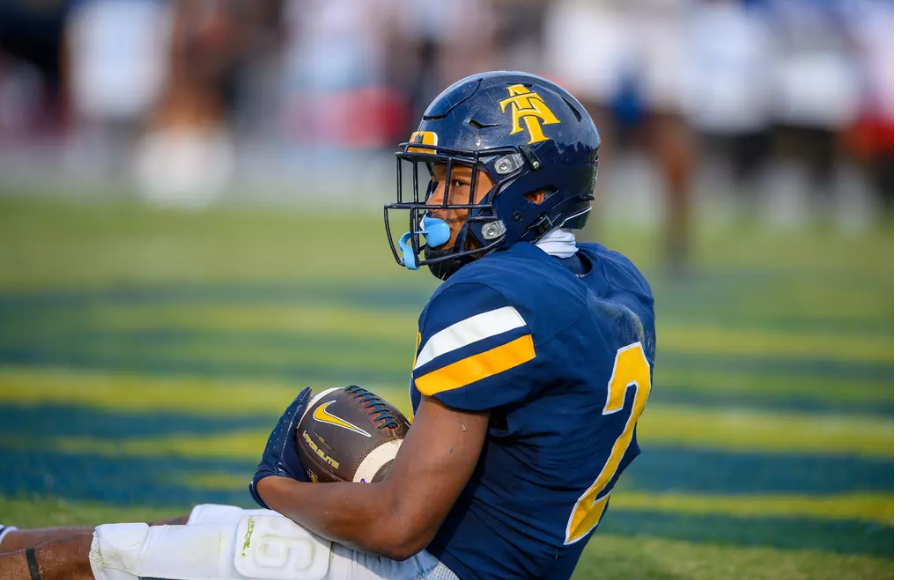
With Sacred Heart set to join CAA Football in 2026, North Carolina A&T remains in a 13-team league that still demands weekly physical, playoff-caliber football even after the departures of Villanova and William & Mary.
Photo: North Carolina A&T Athletics
From a competitive standpoint, the addition of Sacred Heart offsets some of the brand power lost with Villanova and William & Mary. But it does not fundamentally soften the league for A&T.
N.C. A&T, which is coming off its third consecutive 10-loss season, has been trying to find its footing since moving from the MEAC through the Big South.
The challenge remains the same: climb a crowded middle tier in a league that still expects to send multiple teams to the FCS playoffs each season.
Hampton: depth, travel and a longer climb
Hampton’s situation mirrors North Carolina A&T’s in many ways, but with fewer historic CAA footholds to lean on. The Pirates remain part of the 13-team CAA lineup in 2026, navigating the same expanded, northern-tilted footprint.
For Hampton, Sacred Heart’s arrival adds another Northeast opponent that could become a natural scheduling partner but also another program fighting for the same middle-of-the-pack oxygen the Pirates are seeking. In the short term, that means Hampton’s climb toward a contender does not get much easier; the pathway still runs through a gauntlet.
Photo: Hampton Athletics
Where realignment may help Hampton is in branding. The CAA’s continued stability at 13 programs in 2026 allows the school to sell recruits and donors on staying in a “power” FCS league rather than being caught in a shrinking conference or alliance.
Tennessee State: more isolated in the OVC–Big South setup
While A&T and Hampton are trying to survive in a deep CAA, Tennessee State is watching its own neighborhood change around the OVC–Big South Football Association.
Tennessee Tech’s move to the Southern Conference in 2026 removes a familiar in-state foe and long-time OVC member, leaving the OVC–Big South football group at eight programs.
For TSU, that translates to fewer natural regional games and the loss of an easy-marketed in-state conference matchup, even as it maintains its traditional HBCU rivalries outside league play.
On the field, the OVC–Big South partnership still offers Tennessee State a clearer path to an automatic playoff bid than a crowded league like the CAA, simply because of its smaller membership and less top-heavy profile.
The Tigers did make a trip to the FCS postseason in 2024.
But with Tennessee Tech leaving and no immediate replacement of a similar regional profile, TSU’s situation underscores a familiar question: does it make more sense long term to seek a different conference alignment that better matches its HBCU identity and geography, or to try to become the flagship program within a more eclectic association?
Some HBCU football fans want Tennessee State to make the transition to either the SWAC or MEAC, identifying it as a national cultural fit.
For now, the realignment wave cuts in different directions: A&T and Hampton stay in a deep, tough conference, while Tennessee State remains in an alliance that is stable enough for playoff access but increasingly thin on regional clarity.
Former Fort Valley State punter Marquette King has announced he is retiring after 13 years of professional football.
“I’ve battled to break back into the NFL, but if the league’s gatekeepers want to block me out, I’ll shut the door myself, because the ultimate goal was to make it back into the NFL,” said King in a tweet announcing his retirement from football. “I don’t beg and this is me calling it on my terms. I’m thankful for the opportunity to have played in the NFL. Shout out to the Raiders and beyond, the XFL, and the UFL. It is what it is. Thanks for all the love, I appreciate every last one of my fans. I am officially retiring from this and I’ll leave this [song] here.”
After being named to the All-SIAC First Team in his final season at Fort Valley State in 2011, King was selected to play in the inaugural NFLPA Collegiate Bowl.
He was signed as an undrafted free agent by the Oakland Raiders (now Las Vegas Raiders) in 2012, becoming just one of five HBCU punters to make it to the NFL.
The former Wildcat went on to play six seasons in the NFL, including five with the Raiders (the other with the Denver Broncos).
As a rookie, King led the NFL in yards per punt (48.9) then led in total punt yards in his second season (4,930). In 2016, he was named to the All-Pro Second Team after finishing third in yards per punt (48.6).
It was also in 2016 that King made his only career playoff appearance, becoming one of only 17 players in the Super Bowl era to ever punt the ball 10 times in a playoff game.
After a thigh injury led to his release from the Raiders, King transitioned to the XFL, signing with the St. Louis Battlehawks as part of the 2020 Supplemental Draft.
He most recently played for the Arlington Renegades, spending three years with the team, including in 2024 when he was named to the All-UFL team.
“I’m thrilled to welcome Coach Dawson Odums to the Bulldog family,” said Bowie State President Aminta H. Breaux. “He brings more than 25 years of coaching experience and has a remarkable record of helping student-athletes succeed both on and off the field.”
For Odums, the move to Bowie State is a return to familiar territory—the HBCU football stage where he’s built his name. A Shelby, North Carolina native, he spent four seasons as head coach at Norfolk State, where he went 15-30 before being fired in 2024.
Before that, he led Southern University to a string of successful seasons, including a 2013 SWAC championship and multiple division titles.
Photo: Raymond Holley
Odums said he’s grateful for the opportunity and ready to get to work.
“To the Bowie State University community, I am honored and grateful to formally accept the position of head football coach,” Odums said. “I want to thank President Breaux for her confidence and leadership throughout this process.
I am truly appreciative of the trust placed in me to guide Bowie State Football into its next chapter. I firmly believe that discipline, character, leadership, and citizenship are the foundations of sustained success. Those principles shape young men and prepare them for life beyond football and ultimately create a winning culture. When those standards are upheld, championships follow.”
The biggest day in North American sports is here with the National Football League (NFL) celebrating the 60th anniversary of the Super Bowl.
With Super Bowl Sunday upon us, let’s do a breakdown of some historical connections between the big game and HBCUs by the numbers.
40: Super Bowl-winning teams with HBCU starters
Of the 59 previous Super Bowl winners, 40 have featured at least one former HBCU player in the starting lineup (specifically in the game itself). This includes each of the first 25 Super Bowl winners.
2: Quarterbacks to start in the Super Bowl
In the 60-year history of the Super Bowl, there have only been two HBCU quarterbacks to start in the big game. Grambling State’s own Doug Williams made history by becoming the first black quarterback to start in Super Bowl XXII, leading the then Washington Redskins (now Washington Commanders) to a 42-10 win over the Denver Broncos. Alcorn State’s Steve McNair is the most recent HBCU quarterback to record a start, leading the Tennessee Titans to their only Super Bowl to date in Super Bowl XXXIV, falling short against the St. Louis Rams.
26: Total touchdowns scored by HBCU players
HBCU players have reached the end zone 26 times in the Super Bowl, including 22 offensive touchdowns. Hall of Famer and Grambling State alum Willie Brown became the first HBCU player to score a defensive touchdown in the Super Bowl after returning an interception 75 yards in Super Bowl XI. Tennessee State’s Mike Hegman (Super Bowl XIII) and Bethune-Cookman’s Nick Collins (Super Bowl XLV) eventually followed in Brown’s footsteps. Jacoby Jones is the only HBCU player to score a special teams touchdown, returning the opening kickoff in the second half of Super Bowl XLVII 108 yards to the house. Delaware State’s John Taylor is the only HBCU player to score the go-ahead touchdown that won his team the game, doing so in Super Bowl XXIII against the Cincinnati Bengals.
14: Different HBCU players to score a touchdown
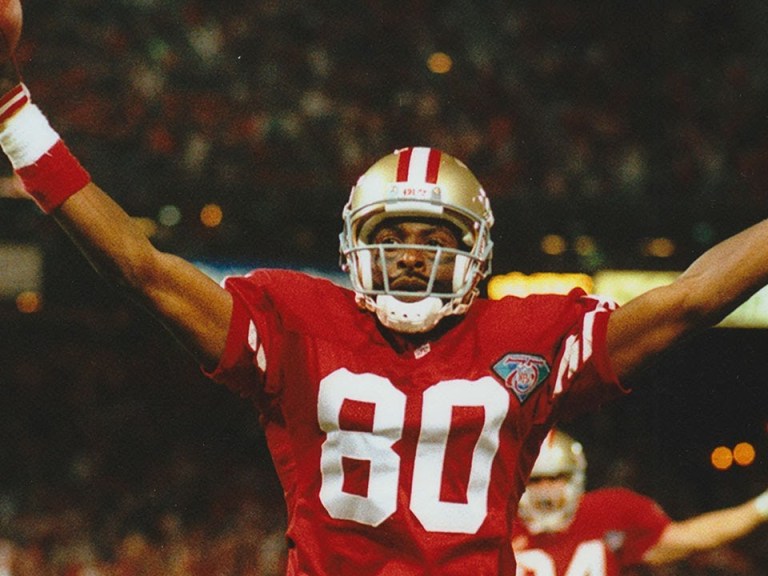
There have been 14 different HBCU players who have registered a touchdown in the Super Bowl. Of those players, five have scored multiple touchdowns in their careers. Philander Smith alum Elijah Pitts became the first player in Super Bowl history to score multiple touchdowns in a single game, helping lead the Green Bay Packers to a win over the Kansas City Chiefs in the inaugural contest. John Stallworth accomplished this feat in Super Bowl XIII with a pair of receiving scores (three career touchdowns). Jerry Rice, the record holder for career touchdowns in the Super Bowl, recorded three touchdowns on two separate occasions (Super Bowl XXIV and Super Bowl XXIX). In addition to his kick return touchdown, Jacoby Jones also took his only reception of the game 56 yards to the end zone. Rounding out the list of players with two or more career Super Bowl touchdowns is John Taylor.
6: HBCU players with active Super Bowl records
Six former HBCU players hold active Super Bowl records, including Jerry Rice, who holds eight different distinctions. L.C. Greenwood set the record for sacks in a game (4.0) in Super Bowl X, breaking the previous mark set by Grambling State’s Willie Davis in Super Bowl II. He also holds the record for career sacks with 5.0. John Stallworth has the highest career yards per reception mark with 24.4, including the single-game record of 40.3 set in Super Bowl XIV. Doug Williams threw for the most yards in a single quarter (228) and the most touchdowns in a half and a quarter (4). Jacoby Jones’ 108-yard kickoff return touchdown in Super Bowl XLVII is the longest play registered in the game’s history. Finally, John Taylor has the highest average yards per punt return for a single game (18.7) and for a career (15.7).
3: Super Bowl MVPs
Three different HBCU stars shone brightest in their team’s Super Bowl win, claiming the game’s top prize. Richard Dent was the first to do so, helping lead the Chicago Bears to their only championship to date in Super Bowl XX. Doug Williams’ history-making and record-setting performance for the Washington Redskins in Super Bowl XII resulted in an MVP nod. Last but not least, Jerry Rice took home the MVP in his first Super Bowl appearance, setting the record for receiving yards in a game (215).
6: HBCU bands to perform in a Super Bowl halftime show
There have been six different HBCU bands that have performed at halftime of the Super Bowl. Grambling State was honored with this distinction in each of the first two Super Bowls, going on to do so four more times. Southern, who first performed at halftime of Super Bowl IV, has done so four times total. Florida A&M has graced the Super Bowl halftime stage twice (first in Super Bowl III), including as part of Prince’s all-time show in Super Bowl XLI. Rounding out the list are Texas Southern (Super Bowl XXXVIII), Prairie View A&M (Super Bowl XLV), and, most recently, Jackson State (Super Bowl LVIII).
The assault and elimination of diversity initiatives through state and federal action has resulted in HBCU students no longer feeling empowered to use the word Black.
Aaliyah Steward, a third-year student at FAMU’s College of Law, said she faced pushback while promoting events for the Black Law Students Association.
“For our flyers, certain words were flagged,” Steward said. “It was ‘Black,’ ‘affirmative action,’ and ‘women’ as well.”
Steward told the TV station she was told those terms could not be used in promotional materials.
“We couldn’t use the word ‘Black’ in Black History Month,” she said. “We would have to abbreviate it. I was very angry and baffled because this is a Historically Black College and University, and for them to say we can’t use the word ‘Black’ was kind of insane.”
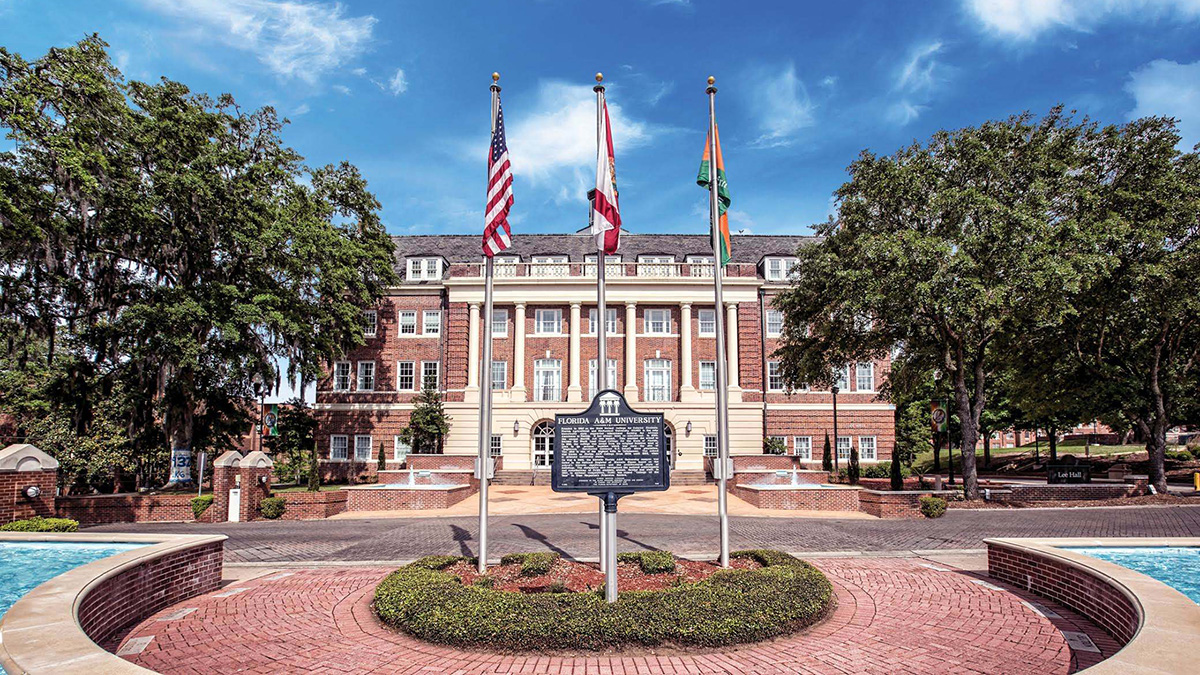
Photo: Florida A&M University
Florida’s 12 public universities have been barred from using state or federal funds for DEI programs following legislation signed by Gov. Ron DeSantis and reinforced by the State Board of Governors through Regulation 9.016.
FAMU said in a statement to the TV station that the school remains compliant with state law on the matter.
“Florida A&M University has consistently been in full compliance with Senate Bill 266 and Board of Governors’ Regulation 9.016,” the university said in a statement. “We support and have implemented the policy direction established by the Governor, the Legislature, and the Board of Governors as it relates to DEI, and consistent with related federal court rulings.”
Steward said she is concerned about cultural censorship.
“I just don’t want us to be censored this way,” she said. “Not being able to use the word ‘Black’ is very frustrating.”
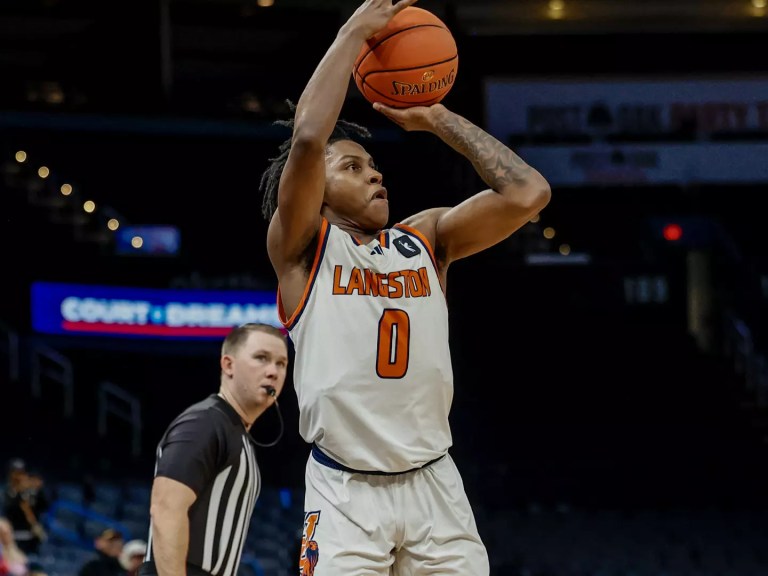
This is Langston’s fifth win, improving its record to 14-3 against the SAC (19-4 overall), including a perfect 11-0 at home.
The win keeps them within striking distance of Nelson (Texas), who currently hold a 15-3 conference record, at the top the standings.
Orlando Thomas led the way for the Lions, tying a season-high with 25 points and five rebounds, connecting on four three-pointers.
Trey Clarke followed closely behind with 18 points and six rebounds, while Jay Wilson came off the bench to produce 16 points on 7-of-8 shooting, nine rebounds and two steals.
After surrendering the first five points of the game, Langston quickly went to work, going on a 12-0 run, including six points by Wilson.
This run set the tone for the remainder of the game as the Lions would not trail for the contests’ duration.
Langston’s season-high offensive performance was primarily set up by defensive stops, scoring 30 points off 19 Science and Arts turnovers.
Their presence in the paint was also a major contributor to the win, outscoring their opponent 44-22.
Aiming for their fourth straight conference tournament championship, Langston will continue its battle for the number-one seed when it returns to action on Monday against Wayland Baptist.
This marks Clark Atlanta’s fifth straight victory, and the seventh in its last eight games, improving to 14-5 in conference play (17-6 overall).
Following Morehouse’s loss to Lane, Clark Atlanta has now entered a tie with the Maroon Tigers atop the SIAC’s Eastern Division.
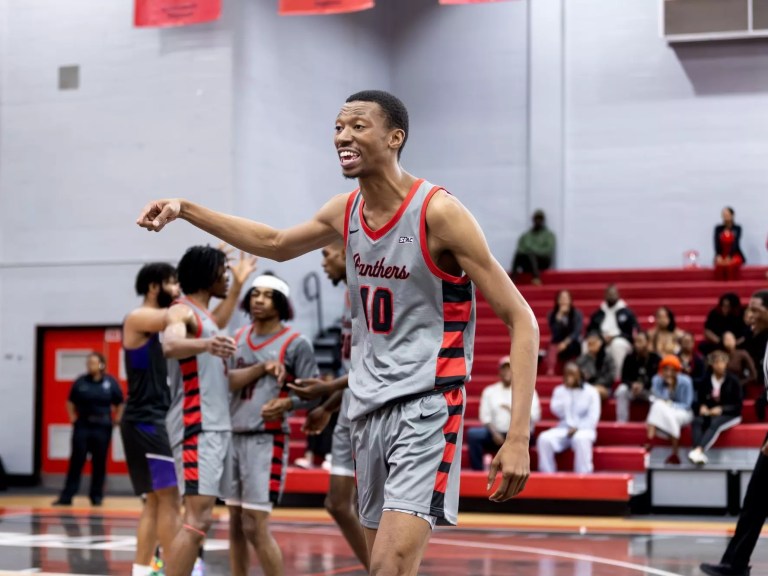
Despite finishing with just five points on 2-of-8 shooting, Kharye Cayne made a lasting impact with his most dominant defensive performance of the season.
The former SIAC Defensive Player of the Year recorded a season-high 11 blocks and a season-high 16 rebounds (13 defensive rebounds).
Cayne’s rare rebounds/blocks double-double is his first of the season and the second of his career under these circumstances.
Peyton Weathersby paced the Panthers in scoring off the bench with 18 points, all four of his shots from the field coming from three-point range.
Chase Hill led the starters with 17 points on 67% shooting from the field, while Ny’Mire Little had 14 points, hitting four three-pointers.
Jeremiah Israel led the Thorobreds with a game-high 21 points off the bench, adding eight rebounds and three steals.
It only took Clark Atlanta 26 seconds to put the first points of the game on the board, foreshadowing what would be its best shooting performance of the season.
They got hot from three-point range early and never cooled off, hitting eight in the first half and a season-high 14 in the game.
Meanwhile, Kentucky State had its worst shooting performance of the season (26%), with its starters combining to shoot 6-of-31 from the field.
The Panthers never trailed in this contest, leading by as many as 31 points on their way to victory.
This was the third game in a four-game home stand for Clark Atlanta, claiming wins in each game by an average margin of 12 points.
They will conclude their home tilt this upcoming Wednesday when they welcome Fort Valley State.
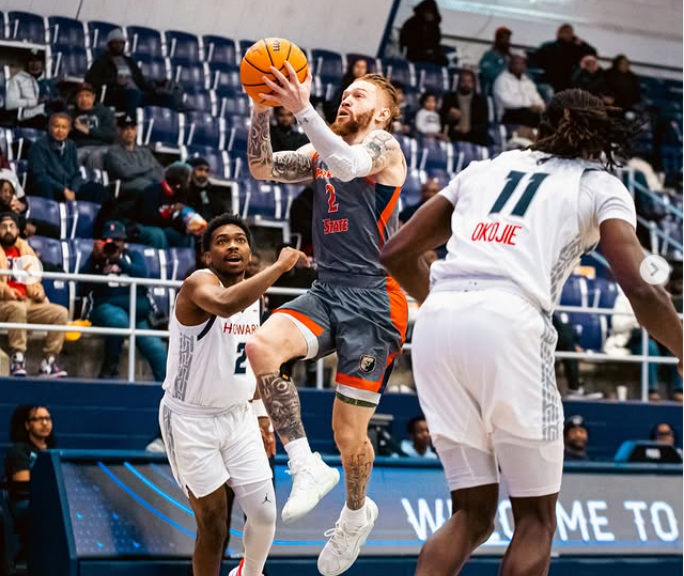
Senior forward Marland Harris compiled a double-double of 17 points and 11 rebounds and guard Alfred Worrell Jr. scored a game-high 24 points as the Bears defeated Maryland Eastern Shore 79-71 Saturday afternoon.
UMES (8-17 overall, 4-4 MEAC) took their last lead at 64-61 on a Michael Teal basket and free throw with 5 1/2 minutes left in the second half.
Worrell scored seven straight points – four foul shots and a three-pointer – to put the Bears (10-13 overall) ahead for good at 68-64 and Morgan State held serve the rest of the way.
Bowie State transfer Elijah Davis just missed out on a triple double for MSU with 11 points, 9 assists and 8 rebounds. Christian Meeks also scored in double figures for Morgan with 10 points.
Teal and Dorion Staples scored 16 points each to lead Maryland Eastern Shore, who has now lost four straight games after a 4-0 start in MEAC play.
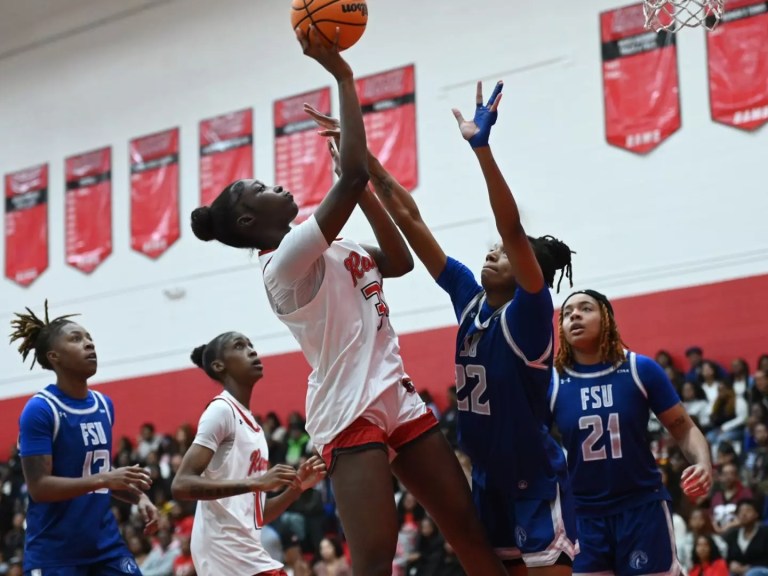
The Winston-Salem State women’s basketball team continued its strong season Saturday afternoon, using a dominant defensive showing to beat Fayetteville State 50-36 inside the C.E. Gaines Center.
The win improved the Rams to 19-2 overall, 10-1 in CIAA play, and 4-1 in the Southern Division.
Jakaiya Mack paced WSSU with 11 points, while Navaeh Farmer added 10 as the Rams relied on balanced scoring and relentless pressure to hold the Broncos to just 36 points.
Winston-Salem State shot 34 percent (19-of-56) from the field and 26 percent (5-of-19) from beyond the arc. The Rams also finished with 45 rebounds, 22 points in the paint, and 20 points off 25 forced turnovers.
Rams pull away
The Rams jumped out quickly, scoring the game’s first eight points and taking a 13-5 lead after the opening quarter. Mack’s three-pointer late in the period capped a strong start for WSSU.
Fayetteville State found a brief rhythm in the second quarter, trimming the lead to 14-10 midway through the period. But WSSU responded with a 6-2 burst, fueled by an Alana Biosse layup, to take a 20-15 advantage into halftime.
The Rams maintained their defensive intensity after the break. Ah’Kiyah Pye’s layup pushed the lead to 27-17 midway through the third before the Broncos countered with an 8-0 run to pull within two. Undeterred, WSSU closed the quarter strong and carried a six-point lead into the final period.
Winston-Salem State put the game out of reach with a decisive 14-2 run in the fourth quarter, highlighted by a Farmer three-pointer that extended the margin to 48-30 with just over four minutes to play.
The Rams cruised the rest of the way, securing another key CIAA victory as they continue their pursuit of a conference championship.