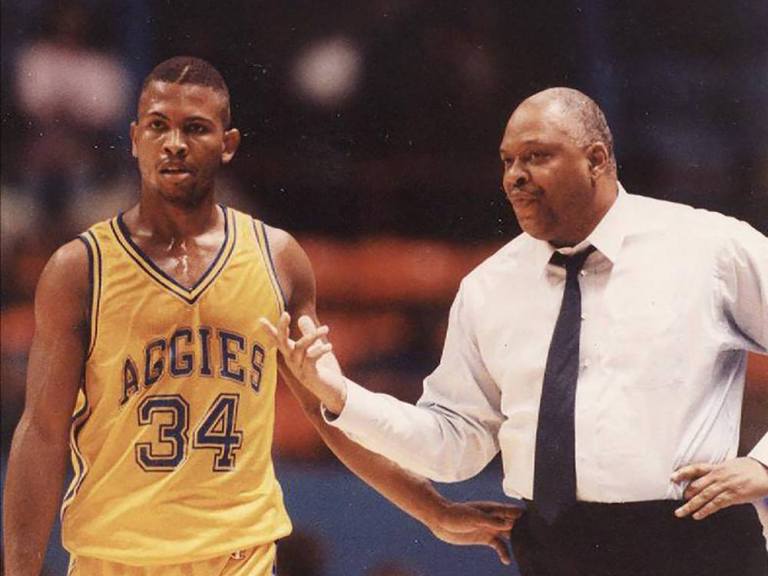
North Carolina A&T basketball’s seven-year run atop the MEAC was anything but lucky

Don Corbett AT
When you think of the NCAA tournament’s most consistent programs as the event became popular in the ’80s North Carolina A&T should come to mind.

After an upset loss in the 1981 MEAC title game, the Aggies went on a streak that may never be matched or topped by anyone in any conference; seven consecutive conference tournament titles on their way to seven NCAA tournament appearances.

The story of the Aggies’ run of success starts with a coach who already had a successful career prior to settling in Greensboro.

Don Corbett comes to town

Don Corbett was no stranger to winning basketball when A&T hired him in 1979. Coaching at his Alma mater Lincoln (Mo)., Corbett led the Blue Tigers to three Mid-America Intercollegiate Athletics Association championships and five NCAA Division II tournament appearances, including an Elite Eight appearance in 1978.

After going 8-19 in the 1979-80 season, the Aggies were prepared to make history the next year. Led by guard James “Doc” Anderson and young forwards Joe Binion, who went on to play in the NBA with the Portland Trailblazers, and James Horace, the Aggies won the MEAC regular season title with a 7-3 conference mark (and 21-8 overall).

A&T held off Bethune-Cookman 54-51 in the semifinals, then faced defending champion Howard, led by future Los Angeles Laker and NBA champion Larry Spriggs, James Ratiff and Bernard Perry.

The Bison’s championship experience was too much for the young Aggies to overcome as the frontcourt duo of Spriggs and Ratiff  combined for 31 points and clutch free throws from Perry and backcourt mate Rodney Wright lifted Howard to a 66-63 win.

North Carolina A&T’s consolation prize was a trip to the NIT, where they played Duke tough in a 79-69 loss.

The Aggies begin their run

The 1981-82 season started off slow for the Aggies as a road trip through the SWAC and Tennessee State left them with a 1-4 record heading into a rematch with Howard to start MEAC play at Burr Gymnasium.

With the game tied at 36 midway through the second half, A&T pushed ahead for good with an 11-2 run to take a 53-48 victory from the Bison, setting the tone for what would be a special season.

North Carolina A&T won their second consecutive MEAC regular season title with a 10-2 mark and finished a perfect 9-0 at Corbett Sports Center.

The MEAC tournament, held at the old Winston-Salem War Memorial Coliseum, was A&T’s time to shine, although the lights were almost shut off by Florida A&M.

The Rattlers held A&T 23 points below their season average and trailed 45-43 with possession in the MEAC semifinals.

The Aggies defense forced a traveling violation and freshman Eric Boyd was fouled in the final seconds.

“Nervous,” was Boyd’s description heading to the free throw line in the Greensboro News & Record. Boyd swished the first free throw and “I knew we had it after that.” He made the second and A&T survived FAMU 47-45 for a rematch with Howard in the MEAC title game.

Boyd continued his hot play against the Bison with 16 points and six assists before fouling out with three minutes left; he would be named the tournament’s most outstanding player.

A&T built a 17-point lead and it was good enough to last as they earned their first trip to the NCAA tournament with a 79-67 win.

The Aggies’ first appearance in the Big Dance took place on the campus of Utah State University in the Spectrum. Their opponent was West Virginia, Eastern Athletic Association champions and the 9th-ranked team in the country.

The Mountaineers won convincingly 102-72, showing A&T what guard Doc Anderson called “the other side. We found what we’ve got to do to play teams like this outside of our conference.”

“They didn’t lose much off the bench,” Corbett said. “They just kept bringing people in and wore us down.”

Still, A&T’s first of seven straight MEAC titles was in the books. Their second would be among the hardest.

A&T repeats the hard way

After being rolled by eventual national champion North Carolina State to start the 1982-83 season, the Aggies won three of their next four games, including a 73-60 win over Howard at Corbett to start MEAC play, but they were stunned 68-67 by Delaware State, snapping their home win streak.

The Aggies (9-3) fell short of their third straight regular season title as Howard won the MEAC crown with an 11-1 mark.

And with an extra round to play in the MEAC tournament, A&T’s dynasty was already being challenged.

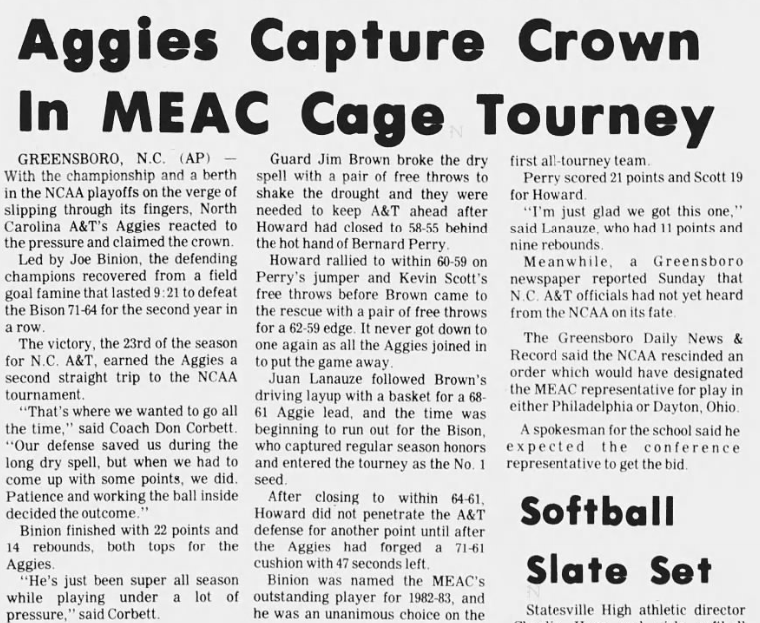
They survived two early challenges, defeating Bethune-Cookman 80-73 and Maryland Eastern Shore 81-74 in the quarters and semifinals before facing Howard once again in the championship game.

Joe Binion played to his 6-foot-8 height, scoring 22 points and grabbing 14 rebounds on his way to tournament MVP and conference player of the year honors.

The Aggies also weathered a nine-minute field goal drought to defeat the Bison 71-64 for their second trip to the NCAA tournament.
The tournament expanded to 52 teams and included a preliminary round, which North Carolina A&T found themselves in against Princeton.

The Ivy League champion Tigers were led that year by a 6-foot-6 forward from the Chicago area named Craig Robinson, better known today as Michelle Obama’s brother and President Barack Obama’s brother-in-law.

Playing at the historic Palestra in Philadelphia, A&T played a solid defensive game, but failed to bring their offense to the City of Brotherly Love.

“We just couldn’t put the ball in the basket,” Corbett said after the Aggies shot a woeful 19-of-70 from the field in falling to Princeton 53-41.

Even though NCAA tournament success was hard to come by, the MEAC was North Carolina A&T’s playground for much of the 80s. Every year between 1982 and 1988, they found a way to win the MEAC title, with the 1988 team likely being the best in school history.

Syracuse sweats it out

That Aggie team won 26 games and became the first MEAC men’s basketball team to run the table, going 16-0 in the regular season and defeating Howard and Florida A&M for their seventh straight MEAC tournament title.

The last NCAA tournament game of the Corbett era would take place an hour east at the Dean Smith Center on the campus of North Carolina-Chapel Hill.

Syracuse, NCAA runners’ up the previous year, featured future NBA standouts Derrick Coleman, Rony Seikaly and Sherman Douglas.

The heavily favored Orange didn’t know much about A&T, but they were about to find out about this group, led by the senior trio of Claude Williams, 5-foot-8 guard Thomas Griffis, and center Kenny Cox.

Griffis, even shorter than the 6-foot Douglas, drained a three-pointer with 6:29 left in the second half to tie the game at 50 and Syracuse was forced to take a timeout.

The Orange regrouped with a 15-0 run to take a 69-55 win, but as legendary coach Jim Boeheim said afterwards, “The game belonged to either team.”

Don Corbett would coach for another five years, winning one final MEAC regular season title in 1992 before retiring the following season.

His record at A&T reads as 254 wins, 145 losses, six MEAC regular season titles, seven tournament championships and NCAA appearances, and countless players and men he shepherded into adulthood.

As North Carolina A&T continues forward as one of the premier HBCUs in the country, Don Corbett and the Aggie men’s basketball team deserve a good portion of credit for that success.

For almost every March in the 80s, you could turn on the NCAA tournament and see A&T giving a higher-ranked, nationally-recognized team a battle and proving that HBCUs, at one time, could compete at a national level.

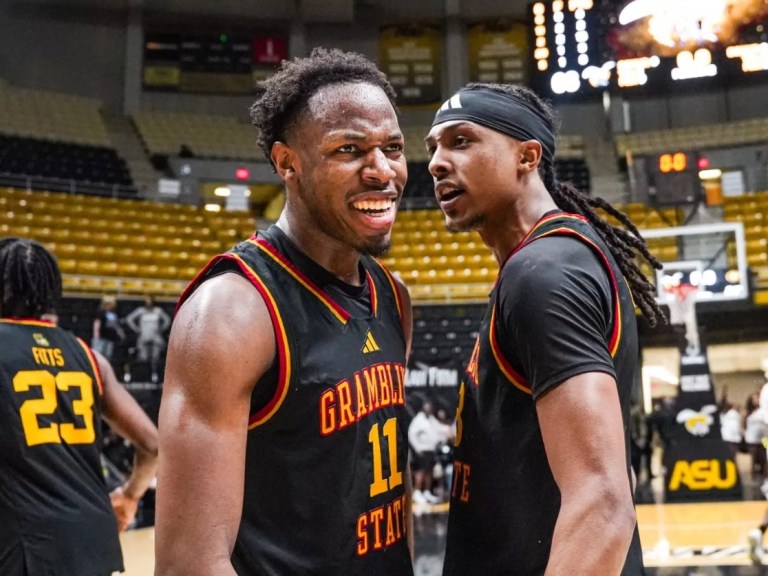
Grambling State to visit Kentucky at Rupp Arena next season

Grambling Hoops

Grambling State will play a historic matchup next season.

The Tigers’ men’s basketball team will visit Kentucky on Monday, Nov. 16, to play at Rupp Arena at Central Bank Center in Lexington, a matchup that places the Tigers on one of the sport’s biggest stages, the school announced.

The meeting pairs the HBCU with one of college basketball’s most prominent programs, giving Grambling a chance to compete in a nationally recognized arena against a perennial heavyweight.

//www.instagram.com/embed.js

For Grambling, the significance goes well beyond the game itself.

The matchup offers an early-season measuring-stick opportunity against an NCAA Tournament team and Power 4 competition.

Grambling State is coming off a 2025 season where it went 14-19 overall and 7-11 in the SWAC under first-year coach Patrick Crarey.

Godsey Law Firm signs on as official sponsor of 3rd Annual HBCU Sports Awards

Godsey Law Firm HBCU Sports Awards
The HBCU Sports Awards is proud to announce that the Godsey Law Firm has signed on as an official sponsor of the 3rd Annual HBCU Sports Awards, scheduled for July 25, 2026.

The partnership reflects a shared commitment to the HBCU community.

David Godsey, founder of the Godsey Law Firm, is a proud graduate of Huston-Tillotson University — one of the nation’s historically Black colleges and universities — making this sponsorship as personal as it is professional.

“There aren’t enough words to express how appreciative I am of David Godsey and the Godsey Law Firm for choosing to support this event,” said Kenn Rashad, Founding Publisher and Editor of HBCU Sports. “The fact that David is an HBCU graduate from Huston-Tillotson makes it that much more special. He had options. He didn’t have to do this. And I’m truly grateful that he chose to invest in what we are building here.”

About the Godsey Law Firm

Founded in 2007, the Godsey Law Firm is a Texas personal injury law firm with offices in Dallas and Houston. The firm has represented more than 75,000 injured Texans and recovered over one billion dollars on behalf of its clients. With a team of more than 130 legal professionals, the Godsey Law Firm handles cases involving car accidents, truck accidents, motorcycle accidents, slip and falls, pedestrian accidents, and other personal injury matters throughout the state of Texas. For more information, visit iJustGotHit.com.

About the 3rd Annual HBCU Sports Awards

Now in its third year, the HBCU Sports Awards is an annual live broadcast event produced by HBCU Sports, the longest-running HBCU media platform on the Internet. The Awards honor athletes, coaches, and administrators across all HBCU conferences and sports, spanning 46 categories across NCAA Division I, Division II, and NAIA institutions.

The 3rd Annual HBCU Sports Awards will feature two live YouTube broadcasts: the HBCU Sports Awards Nominations Show on July 14, 2026, and the HBCU Sports Awards on July 25, 2026. The event reaches a combined audience of more than 124,000 followers across all platforms, with year-over-year livestream viewership growth of 45.8 percent and watch time growth of 87.4 percent — all with zero paid promotion.

Sponsorship Opportunities Still Available

The HBCU Sports Awards continues to welcome businesses and organizations that share a commitment to celebrating HBCU athletic excellence. Sponsorship opportunities remain available across multiple tiers, with a commitment deadline of July 1, 2026. Businesses and organizations interested in becoming a sponsor are encouraged to contact HBCU Sports at advertise@hbcusports.com for full details.

The 3rd Annual HBCU Sports Awards Nominations Show streams live on YouTube on July 14, 2026. The Awards Show streams live on YouTube on July 25, 2026.

HBCUs should be wary of Ted Cruz concern with Protect College Sports Act

Teddy
As the NCAA and Washington politicians continue to square off regarding the state of college athletics, HBCUs are caught in the middle of the mess.

With one politician allegedly advocating on their behalf, politics can indeed make for strange bedfellows.

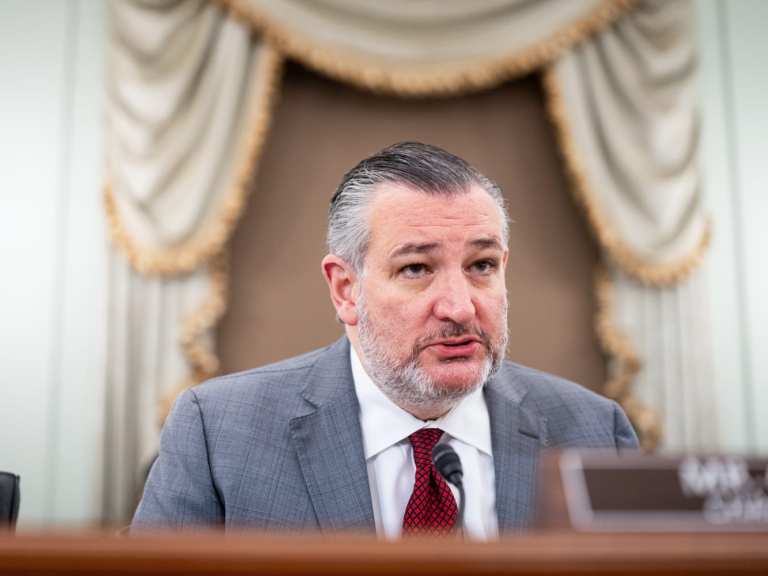
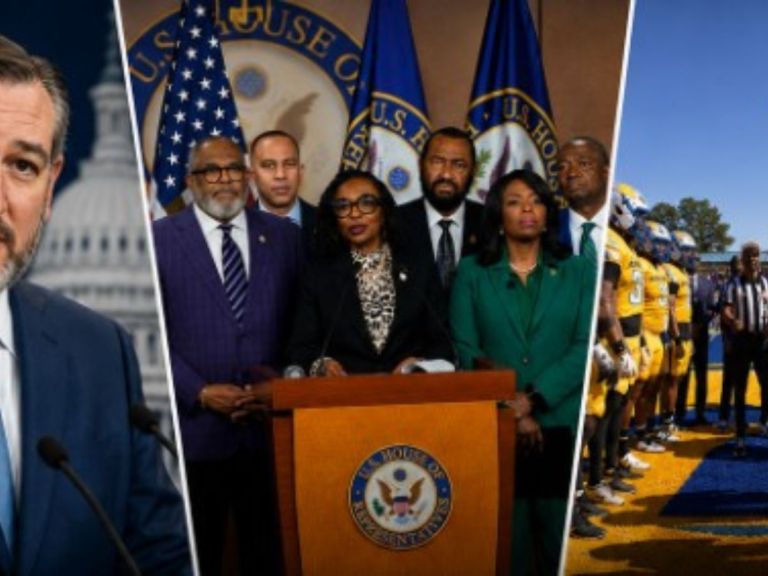
The Texas senator Ted Cruz has implored the Congressional Black Caucus to support his bipartisan Protect College Sports Act.

Cruz and Democratic senator Maria Cantwell’s Protect College Sports Act “would establish federal NIL rights for student-athletes, require that contracts clearly outline athletes’ obligations and compensation, and cap agent fees at 5 percent. It would also override conflicting state NIL laws, create a student-athlete ombudsman, set transfer and eligibility standards, ban salary cap-evasion tactics, and prohibit the formation of a college sports ‘super league’.”

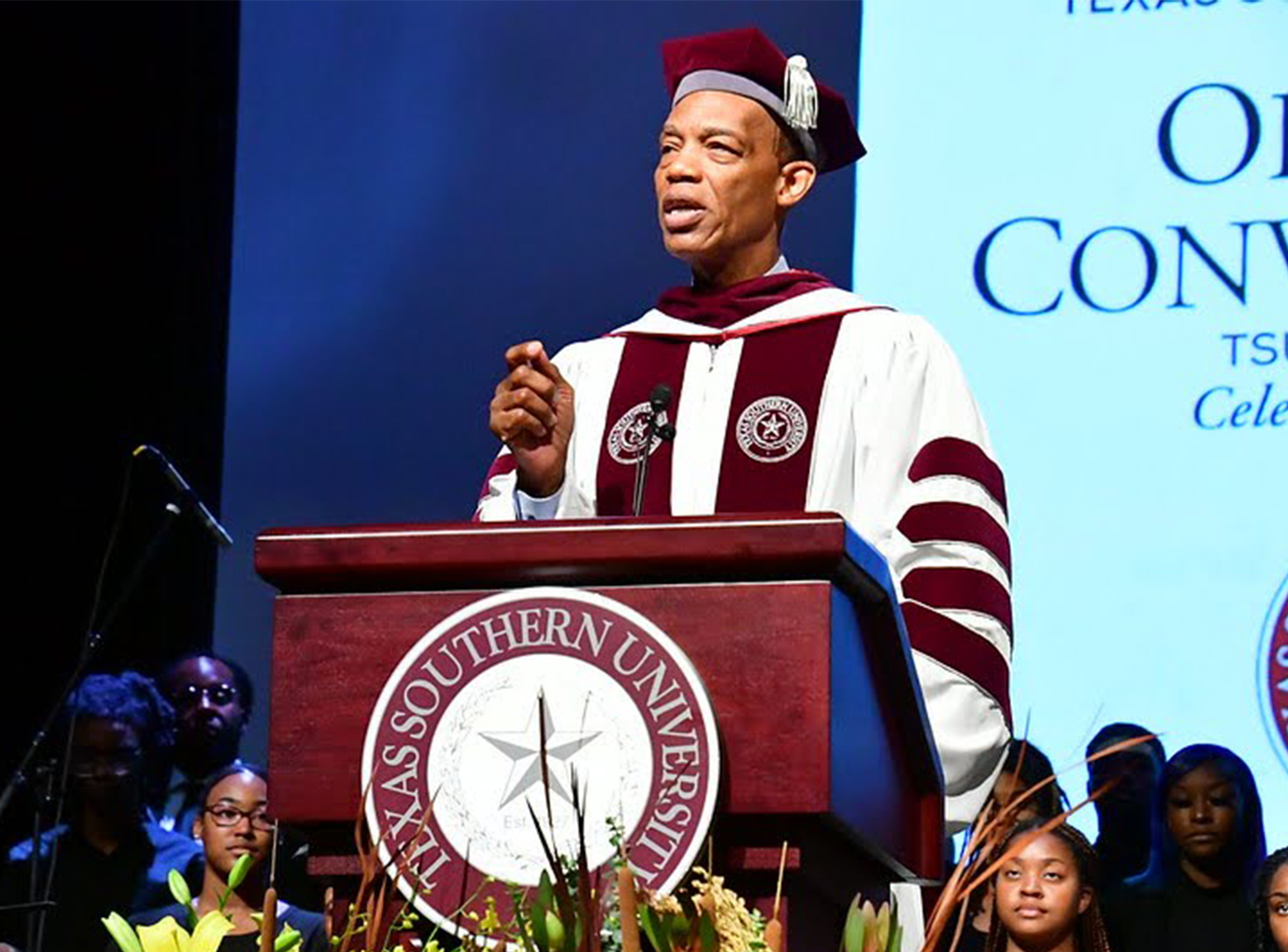
Cruz cited Texas Southern president James Crawford III’s comments that HBCUs are struggling in the new NIL era, stressing that CBC support would be better for HBCUs.

Coming from most any other politician, this would be taken a lot more seriously.

Ted Cruz should have no say on future of HBCUs

However, this sudden care for the future of HBCUs is coming from…Ted Cruz.

Yes, the same Ted Cruz who consistently abandons his constituents when the weather gets rough – literally.

The same Ted Cruz, with the birth name Rafael, who has Anglicized himself to fit into the Republican way of doing things.

And yes, the same Ted Cruz who said or did nothing to defend the honor of his wife when the now two-time president of the United States made unsavory comments about her physical appearance.

Would you trust someone like that? I sure wouldn’t.

It’s unfortunate, but HBCUs are the ones that will immediately suffer in the aftermath of whatever these larger entities decide will be best for college sports.

In a game that our schools were never meant to play – the money game – the rich will continue to get richer while everyone outside of the Power 4 level will be left to fend for themselves.

Congressional Black Caucus should stand tall

And as appealing as it looks to side with Ted Cruz on this, the HBCU conferences should absolutely pass on backing his plea to the CBC.

The reason is simple: there’s no working in good faith with someone who has repeatedly demonstrated who they are. And we all know what Maya Angelou said about people who show you who they are.

At the same time, the CBC, which is stalling as much legislation as possible due to the slash job done on the Voting Rights Act by the Supreme Court, must explain why they would not support any legislation aimed at easing the burden on HBCUs to compete with billion-dollar PWIs…if the Protect College Sports Act is the real deal.

Then again, that politics and strange bedfellows quote actually belongs to William Shakespeare.

“Misery acquaints a man with strange bedfellows” comes from a shipwrecked man forced to share quarters with a monster.

And Ted Cruz is one monster HBCUs shouldn’t let their misery make a bedfellow out of.

An HBCU is going to own a high school. Here’s what will be done with it

Claflin Baseball
One HBCU will have access to potential new athletic facilities after a local donation.

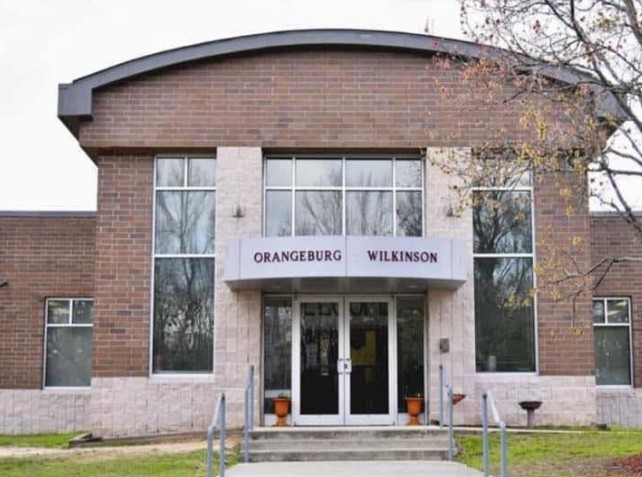
The Orangeburg County School District Board of Trustees voted unanimously this week to transfer ownership of the current Orangeburg-Wilkinson High School campus to Claflin University after the high school relocates to its new campus on Cook Road.

The move will allow Claflin University to use the school’s athletic facilities while preserving the site as a community resource, university officials said.

During a presentation to the school board in May, Claflin President Dr. Dwaun Warmack said the university’s primary interest is in the athletic facilities rather than the academic buildings.

“We hope this can be a collaborative effort,” Warmack said. “We want to do it there to preserve that legacy.”

The current Orangeburg-Wilkinson campus on Bruin Drive is expected to become vacant when students move into the new $125.3 million high school, which is projected to be completed later this year.

Photo: Orangeburg-Wilkinson High School/Facebook

Claflin’s plan for high school campus

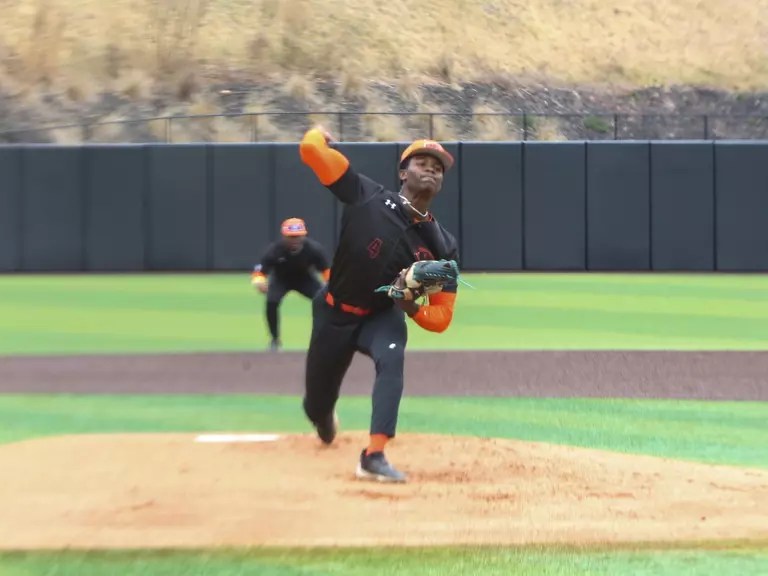
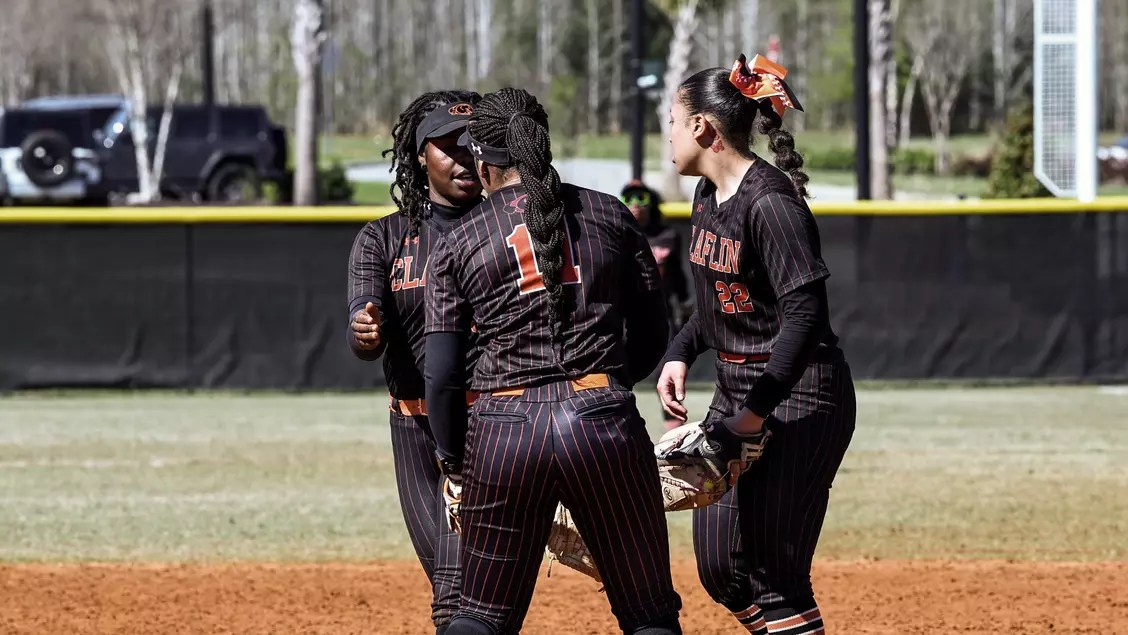
Warmack said Claflin plans to use the facilities as home venues for its baseball, softball and track programs, which currently lack dedicated fields and locker rooms. The university’s baseball team, for example, currently plays at the city-owned Mirmow Field.

“The facilities would become the home of the intercollegiate softball, baseball and track teams,” Warmack said.

University officials also envision opening the facilities to the public for youth sports camps, athletic tournaments and other community events.

“We want to open it up to have a variety of community events,” Warmack said. “We want to host Little League track tournaments that our coaches will lead and sponsor. We want community events around volleyball and the gym, and baseball clinics to be able to go there as well.”

He said the initiative would provide Claflin student-athletes opportunities to earn service hours by mentoring and training local youth.

“That is a piece we really want: to be able to ensure youth have the training and development they need,” Warmack said.

School board members praised the proposal, citing both economic and community benefits.

“I think we have to act fiscally responsible as far as our constituents and taxpayers are concerned,” trustee Dr. William O’Quinn said. “I think they will do a great job taking care of the property.”

Claflin NCAA Division II Softball Championships
Photo: Claflin Athletics

O’Quinn noted that the district would avoid the estimated $2.5 million cost of demolishing the campus. He also said Claflin’s plans could generate economic activity by attracting visitors to Orangeburg and creating jobs through future renovation projects.

“We will not have to pay to have it demolished,” O’Quinn said. “I think all of us would hate to see that happen.”

Trustee Ruby Edwards said she was encouraged by the opportunities the facilities could provide for local youth.

Claflin officials have not determined whether existing buildings on the campus will be renovated or demolished. Warmack said an architect serving on the university’s board estimates renovation costs could range from $2.5 million to $10 million, depending on the scope of the project.

These were the 5 Best Division II Football Games from the 2025 season

Screen Shot 2026 06 15 At 35816 PM
The 2025 Division II HBCU football season was filled with exciting games that perfectly encapsulated the unpredictable nature of sports.

Here are 5 games from last season that stood out the most.

Edward Waters vs. Virginia Union 

Edward Waters’ thrilling win over the then-defending CIAA champion Virginia Union was easily the biggest upset of the 2025 season.

After a sloppy opening quarter, during which each team committed turnovers on their opening offensive drives, the game began to pick up steam as it shifted to the next period.

Of the 14 offensive drives from the 12:42 mark of the second quarter to the end of the game, 10 of them culminated in scores, including seven touchdowns.

One particular sequence saw both teams combine for three straight touchdown drives in a span of two minutes.

Trailing 31-17 in the fourth quarter in the final 10 minutes, Virginia Union mounted a comeback by first capping a 75-yard drive with a nine-yard touchdown pass. On the ensuing defensive possession, they recovered EWU fumble, returning it 51 yards for a touchdown to tie the score 31-31 with 4:09 left.

It did not take long for Edward Waters to get the lead back, returning the following kickoff 90 yards for a score to go up 38-31 with 3:50 remaining.

After another Virginia Union score to tie the score again with 1:20 still on the clock, Edward Waters miraculously drove the ball down the field for the game-winning field goal as time expired.

Kentucky State vs. Grambling State

The most controversial finish on this list comes from Kentucky State’s overtime thriller against Grambling State.

Kentucky State started the game upset-minded, building a 14-0 lead that turned into a 21-10 lead with two minutes left in the first half.

Grambling trimmed its deficit down to one score before the end of the half, later taking the lead toward the end of the third quarter.

However, a muffed punt set off a run of 10 unanswered points for the Thorobreds that gave them a 31-24 advantage in the final two minutes of the game.

In the face of adversity, a string of big plays by quarterback C’zavian Teasett got the Tigers downfield, culminating in a 17-yard touchdown run to tie the game at the end of regulation.

The controversy comes in Kentucky State’s only drive in overtime, facing third-and-four with a chance to extend the drive.

After a pass is stopped short of the first down, and forward progress seems to stop as a pile of defenders pushes the receiver back, the referees allow the play to continue.

Grambling State took full advantage of the opportunity, forcing a fumble and returning it 83 yards for the game-winning touchdown.

Benedict vs. Edward Waters 

Edward Waters makes the list once again, this time on the wrong side of the final result in their clash against Benedict.

Benedict entered this game looking to preserve its unbeaten record while Edward Waters, reeling after suffering its first conference loss against Kentucky State the previous week, was trying to remain in the SIAC title hunt.

The drama began with Benedict taking a 10-7 lead with less than a minute remaining in the first half, beginning a sequence that proved consequential in determining the winner.

On the second play from scrimmage after the ensuing kickoff, Edward Waters turned the ball over after Benedict forced and recovered a fumble, getting the ball back in position to score.

However, on their first play after the turnover, they fumbled the ball back to Edward Waters, who returned it 61 yards the other way, putting them in field goal range.

With a chance to tie the game on a 54-yard field goal, the kick was blocked by Benedict and returned for a touchdown to take a 17-7 lead at halftime.

Despite the setback, Edward Waters responded well, scoring the first points of the second half with a field goal, then tying the game on a 56-yard punt return touchdown.

After taking the lead in the fourth quarter with another field goal, the game turned into a track meet with both teams trading touchdowns back and forth.

This sequence ended with Benedict getting the final word, scoring with 29 seconds remaining to win and keeping its undefeated streak intact.

Johnson C. Smith vs. Fayetteville State 

While the final score of 17-14 is not exactly indicative of a Game of the Year candidate, the backstory and the action on the field paint the picture of this magical matchup.

The previous year, Johnson C. Smith was primed for its first CIAA championship in school history, winning each of its first eight games, only needing one win to clinch a title berth.

Then they ran into Fayetteville State, suffering a damaging 27-0 loss followed by a 15-10 loss in the final week to Livingstone, putting a halt to their championship destiny.

Fast forward to 2025, and it’s now Fayetteville State who holds a perfect 5-0 conference record, needing a win over Johnson C. Smith, who sit a game behind them in the standings.

Cutting to the fourth quarter, trailing 10-0 at the start of the period, the Broncos scored two unanswered touchdowns to take a 14-10 lead with 3:28 remaining.

Faced with a repeat of their championship hopes falling by the wayside, the Golden Bulls came up clutch, driving the ball downfield for a touchdown with 13 seconds remaining to seal the win.

Johnson C. Smith further exorcised its demons by knocking off Livingstone the following week to officially clinch a berth in the CIAA championship game, where they would defeat Virginia Union to claim their first conference title since 1969.

Benedict vs. Wingate

Benedict’s Division II playoff win against Wingate was an extraordinary display of resilience in the face of adversity, producing what was easily the best finish to a game in Division II football last year.

For context, Benedict made the playoffs as an at-large bid after losing to Albany State in the SIAC championship game the previous week.

This meant the Tigers would be going on the road for a Division II playoff game for the first time in school history (their previous two appearances were at home) against a Wingate team that defeated them in their first-ever playoff appearance in 2022.

History looked like it was going to repeat itself as on the second play from scrimmage in the second half, Benedict threw an interception that was returned for a touchdown to put them down 24-0.

On the verge of being shut out, the Tigers’ defense gave the team a chance in the third quarter, forcing turnovers on three straight possessions.

The offense finally took advantage after the final turnover, converting it into a touchdown for their first points of the game.

Special teams then got in on the action, returning a blocked field goal for a touchdown, followed by another offensive touchdown to bring the lead back down to 24-19 with 3:36 remaining.

With 19 seconds left in the game, Benedict got the ball back with a chance to win the game.

After three incomplete passes, the Tigers pulled off a miracle hook-and-ladder play, taking the ball 86 yards down the field for the go-ahead touchdown as time expired, claiming their first Division II playoff win in school history.

Andrew Body gets nod as Alabama’s top small college athlete

Andrew Body
Alabama State quarterback Andrew Body is being recognized as one of the state’s best athletes.

The Alabama Sports Writers Association named Body the Small College Athlete of the Year.

And for good reason.

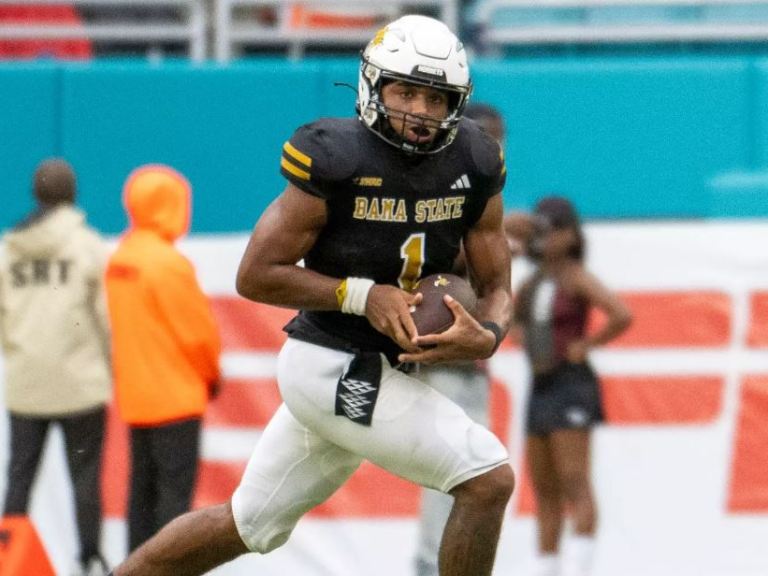
The redshirt senior signal-caller transferred to Alabama State in 2024 and quickly became the centerpiece of a Hornets team that posted its first 10-win season in 21 years in 2025. Despite being limited to eight games due to injury, Body was named Southwestern Athletic Conference Offensive Player of the Year.

He also earned national honors as the Stats Perform HBCU National Player of the Year and the BOXTOROW National Offensive Player of the Year.

“Andrew Body has exemplified what it means to endure,” Alabama State coach Eddie Robinson Jr. said in a statement. “He has overcome numerous injuries and setbacks during his college career. He has never complained and leads by example in everything he does.”

Andrew Body Alabama State HBCU
Photo: Alabama State Athletics

Body completed 70.6 percent of his passes for 1,770 yards and 20 touchdowns with just one interception. He added 518 rushing yards and four touchdowns.

He said Alabama State proved to be the right fit during his transfer process.

“Alabama State just gave me an opportunity, and I just kind of took it and ran with it,” Body said. “You’ve got to go where you feel loved.”

Body is set to return for his senior season in 2026.

“It is a privilege to be able to get recognized,” he said. “I don’t take it for granted at all because I know this game can get taken away in the snap of a finger.”

Ted Cruz urges CBC to support college sports bill for sake of HBCUs

KNOCKED DOWN 30
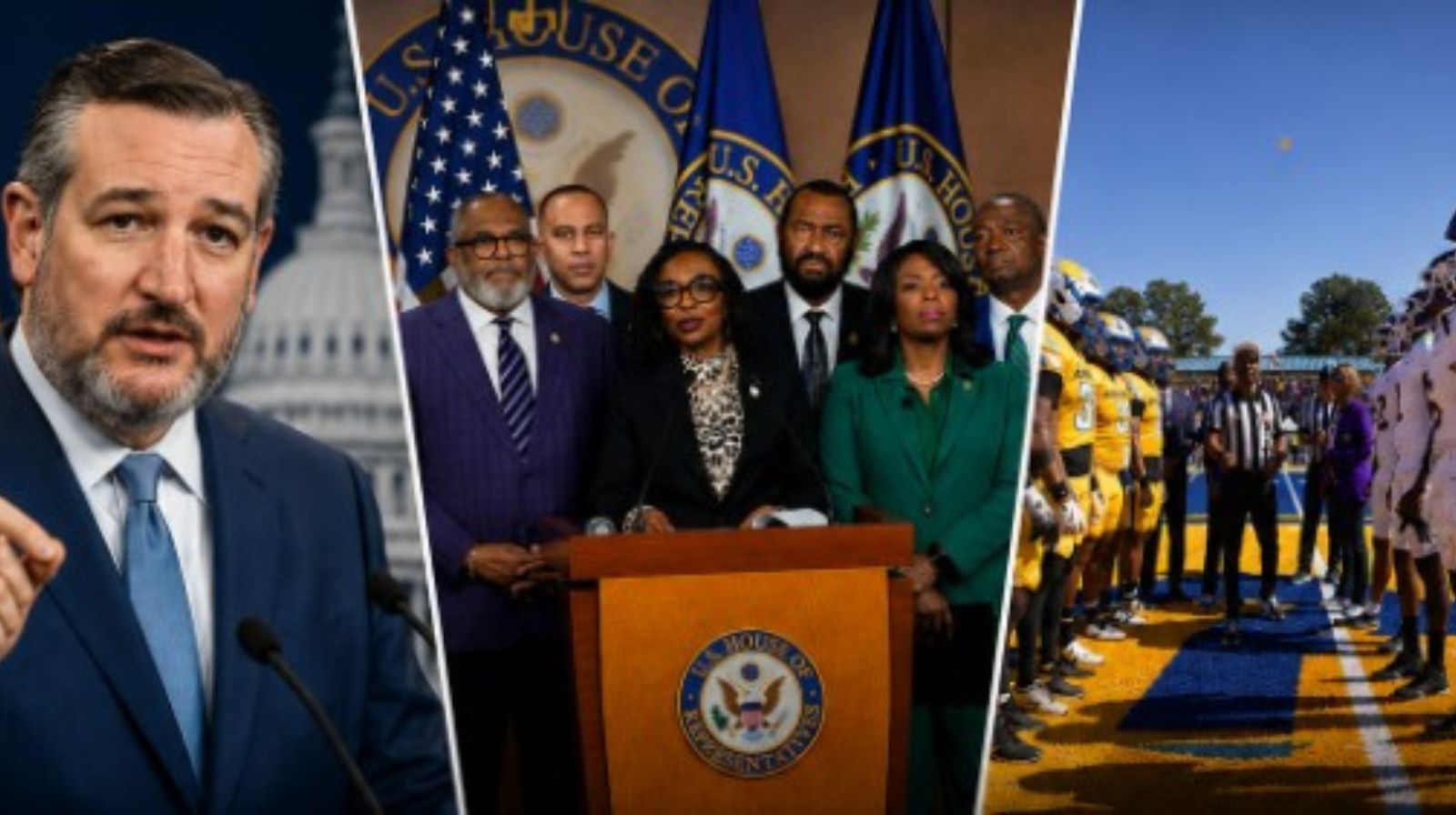
Ted Cruz, the Texas Republican co-author of a Senate bill to revamp college sports, is making a direct appeal to Black lawmakers in Congress that inaction on the legislation would hurt HBCUs.

Cruz, the Senate Commerce Committee Chair, and ranking member Maria Cantwell, D-Wash., say they have been reaching out to members of the Congressional Black Caucus as they search for the votes needed to move their proposal through both chambers, according to Roll Call.

But the CBC has given no sign it is ready to support the Protect College Sports Act. Instead, the caucus has asked them to pause.

In May, the caucus helped stall a House bill amid anger over redistricting fights that weakened Black voting power in several southern states.

In a June 3 letter, the group extended that same skepticism to the Cruz-Cantwell plan, warning against advancing college athletics legislation while Black political representation is under attack.

“The Congressional Black Caucus believes institutions that profit from Black talent and Black communities have a responsibility to stand with those communities when their fundamental rights are under attack. Silence in the face of injustice is not neutrality—it is complicity,” the letter said.

What would the Protect College Sports Act do?

The bill would establish federal NIL rights for student-athletes, require that contracts clearly outline athletes’ obligations and compensation, and cap agent fees at 5 percent. It would also override conflicting state NIL laws, create a student-athlete ombudsman, set transfer and eligibility standards, ban salary cap-evasion tactics, and prohibit the formation of a college sports “super league.”

Cruz: failure to act would be devastating for HBCUs

“If Congress doesn’t act, the consequences will be devastating. They will be devastating when the president of TSU says that they would be devastating for HBCUs,” Cruz said. “They would be devastating for hundreds of thousands, and over time, millions of athletes — many of whom are African American, many of whom are Hispanic, many of whom are from economically disadvantaged environments.”

At a recent roundtable, Cruz cited comments from Texas Southern University President James W. Crawford III, who suggested that HBCUs are already under strain in the current NIL era amid a financial arms race for talent.

Photo: Texas Southern University

He compared the environment to a “Hunger Games” style competition, one that favors the wealthiest programs and leaves smaller schools scrambling to keep up.

“It’s about competing. … If you get at the ability where you have some controls on costs [and] you don’t have this continual bidding, you’re not in a constant recruiting mode because now you’re constantly trying to recruit that great player that just beat your team,” Crawford said.

The fight over the Senate bill comes after the CBC and the NAACP helped force House GOP leaders to pull a separate college sports measure from consideration.

Photo: Congressional Black Caucus

They argued that bill would have helped powerful schools and conferences while hurting athletes, and they linked it to broader battles over Black representation in Congress.

Cruz says he wants a vote in both chambers before the fall semester and football season begin.

HBCU stars contributed to New York Knicks championship history

20240424 153337 Knicks
For the first time in 53 years, the New York Knicks are NBA champions, claiming the Larry O’Brien trophy after beating the San Antonio Spurs in five games.

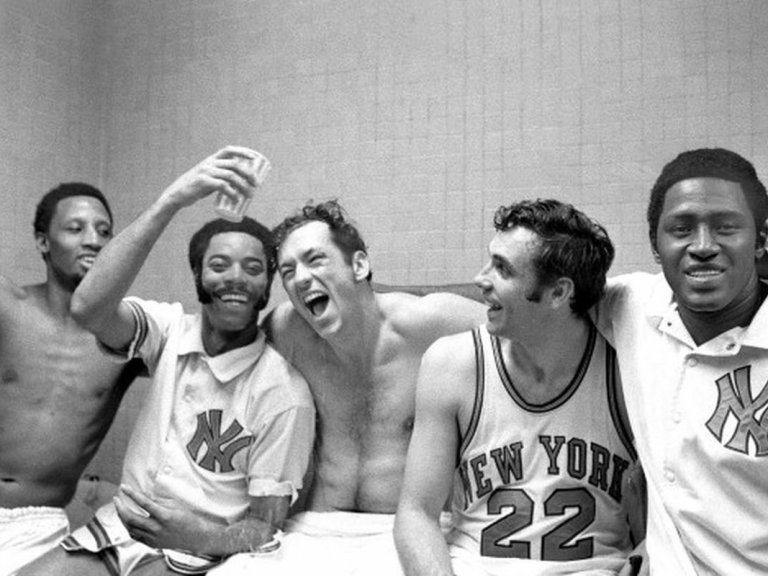
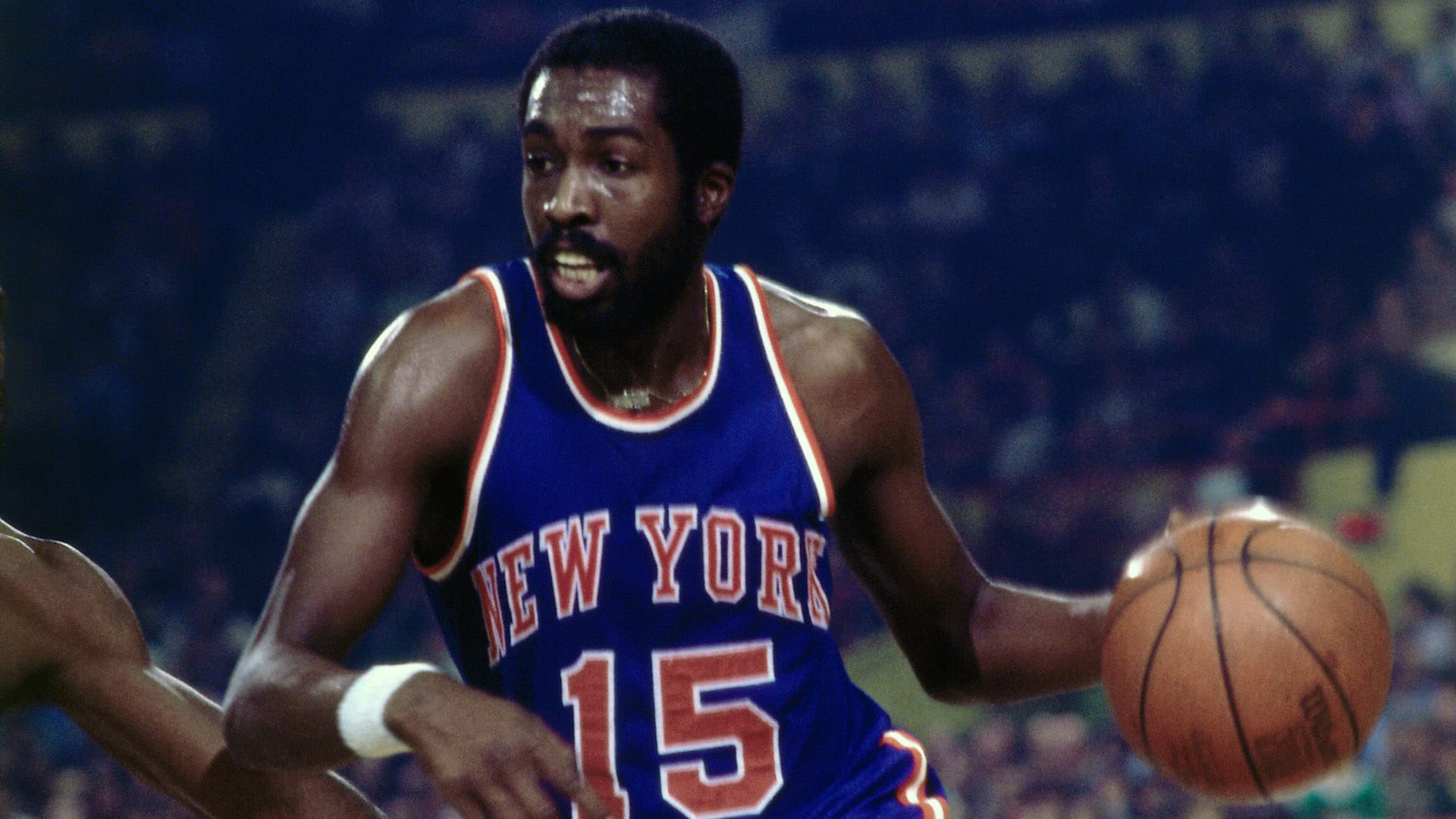
The last time the Knicks called themselves champions, they had a distinct HBCU flavor on their roster, with three of the most prominent players in our lore contributing to the team’s success.

The most prominent being Grambling State alum Willis Reed, who reigned as one of the NBA’s top players in the late ’60s and early 70s.

Being drafted to the New York Knicks in the second round of the 1964 NBA Draft, Reed started his career hot, being named Rookie of the Year and making the All-Star team in each of his first seven seasons.

During that span, Reed averaged 20.1 points on 48% shooting and 13.8 rebounds, including in 1967 when he helped the Knicks snap an eight-year playoff drought.

Willis Reed led Knicks to memorable championship

His best season came in 1970 when he became the first, and to date only, HBCU player to ever win league MVP, narrowly beating Lakers legend Jerry West for the award.

Reed’s magical 1970 season also included winning the All-Star MVP and leading the Knicks to their first NBA championship in franchise history in a mythical Game 7 performance.

Dealing with a torn thigh muscle that forced him to miss Game 6, Reed unexpectedly returned to the court for Game 7, producing two big buckets at the start of the game that helped power the Knicks to an 113-99 win over the Los Angeles Lakers.


He was named Finals MVP, becoming the first player in NBA history to win the regular season MVP, All-Star MVP and Finals MVP in the same season.

By the time the 1973 season rolled around, Reed was plagued by injuries, missing the majority of the 1972 campaign during which the Knicks lost in the NBA Finals to the Los Angeles Lakers.

In what was his final season playing at relative full health, the former MVP helped lead the Knicks to a 57-25 record, advancing to the NBA Finals where they once again beat the Lakers in five games to claim their second championship in three years.

Reed was named NBA Finals MVP after averaging 16.4 points on 49% shooting and 9.2 rebounds during the series.

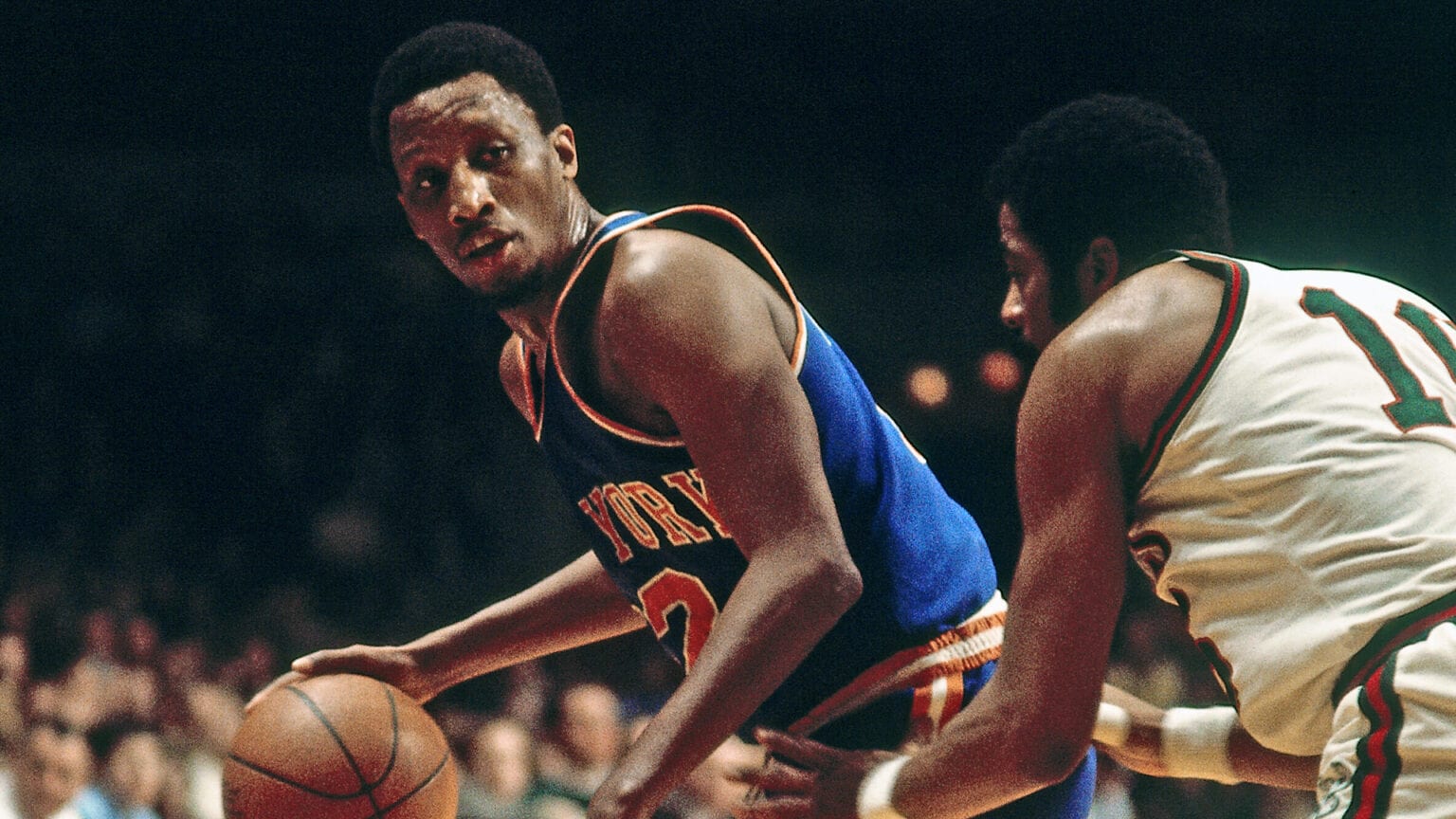
Dick Barnett was a rock on Knicks title team

Another member of the Knicks’ championship teams was Tennessee State’s Dick Barnett, who took a much longer road to the big stage.

Barnett entered the NBA as the fifth overall pick in the 1959 NBA Draft by the Syracuse Nationals (now Philadelphia 76ers). After spending his first two years with the team, he spent a year playing with the Cleveland Pipers in the American Basketball League before returning to the NBA with the Los Angeles Lakers in 1962.

Photo: NBA.com

In his first season with the Lakers, he averaged 18.0 points per game, helping the team reach the NBA Finals for his first career appearance.

After three seasons with the Lakers, including another NBA Finals berth in 1965, Barnett was traded to the Knicks, where he would spend the final nine years of his career.

His tenure in New York got off to a hot start, putting up a career-high 23.1 points and 4.1 rebounds. Two years later, he was selected to his lone All-Star Game.

Barnett was a primary contributor to the Knicks’ 1970 championship, averaging 18.6 points and 4.3 assists during the series, including a 21-point performance in the title-clincher.

Like Reed, the 1973 season came during the back stretch of his career, when the Tennessee State alum played sparingly before retiring the following year.

Earl “The Pearl” became a legend in New York

Finally, there’s Earl “The Pearl” Monroe, whose NBA journey began in a starring role in Charm City.

The Winston-Salem State standout was selected second overall by the Baltimore Bullets (now Washington Wizards), making him the highest drafted HBCU player in NBA history.

Monroe joined Reed as the only HBCU player to win the Rookie of the Year award, leading the Bullets in scoring (24.3) and assists (4.3), adding 5.7 rebounds per game.

Over the next three years, he helped elevate the Bullets to championship contention as a two-time All-Star, leading the team to its first NBA Finals appearance in 1971.

The following year, Monroe would be traded to the Knicks midway through the season, helping the team reach the Finals in a sixth-man role.

Photo: NBA.com

In 1973, the WSSU alum was elevated into the starting lineup in his first full season with the team. He averaged 16.1 points in the Knicks’ championship run, including a series-high 23 points to clinch the title.

Monroe continued to play at a high level for the remainder of the 1970s, being selected to a pair of All-Star teams before retiring in 1980.

New York Knicks history, before and since their initial two championship runs, is synonymous with HBCU stars who gave their hearts and souls to the city, cementing their place among the most beloved players in franchise history.

Names such as Nat “Sweetwater” Clifton (Xavier University of Louisiana), Charles Oakley (Virginia Union), Kyle O’Quinn (Norfolk State), Anthony Mason, and Truck Robinson (Tennessee State) went through the highs and lows with the Knicks, defining their respective eras that helped lay the foundation for the team’s success today.

Former Howard running back Ian Wheeler named MVP of UFL United Bowl

Wheeler Chat
Former Howard running back Ian Wheeler’s return to Washington, D.C. was a special one.

For the second straight week, Wheeler scored the go-ahead touchdown as the Louisville Kings defeated the 2025 United Football League champion D.C. Defenders 27-20 in the United Bowl Saturday afternoon.

The win gives the Kings their first UFL championship.

Wheeler, named the game’s Most Valuable Player, scored on a 44-yard burst down the left sideline early in the fourth quarter to give the Kings, who started the season 0-3, the lead for good at 20-16.

Wheeler scored on a 51-yard run the previous week to push the Kings past the St. Louis Battlehawks in the UFL semifinals. He finished the United Bowl with 81 yards on 10 carries.

Wheeler’s performance came on a very special day for his family as well; Saturday was his mother’s birthday.