NCAA new age-based model eliminates redshirts and some waivers for D1 athletes

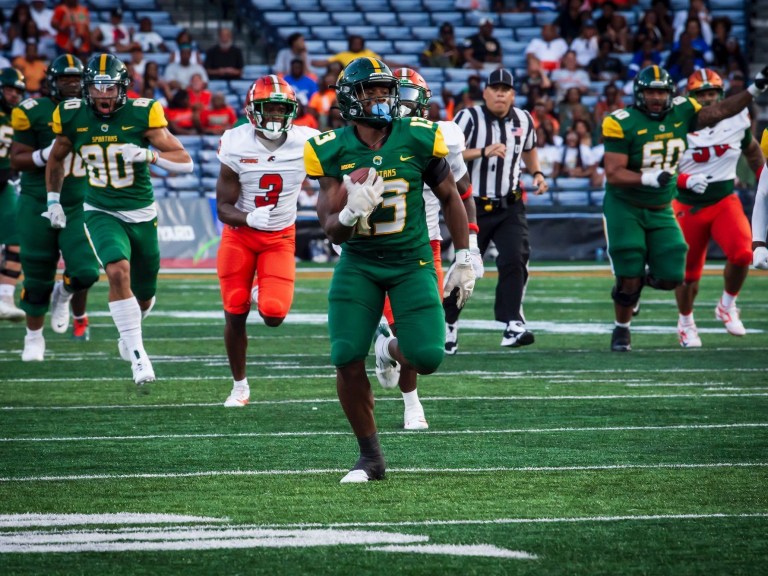
Norfolk State Running Back
The NCAA Division I Council Cabinet unanimously approved an age-based, five-year eligibility model.

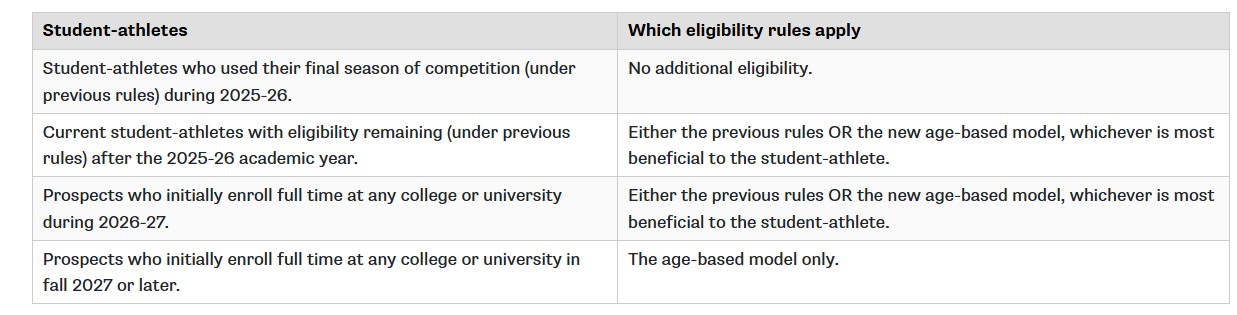
Incoming members of the 2026 class and current student-athletes will operate under whichever eligibility model benefits them most. However, athletes who exhausted their eligibility during the 2025–26 academic year will not receive additional seasons, though legal challenges seeking extra eligibility are expected.

Are there exceptions to the rule?

The rule change also eliminates redshirts and most waiver pathways, including hardship exceptions that have been a lifeline for programs navigating injuries and roster gaps.

In recent years, critics have pointed to the waiver system as overly complex and prone to manipulation, contributing to an influx of older, mid-20s players and roster congestion across Division I.

Those limited exceptions—pregnancy, military service, and official religious missions—will allow athletes to pause their eligibility, provided they do not participate in organized competition during that time.

For HBCU programs, the impact could be immediate and layered. The new rule starts a student-athlete’s eligibility clock either upon full-time college enrollment or at the beginning of the academic year following their 19th birthday—whichever comes first.

Photo: NCAA

Current student-athletes who still have eligibility and are considering submitting season-of-competition or eligibility clock extension waiver requests based on circumstances during or before this past academic year must do so no later than July 31, according to the NCAA.

That adjustment effectively limits the pathway for older prospects, including junior college transfers, prep school standouts, and international players who have often bolstered HBCU rosters.

Under the current system, flexibility in age and eligibility has allowed HBCUs to develop late bloomers and add experienced talent who can contribute right away. The proposed model tightens that window, potentially forcing programs to recalibrate recruiting strategies that have leaned on maturity and development upside.

NCAA president Charlie Baker framed the move as a simplification effort in a shifting college sports landscape.

“While previous NCAA rules have served college sports well for a long time, we heard also loud and clear from NCAA members and student-athletes that eligibility rules should be easier to understand,” Baker said in a statement. “This change…clearly defines the exceptions available in limited circumstances, while preserving the long-intended alignment of eligibility with typical college enrollment and graduation patterns.”

Photo: Alabama State Athletics

What does this mean for HBCUs?

For HBCUs, the broader question is how to adapt.

Programs that have thrived by identifying overlooked or nontraditional talent may now have to double down on high school recruiting pipelines and earlier player development. At the same time, eliminating older-player logjams could create more immediate opportunities for younger athletes to see the field.

In a landscape where resource gaps already shape competition, this rule change doesn’t just tweak eligibility—it could redefine how HBCU programs build, sustain, and compete.

How much it will cost to watch a Delaware State football game from a VIP cabana

558979845 1200172282143603 6421464062931984551 N
During each Delaware State home game, VIP cabanas are stationed for prime football viewing.

And for 2026, the price of a field-level seat will be steep, as season prices were released by the DSU athletic department earlier this week.

Prior to July 15, one can purchase a season-long cabana for $8,500, which increases to $9,500 after that date. A $3,000 deposit is required, and full payment is due Aug. 14.

Included with the purchase of a VIP Cabana are 20 season tickets, four season parking passes, meet and greet opportunities with Delaware State football players, and access to VIP events.

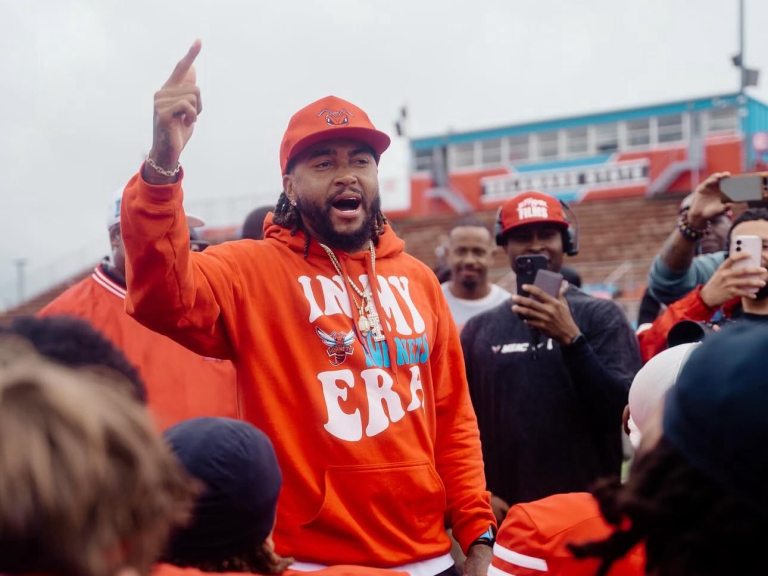
Delaware State opens Year Two of the DeSean Jackson era Thursday, Aug. 27, at Alumni Stadium against Coastal Athletic Association program Stony Brook.


View this post on Instagram


A post shared by MeeShach Stennett (@radioshach)

2026 NBA mock drafts project HBCU underdog story as second round pick

Screenshot 2026 03 04 102123
An HBCU basketball player is projected to be taken in the 2026 NBA Draft

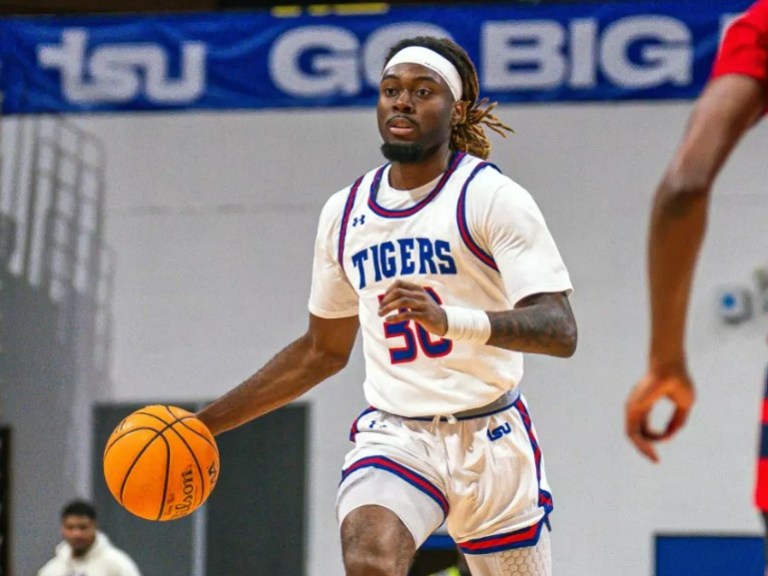
Multiple mock drafts released ahead of Wednesday night’s second round are converging on the underdog story of Tennessee State guard Aaron Nkrumah.

Nkrumah, a senior who rose from Division III Worcester State to become Ohio Valley Conference Player of the Year, has been projected across several outlets to hear his name called somewhere in the back half of the draft.

Where Aaron Nkrumah might be drafted

On3 projects Nkrumah going No. 51 overall to the Washington Wizards, while ESPN slots him slightly higher at No. 47 to the Phoenix Suns via Philadelphia. Sports Illustrated’s final mock draft places him at No. 49 to the Denver Nuggets, underscoring a growing consensus that the versatile guard has firmly entered the league’s radar.

Once considered a long shot even to be evaluated by NBA decision-makers, Nkrumah’s pre-draft rise has been swift. After being initially overlooked for the Portsmouth Invitational Tournament, he earned a late invitation to the NBA G League Elite Camp. From there, his performance was strong enough to secure a coveted call-up to the NBA Draft Combine — a turning point that prompted scouts to take a closer look.

Photo: Tennessee State Athletics

Evaluators have been drawn to Nkrumah’s physicality, defensive versatility, and advanced feel for the game. At Tennessee State, he developed into a multi-positional wing capable of guarding across the perimeter while contributing as a secondary playmaker.

“He’s one of the draft’s true hidden gems,” the Sports Illustrated scouting report noted, pointing to his unusual developmental path and steady improvement against higher levels of competition.

Nkrumah is arguably the draft’s best underdog story. He began his career at Division III Worcester State, then transferred up and blossomed into Ohio Valley Player of the Year at Tennessee State. Then, after a snub from the Portsmouth Invitational, he got a late invite to the G League Elite Camp, which he then parlayed into an NBA draft combine call-up that had scouts scrambling for more information about one of the draft’s true hidden gems. He’s a physical wing with excellent feel for the game and the ability to guard multiple positions.

Nkrumah had a magical senior season. He was named the 2025-26 OVC Player of the Year after averaging 17.7 points, 5.5 rebounds, 3.0 assists, and 2.8 steals per game while shooting 35.1% from 3-point range.

His efforts under first-year coach Nolan Smith helped Tennessee State reach the NCAA Tournament for the first time in 32 years.

What Aaron Nkrumah being drafted would mean

While his exact landing spot remains uncertain, the clustering of projections in the late second round suggests Nkrumah has moved from fringe prospect to legitimate draft candidate.

For Nkrumah, Wednesday night represents the potential culmination of a journey that has defied conventional pathways to the NBA. Regardless of where he is selected, his trajectory has already made him one of the more intriguing names to watch as the draft unfolds.

He would be the first Tennessee State basketball player in the NBA since former Tigers great Robert Covington. If drafted, Nkrumah would be the first HBCU draft pick since Kyle O’Quinn of Norfolk State in 2012.


Jackson State, Alabama A&M set for statement HBCU Gulf Coast Challenge

Screenshot 2026 06 23 164631 E1782248047928
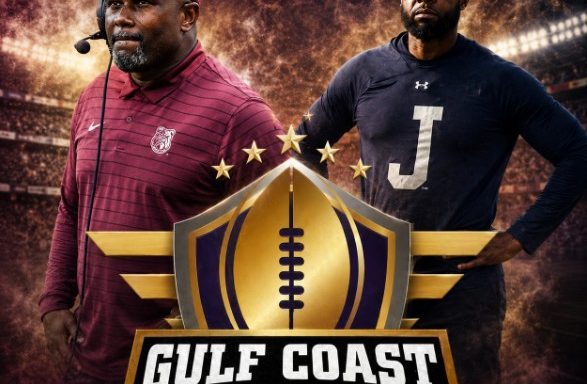
Sam Shade and T.C. Taylor share an appreciation for the Gulf Coast Challenge.

But one thing remained abundantly clear on Tuesday:

When Oct. 3 arrives, respect will give way to expectation. With Jackson State chasing another Celebration Bowl run and Alabama A&M eager to close the gap, this year’s meeting in Mobile is already carrying more than early-season weight.

Shade didn’t shy away from praising Jackson State and head coach T.C. Taylor, calling the Tigers one of the most talented and well-coached programs in the SWAC in recent years. He pointed to last season as proof—Jackson State’s physical run game and stout run defense set the tone across the league, and the Tigers came within two points of another Celebration Bowl appearance.

“A lot of teams have been chasing Jackson State,” Shade said Tuesday during a press conference.

But the Bulldogs’ message wasn’t about admiration alone. Shade emphasized urgency. With six home games on the schedule, he noted, those are the kinds of matchups teams “have to find a way to win.” And while an early test against Howard in the MEAC/SWAC Challenge looms, the clash in Mobile carries special weight.

“This game means a lot to our coaching staff, our players, our fans, and Alabama A&M,” Shade said. “It’s right here in our home state. We’ve got a lot of players from Alabama, and from Mobile, so this one is important.”

For Alabama A&M, it is more than a neutral-site game. The Bulldogs hope to bounce back from a 2025 season in which they won just four games overall and went 1-7 in the SWAC.

Jackson State beat Alabama A&M 57-24 in last season’s matchup.

Photo: Alabama A&M Athletics

Jackson State carries a mix of appreciation, expectation

When Taylor took the microphone, his focus sharpened quickly.

He echoed the importance of the event and its organizers, but made it clear that for his program the stakes are always internal. The Tigers are still carrying the sting of last season’s loss in the SWAC Championship Game to Prairie View.

“That left a bad taste in my mouth,” he said. “Being two points away from getting back—that’s always our goal, and that doesn’t change.”

At the same time, Taylor acknowledged the reality of modern college football. Roster turnover, fueled by the transfer portal, has reshaped Jackson State into what he described as a “new team”—younger, but still talented. With dozens of players arriving over the summer and already grinding through workouts, the foundation is being laid again.

“It’s an entire new team, but a talented team,” Taylor said. “A young team, but we’re excited about it. Those guys are working right now, and that’s what you want to see this time of year.”

By the time the microphones were set down, the tone was clear: respect, yes—but also urgency.

Both programs are chasing something in 2026. And come Oct. 3, in Mobile, they’ll measure exactly how close they are.

National College Resources Foundation signs on as official sponsor of 3rd Annual HBCU Sports Awards

NCRF HBCU Spnosor
The HBCU Sports Awards is proud to announce that the National College Resources Foundation (NCRF) has signed on as an official sponsor of the 3rd Annual HBCU Sports Awards, scheduled for July 25, 2026.

The partnership represents a natural alignment between two organizations deeply committed to the advancement of the HBCU community. Founded in 1999 by Dr. Theresa Price, NCRF is a 501(c)(3) nonprofit educational enhancement organization that has spent more than two decades expanding access to higher education and career pathways for underrepresented students.

“As the Founder and CEO of the HBCU Basketball Showcase, HBCU Football Combine, and the Black College Expo, I am super excited to partner with HBCU Sports Awards to recognize amazing coaches in the HBCU community,” said Dr. Theresa Price, Founder and CEO of the National College Resources Foundation. “Coaches pour so much of their time into our young people, helping them develop into their best selves. It is an honor to be able to shine the light on them with this incredible award show.”

“We are incredibly grateful to have the National College Resources Foundation join us as an official sponsor of the 3rd Annual HBCU Sports Awards,” said Kenn Rashad, Founding Publisher and Editor of HBCU Sports. “What Dr. Theresa Price and the NCRF team have built over the past 26 years is nothing short of remarkable. Their commitment to opening doors for students, particularly in the HBCU space, makes this partnership a perfect fit.”

About the National College Resources Foundation

National College Resources FoundationFounded in 1999 by Dr. Theresa Price, the National College Resources Foundation is a 501(c)(3) nonprofit educational enhancement organization headquartered in California. Since its founding, NCRF has helped over 700,000 students gain admission to college, including more than 450,000 first-generation students, while facilitating access to more than $5 billion in scholarships and grants.

NCRF has hosted over 300 college expos nationwide, helping students gain direct access to colleges where they can be accepted, have application fees waived, and be awarded scholarships on the spot. For more information, visit ncrfoundation.org.

About the 3rd Annual HBCU Sports Awards

Now in its third year, the HBCU Sports Awards is an annual live broadcast event produced by HBCU Sports, the longest-running HBCU media platform on the Internet. The Awards honor athletes, coaches, and administrators across all HBCU conferences and sports, spanning 46 categories across NCAA Division I, Division II, and NAIA institutions.

The 3rd Annual HBCU Sports Awards will feature two live YouTube broadcasts: the HBCU Sports Awards Nominations Show on July 14, 2026, and the HBCU Sports Awards on July 25, 2026. The event reaches a combined audience of more than 124,000 followers across all platforms, with year-over-year livestream viewership growth of 45.8 percent and watch time growth of 87.4 percent, all with zero paid promotion.

Sponsorship opportunities still available

The HBCU Sports Awards continues to welcome businesses and organizations that share a commitment to celebrating HBCU athletic excellence. Sponsorship opportunities remain available across multiple tiers. Businesses and organizations interested in becoming a sponsor are encouraged to contact HBCU Sports at advertise@hbcusports.com for full details.

The 3rd Annual HBCU Sports Awards Nominations Show streams live on YouTube on July 14, 2026. The Awards Show streams live on YouTube on July 25, 2026.

These are the 10 best head coaches in Division II HBCU football

Alvin Parker
While Division II HBCU football is well-known for its exciting, hard-hitting action, not enough credit is given to the coaches who put their team in a position to compete at a high level even beyond their given conferences.

Here are the 10 best that stand out among the crop.

10. Cedric Pearl, Allen

The head coaching ranks in Division II HBCU football are a bit top-heavy, with the coaches toward the bottom of this list having yet to prove themselves.

So we begin with Allen head coach Cedric Pearl, who has shown great promise to begin his tenure at Allen. After posting a 2-8 overall record in his first season with the Yellow Jackets, Pearl improved the team to 6-5 in 2025.

However, with reigning SIAC Overall Player of the Year Fabian Duncan having transferred to Johnson C. Smith, Pearl and the Yellow Jackets will be starting from square one in 2026.

9. Adrian Jones, Elizabeth City State

In his first season as head coach at Elizabeth City State, Adrian Jones did something that had not been done in over a decade.

Coming to ECSU after a nine-year stint at Shaw, Jones led the Vikings to a 4-3 conference record, marking the first time the team has been above .500 in conference play since 2013.

While contending for a championship in a top-heavy CIAA is a bit far-fetched, the future could be bright for the Vikings if they continue on this trajectory.

8. Brian Jenkins Sr., Edward Waters

Another coach who had a strong first season in his new gig is Brian Jenkins Jr., who guided Edward Waters to a surprisingly promising season despite unlikely circumstances.

Known for his five-season tenure as head coach at Bethune-Cookman from 2010-2014, during which he led the team to the FCS Playoffs three times, Jenkins was named interim head coach at Edward Waters following the sudden departure of Toriano Morgan prior to the start of the 2025 season.

Despite operating on short notice, the Tigers overachieved with a 5-5 record, including a 3-0 start highlighted by a win over the then-reigning CIAA champion Virginia Union.

With a full offseason for recruiting and spring training as head coach, the prospect of Jenkins turning EWU into a contender as early as this season is highly probable.

7. Sean Gilbert, Livingstone

Since taking over as head coach at Livingstone in 2020, Sean Gilbert has transformed the Blue Bears from a non-factor to a fringe contender in the CIAA.

Beginning his tenure with a 1-8 season, Gilbert has led the Blue Bears to at least four wins in each of the last four seasons, Livingstone’s longest such streak since 1999.

This includes a 5-5 record in 2025, marking the first time Livingstone has finished at or above .500 in consecutive seasons in a decade.

6. Felton Huggins, Kentucky State

Despite a strong 2025 season in which he led Kentucky State to its first Division II playoff appearance in school history, Felton ranks outside the top five because he does not have the same consistency as the coaches ahead of him.

The Thorobreds’ playoff berth coincides with a season in which they finished with a 9-3 record, the most they’ve had in a year since 1935.

Considering Coach Huggins has improved in each of his first three seasons, Kentucky State is on a natural progression to becoming the number one team in the SIAC.

5. Dr. Henry Frazier, Virginia State

While the Trojans’ 2025 campaign was a minor setback compared to Dr. Henry Frazier’s first four seasons as head coach, it is a sign of how good the team has been compared to their competitors.

The Trojans’ 6-4 record extended Coach Frazier’s streak of winning seasons to four since taking over the program in 2022.

This includes a 2024 season in which he guided Virginia State to its first CIAA championship appearance since 2017.

In what is sure to be a wide-open CIAA championship race this upcoming season, it is a strong possibility that Coach Frazier will have the Trojans in the mix at the top of the conference.

4. Ron Dickerson, Benedict

Two seasons after moving on from Chennis Berry, Benedict’s timeline back into the championship picture was sped up, due in large part to the efforts of head coach Ron Dickerson.

Taking over for a team that had won two straight SIAC championships, Dickerson built on what was a solid first season in which he finished 4-6 by posting a 10-3 record.

He helped lead Benedict back to the SIAC championship game and helped the team overcome a 24-point deficit to win their first Division II playoff game in school history.

Considering Benedict will be the favorites to win the SIAC this season, Dickerson’s resume could lead to him climbing up the Division II coaches’ power rankings this time next year.

3. Maurice Flowers, Johnson C. Smith

The 2025 season was one of vindication for Maurice Flowers after he got the Johnson C. Smith Golden Bulls over the hump, winning their first CIAA championship since 1969.

During the previous season, Johnson C. Smith got off to a hot start, winning its first eight games and looking like the overwhelming favorite to take home the conference.

However, losses over the final two weeks put an end to those hopes, adding to the Golden Bulls’ adversity that enriched their story of championship glory the following year.

Considering Johnson C. Smith still boasts a significant amount of talent from their championship run, and some key new players from the transfer portal, a repeat is certainly within their reach.

2. Richard Hayes, Fayetteville State

There is an argument to be made that Richard Hayes should be number one on this list, as he is arguably the most consistent coach remaining in Division II HBCU football.

Since taking over as head coach at Fayetteville State in 2016, Hayes has established a winning culture that has made it one of the most successful programs in recent years.

Before the CIAA abolished divisions after the 2023 season, the Broncos ruled over the CIAA South, claiming six straight division titles from 2017-2023. His six conference championship berths are the most among active HBCU football coaches at any level.

That being said, Hayes’s 1-5 record in CIAA championship games, including his most recent loss coming against the team headed by the number one coach on this list, drops him to number two.

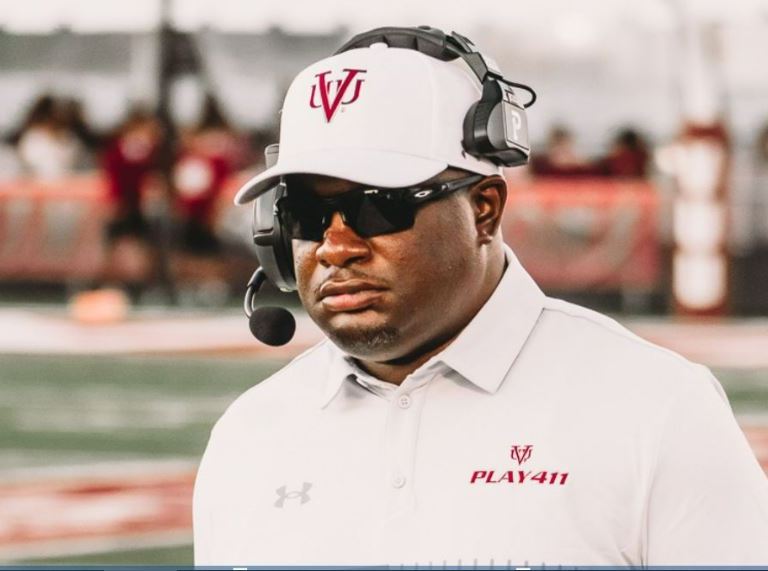
1. Dr. Alvin Parker, Virginia Union

There is no question that Virginia Union head coach Dr. Alvin Parker is hands down the best and most accomplished in Division II HBCU football.

Coach Parker has won at least six games in every year he’s been at the helm at his alma mater (since 2018), including appearances in each of the last three CIAA championship games.

In addition, the Panthers have been selected to the Division II playoffs in each of the past four seasons, one of only five teams in all of Division II football to do so.

The only thing Dr. Parker has yet to do is win a Division II National Championship, which, considering all he has accomplished with Virginia Union thus far, would not be far-fetched to see happen in the years to come.

Ken Griffey Jr.’s signature sneaker gets HBCU makeover

Griffey1
Historically Black Colleges and Universities have long shaped culture, style, and sport—often without the spotlight they deserve.

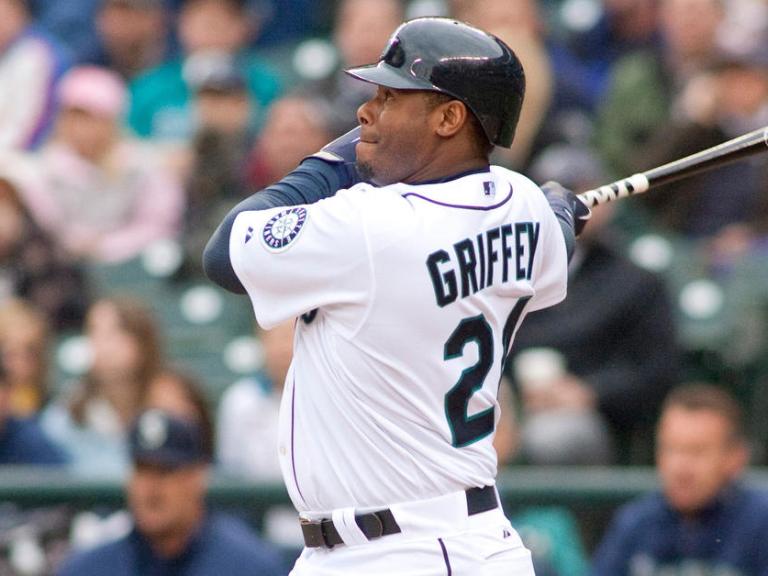
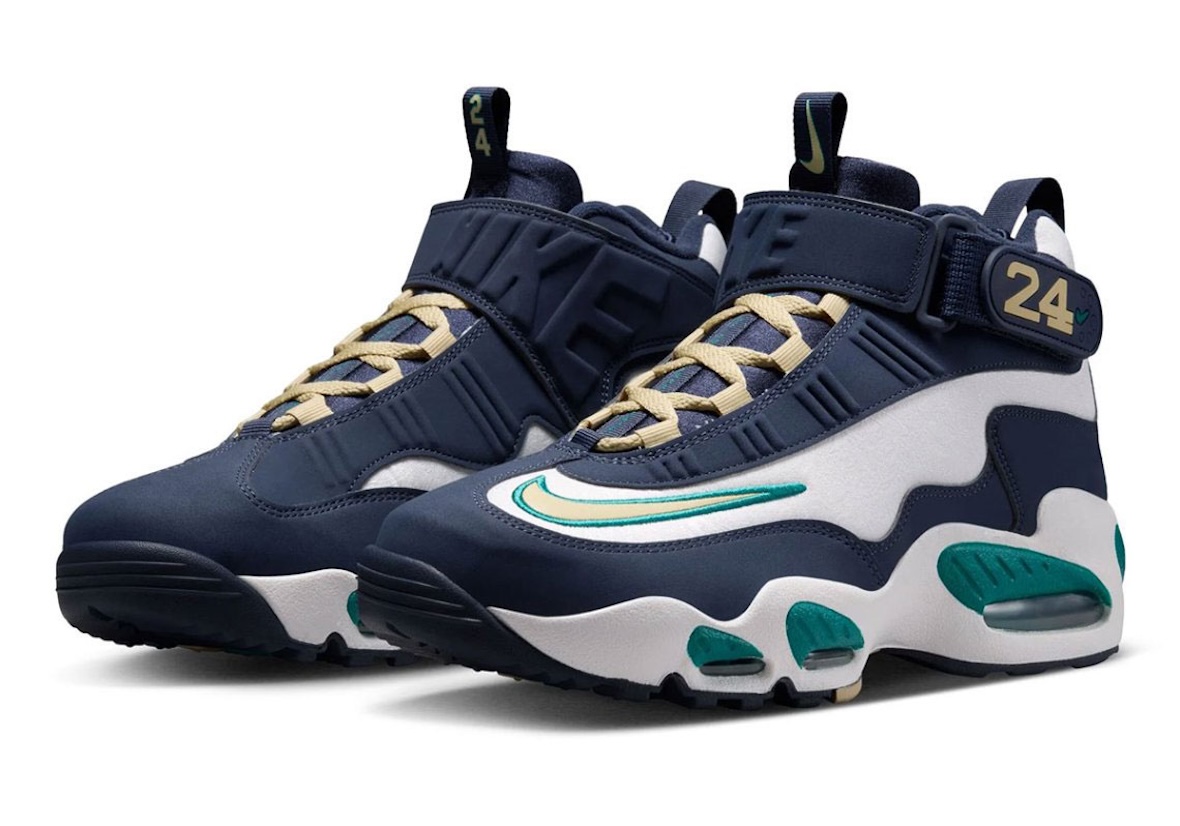
Now, that influence may be stepping into it, as Nike brings back Ken Griffey Jr.’s Air Griffey Max 1 in a colorway that channels the spirit of the HBCU Swingman Classic.

The newly surfaced “HBCU Swingman Classic” edition blends Midnight Navy, teal, white, and Team Gold, a palette that closely mirrors the uniforms worn during the annual event founded by Griffey himself, according to sneakerbardetroit.com.

What’s unique about HBCU Swingman Classic sneaker

From a design standpoint, the sneaker leans heavily into Midnight Navy, which dominates the upper, tongue, and molded sections. It sets a strong, uniform base, allowing the brighter accents to stand out with purpose.

Beneath those overlays, white leather panels bring contrast, but this time with a twist—tonal lace embroidery stretches across the base, adding texture to a part of the shoe that’s typically left minimal. Nike hasn’t explained the detail, leaving room for interpretation.

Teal lands on the Swoosh and midsole, giving the shoe a clear nod to Griffey’s Mariners roots, while Team Gold highlights the laces, lace loops, additional branding, and the iconic No. 24. The result feels like a blend of influences—part Seattle nostalgia, part HBCU tribute.

That duality is what makes this release stand out. The Air Griffey Max 1 has been a consistent presence in Nike’s retro rotation, but rarely does a colorway invite such a connection to an event.

The sneaker is more than just a throwback—it becomes a bridge between Griffey’s black baseball legacy on the field and his impact beyond it.

Release details are still unconfirmed, but the pair is expected to be priced at $180, according to the website.

Which D2 HBCU football team has to prove 2025 wasn’t a fluke?

KNOCKED DOWN 34
Every offseason reshapes college football, but in Division II HBCU circles, 2026 feels less like a reset and more like a quiet standoff.

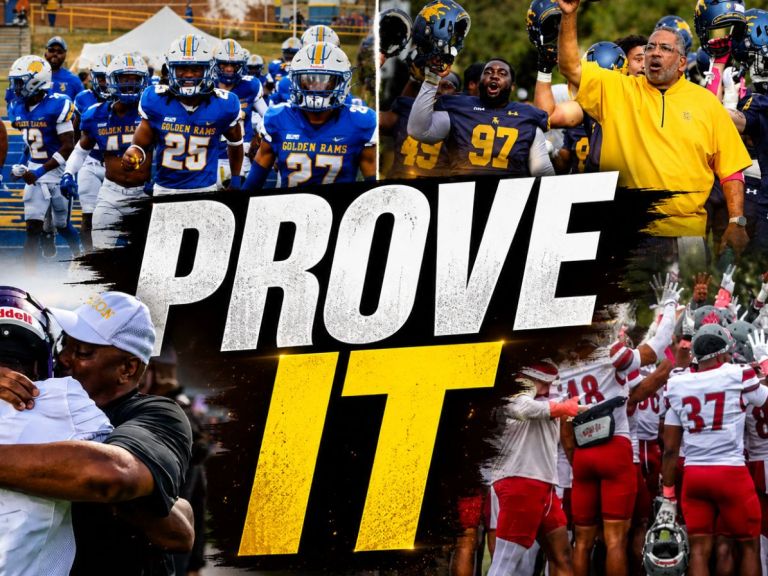
The hierarchy hasn’t exactly crumbled. The usual contenders still hover near the top. But beneath that surface stability sits a more interesting question—who actually has something to prove?

If there is one team HBCU Sports reporter Jarrett Hoffman says carries the heaviest burden, it’s Kentucky State.

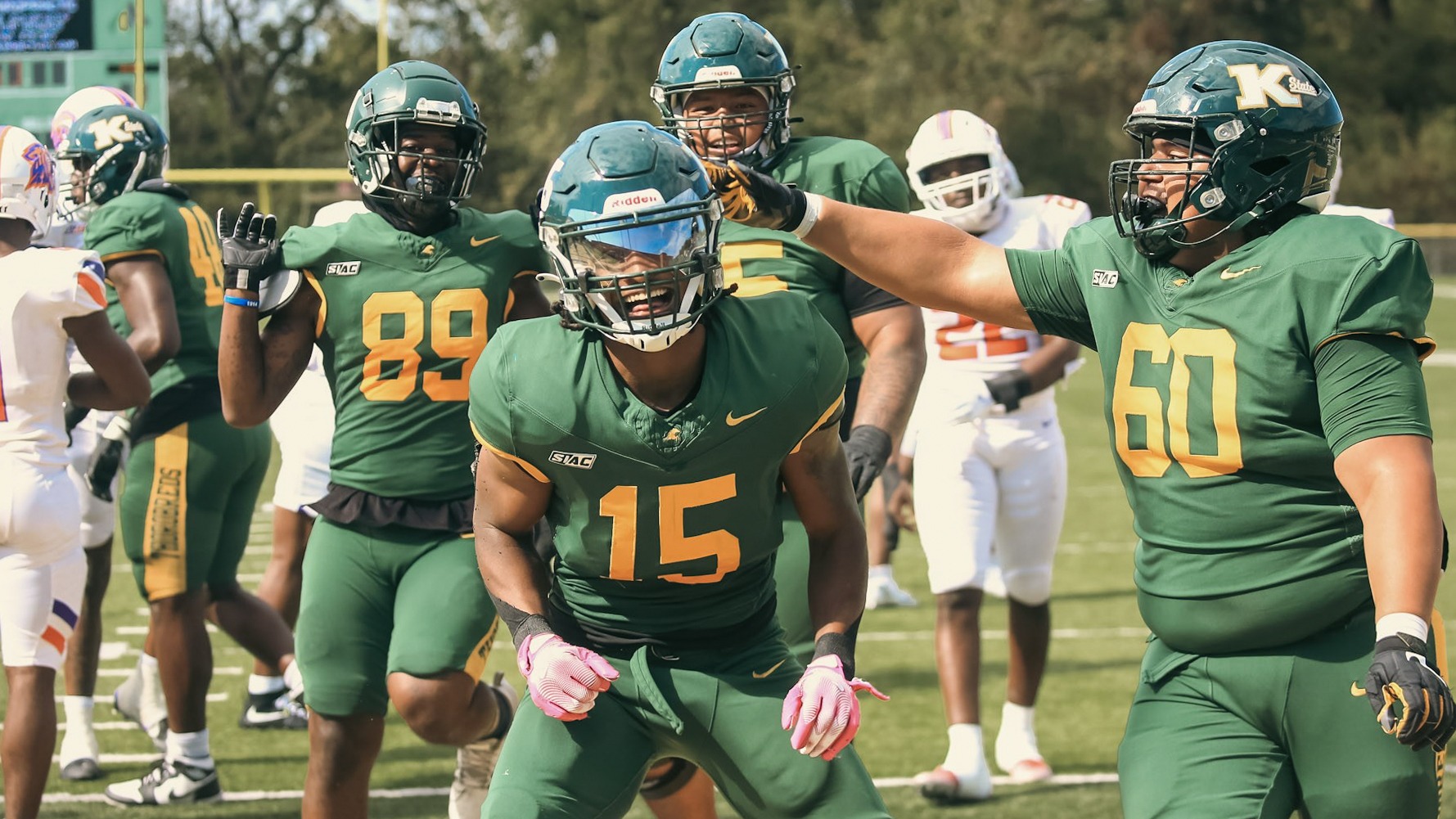
“I think that if I was to pinpoint a team that has the most to prove, it’s probably Kentucky State,” he said plainly. That view is rooted in how far the Thorobreds have come under Felton Huggins. Hoffman pointed out the program’s climb from “three wins in his first season to five wins and last year they had nine wins,” calling it “their best season in nearly a century since 1935.”

Photo: Kentucky State Athletics

That kind of rise changes the standard. Kentucky State did not just improve. They became relevant. They earned “the Division 2 playoffs for the first time in school history.” But with that success comes scrutiny, and Hoffman noted that “a lot of people believe that they were gifted a Division 2 playoff berth.”

He said he doesn’t personally agree with that view, but he understands why it hangs over them. “Now you have to show that it was no fluke,” Hoffman said. “Everybody has you pinpointed on their schedule. Everybody has you as a team to beat.” That is the heart of their 2026 challenge: not just winning again, but proving last year’s surge was earned and sustainable.

Watch Jarrett’s full take on The Better Than Less Than podcast.

Tennessee State hockey program in danger of folding before playing a game

Tsu Hockey Scaled 1
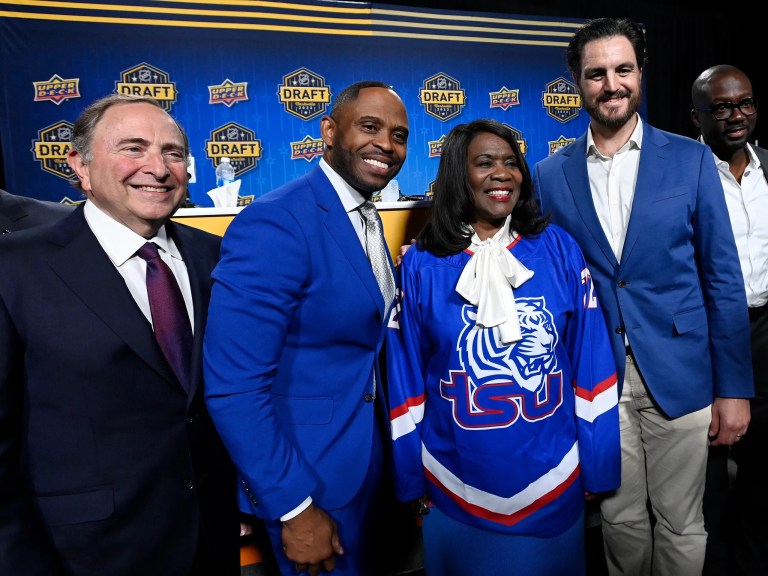
The Tennessee State hockey program could be finished before it ever begins.

TSU Interim President Dwayne Tucker told The Athletic that the university is evaluating whether it can move forward with the men’s hockey program, which was announced in June 2023 in partnership with the NHL’s Nashville Predators. A final decision could come within the next month if sufficient financial backing is not secured.

“I can tell you we’re not going to move forward with a hockey program if the sustainable funding is not there,” Tucker said. “Unfortunately, there’s no funds through 2030 that we can provide to a start-up program.”

The Tigers’ hockey program was scheduled to debut in the 2024-25 season as a club team but was pushed back to the 2026-27 season due to a lack of funding.

Tucker said the university needs funding commitments that would cover operational expenses and scholarships for at least five years to ensure the program’s long-term viability.

He also said the university’s priorities include addressing aging residence halls and renovating Hale Stadium. Tennessee State will soon launch a two-year, $100 million fundraising campaign to pay for those improvements.

“We need that money to help fix some of the modernization that needs to take place on the campus, not another sport that couldn’t be standing on its own,” Tucker said.

Holding out hope for a solution

Head coach Duante’ Abercrombie, who was hired to lead the program, remains optimistic that a solution can be found.

“I have faith in the Nashville Predators, I have faith in the NHL,” Abercrombie said. “And, more importantly, I have faith in my institution that they will find a path forward that is positive for the hockey program.”

Photo: Tennessee State Athletics

Abercrombie noted that annual operating costs for NCAA Division I hockey programs can range from $900,000 to $3 million, excluding scholarships.

The Predators also expressed hope that the project can move forward.

“We’ve had very informative and productive conversations with the president and others at the university,” Predators Chief Marketing Officer Bill Wickett said. “We understand all of the priorities and opportunities in front of Tennessee State, but we remain hopeful that Division I hockey will still be played in Nashville in the future.”

Tucker said he remains committed to exploring fundraising opportunities and working with potential donors but emphasized that the program must be financially self-sustaining.

“I’d love to have the hockey program and make history,” Tucker said. “But it has to be a stand-alone program in terms of the funding to make it work, because of the bigger financial challenges that the university has.”

How Kendrick Perkins will assist Jackson State basketball

IMG 1704

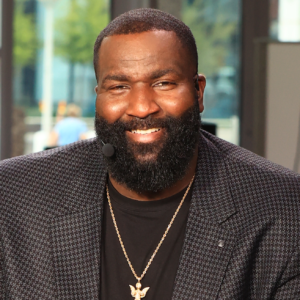
Jackson State is betting that Kendrick Perkins can help reshape the program’s future.

The school announced that Perkins will join the basketball program as general manager, a move leaders say will bring added energy to fundraising, NIL initiatives and broader program development. Though the role is volunteer, JSU athletics director Ashley Robinson said Perkins will still be deeply involved in efforts to raise support for the Tigers.

“It’s a volunteer role, but he’s going to come in to fundraise,” Robinson told HBCU Legends.

Perkins, a former NBA player and current ESPN NBA analyst, is also expected to take a role in Jackson State’s name, image and likeness work, an area that has become increasingly important in college athletics.

Robinson said his presence should expand the program’s exposure and resources.

“That’s going to be huge for us,” Robinson said.

Jackson State coach Trey Johnson said Perkins’ arrival marks a significant step forward for the program as it seeks to build a championship-level culture while creating new opportunities for student-athletes off the court.

“I am extremely excited about Kendrick Perkins joining our program as General Manager,” Johnson said in a statement. “This partnership represents a significant step forward in our commitment to building a championship-caliber program while creating meaningful opportunities for our student-athletes beyond the court.”

Johnson added that Perkins’ knowledge of basketball and sports media could benefit the team, the university and the wider Jackson State community.

Perkins’ addition comes as college programs continue adapting to the changing world of NIL and athlete branding, and Jackson State hopes his profile can help the Tigers continue to advance in that area.