

Texas Southern University has introduced a sweeping $1.7 billion campus master plan that places a new football stadium at the center of a long-term vision to modernize the HBCU.
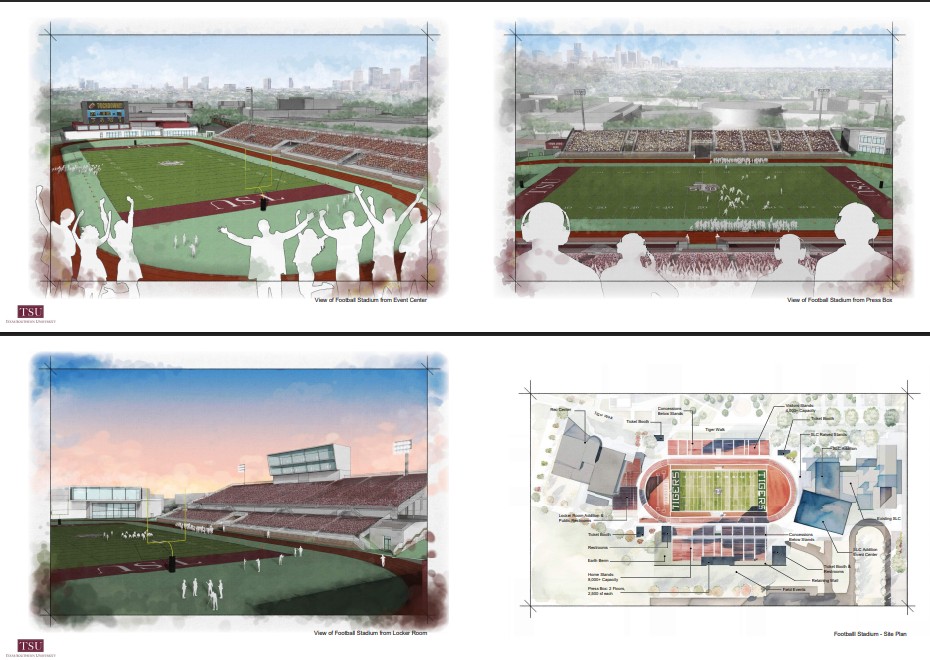
University officials say the proposed stadium — part of a broader relocation of track-and-field facilities — would seat approximately 10,000 fans and serve as a cornerstone of a redesigned athletics district.
The so-called master plan project is part of a 10-year, three-phase plan to reshape the Houston campus with updated academic buildings, student housing, and improved campus infrastructure.
If completed, the new venue would mark a significant shift for TSU football, offering a more modern game-day environment and on-campus energy that university leaders believe is critical to recruiting, fan engagement and institutional pride.
“If you continue to have outdated, unused facilities on your campus, you’re sending a message,” TSU President J.W. Crawford III told The Houston Chronicle, emphasizing the role upgraded facilities play in attracting students, athletes and partners.
What will the new Texas Southern Stadium feature?
The stadium project is slated for the middle phase of development, expected between years three and five, alongside a new athletics recruiting center and expanded housing. Plans also call for enhancements that support the broader game-day experience, including improved campus access, parking and an extended Tiger Walk — a central feature of TSU’s campus tradition.
Texas Southern currently plays its home football games at Shell Energy Stadium in downtown Houston, about 2.7 miles from campus, and has done so since 2012.
While the vision is ambitious, the project remains dependent on securing funding through a combination of private partnerships, donor contributions and state support. The university has already received targeted funding for other developments, including a health and wellness center, signaling incremental progress toward the larger plan.
The stadium initiative comes as TSU works to address longstanding infrastructure challenges tied to historical underfunding common among HBCUs.
University leaders argue that modern athletic facilities are essential not only for competition, but for changing perceptions and strengthening the institution’s long-term trajectory.