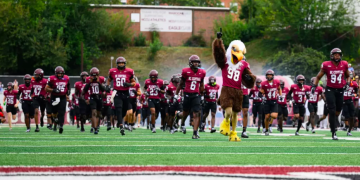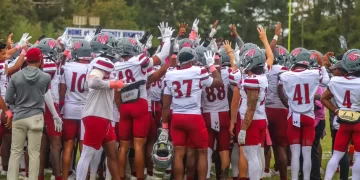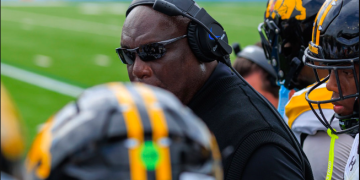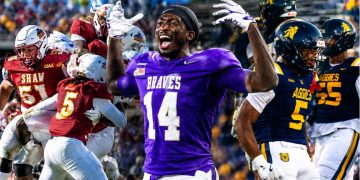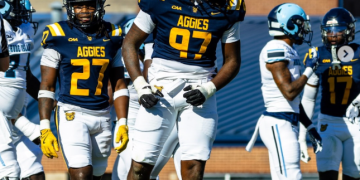


Current and former HBCU football coaches say the path to major college football’s top jobs still runs through a gatekeeping system built on comfort and connections.
Marshall Faulk, Eddie George and Michael Vick all see the same problem from different angles, they told USA Today in a lengthy article about the struggles that Black coaches have getting a shot.
Faulk, the first-year head coach at Southern, said the game still treats former players, especially Black ones, like they cannot translate on-field success into leadership.
“Football’s the only sport that players struggle to come off the field and become a coach,” said Faulk to USA Today. “They look at us as if you’re successful at the game playing, then you won’t be successful at the game in any other capacity.”
‘It’s a comfort thing’
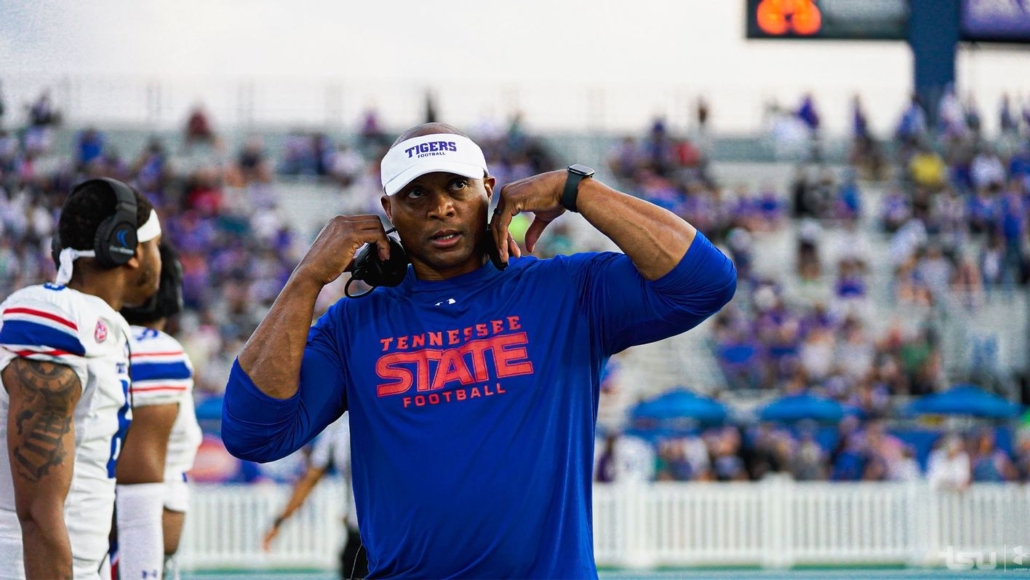
George, who was a successful coach at Tennessee State before moving on to Bowling Green on the recommendation of former college coach Urban Meyer, told the website that hiring often comes down to trust, not simply qualifications. “It’s not necessarily a race thing,” George said. “It’s more of a comfort thing: ‘This is who I trust in this position.’”
Vick, the head coach at Norfolk State after years in the NFL and time as an NFL analyst, framed the issue more bluntly. “It’s connection-based,” he said. “Sometimes it’s more about who you know than what you know. It’s just about getting the opportunity.”
The coaches’ comments land against a familiar backdrop. Black players now make up about half of Football Bowl Subdivision rosters, but only 13 of 136 FBS head coaches are Black.
In the Big Ten and SEC, the imbalance is even worse. But the HBCU route has offered a different kind of entry point, one that allowed ex-Jackson State coach Deion Sanders, George, Vick, Faulk, and Jackson to start leading programs without first spending decades climbing the traditional assistant-coach ladder.
In each case, none of the men had ever been a college head coach before. In the case of George and Vick, they hadn’t been coaches anywhere before landing Division I jobs.
Black players don’t get same respect as white ones
Sanders has spoken openly about that path, saying many former NFL players are told they must work their way up through layers of lower-level jobs while their playing accomplishments are set aside. That is part of why the HBCU model has mattered so much in recent years: it has given Black former players a place to prove they can recruit, manage, and lead.

After being hired by Colorado amid leading Jackson State to a pair of SWAC championships in three seasons, Sanders described the move as being “elevated.”
Faulk said there is no reason the profession should be closed off to people with unconventional backgrounds.
“But if reach means ‘risk,’ why shouldn’t somebody take a risk on somebody like him?” he said.
“You can be JJ Redick and never have coaching experience and get the Lakers job. But can Marshall Faulk get the Rams job? Hell no. It is what it is.”
The larger point from the HBCU coaches is simple: opportunity creates proof, and proof creates possibility. For now, they are trying to force the door open one hire at a time.