

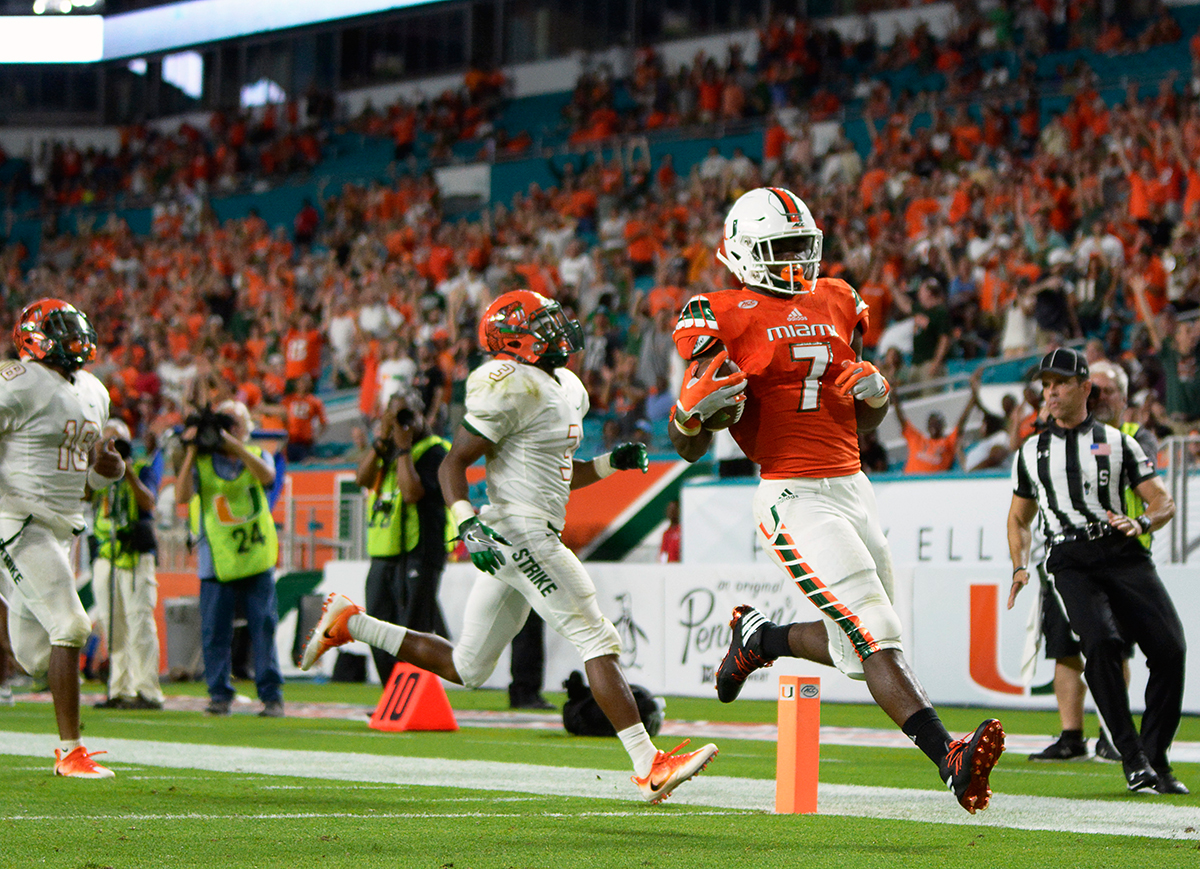
The guarantee game remains an important and controversial exercise in HBCU football.
This fall, at least 15 matchups between Division I HBCU programs and FBS opponents will collectively generate more than $6.9 million to Black College coffers.
Using the confirmed list of HBCU versus FBS payout game parameters compiled by Hero Sports for the 2026 season, here is a look at all the matchups and the dollars associated with them.
Florida A&M tops HBCU payouts
At the top of the payout list is Florida A&M, which will reportedly receive $740,000 for its trip to Miami. It’s the kind of high-profile in-state matchup that not only brings financial value but also visibility for one of the premier programs in the FCS ranks.

Several other programs will hit the $600,000 mark. Morgan State heads west for a matchup against Arizona State, while Tennessee State travels to face SEC powerhouse Georgia. Both games highlight the growing willingness of Power Five programs to schedule HBCUs — and pay accordingly.
Arkansas-Pine Bluff ($550,000 at Missouri) and Howard — which has two such games on its schedule — also stand out.
Howard to play at College Football Playoff national champions
The Bison will earn a combined $1 million between trips to Indiana ($525,000) and Rutgers ($475,000), making them one of the biggest financial winners of the 2026 slate.
In the mid-tier range, Hampton ($475,000 at Maryland) and Delaware State ($450,000 at USF) continue the trend of MEAC and CAA programs leveraging these matchups for revenue. North Carolina Central ($425,000 at East Carolina) and Norfolk State, which has two games totaling $720,000 (Virginia and Old Dominion), also benefit from multiple opportunities.
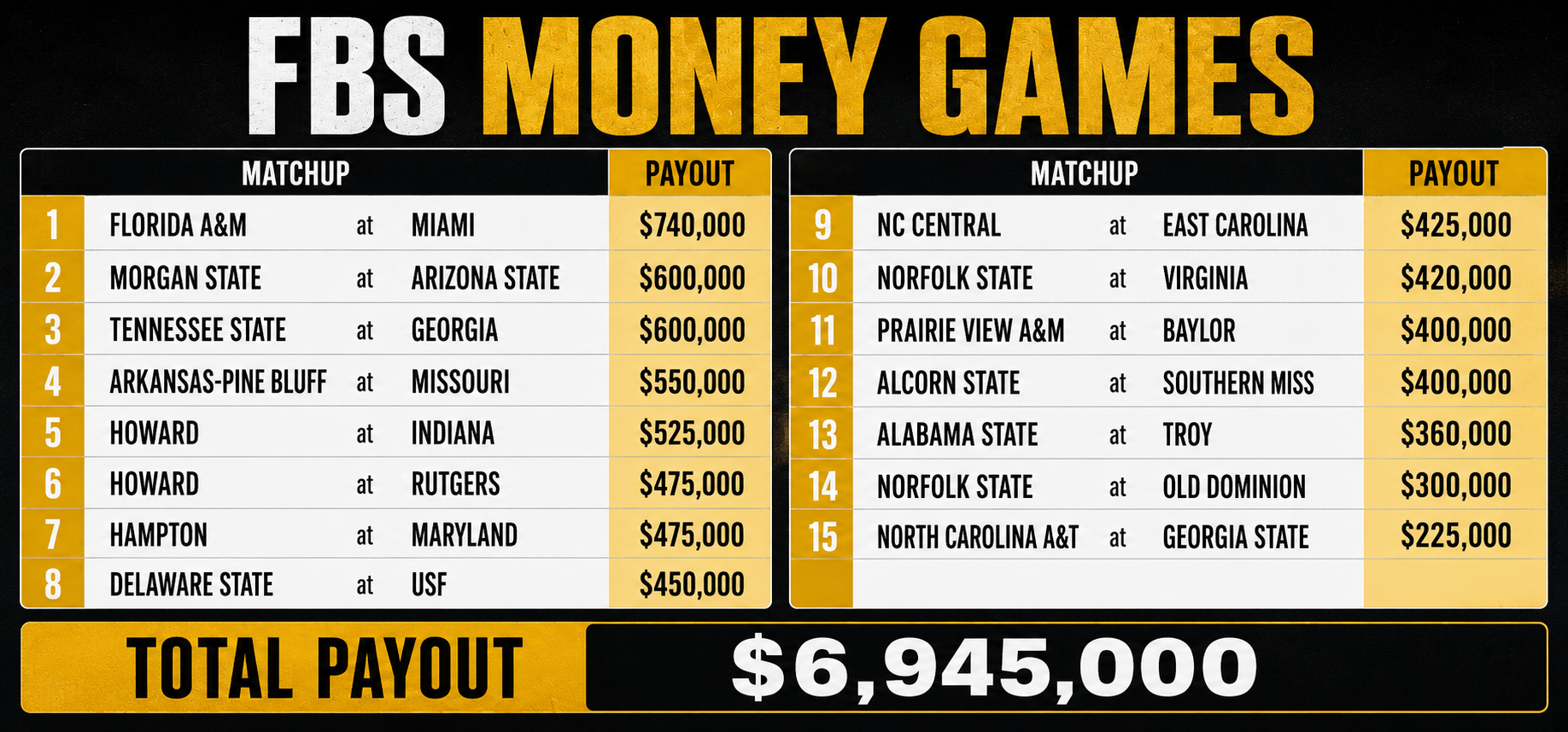
Further down the list, Prairie View A&M and Alcorn State will each collect $400,000 for games against Baylor and Southern Miss, respectively. Alabama State ($360,000 at Troy) and North Carolina A&T ($225,000 at Georgia State) round out the group.
The payouts vary widely, but the purpose remains the same. These games are often labeled “guarantee games” for a reason — the financial return can help offset the costs of running an entire athletic department.
And occasionally, there’s more than just a check on the line.
Upsets like Howard’s historic win over UNLV in 2017 or North Carolina A&T’s victory over East Carolina in 2022 serve as reminders that while these matchups are often viewed as tune-ups for FBS programs, they can become defining moments for HBCU teams.
In 2026, the stakes will once again include both dollars and opportunity — with nearly $7 million on the table and the chance, however slim, to make history.


So f Valley playing FBS Sacramento State huh?