
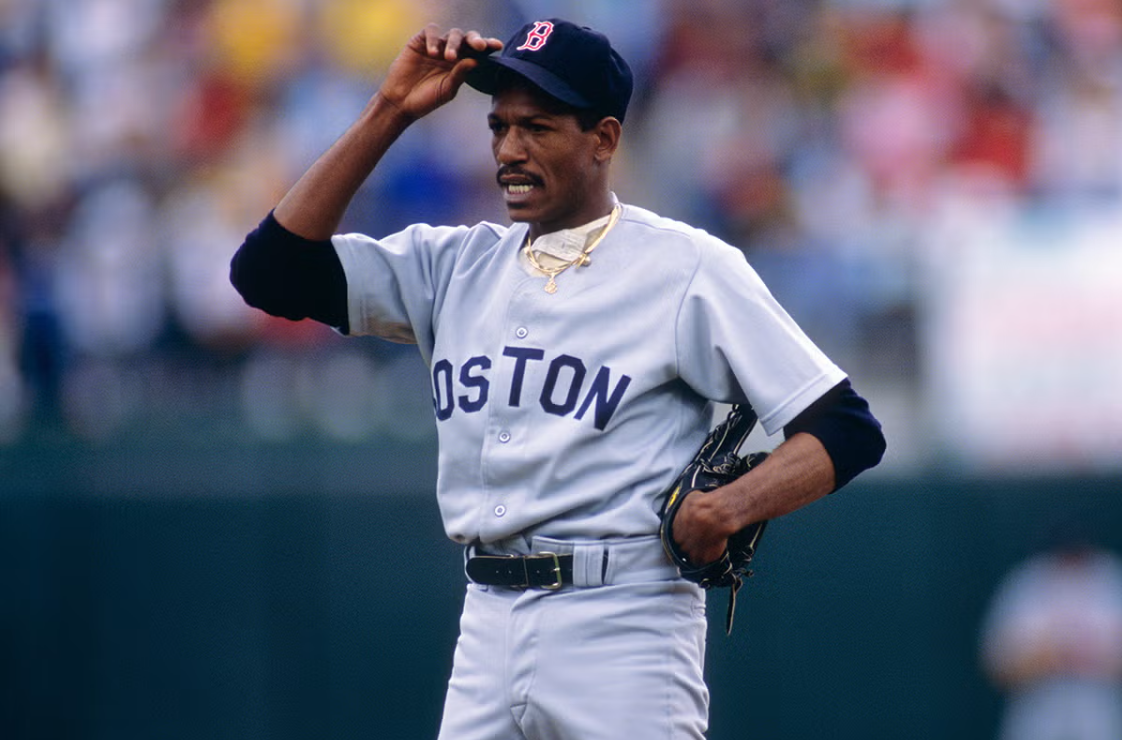
This article is one in a series of features produced in partnership with the Southwestern Athletic Conference, exploring the history of the SWAC from its founding in 1920 to the present day. The series will run in April and May.
Jackson State enjoyed plenty of success under legendary head coach Bob Braddy, which, aside from SWAC championships and NAIA/NCAA tournament appearances, included sending several athletes to Major League Baseball.
While all were talented, none may have been more of a unique character than Dennis “Oil Can” Boyd.
Meridian, Mississippi native Dennis Ray Boyd came from a long line of baseball players, but his nickname even surpassed those of the Negro League players his father, Skeeter Boyd, and uncles K.T. and Robert Boyd competed against.
“Oil Can” came from his proficiency at drinking beer, which was known as “Oil” in those days in the Delta.
His pitching talents left SWAC batters feeling a little drunk, as he finished with a record of 20-5 in three seasons at JSU.
Confidence was key for “Can”
After a sizzling 5-1 start to his junior year in the 1980 season, Boyd was profiled by legendary sportswriter Roscoe Nance in the Jackson Clarion-Ledger, discussing his prospects for a pro career.
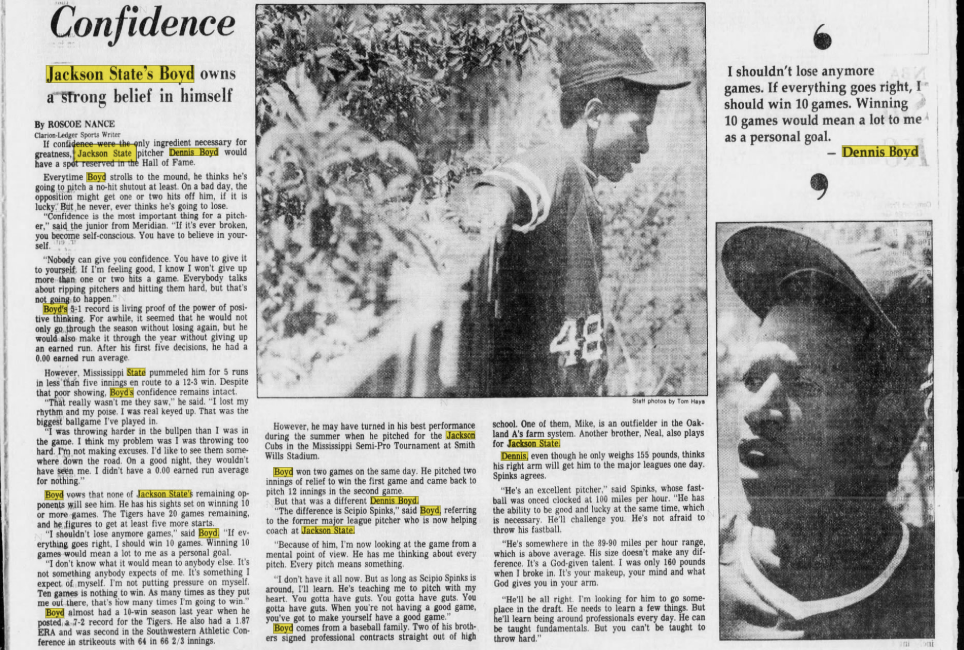
“Confidence is the most important thing for a pitcher; If it’s ever broken, you become self-conscious,” Boyd told Nance. “You have to believe in yourself.”
Jackson State pitching coach Scipio Spinks, who pitched five seasons in the Majors before joining Braddy’s staff, said Boyd had Major League stuff, despite being a rail-thin 155 pounds at 6 feet, 2 inches.
“He’s somewhere in the 89-90 miles per hour range, which is above average,” Spinks explained. “His size doesn’t make any difference; It’s a God-given talent.”
Though Boyd fell short of his goal of winning 10 games that season (he finished with an 8-2 record), the Boston Red Sox noticed that talent and drafted him in the 16th round of June’s Major League Baseball Secondary Draft.
Major League Success
When Boyd was called up in the final two weeks of the 1982 season, he joined a Red Sox staff featuring a who’s who of hurlers. Dennis Eckersley was a starting pitcher then and would go on to win the American League MVP and Cy Young awards in 1992. John Tudor was an innings eater who went on to a 21-year career with the St. Louis Cardinals in 1985. Rounding out the staff were World Series winners Mike Torres, Bruce Hurst, and Bob Ojeda, whom Boyd would see in a bigger game a few years later.
Boyd’s Major League debut on September 13 was a good one as he only gave up two runs in 5 ⅓ innings, but the Red Sox fell to the Cleveland Indians 3-1.
Boyd returned to the Majors for good in June of 1983 and made his first start of the season at the Metrodome in Minneapolis against the Minnesota Twins.
The tall, skinny Black kid with the funny nickname was a point of interest for all involved.
“I can’t wait to see this guy named ‘Oil Can,’” Twins first baseman Kent Hrbek said before game time.
Red Sox catcher Gary Allenson said, “He is one of those pitchers they [the fans] come to see – in this case, before they even know who he is.”
Boyd introduced himself to the Minnesota crowd of less than 9,000 with a six-inning performance consisting of two earned runs and seven hits allowed as the Red Sox beat the Twins 6-3 for his first Major League win.
“I wasn’t nervous,” he said afterward. “I couldn’t afford to be nervous.”
Boyd became a reliable pitcher for the Sox, winning 12 games in 1984, 15 in 1985, and a career-high 16 in 1986, good enough for second on the team behind some guy named Roger Clemens.
Big Time Boyd
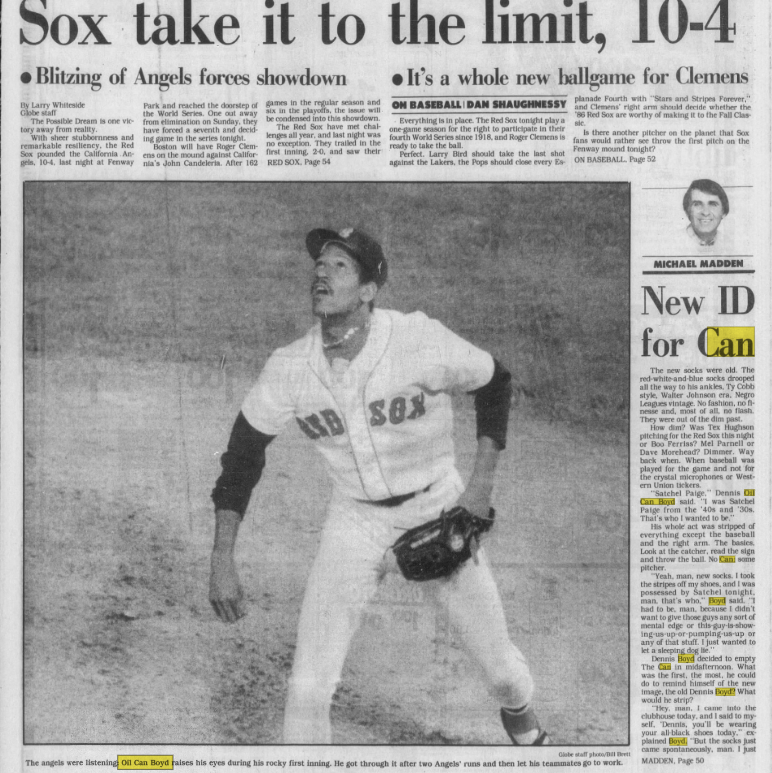
Boyd’s biggest start of the season was Game 6 of the American League Championship Series against the California Angels.
The Sox snatched victory from the jaws of defeat in Game 5 thanks to Dave Henderson’s iconic home run, but they still trailed 3 games to 2 coming back to Fenway Park.
Against a hard-hitting lineup featuring Hall of Famer Reggie Jackson, Boyd was equal to the task.
He pitched seven innings, allowing three runs and striking out five. The Boston offense took care of the rest, drilling the Angels 10-4 in Game 6 and 8-1 in Game 7, completing a 3-1 comeback.
Boyd said he channeled a hero of his for his bend-but-don’t-break Game 6 performance.
“Satchel Paige,” he told the Boston Globe. “That’s who I wanted to be.”
The Red Sox went on to face the New York Mets in the World Series, which went to a Game 7 after Bill Buckner’s infamous error that allowed the Mets to tie the series at 3.
With the World Series on the line, all hands – and pitching arms – were expected to be on deck. Unfortunately, Boyd, who had experimented with drugs outside of his reliable Oil, was accused of being too under the influence of alcohol to perform in Game 7.
The Red Sox lost the game 8-5 and the championship.
Boyd continued to pitch for the Red Sox until 1989, when he moved on to the Montreal Expos and then the Texas Rangers. He still had offers to pitch as a reliever, but retired following the 1991 season, finishing his career with a 78-77 record.
Oil Can Boyd was inducted into the SWAC Hall of Fame in 2010 and released his autobiography, They Call Me Oil Can. He is still actively involved with Red Sox events as one of the true characters in the franchise’s storied history.