Opinion: Delaware State must invest in women’s sports to ensure success

KNOCKED DOWN 4
The Delaware State athletics program is experiencing renewed interest following a successful football season. That’s the good news.

The bad news is that there is still something to be desired in the rest of the school’s sports offerings, especially on the women’s side.

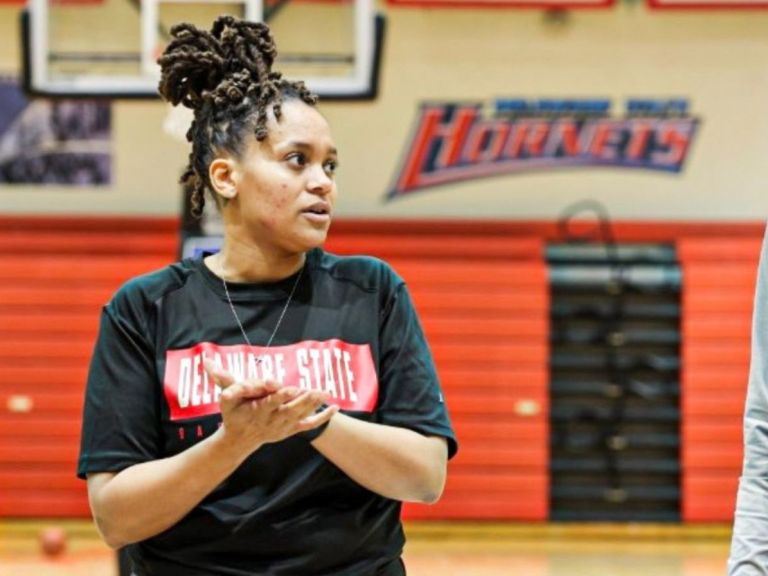
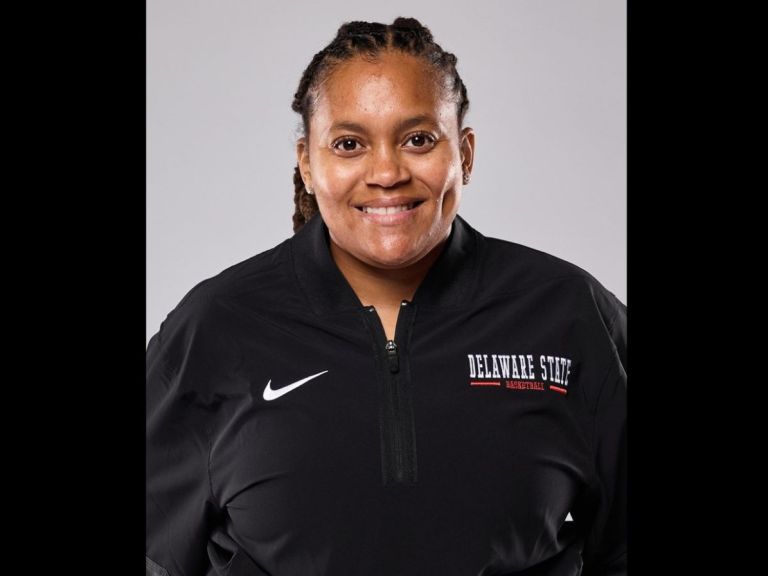
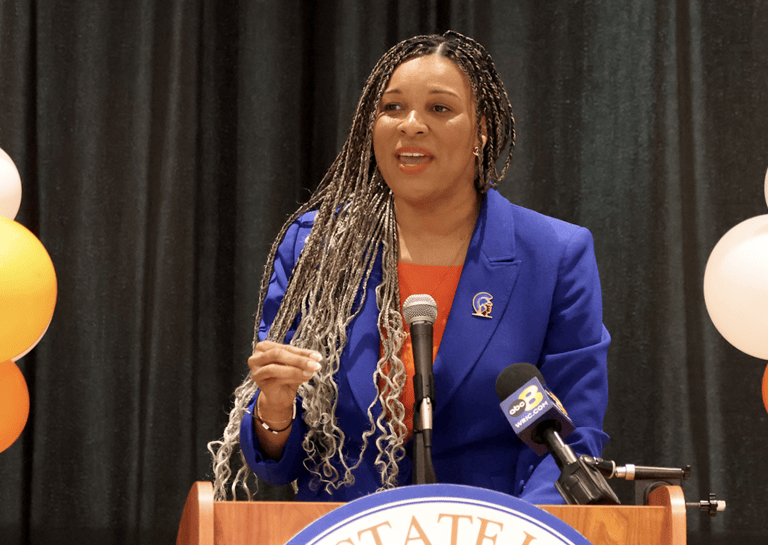
When HBCU hoops insider Liv Antilla reported that the Hornets parted ways with women’s basketball coach Jazmone Turner, I could only shake my head, thinking of the dumpster fire she inherited and tried to fix.

For one, the previous head coach, E.C. Hill, disappeared from the sidelines between the end of the 2022-23 and the beginning of the 2023-24 season, leaving Turner to serve as interim head coach.

The interim tag was lifted following that year. Still, the transfer portal began to take a toll, and even with a highly touted recruiting class (freshmen Amya Scott and Liliana Harrison were MEAC All-Rookie Team selections this season), it wasn’t enough to save Turner’s job.

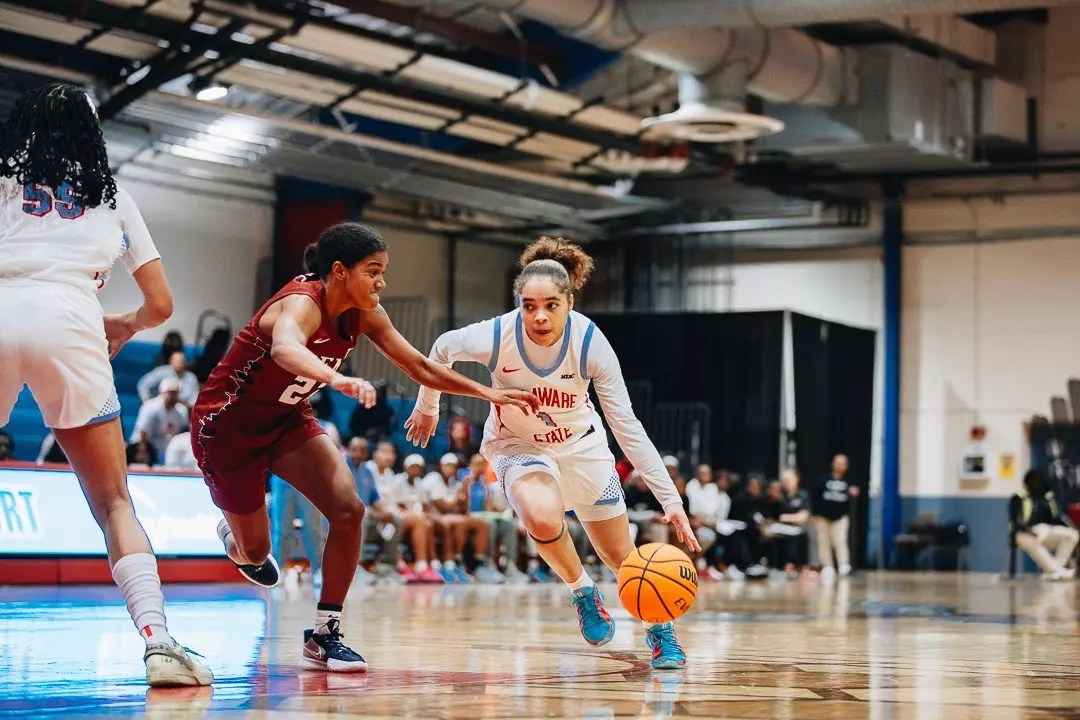
Basketball has long been one of DSU’s strongest suits, including the Lady Hornets’ run under HBCU coaching legend Ed Davis.

Photo: Delaware State Athletics


As a student reporter, I watched Davis coach a team that once held the modern NCAA women’s record for fewest points per game in a season, earning a share of an MEAC championship, then winning the conference tournament in 2007, making their first and only NCAA tournament appearance.

Delaware State women’s sports can thrive with investment

Unfortunately, there hasn’t been much to talk about since the DSU women’s last winning season was under Davis way back in the 2007-08 season.

Turner was charged with winning in an impossible situation, and the next coach, whoever that is, will likely face the same problems: a lack of attention, care, and resources.

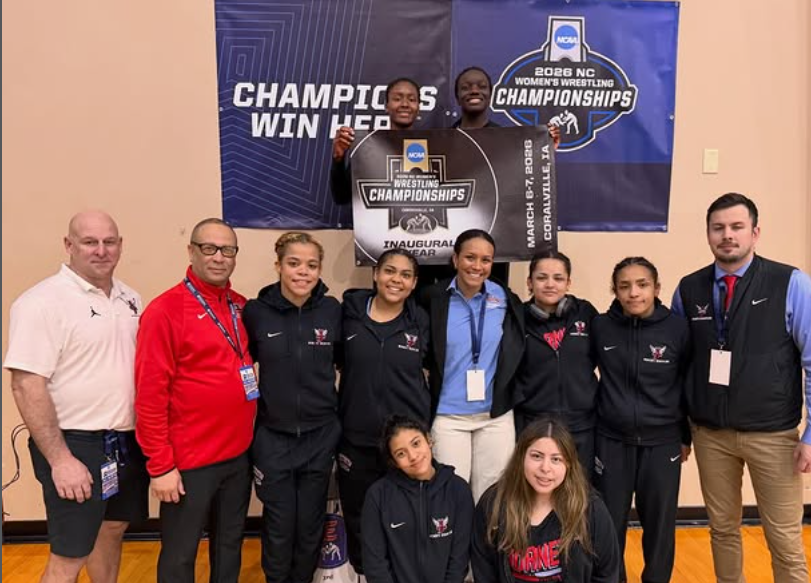
To be fair, DSU women’s sports have had some success in recent years. The volleyball team won MEAC championships in 2022 and 2024, and this year, the newly formed women’s wrestling team sent two competitors, Louise Juitt and Icart Galumette, to the national championship tournament.

Delaware State HBCU
Photo: Delaware State Women’s Wrestling Instagram

But neither of those accomplishments has gotten the publicity they deserve for one reason or another.

The women’s lacrosse and women’s soccer teams were gifted a home field following DelState’s purchase of the former Wesley College, but still have not been able to make headway in the tough Northeast Conference.

DSU stakeholders need to do more

This is where the rubber meets the road with university president Tony Allen’s ambition to make DSU a competitive sports school to go along with marked academic progress; you can’t have one program doing great and the others…not so much.

And yes, alumni need to give to and support sports outside of football, but there needs to be a renewed effort to provide support and care for the young women who want to win just as badly as the young men on campus do.

Otherwise, a revolving door of coaches will be drawn into wars they may have the heart for, but not quite the ammunition required for victory.


Report: Delaware State makes women’s basketball coaching change

KNOCKED DOWN 3
For the third time in five seasons, the Delaware State women’s basketball program will be under new management.

According to a report by HBCU basketball reporter Liv Antilla, Jazmone Turner will not return as the Hornets’ head coach next season.

The Hornets finished seventh in the MEAC this past season with a 7-23 overall record and 4-10 mark in conference play. DSU lost to Maryland Eastern Shore 55-48 in the MEAC tournament’s first round.

Turner became interim head coach following the departure of E.C. Hill prior to the 2023-24 season and had the interim tag removed prior to the 2024-25 season.

In three full seasons, Turner’s record was 20-67 overall, 9-33 in MEAC games.

Bethune-Cookman turn to former Wildcats player to lead women’s hoops team

Demetria Frank

Bethune-Cookman has turned to one of its own to lead the next chapter of its women’s basketball program.

The university named former Wildcats standout Demetria Frank as the school’s eighth head coach in program history.

“This is an exciting day for Bethune-Cookman Athletics,” said Reggie Theus, B-CU’s Vice President for Athletics. “We are thrilled to welcome back one of our most accomplished alumni to lead our women’s basketball program into a new era. Demetria Frank aligns with our mindset and goal of building a Championship Culture, bringing with her a true love for our program and our university.”

She replaces Janell Crayton Del Rosario, who was fired after five seasons with B-CU.

Frank return to Bethune-Cookman is a homecoming

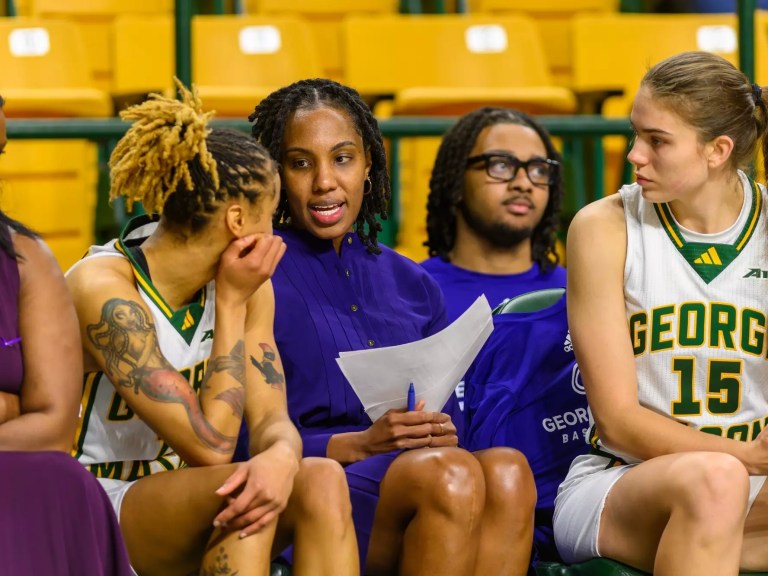
Frank returns to Daytona Beach after serving as associate head coach at George Mason University, where she was instrumental in player development, recruiting, and program operations.

A Wildcats star from 2007 to 2012, Frank graduated as the program’s second all-time leading scorer with 1,567 points. She still holds career records for free throws made (854) and steals (422) and led NCAA Division I in steals in 2012, averaging 4.25 per game.

Photo: MEAC

The two-time All-MEAC selection remains one of the most celebrated players in Bethune-Cookman history.

Her coaching career began at her alma mater under Blair-Lewis.

Frank’s leadership reputation extended nationally when she was selected in 2024 for the prestigious Next Up Coaches Conference, a program that supports emerging minority coaching talent.

“I am beyond excited and truly humbled to be coming back home as head women’s basketball coach at Bethune-Cookman University,” Frank said. “Bethune-Cookman is a special place, and those words have never meant more to me than they do right now.”

Virginia State athletic director: Trojan sports will “sustain excellence”

Screen Shot 2025 05 21 At 23043 PM
Marking the occasion of her first year as Virginia State athletic director, Tiffani-Dawn Sykes penned a letter to VSU stakeholders highlighting the strides the Trojan sports programs have made in that time period.

“This first year has been about building momentum. The next will be about sustaining excellence,” Sykes wrote.

Some of the achievements during Sykes’ first year include helping non-CIAA sports branch out, such as men’s lacrosse joining the Peach Belt Conference, the women’s lacrosse team becoming Gulf South Conference members.

Virginia State also help create the inaugural CIAA Soccer Cup event as well as the CIAA baseball championship series scheduled to take place on campus next month.

The Trojans also hosted the Black College Invitational Championship, a men’s and women’s basketball post-season tournament for HBCUs. The Trojan men enjoyed the home court advantage, defeating Bluefield State 69-66 in the championship game.

Sykes thanked the athletes and stakeholders for their part in making her first year a successful one before adding that “Greater Happens Here. And at Big State, we are proud to build on a legacy that was established long before us and one we are honored to carry forward and elevate.”

SWAC history: How six Texas HBCUs changed college athletics forever

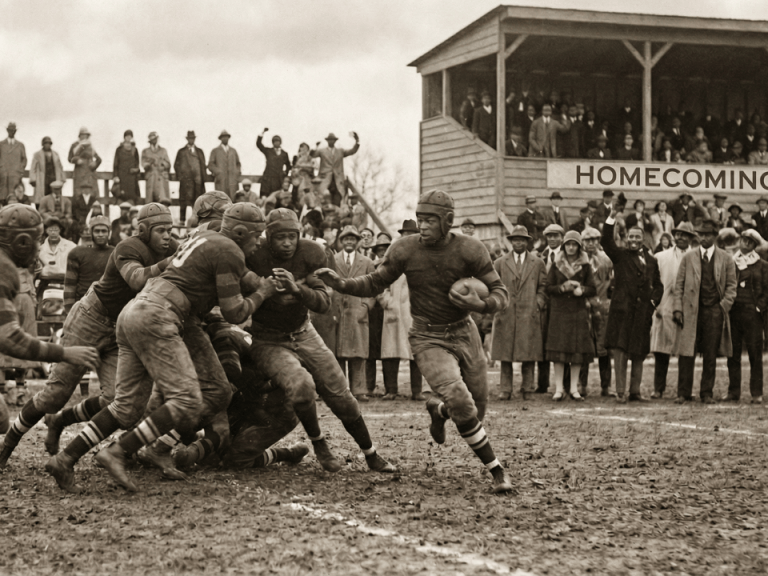
HBCU Football 1920s
This article is the first in a series of features produced in partnership with the Southwestern Athletic Conference, exploring the history of the SWAC from its founding in 1920 to the present day. The series will run during the months of April and May.

Before there was national television, before conference realignment became a business strategy, and before college athletics turned into a billion-dollar enterprise, there were institutions trying to create something that didn’t exist for them.

In the fall of 1920, against the backdrop of a segregated America that offered little access and even less recognition to African Americans, eight men representing six historically Black colleges gathered in Houston with a shared purpose. By the time that meeting ended on September 10, they had done more than organize a schedule. They had built a foundation.

What emerged from that room would become the Southwestern Athletic Conference, a conference born not out of convenience, but out of necessity. This wasn’t just about sports. It was about structure, opportunity, and perhaps most importantly, ownership.

The “Super Six”: Building Something From Nothing

The SWAC’s original charter members, often referred to as the “Super Six,” represented a mix of private, church-supported institutions and one public college. Each brought its own identity, but all shared the same reality: they were operating in a system that wasn’t built for them.

The founding institutions included:

• Bishop College (Marshall, TX) — 1920 to 1956

• Paul Quinn College (Waco, TX) — 1920 to 1929

• Prairie View State Normal & Industrial College, now Prairie View A&M (Prairie View, TX) — 1920 to Present

• Samuel Huston College, now Huston-Tillotson University (Austin, TX) — 1920 to 1954

• Texas College (Tyler, TX) — 1920 to 1962

• Wiley College (Marshall, TX) — 1920 to 1968

These weren’t large institutions with deep pockets. Most were church-affiliated schools operating with limited resources. But what they lacked financially, they made up for in vision. They understood early on that if they wanted structure, legitimacy, and recognition, they would have to build it themselves.

The First Steps Toward Structure

In 1921, the SWAC held its first official football championship, with Wiley College claiming the inaugural title. That moment may seem modest in hindsight, but it represented something much larger: proof that there were rules, organization, and something worth competing for. In a time when Black institutions were routinely excluded from formal recognition, the SWAC created its own system and made it matter.

Expansion and a Changing Identity

The SWAC didn’t remain a Texas-based conference for long. As the value of structured competition became clear, other institutions joined, expanding the conference’s reach and elevating its level of play.

Key additions included:

• Langston University — Joined in 1931, left in 1957

• Southern University — Joined in 1934, still a member

• Arkansas AM&N (now Arkansas-Pine Bluff) — Joined in 1936, left in 1970, rejoined in 1997

• Texas Southern University — Joined in 1954, still a member

• Grambling College (now Grambling State University) — Joined in 1958, still a member

• Jackson State College (now Jackson State University) — Joined in 1958, still a member

• Alcorn A&M (now Alcorn State University) — Joined in 1962, still a member

• Mississippi Valley State University — Joined in 1968, still a member

• Alabama State University — Joined in 1982, still a member

• Alabama A&M University — Joined in 1999, still a member

• Florida A&M University — Joined in 2021, still a member

• Bethune-Cookman University — Joined in 2021, still a member

Each addition didn’t just expand the conference’s geography; it also expanded the conference’s reach. It expanded its identity. The SWAC was no longer a regional organization; it was finding its footing. It was becoming a genuine force in college athletics.

The Shift: When the Balance Changed

In its early years, the conference was dominated by its private, church-supported institutions. Schools like Wiley, Bishop, and Paul Quinn found early success and helped define the SWAC’s competitive foundation. But by the 1930s, and especially into the 1950s, the balance began to shift.

Public, state-supported institutions began entering the conference, bringing larger enrollments, increased funding, and greater institutional backing. As schools like Texas Southern, Grambling, and Jackson State rose in prominence, it became increasingly difficult for smaller private institutions to keep pace financially and competitively.

Departures That Told a Larger Story

The exits didn’t happen all at once, but they followed a clear pattern. Paul Quinn was the first to leave in 1929, followed by Samuel Huston in 1954, Bishop in 1956, Texas College in 1962, and Wiley College, the conference’s first football champion, in 1968.

Each departure marked more than a change in membership. It reflected a broader reality about college athletics: resources matter, infrastructure matters, and over time, those differences reshape competition. Today, Prairie View A&M University stands as the only remaining charter member, a living link to the conference’s original vision.

From Survival to Significance

What started as a small group of institutions trying to create opportunity has grown into one of the most culturally significant conferences in college athletics. From producing professional athletes to shaping the broader culture of the sport, from marching bands to storied rivalries, the SWAC’s influence extends far beyond the field.

But none of that happens without 1920, and without six institutions deciding that waiting for inclusion wasn’t an option.

The story of the SWAC, at its core, is about a decision: to organize, to compete, and to build something that didn’t yet exist. Access can be denied. But ownership is something you claim for yourself. And in 1920, that’s exactly what these six institutions did.

South Carolina State hires HBCU and NFL veteran coach as offensive coordinator

KNOCKED DOWN 2
South Carolina State has found their new leader for their offense.

K.J. Black, a standout quarterback at Prairie View and veteran NFL offensive assistant, was named the Bulldogs’ offensive coordinator and quarterbacks’ coach, the program announced this morning.

As a quarterback, Black led the Panthers to the 2009 SWAC title, the program’s first since 1964 and most recent prior to last season. He was then an assistant on the PV staff for five seasons, working as grad assistant, then passing game coordinator/quarterbacks coach and tight ends coach.

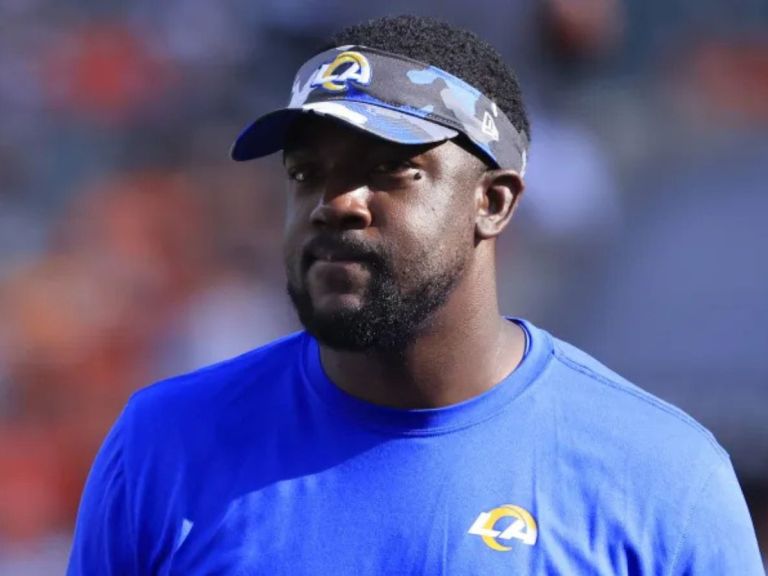
Black moved to Florida A&M, where he served as passing game coordinator, quarterbacks coach and co-offensive coordinator under Willie Simmons before taking an offensive position assistant with the Los Angeles Rams. He recently served in that same capacity with the Atlanta Falcons.

Black replaces Johnathan Williams, who left to take a position on the Super Bowl champion Seattle Seahawks offensive staff.

SWAC Player of the Year Daeshun Ruffin headed to transfer portal

Beige And Orange Minimalist Best Makeup Product Youtube Thumbnail 2pdf 15
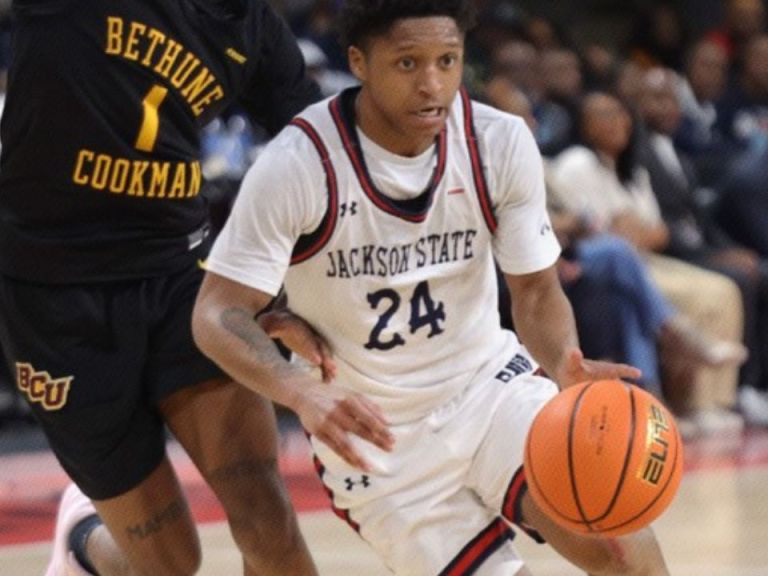
Jackson State guard Daeshun Ruffin, one of the top scorers in the country, plans to enter the NCAA transfer portal.

Ruffin, a 5-foot-10 senior, led the Tigers with 23.3 points and 5.3 assists per game this season, ranking fourth nationally in scoring. His explosive play and leadership earned him SWAC Player of the Year honors.

Ruffin, who began his college career at Ole Miss before transferring to Jackson State, will need to apply for an NCAA eligibility waiver to play next season, he told he told @recruitsnews.

Photo: Jackson State Athletics

The decision comes shortly after Tigers head coach Mo Williams resigned to become an assistant at Kentucky under Mark Pope.

In SWAC conference play, Ruffin poured in just over 30 points per game against SWAC opponents to firmly stamp himself as the league’s go-to closer.

His decision marks a major shake-up for Jackson State and could make him one of the most sought-after names in the portal in the offseason.

What was HBCU Showcase like for an NFL hopeful? ‘Everything you’d see at the Combine’

KNOCKED DOWN
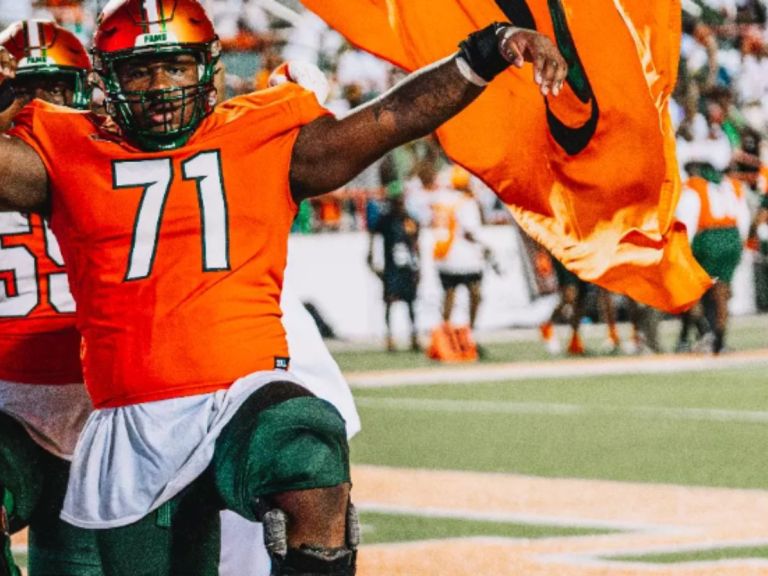
Florida A&M offensive lineman Ashton Grable said stepping onto the field in front of NFL scouts was more than just another workout — it was a moment years in the making.

“For me, it was just another chance to go out there and show what I can do in front of a lot of scouts,” Grable told HBCU Sports in a phone interview. “I’m just glad I got an opportunity to do that.”

The two-time All-SWAC standout joined fellow HBCU stars earlier this month to perform drills and positional work at the 2026 HBCU Showcase and International Player Pathway Pro Day in Ashburn, Virginia.

Though not the official NFL Combine, Grable said the setup and intensity felt every bit as professional, and “every team you could think of was there.”

“We did the 40 (yard dash), the bench (press), broad jump, three-cone drill — everything you’d see at the combine or a pro day,” he said. “Then we went into position work with scouts watching. You could tell they were really paying attention.”

While he hasn’t yet received direct feedback from teams about his performance, Grable said one team that met with him days earlier at FAMU’s pro day told him they were impressed. “They said I did good at my pro day,” he said. “That’s why they interviewed me again at the event.”

HBCU Showcase invite carried extra meaning

“Coming from a small school (Florida A&M), you don’t get opportunities like that too often,” he said. “Once I got the invite, I told myself I had to be at my best.”

The NFL’s investment in HBCU scouting — through events like the HBCU Legacy Bowl, HBCU Combine and the latest pre-NFL Draft event — isn’t lost on the FAMU lineman.

“It’s a great opportunity because we’re not always in front of a lot of people’s eyes,” Grable said. “The guys that came before us in the league laid the foundation for this. At one point, the Legacy Bowl and Showcase weren’t even a thing. I take my hat off to those guys for opening that door.”

Grable said knowing that multiple NFL teams have shown interest has only strengthened his belief that he belongs at the next level.

“It’s a crazy feeling because a few years ago, I didn’t even know if I had a shot,” he said. “Now teams are coming to my practices, games, and pro day. It’s just wild to see how far I’ve come.”

NFL dream within reach

Grable credits the Florida A&M program — and the trailblazers who came before him — for putting him in this position.

“FAMU’s helped me a lot,” he said. “We’ve got guys in the league right now — Terrell Jennings, Isaiah Land, Marquise Bell, Xavier Smith. Scouts are coming back now because they know what kind of talent we have here. I just thank those guys for making it easier for me.”

For Grable, who once entered college simply hoping to earn playing time, the chance to chase an NFL dream now feels within reach.

“It feels amazing because I know how much work I’ve put in,” he said. “It’s been a full-circle moment — staying down, waiting my turn, and now finally getting my shot.”

HBCU coach who won 12 games in four seasons reportedly dismissed

George Ivory
Mississippi Valley State University has reportedly parted ways with men’s basketball head coach George Ivory after four seasons at the helm of the Delta Devils.

Ivory, a former MVSU standout and longtime figure in Southwestern Athletic Conference circles, compiled a 12–118 overall record and an 8–67 mark in SWAC play since taking over in 2022.

Photo: Mississippi Valley State Athletics

The news was first reported on Tuesday by Delta Sports, a Mississippi-based news outlet. Mississippi Valley State has not confirmed the coaching change.

The Delta Devils finished this past season near the bottom of the conference standings, continuing a rebuilding process that never gained traction under his leadership.

Mississippi Valley State went 3-30 overall and 2-16 in the SWAC during the 2025-26 season.

Ivory, who previously coached at Arkansas–Pine Bluff before returning to his alma mater, faced one of the toughest rebuilds in Division I basketball.

Coach who led HBCU to national championship game reportedly set to interview for SWAC job

Chris Wright
One of HBCU men’s basketball best coaches is reportedly up for a major promotion.

Chris Wright, who has led Langston University and Talladega College to the NAIA championship game, is reported to be interviewing for the vacant Alabama State men’s basketball job, according to The Coaching Carousel.

Wright led the Lions to their second NAIA title game in three seasons, coming up short in a heartbreaking 76-71 decision to Freed-Hardeman.

Wright also guided Talladega to the 2022 NAIA championship game before taking the Langston job.

With 16 years of head coaching experience, Wright has compiled a record of 332 wins and 121 losses. His record at Langston stands at a sparkling 121 wins and 21 losses.

Alabama State is looking for a head coach following the resignation of Tony Madlock to rejoin Penny Hardaway’s staff at Memphis.