Parents shouldn’t tell student-athletes to avoid HBCUs due to lack of TV exposure. That theory is a myth.

Million Dollaz Worth Of Game
When high school basketball phenom Makur Maker chose Howard University over college basketball powerhouses UCLA, Kentucky, and Memphis on July 3, his decision generated multiple reactions and placed Black college athletics into the national sports lexicon.

In September 2019, Jemele Hill of The Atlantic asked, “what if a group of elite athletes collectively made the choice to attend HBCUs?” in her editorial piece entitled “It’s Time for Black athletes to Leave White Colleges.“ It appears that we will begin to get that answer (if spring sports are to be played this coming season) when the 18th-best boys’ basketball player in the nation, according to 247Sports.com, starts his collegiate career playing at “The Burr” on the Howard University campus.

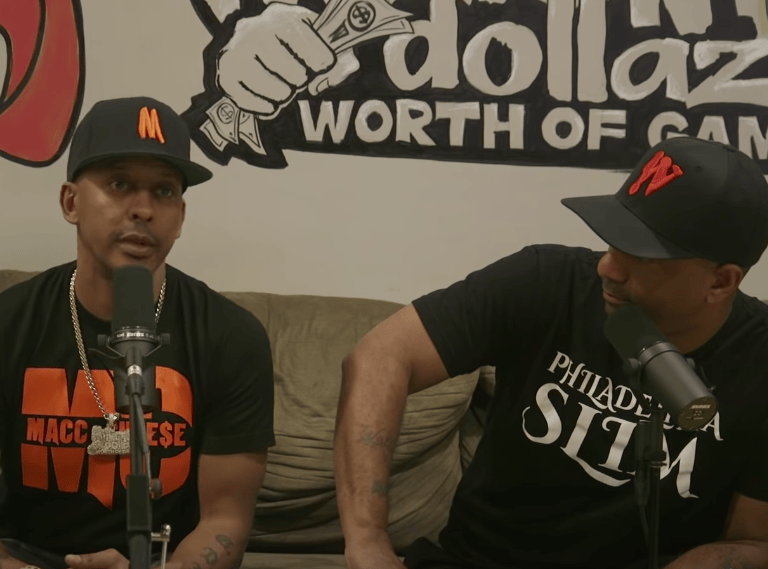
The addition of upper-tier talent to HBCU sports will have positive ramifications in a plethora of ways. What Ms. Hill did not account for was how influential the adults in the lives of these student-athletes, primarily their parents, can be and how they can sway where these kids will eventually spend their life after high school. Rapper-turned-podcaster, Gillie da Kid, would become the embodiment of this “guidance,” rooted in biased opinions.

In Episode 68 of his podcast titled “Million Dollaz Worth of Game,” the Philly rapper can be heard yelling the following:

“If that was my [expletive] son, he wouldn’t be goin’ to [expletive] Howard University, man” because he believes that the Bison’s lack of television exposure would negatively affect his theoretical child’s NBA draft position.

You are probably familiar with the concept that exposure, most-notably through televised games, will improve the chances, as well as the draft position, of a student-athlete when they eventually decide to become a professional. Unfortunately, there are many parents, cousins, uncles, and even coaches who believe in this theory. It is this thought process that has led to a lot of Black student-athletes choosing majority-white colleges over HBCUs.

This assumption, along with a few others declared by Gillie throughout this episode, can easily be debunked. I will attempt to do just that, primarily for the student-athletes wavering where to attend college, but this is also for adults who are holding on to misinformation.

For those unfamiliar, the amount of exposure that a college program receives can be attributed to the size of the institution. Schools with larger enrollment have larger budgets. Large budgets are used to build exuberant facilities that tend to attract top talent. Fans enjoy watching top talent. With this ready-made viewership, networks like ESPN/ABC, FOX, CBS, and NBC shell out large amounts of money to broadcast their events.

Within men’s Division I college basketball, schools compete in 32 conferences. There is a line of demarcation that separates one conference from another based upon, but not limited to, the total enrollment/attendance of its member institutions, notoriety, performance, national perception, and — you’ve guessed it — exposure. Programs on the higher end of this spectrum are often called “Power Conferences,” “The Elite Eight” or “High-Majors.” Those conferences would include the American Athletic Conference (AAC), Atlantic Coast Conference (ACC), Atlantic-10 Conference (A-10), Big East Conference, Big Ten Conference, Big 12 Conference, Pac-12 Conference, and the Southeastern Conference (SEC). The remaining 24 are commonly known as “Mid-Majors,” which would include the Mid-Eastern Athletic Conference, Southwestern Athletic Conference, Hampton of the Big South, and the Ohio Valley Conference’s Tennessee State.

The programs within “The Elite Eight,” like Louisville, Villanova, Michigan, and Florida, are all in conferences that have T.V. networks owned and operated by more substantial media conglomerates. But before I continue, this leads me to one of Gillie’s comments where he and I agree.

“It ain’t no [expletive] way that a [expletive] goin’ to Howard University is gonna get the same T.V. exposure as a [expletive] goin’ to Michigan, Michigan State, Texas, Duke, (and) North Carolina.”

Gillie is right. Unlike the programs mentioned earlier, Howard — along with the other members of the MEAC — does not have a television network operated by the likes of ESPN or FOX. The MEAC (along with the SWAC) currently has a contract to televise select events with ESPN and FloSports, but that does not compare to the amount of programming a conference with a network will broadcast on an annual basis. Side note: Howard University DOES have a local television network, but it will not allow the athletics department to air sporting events.

With that said, Gillie’s claim that you must have exposure to improve your draft position is a farce, and you won’t have to go far in the past to discredit this statement.

In last year’s NBA Draft, Ja Morant would become the second overall selection out of “Mid-Major” Murray State, behind Duke’s Zion Williamson. Along with Morant, Goga Bitadze (18th, Indiana) and Darius Bazley (23rd, Utah) were both drafted in the top 25 even with little to no U.S. T.V. exposure because they did not play in the NCAA.

Enes Kanter (2011; 2nd, Utah), Damian Lillard (2012; 9th, Portland), CJ McCollum (2013; 10th, Portland), Dante Exum (2014; 5th, Utah), Elfrid Payton (2014; 10th, Philadelphia), Kristaps Porzingis (2015, 4th, New York), Makur’s cousin Thon Maker (2016, 6th, Milwaukee) and Luka Dončić (2018, 3rd, Atlanta) are other players who received little to no exposure but were selected in the top ten of their respective draft.

Later in the podcast, Gillie continued with, “how this [expletive] is broken down, it goes in picks. OK, so it [goes], you the first pick, you get this amount of money. If you’re the second pick, you get less than him. If you’re the third pick, you get less than him. Don’t nobody want to be the 49th [expletive] pick because you went to [expletive] Howard instead of one of these top programs.”

Well, he is kind of correct here too. The NBA works under a rookie salary scale, meaning the salary a player receives under the rookie contract depends upon their draft position. For example, Williamson, the number one overall pick in last year’s draft, will receive a little over $2 million more than the number two pick, Morant, over the first two years of their contract. That number drops off by a little over $10 million when you get to the eighth overall selection. So, yes, there is a considerable difference in annual salary based upon your draft position, but being taken 49th (out of 60 picks) has little to do with where you played collegiately.

Quinndary Weatherspoon, the 49th pick in last year’s NBA Draft, attended Mississippi State, a member of the SEC. Even though Weatherspoon competed in a conference with a network, there were nine guys drafted ahead of him in the first and second rounds of that year’s draft that received little to no television exposure.

It would happen again in 2018 when Chimezie Metu of USC, the 49th pick in that year’s draft, would have eight players selected ahead of him that did not play in the NCAA. USC is a member of the Pac-12, a “High-Major,” which also has a network.

If you were to review the drafts over the past ten years, you would see student-athletes who played with “High-Major” programs selected around the 49th slot. And yes, those who had a lot of exposure would have multiple guys have chosen ahead of them that had little to none. Note: The 49th pick of the 2012 NBA Draft was Norfolk State’s Kyle O’Quinn, one of twenty players selected that year that has played eight consecutive seasons in the league.

I do understand that Gillie was using that draft position as an example. As you can see, lack of exposure will not relegate a student-athlete looking to participate in the NBA to a lower draft pick, nor will be playing at a “High-Major” automatically translate to a high selection.

Note that I said “NBA.” If he were referring to the NFL, this debate would be a little different.

Pro football scouts and general managers have faced criticism for their propensity of being lazy and tend to rely on known commodities from FCS programs. Those tendencies were displayed in April’s NFL Draft when there were as many, if not more, prospects selected from Power Five FBS programs LSU (14), Michigan (10), Ohio State (10), Alabama (9), Clemson (7), Florida (7), Georgia (7), and Utah (7) as there were chosen from the FCS, Division II, and Division III ranks combined (7).

If Gillie would have been discussing the merits of playing for a PWI, primarily within a Power Five conference, as it related to being select in the NFL Draft, at best, all I could have done was get upset, shrug my shoulders and begrudgingly agree with him based off of this most recent draft.

But this is the NBA, and Maker is one of the best high school basketball players in the world. He is “six-foot forty.” Pro scouts already recognize his abilities and will continue to follow his progress. And whenever he decides to leave Howard, he will be playing in the NBA If he shows steady improvement.

But Gillie continues to bloviate when he hedges his bets with this statement. “[Expletive] no! He ain’t going’ in the top ten! I’m sayin’ it now … and if he go in the top ten, imagine where he would’ve went … if he would’ve got all the exposure.”

No one can adequately predict a pro sports draft one year out. Maker could suffer an injury that could potentially lower his draft stock. Unknown players that will eventually be in his draft class could surpass his ability. A lot of things can happen. I refuse to believe that playing at an HBCU will hurt his draft positioning, but the stats based on where he is currently ranked as a player speak volumes.

Players that have been ranked between 15th and 20th in the nation by 247Sports.com over the past three years, so far, have not been selected in the top ten of their respective draft classes. As I stated before, Maker is currently ranked 18th, but it is not a foregone conclusion that he will go in one of the first ten picks.

One-third of the top ten picks over the last three years have been players that were ranked lower than fifteen.

These stereotypes about HBCUs and excuses on why talented student-athletes should not attend them are just too prevalent, especially within the Black community. These hackneyed theories span from ‘sacrificial lambs’ choosing HBCUs over Elite Eight programs to praising Black colleges on their abilities to educate, but believing they cannot produce pro athletes due to poor coaching and inadequate facilities. Even former NBA Champion Dwyane Wade recently commented on Maker attending Howard.

“I love this move that this young man has made, but this is my dilemma with this move. If the bigger programs don’t schedule Howard, on their schedule, we will not get a chance to see this young man. If T.V. execs don’t get their games on T.V., we will not get a chance to see this young man. Howard University plays in an arena that seats less than 3,000 people. You go to these other arenas — Kentucky, all these big schools — they seat 10, 20,000 people. I love the move he made, and I hope other Black athletes chose to do HBCUs, but college basketball and everyone else has to do their job to make sure that the HBCUs are pulled up from the dirt because that’s where they are right now.”

But when asked about playing in a small arena — Howard’s Burr Gymnasium has a maximum capacity of 2,700 — Maker told TNT Network’s Cari Champion, “If LaMelo Ball can do it from Australia and I know the facilities there are nothing, and he’s already a lottery pick, perhaps number one, why can’t I do it?”

Over the past two years, no one has complained about the size of the arena NBA prospect LaMelo Ball is playing in as a member of the National Basketball League’s Illawarra Hawks. The Hawks 2019-2020 home attendance in the WIN Entertainment Center — which had a 10% increase from the previous season — averaged 3,437 per game. That is less than the maximum capacity of six MEAC arenas and within 400 more of three more. And how many NBL games have you watched on U.S. television?

It seems like everyone loves the concept of talented athletes attending HBCUs, but no one wants to be Neil Armstrong.

I understand that all of this is new to some. People fear change, and no one knows what to expect, as it pertains to how high an HBCU student-athlete can be selected in a professional sports draft.

It has been almost 25 years since an HBCU product was last selected in the first round of the NBA Draft (Central State’s Priest Lauderdale, 28th Pick, Atlanta, 1996). But can you name the last times a five-star athlete has been a member of any HBCU roster?

I also must ask, why are these kids going to college anyway? I understand the draft eligibility rules for the NBA, but does it mean that a student-athlete must play in front of large crowds? If you are good, the pro scouts will find you. And if you play basketball, you know who you are when you are a high school sophomore. Why not play in an environment that you believe is best for you? And in this current social climate, these Black students are discovering that they will be nurtured, both emotionally and physically, on an HBCU campus.

I believe you should go where you are comfortable. If high school student-athletes want to further their careers at HBCUs — and it appears that a lot of these kids are at least exploring this as a strong possibility — don’t allow antiquated and dubious theories to hinder their decision.

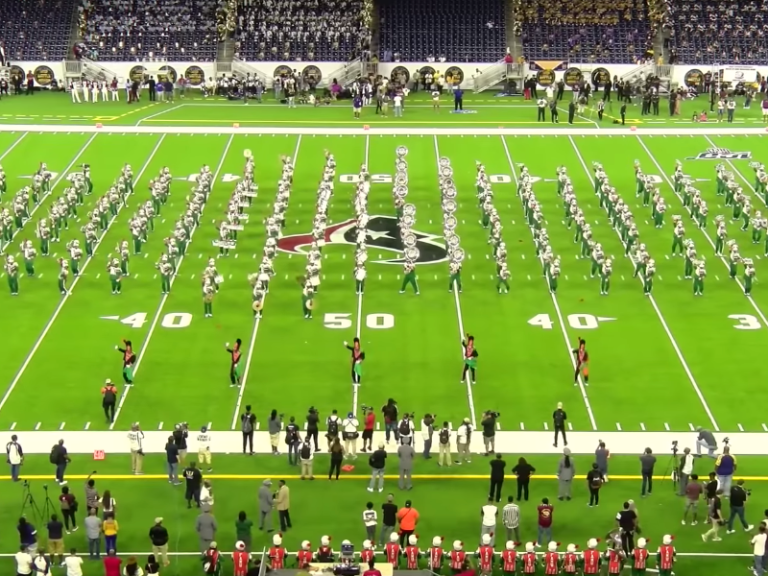
National Battle of the Bands forms partnership with U.S. Air Force

FAMU NBOTB 2019
HOUSTON — Webber Marketing and Consulting, LLC., creators of the Cracker Barrel National Battle of the Bands (NBOTB), announces the U.S. Air Force as an official sponsor of the NBOTB and the new title sponsor of the event’s “HBCU STEM College Fair.”

“We are thrilled about adding the U.S. Air Force as an official sponsor of the NBOTB,” says Derek Webber. “Their support will support the continued execution of our mission to enhance the exposure of Historically Black colleges and Universities (HBCUs) and their marching bands. It’s the support of sponsors like the U.S. Air Force whose contribution and resources allow us to raise the bar in our efforts to create opportunities and generate scholarship dollars for the education and development of our future leaders.”

In addition to the NBOTB, the U.S. Air Force sponsorship will also support the event’s HBCUs Band Together scholarship initiative designed to bring together those who love and seek to support HBCUs, HBCU marching bands and their band members during the COVID-19 crisis.

As the title sponsor for the HBCU College Recruitment Fair, the U.S. Air Force will be helping students gain access to HBCUs from around the country recruiting for both undergrad and graduate admissions for S.T.E.M. and non S.T.E.M. programs.

“We are excited and proud to partner with the Battle of the Bands,” said Major Ross McKnight, Chief of National Events. “It will be great to connect with the fans and students at this entertaining and fun event that celebrates hard work, attention to detail, passion, and most importantly music. These are the same characteristics that we need in our Airmen to continue to be the world’s greatest Air Force.”

For more information about the NBOTB and its Virtual Battles Series follow us on social media at @NationalBattleOfTheBands (Facebook/Instagram) / @NationalBOTB (Twitter) or visit the official home of the National Battle of the Bands at www.nationalbattleofthebands.com.

For more information about HBCUs Band Together and how to make a donation visit, www.hbcusbandtogether.org and follow us on social media at @HBCUsBandTogether (Facebook/Instagram), / @HBCUsBand (Twitter).

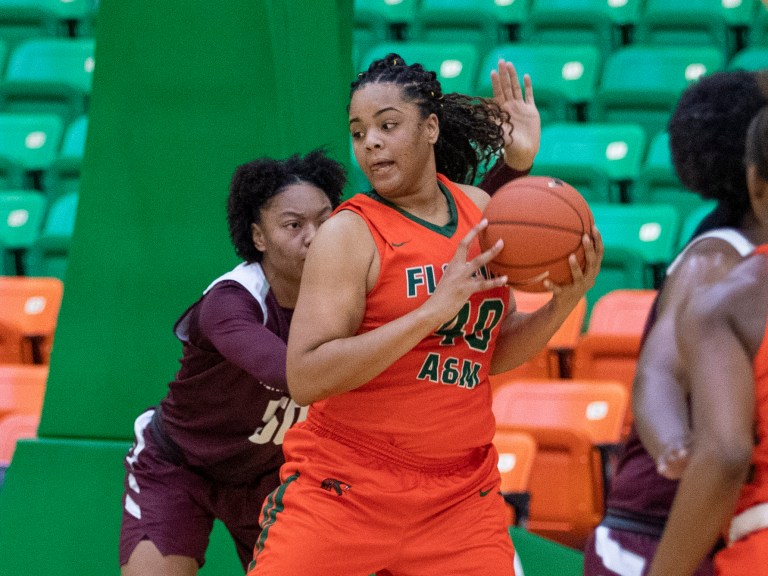
FAMU’s Burney-Robinson signs professional contract with KP BRNO

Burney Robinson
TALLAHASSEE, Fla. — Former Florida A&M University women’s basketball player Shalaunda Burney-Robinson signed a professional contract to play overseas with the Czech Republic team, KP BRNO.

Burney-Robinson played in 87 career games, starting in 56 from 2015-2020. She amassed 745 career points and shot 52.3 percent (308-of-588) from the floor. Defensively, Burney-Robinson grabbed 594 rebounds and registered 52 blocked shots, including 22 during her junior season.

Last season the Palmdale, Calif. native recorded 10 double-doubles, including a 26-point, 17-rebound performance in the season finale against rival Bethune-Cookman. She finished her final season by playing in all 27 games, leading the team in scoring (10.7 ppg), field-goal percentage (52.0), field-goals made (116), rebounds (240) and rebounds per game (8.9).

KP BRNO is coming off a second-place finish last season, posting a 17-6 record.

Courtesy: FAMU Athletics

OVC to postpone fall Olympic sports but will move forward with football due to ‘contractual matters’

OVC Logo
BRENTWOOD, Tenn. – The Ohio Valley Conference Board of Presidents has reiterated its intention for the Conference to commence competition this fall if the facts surrounding the pandemic support it. The Board agreed to postpone the start of competition in fall Olympic sports until September 17 and to conduct conference-only competition in women’s soccer and volleyball. This decision does not include football at this time due to existing contractual matters.

Pursuant to this decision, the fall competitive schedules for men’s and women’s cross country and non-championship segments for men’s and women’s golf and men’s and women’s tennis will also be delayed until September 17, as will the non-traditional competition seasons for baseball and softball. The Board will continue to vigilantly monitor the situation to ensure the Conference’s plans are supported by current medical evidence and guidance.

The delay will provide each campus additional time to prepare for the seasons under new health guidelines, to stagger the start of seasons and for institutions to experience the impact of having the student body return to campus.

Furthermore, the competitive schedules for winter and spring sports are expected to remain unchanged.

Upon their return to campus, teams will have the opportunity to train and practice under the approved safety protocols established in partnership with the NCAA’s Resocialization of College Sports Guidelines, each institution and local public health experts.

Courtesy: OVC

Big South Conference announces plans to move forward with fall sports in 2020

Big South Logo
The Big South Conference announced on Wednesday its plans to move forward with all fall sports for 2020.

Below is the full release:

“With a priority for the health and safety of student-athletes and others due to the COVID-19 pandemic, the Big South Conference announced today that it will begin fall sports competition on Thursday, Sept. 3. The decision was made by the league’s Executive Committee in consultation with the Big South Council of Athletics Directors, Chief Executive Officers and medical professionals, and provides each member institution the opportunity to further focus on return to competition protocols and necessary resources to facilitate the resocialization process, while maintaining competitive opportunities for its student-athletes this fall.

“The new start date for competition includes all exhibition and non-conference games in the traditional fall sports of women’s and men’s soccer, volleyball, and men’s and women’s cross country, and coincides with the beginning of football season on Sept. 3. Baseball, men’s and women’s golf, women’s lacrosse, softball and men’s and women’s tennis, which hold their traditional seasons in the spring, will also begin scheduled fall competition activities on or after Sept. 3.

“Big South member institutions may continue with any permissible athletics activities, as defined by NCAA regulations, at their own discretion as outlined in their respective return to competition protocols, as well as local and state policies related to individual campus decisions. Rescheduling of contests will be determined by each institution.”

Hampton, a member of the Big South Conference, announced last week it would suspend all fall sports for 2020.

Current MEAC member North Carolina A&T will become a full member of the Big South Conference beginning in 2021.

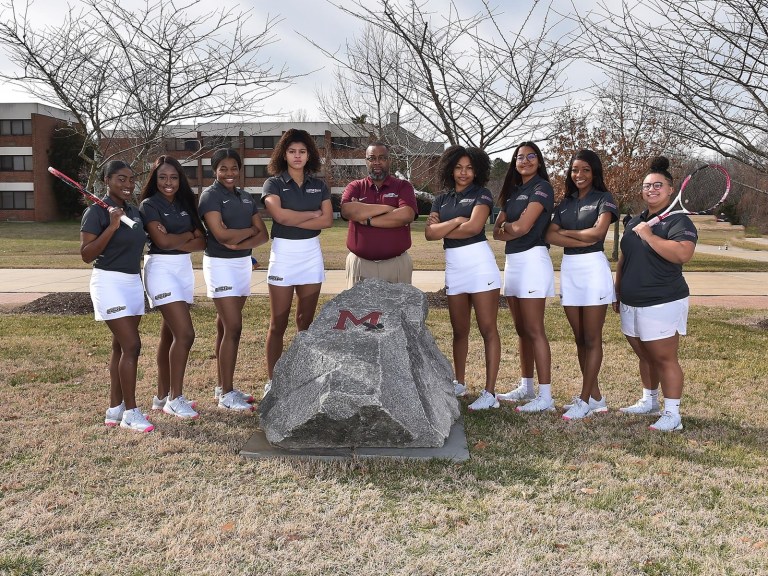
Maryland Eastern Shore suspends women’s tennis program for 2020-21 academic year

2020 UMES Tennis
PRINCESS ANNE, Md. — The University of Maryland Eastern Shore will suspend the women’s tennis program beginning with the 2020-21 academic year. Eastern Shore will still field the required 14 Division I sports to meet sports sponsorship.

“We will take the next three years to perform an assessment of the program’s needs,” Hawk Athletic Director Keith Davidson said. “During this suspension, a number of areas will be reviewed and evaluated. Current practice and match facilities, scholarships, equipment, coaching staff and other expenses that continue to impact our ability to offer a quality program for our young women will all be looked at.”

In addition, the university will initiate a fundraising campaign that will be dedicated to supporting the tennis program and returning our ladies to the court as well as reinstating the men’s program, which was suspended beginning with the 2017-18 academic year.

Courtesy: UMES Athletics

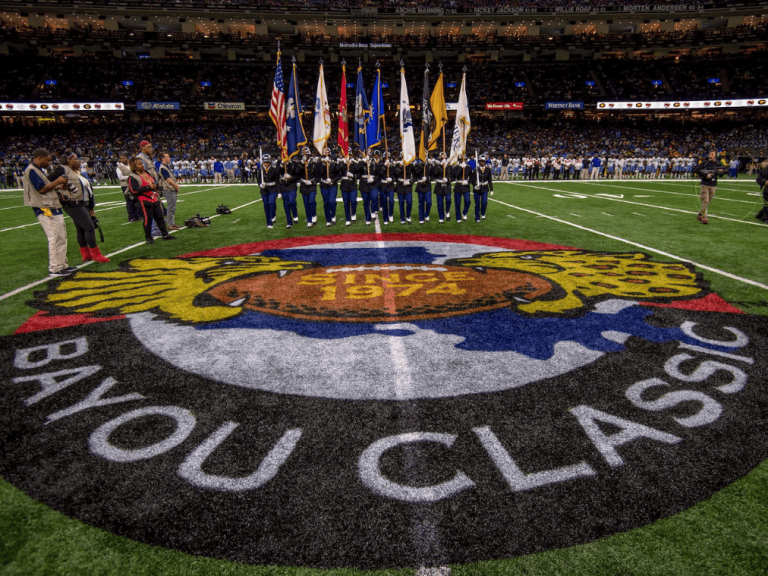
NOCCI announces postponement of Bayou Classic

Bayou Classic
NEW ORLEANS — With the decision of the SWAC Council of Presidents and Chancellors to postpone fall sports contests, we are reviewing options for the 47th Annual Bayou Classic that was to be played in November 2020. The 47th Annual Bayou Classic has been postponed until Spring and will not be played in November 2020.

The organizers of Bayou Classic agree with SWAC’s decision as the health, safety and well-being of our student-athletes, coaches, administrators, team staff, campus faculty, fans and supporters are our top priority.

And while fall football and the Annual Bayou Classic are cultural staples, the organizers of Bayou Classic commit to developing a plan so this important historic tradition continues when it is safe to do so.

With the planned move of SWAC football to the spring, we remain optimistic that the iconic Bayou Classic, ranked as the #1 HBCU Classic in the nation, will be played between Southern University and Grambling State University at the Mercedes-Benz Superdome in New Orleans at some time in the future.

Until then we ask for all Bayou Classic fans to stay safe, wear your mask in public and follow Centers for Disease Control guidelines to help prevent the spread of the COVID-19 virus. We will get past this national pandemic and will celebrate all of our HBCUs traditions — including the Bayou Classic — in an even bigger way.

Courtesy: NOCCI

Video: SWAC commissioner McClelland talks about postponing fall sports for 2020

Sddefault 2
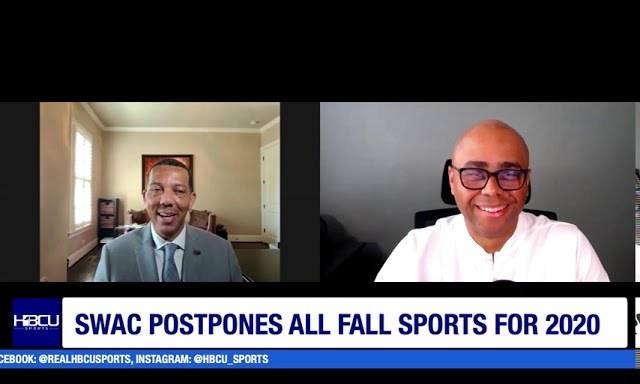
Dr. Charles McClelland, Southwestern Athletic Conference Commissioner, met with Kenn Rashad to discuss the conference’s decision to postpone all 2020 fall sports due to the coronavirus pandemic.

The commissioner speaks about the league’s modified football schedule for the sping and the plan for testing student-athletes, addressing the challenges some of the member institutions will face in meeting the requirements put in place by the NCAA.

Additionally, McClelland talks about the logistical issues the conference will face in conducting all sports during the springs season.

MEAC opens registrations for gamers interested in esports league

Sddefault 1
NORFOLK, Va., – Registration for the Mid-Eastern Athletic Conference (MEAC) Esports League, in conjunction with Blaze Fire Games, is open today. As schools continue to evaluate the conditions attributed to COVID-19, the MEAC Esports League will allow for students, alumni and prospects to stay connected and engaged through online gaming competition.

Registration is $40 and will cover all of fall 2020 (July 20-Dec. 20) for the MEAC Esports League. The first eseries will run from Aug. 10-Sept. 14, with players able to participate in competitions for such games as NBA2K19, FIFA 20, Madden NFL, Rocket League and Super Smash Bros. Ultimate.

Registration for the MEAC Esports League includes access to all five games, with players able to select up to three games concurrently.

The online nature of esports will allow for players to engage with one another safely from their own homes until all universities return to normal campus activity, at which point the esports program will include on-campus components.

In order to facilitate the online competition, the MEAC and Blaze Fire Games have selected GYO Score as their technology and league management platform partner. Through GYO Score, students will be able to participate in regularly-scheduled matches and directly challenge each other in ladder-style competitions that will promote a fun and competitive atmosphere.

Blaze Fire Games is a licensed digital content provider that taps into a variety of creative talent and skills across the globe. The company aims to connect a diverse group of participants by introducing them to a career path where they will learn to compete in a gaming environment.

Courtesy: MEAC

Texas College names former NFL Cowboy Greg Ellis head football coach

Texas College FB
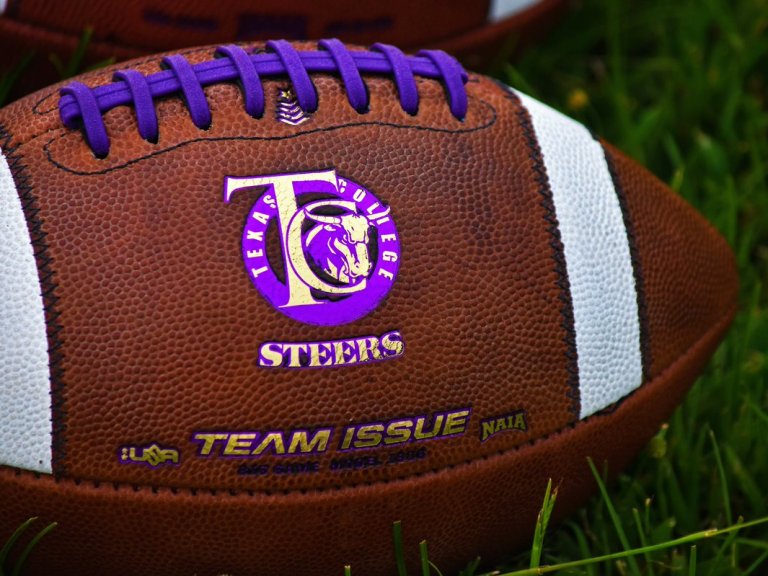
TYLER, Texas — Texas College named former Dallas Cowboys Defensive End Greg Ellis as the Steers’ Head Football Coach. Ellis brings a wealth of experience as both a player and coach in the NFL. Coach Ellis played for the Dallas Cowboys and Oakland Raiders throughout his 12-year career in the NFL; 10 of those years Ellis served as the team captain for both the Cowboys and Raiders. Coach Ellis’ leadership experience extends beyond the gridiron, serving as founder and CEO of Play Now Enterprise, a multimedia production company responsible for the film “Carter High” and impactful plays such as “Juneteenth” and “Watchnight.”

“We are excited for Greg Ellis to join Texas College as the Head Football Coach. His professional experiences and philosophies as a player, coach, as well as civic leader, mirror that which our athletic programs are built upon,” noted Dr. Dwight J. Fennell, President. “His commitment to ensuring student-athletes not only develop physically, but also intellectually aligns with Texas College’s mission. We anticipate Coach Ellis’ leadership to greatly benefit our program in a multitude of ways, including student success and graduation matriculation.”

Though the Steers will not participate in football this fall, Texas College will maintain the program and field a team for intercollegiate competition next season. With the College moving to online instruction for Fall 2020, football and other fall sports will still train and meet regularly through a virtual experience.

“I am excited about the opportunity to be the Head Football Coach of Texas College. Since we are not able to play any games this year, we will maximize our virtual capabilities to the fullest,” commented Coach Ellis. “I am looking forward to working with all the young men and meeting their families. We have a lot of work ahead of us; nevertheless, we are ready for the challenge to be successful on and off the field. Last, but certainly not least, I thank Dr. Fennell and his staff for entrusting me with this task.”

Courtesy: Texas College Athletics