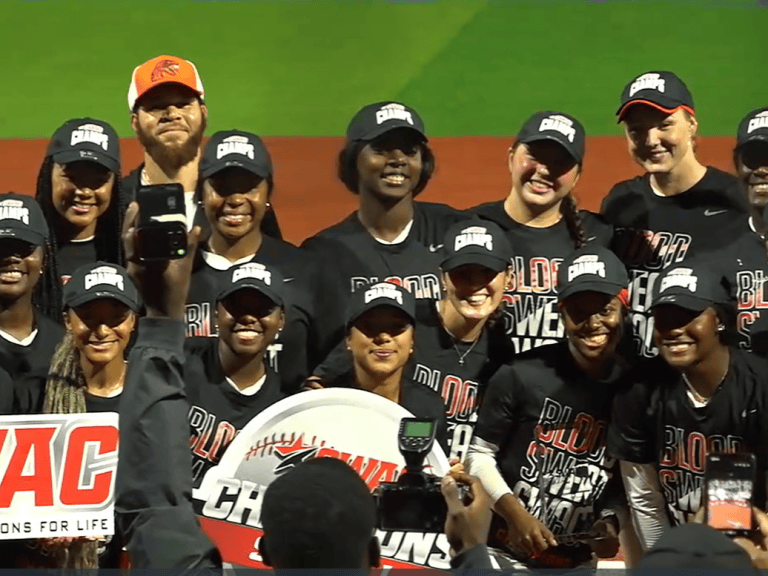
A last-second switch gave Florida A&M their first SWAC softball championship in dramatic fashion.
Pinch hitter Braxtyn Battle singled home Kiara Beltre with one out in the bottom of the 7th inning to give the Rattlers a 2-1 walk-off win over Southern in the conference championship game. The tournament win is FAMU’s first as a member of the SWAC and their first overall since winning the MEAC in 2017.
Saturday’s winner-take-all game was set up by an 8-0 five-inning win by the Jaguars Friday night and after a weather postponement, FAMU’s Samantha Smith and Southern’s Aaliyah Zabala engaged in a true pitchers’ duel.
FAMU got on the board first with an RBI triple by Amya Ramos in the bottom of the first inning, then Southern countered with an Ariel Burton RBI groundout in the top of the second.
From there, Smith and Zabala baffled opposing hitters. Smith allowed just two hits and even though she gave up four walks, the Rattler defense, which committed five errors Friday night, played a clean game Saturday.
Zabala, the SWAC pitcher of the year, showed no ill effects after pitching Friday night, striking out four batters and getting help from her defense as well.
After Smith retired Southern in order in the top of the 7th inning, Florida A&M pieced together their final rally.
Beltre singled with one out and Smith was hit by a pitch to bring Battle up, who was pinch hitting for third baseman Aniya Canty.
Battle looped a ball into left centerfield and Beltre slid headfirst at home well ahead of the throw for the winning run.
They put in the work. They wore the jersey. And now they wear the crown. 👑
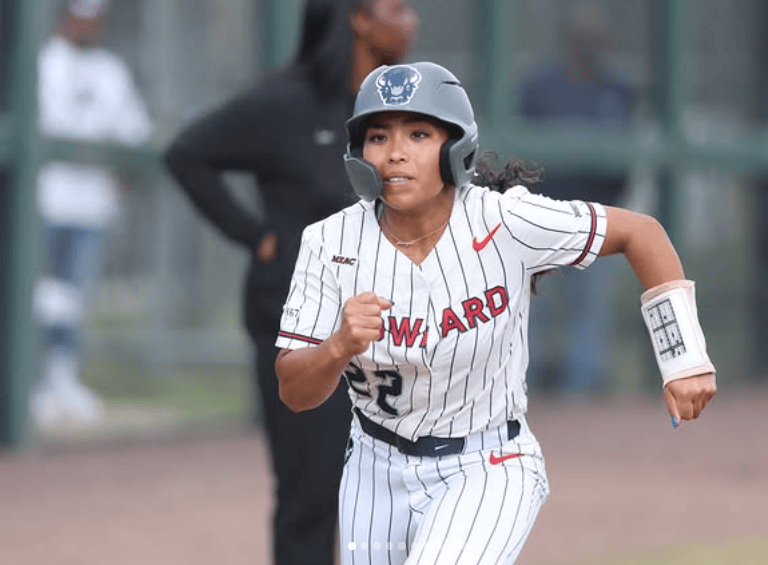
The Howard University softball squad was the MEAC’s best team all year long and proved it again in the conference tournament.
MEAC player of the year – and tournament Most Outstanding Performer – Maryn Jordan went 3-for-3 at the plate with three RBI and pitcher Aiko Conway only allowed two runs as the Bison coasted to an 11-2 five-inning win over South Carolina State Saturday to repeat as MEAC champions.
Howard (28-17) went undefeated in the MEAC tournament, defeating South Carolina State twice and Morgan State, each time in run rule fashion.
The Bison led 4-1 when they broke open the game in the bottom of the fourth with seven runs. Catcher Makyia Taylor singled home two runs, followed by a sacrifice fly by Cheyenne Castillo, an RBI groundout by Angel Wiggins and Amirah Lenon scoring on a wild pitch. The Bison still had two runners on when Jordan, a left-handed batter, punched a ball the opposite way to score two more runs to trigger the run rule (eight run lead through five innings).
Conway surrendered just two runs, the last a homer to Dymond Roundtree in the top of the fifth, but that was all South Carolina State could put together.
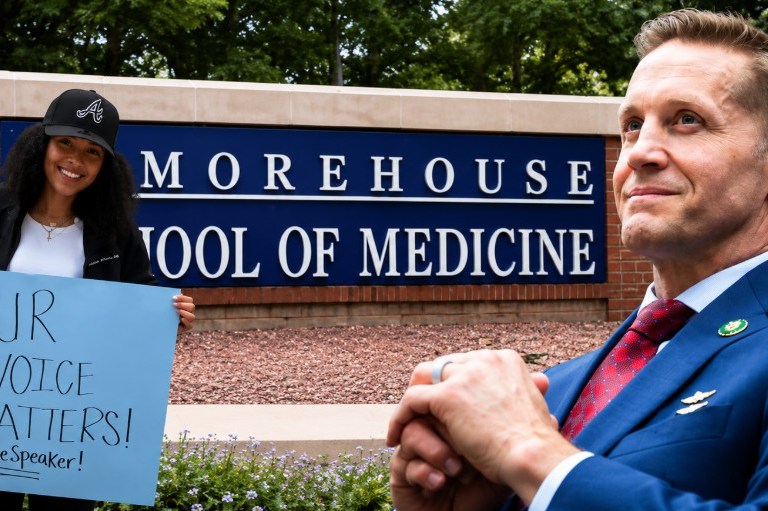
However, students argue that his political views and legislative record “are in direct opposition to our institution’s values and harmful to the very patients we aim to serve,” according to a four-page letter drafted to the school’s administration.
Morehouse students express concern about conservative speaker
In the letter, the students took issue with McCormick’s stance against DEI, undocumented immigrants, and gender-affirming care.
The student-led petition calling for the school to reconsider McCormick has drawn more than 1,200 online signatures.
“This decision goes beyond political disagreement. We hope leadership understands that the hurt and frustration surrounding this decision stem not only from differing opinions but from the feeling that student voices, lived experiences, and trust in institutional leadership are being overlooked.”
Students also demonstrated on campus on Wednesday, holding signs that read “DEI Saves Lives” while urging administrators to reconsider.
McCormick responds to protests
McCormick said he respects differing opinions but stands by his record of public service. He indicated he still plans to attend and deliver the address.
“I plan to deliver the speech to honor my alma mater, celebrate the graduates’ achievements, and continue a tradition I’ve been part of before,” he said in a statement. “My character and contributions should be judged on merit, not politics or appearance.”
The controversy at Morehouse School of Medicine mirrors a similar situation at South Carolina State University, where student backlash prompted officials to withdraw Lt. Gov. Pamela Evette as commencement speaker, citing security concerns.
At Morehouse, students have also raised concerns about McCormick’s endorsement of President Donald Trump and policies they say could disproportionately impact underserved communities and aspiring medical students.
McCormick, the first graduate of Morehouse School of Medicine elected to Congress, has previously spoken at the institution and said recent protests have been disappointing.
“That’s my alma mater,” he said at a town hall in Marietta. “I got protests in the last couple of days, and it was hurtful.”
Southern University has reached a historic milestone in the collegiate world of esports.
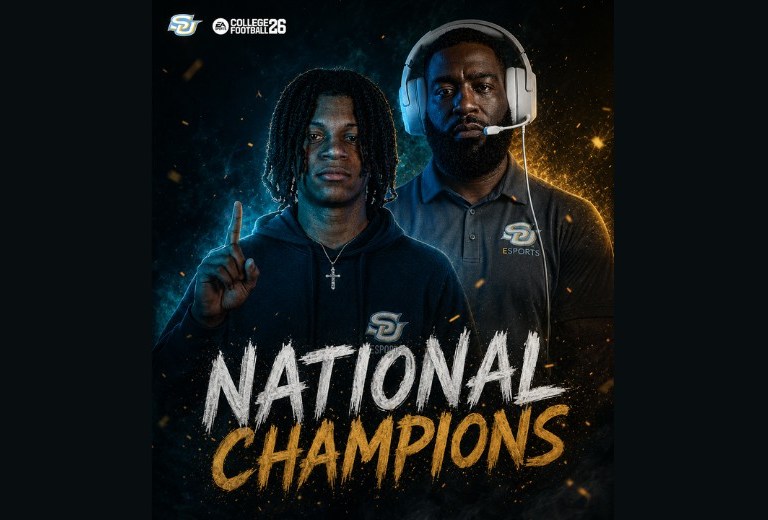
The school became the first HBCU to win the ECAC EA Sports College Football National Championship.
The Jaguars secured the 2026 title behind standout player Coby Robinson, a computer science major competing under the gamertag “K1NGC0BY.”
Robinson captured the EA Sports College Football 26 Division II national championship, defeating No. 1 seed Bellarmine University in a best-of-five series.
Robinson clinched the title with a 38-29 victory in the decisive game, securing the series 3-2.
“I feel great, happy, and accomplished because this has been a dream of mine,” Robinson said in a news release. “To see myself continuing to dominate and make history shows that I belong and that my dream is within reach.”
No NIL, no problem
Southern’s victory marks a significant step forward for the university’s Esports and Digital Gaming Ecosystem (EDGE) program, which aims to position students as leaders in the rapidly growing digital gaming industry.
Christopher Turner, director and head coach of EDGE, emphasized the significance of the achievement, particularly given the program’s limited resources.
NATIONAL CHAMPIONS! 🏆🐾
It wasn’t just a game; it was a masterclass in preparation. After a hard-fought series, Southern University takes down the ECAC National Championship 3-2!
Huge shoutout to Coby “KingCoby” Robinson for the 38-29 clutch performance with Texas to bring… pic.twitter.com/5QUTZ7n6zk
— Christopher Turner 🎮🎒 #EdTech (@GeauxPlayES) April 23, 2026
“National champions. No university funding. No NIL,” Turner wrote in a LinkedIn post. “Watching Coby Robinson take home the ECAC Esports, Electronic Arts College Football National Championship proves exactly what I’ve been saying: our student-athletes possess elite talent, discipline, and competitive spirit.”
Turner added that Southern’s esports athletes continue to excel despite financial constraints.
“Our athletes represent this institution with excellence — often in spite of limited resources, not because of them,” he said. “We have proven that we can compete and win at the highest level.”
The EDGE program focuses on developing students through education, skill-building and community engagement, with a goal of becoming a leading HBCU hub for esports and digital gaming.
“This is a monumental moment for Southern University and the entire HBCU landscape,” Turner said. “We aren’t just participating in esports; we are setting the standard.”
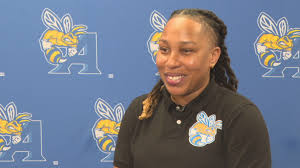
Gaines comes to North Carolina Central after spending the past two seasons at the helm at Allen, leading the Yellow Jackets to a combined 36-19 overall record.
Under her direction, she helped guide the guard Taliah Wesley to the SIAC Player of the Year award and Eboni Clay to the SIAC Freshman of the Year award in her first season.
The former Yellow Jackets coach gained her fame playing for South Carolina from 2013 to 2015 under Coach Staley. In her final season, she contributed to the team making it to the Final Four for the first time in school history.
Olivia Miles has a challenge in turning around NC Central
Before making her way to South Carolina, Gaines had a storied junior college career, being named the JUCO Player of the Year by the Women’s Basketball Coaches Association (WCBA) in 2013.
In three seasons under Coach Baxter, North Carolina Central finished with a combined 34-56 overall record. This included a 16-15 record during the 2023-2024 campaign, marking the team’s first winning season since officially rejoining the MEAC in 2010.
Since returning to the MEAC, the Lady Eagles have only finished with a record above .500 in conference play three times, the last coming in Baxter’s first season as head coach.
South Carolina State University has launched its most ambitious fundraising effort to date.
The school unveiled a $41.2 million capital campaign aimed at expanding opportunities for students, strengthening athletics and academics, and modernizing campus facilities over the next five years, the university announced.
The initiative, titled The Power of SC State: A Capital Campaign to Elevate Excellence, will focus on five major priorities: student scholarships, athletic improvements, faculty and staff support, academic programming, and campus revitalization.
SC State President Alexander Conyers said the campaign represents a major step forward in the university’s long-term vision.
Photo: South Carolina State University
“At SC State, we have set a vision to be a leader in offering relevant programs that fulfill the educational needs of every student,” Conyers said in a statement. “While public funding is vital, private support is the final piece of the equation.”
Although the campaign was publicly introduced this month, fundraising efforts quietly began in 2024 during a so-called “silent phase” that has already generated more than $17.4 million in donations.
South Carolina State football stadium is getting millions in upgrades
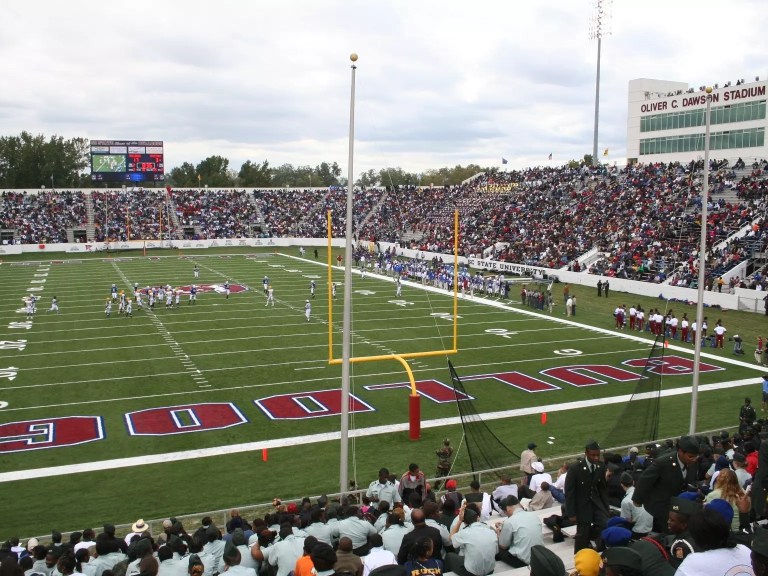
One of the campaign’s largest projects is a $10.4 million renovation of Oliver C. Dawson Stadium. Planned upgrades include new LED lighting, renovated press boxes, improved accessibility through a second elevator, and the addition of the “Dog Park,” a premium pregame experience designed to enhance the game-day atmosphere.
Photo: @TLSN12/Twitter
University officials say the campaign is about more than athletics. SC State recently earned R2 designation in the Carnegie Classification system, placing it among the nation’s high-activity research institutions. Campaign funds will help build on that momentum by investing in faculty support, including $2 million for endowed professorships and $5.5 million for scholarships and student aid.
Conyers said the effort also complements more than $210 million already being invested in campus construction projects, including a new 94,000-square-foot academic building and a modern university library.
“This is our university and our responsibility,” Felder said. “Through this campaign, we can provide our students with the foundation for success for generations to come.”
This article is one in a series of features produced in partnership with the Southwestern Athletic Conference, exploring the history of the SWAC from its founding in 1920 to the present day. The series will run during the months of April and May.
A few weeks ago, the Arkansas-Pine Bluff and Washington Commanders communities were hit hard with the stunning and sudden passing of Monte Coleman.
Coleman was a linebacker who played all 14 of his NFL seasons with the Commanders, helping them win Super Bowls in 1982, 1987 and 1991.
And it’s likely he’ll be remembered just as much for leading one of the most unexpected SWAC football champions of all time.
Arkansas-Pine Bluff’s football history is an interesting, if scattered one. Then known as Arkansas AM&N, the school was a member of the SWAC from 1936 to 1969, then jumped around as an NCAA Division II and NAIA independent before rejoining the SWAC in 1998.
The Golden Lions boasted some longtime pro players, such as Pittsburgh Steelers defensive lineman L.C. Greenwood, Atlanta Falcons deep ball threat Wallace Francis, and AFL all-pro tight end Willie Frazier.
Arkansas-Pine Bluff was successful at the NAIA level in the mid-90s, advancing to the 1994 national championship game before falling in a 13-12 heartbreaker to Northeastern State of Oklahoma.
UAPB championship run came out of nowhere
The Golden Lions’ best year since rejoining the SWAC was 2006, when under Mo Forte, they won the SWAC West, but lost the SWAC championship game 22-13 to Alabama A&M.
Coleman served as Forte’s linebacker coach and team chaplain before replacing him as head coach before the 2008 campaign.
Monte Coleman
In four seasons at the helm, Coleman was 19-25 and had just picked up his first winning season (6-5) in 2011.
Needless to say, there were no high expectations for UAPB entering the 2012 season; they were picked third in the West behind Grambling and Prairie View in the SWAC preseason polls. The Golden Lions’ best-known player was three-time all-SWAC offensive lineman Terron Armstead, who went on to play 12 seasons in the NFL with the New Orleans Saints and Miami Dolphins.
The season got off to an inauspicious start as UAPB struggled with NAIA member Langston, who was coached by future Grambling head man Mickey Joseph.
Placekicker Tyler Strickland rescued the Golden Lions with a 27-yard field goal with a second left for a 17-14 victory.
After getting hammered by Tennessee State 40-13 on September 29, UAPB stood at 2-2, facing a crossroads in their season and Jackson State coming to Golden Lion Stadium that next weekend.
The Tigers did everything right that weekend…except hold onto the football. JSU ran for 319 yards, but fumbled the ball away four times.
154 yards rushing and two touchdowns from Dennis Jenkins helped the Golden Lions beat JSU 34-24 in a soggy Saturday night game. It was the start of a win streak that would take Arkansas-Pine Bluff to the top of the SWAC.
The Golden Lions’ run to the SWAC title game featured a few romps (50-21 at Southern, 49-3 at Texas Southern) and a couple of close calls (10-0 over Mississippi Valley State and 24-17 at Grambling).
But none were as close or as heartstopping as the regular season finale on Nov. 17 against Prairie View.
Two touchdown passes by quarterback Ben Anderson helped UAPB open a 28-13 lead five minutes into the second quarter, but the Panthers scored two touchdowns in a span of 28 seconds to pull within a point.
Somehow, Arkansas-Pine Bluff stayed one step ahead of PV. Anderson connected with Alton Taylor for another score with just four seconds before halftime for a 35-27 Golden Lion advantage.
Prairie View started the third quarter with a touchdown drive, but Anderson called his own number from 19 yards out to make it 42-34 Arkansas-Pine Bluff.
PV scored in the fourth quarter and looked to steal a win from UAPB. Fortunately for the Golden Lions, Jarvis Webb saved the day.
Webb forced a fumble deep in UAPB territory and the Golden Lions recovered. With less than two minutes to go and PV out of timeouts, Arkansas-Pine Bluff headed to the SWAC championship game with a 42-41 victory.
How the Golden Lions became team of destiny
They would face Jackson State, the SWAC East winner, at Legion Field in Birmingham, Alabama, on December 8.
The Tigers were ready for UAPB this time.
A pair of long touchdowns by Rick Richardson and Rakeem Sims, along with a quarterback keeper by Clayton Moore, sparked JSU to a 21-7 lead in the second quarter.
Just before halftime, the UAPB defense came up big again. Linebacker Xavier Lofton sacked Moore and forced him to fumble. Bill Ross picked up the loose ball and scooted 73 yards for a touchdown to make it a 21-14 game at halftime.
Photo: UAPB Athletics
The score remained the same until the final seconds of the fourth quarter. Jackson State pinned the Golden Lions at their own five-yard line, and in need of a miracle, the combination of Ben Anderson and Willie Young came through.
“I looked at the safety, and once I saw him bite on the dig route, I just threw it,” Anderson said of a 95-yard bomb to Young that tied the game at 21.
The Hail Mary play produced the first overtime game in SWAC championship game history.
JSU won the coin toss and looked to take the lead on a 43-yard field goal attempt. UAPB blocked it and had a chance to win. A chance that had been several generations of football in the making.
Running back Justin Billings zipped through the Jackson State line and stepped out of bounds at the Tigers 5-yard-line before tumbling into the end zone.
A special football title
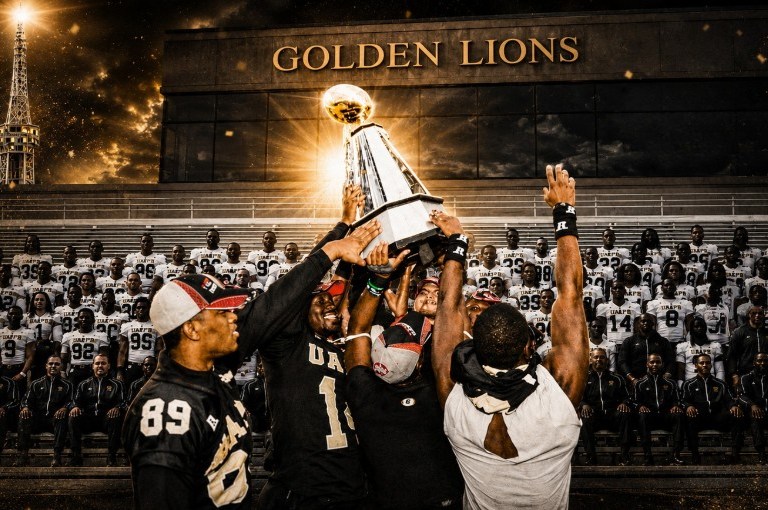
While there was no touchdown, that was plenty of room for Tyler Strickland, who booted a 22-yard field goal to give Arkansas-Pine Bluff their first – and to date, only – SWAC football championship 24-21.
“Sometimes when you’re dealing with destiny, you can’t change it,” Monte Coleman said in the Opelika-Auburn News. “We bent but never broke. Did it scare us? Absolutely, but don’t ever count us out.”
Arkansas-Pine Bluff was also named Black College Football national champion for the first time that season, and while the program has yet to repeat that success, 2012 will hold a special place in the hearts of the Golden Lions community, as will the memories of a great coach and great man who left the field far too soon.
This article featuring Joseph Henderson is one in a series of features produced in partnership with the SWAC, exploring the history of the conference from its founding in 1920 to the present day. The series will run during the months of April and May.
What do former Olympians Jearl Miles Clark, Dannett Young, and Grace Jackson all have in common? At one time or another, they were all members of the Alabama A&M women’s track and field program.
That answer tends to surprise people. Alabama A&M sits in Huntsville, Alabama, a place the world associates with NASA engineers and space exploration, not world-class sprinters preparing for the Olympic stage.
Yet for roughly a decade, spanning the late 1980s into the early 1990s, that is exactly what happened on that campus. Three Olympians. Two countries represented. Multiple medals. Back-to-back national championships. All of it was built by one coach, with a fraction of the resources that schools with far bigger names took for granted.
Joseph Henderson: Building something from the ground up
The architect of the AAMU women’s track and field program was head coach Joseph Henderson, and his most dangerous weapon was his eye for talent. While programs at larger Division I schools chased the same well-known athletes from established pipelines, Henderson was finding talent others had passed on.
Photo: Jearl Miles Clark Facebook
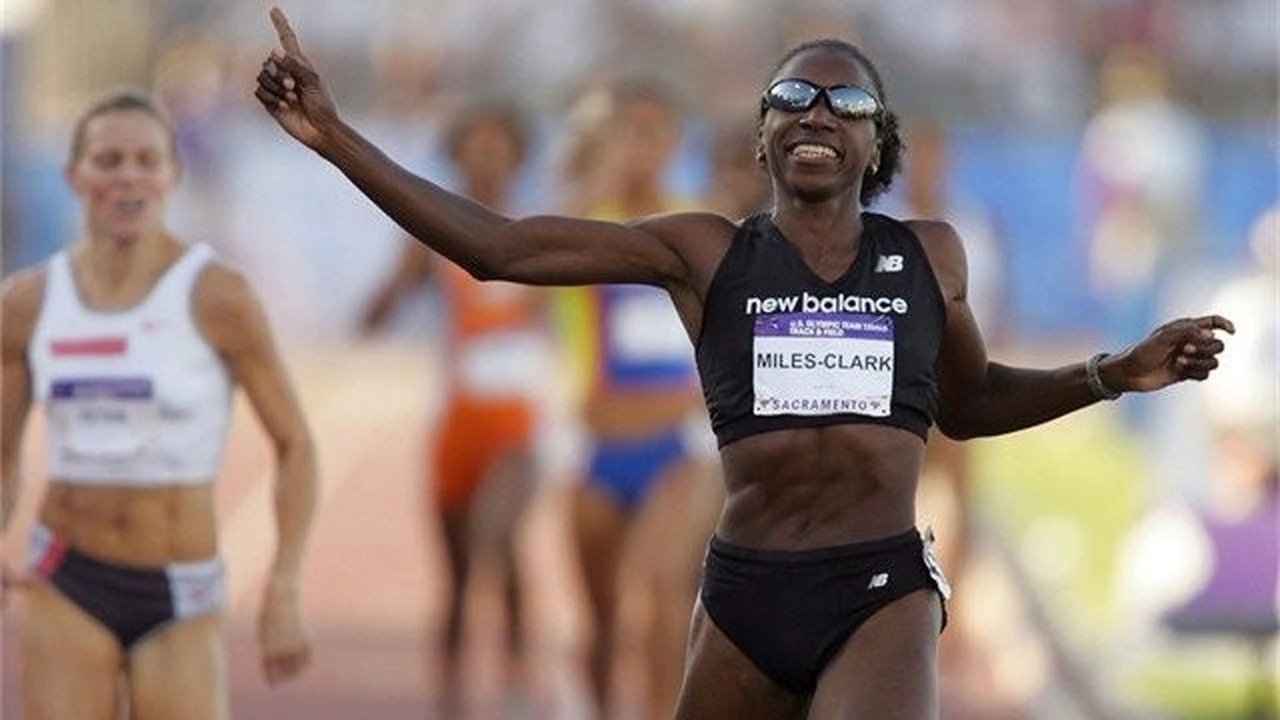
Jearl Miles Clark is the most documented example. She grew up outside of Gainesville, Florida, and had drawn attention as a high school long jumper. Henderson recruited her to Alabama A&M, where she developed into one of the most decorated athletes in the program’s history. By the time she graduated in 1989, the Bulldogs had never placed lower than third at the NCAA Division II national championships during her time on the team.
Grace Jackson came from even farther away. Born in St. Ann, Jamaica, she arrived on an athletic scholarship and developed into one of the fastest women on earth. Dannett Young, born in Jacksonville, Florida, became arguably the most dominant athlete in Division II track history, undefeated across four full years of SIAC competition and losing only one race in her entire collegiate career.
Henderson found them, developed them, and sent them into the world prepared.
1988 Olympics: Alabama A&M goes to Seoul
The 1988 Seoul Olympic Games were the first major public demonstration of what Henderson had been quietly building.
Dannett Young was on the U.S. team. She won gold as a member of the American 4×100 relay squad and that same year ran the fastest 200 meters in the world at 22.34 seconds.
Jackson was in Seoul as well, running for Jamaica. In the 200-meter final, she ran 21.72 seconds, which at the time was a Jamaican national record, and crossed the line directly behind Florence Griffith Joyner. Jackson won silver in what was arguably the fastest women’s 200-meter race run to that point. Two athletes from the same HBCU program, competing on the same Olympic track, in the same Games.
It remains one of the most remarkable convergences in HBCU track and field history.
The Championship Machine
Photo: SIAC
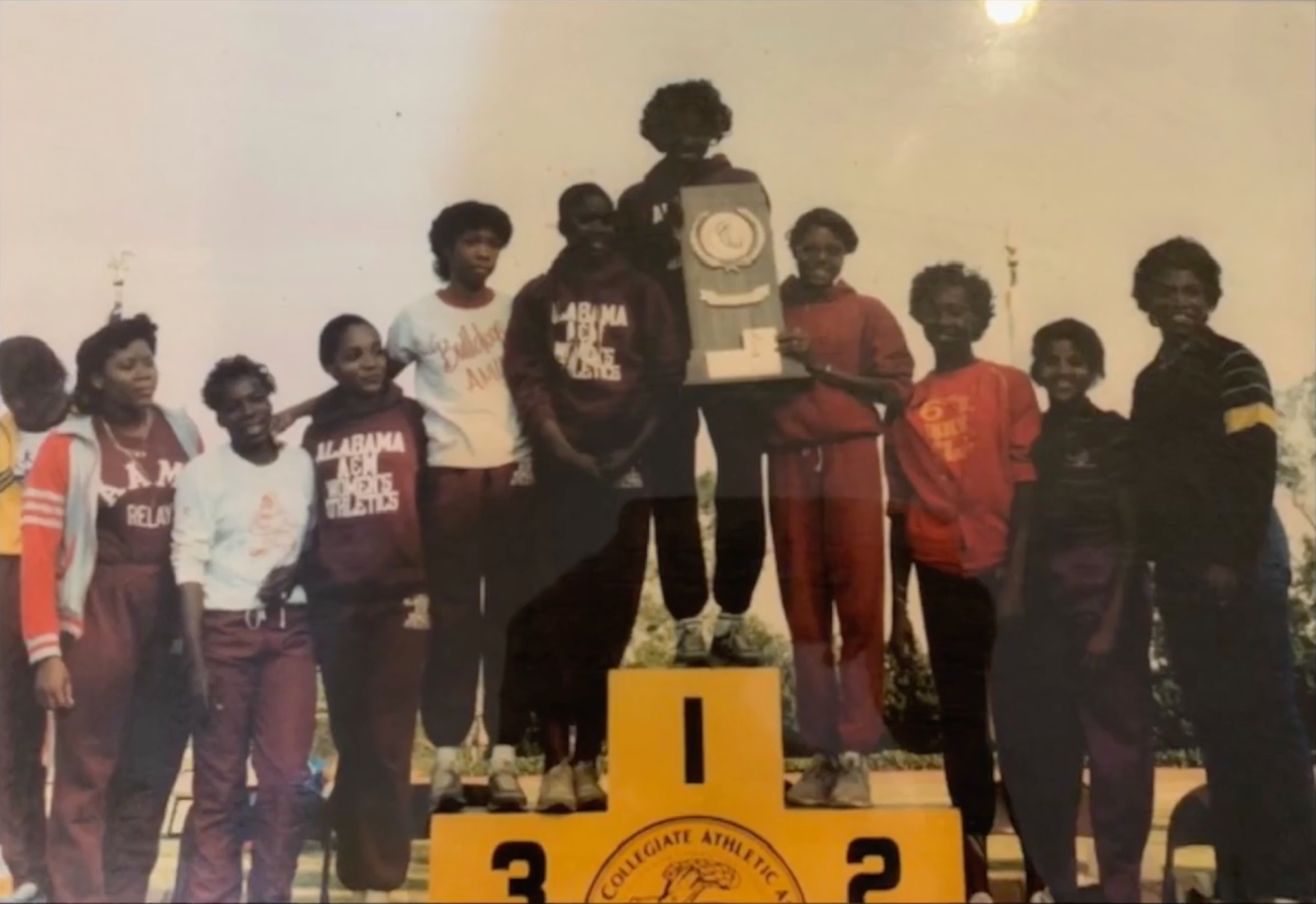
While the Olympic medals accumulated, Henderson was building a team program that dominated Division II in a manner that was almost unfair. Alabama A&M’s women’s track program won six consecutive SIAC championships from 1990 through 1995. In 1992, the program claimed the NCAA Division II outdoor national title by 47 points over Cal State Los Angeles.
In 1993, AAMU entered the final event, the 4×400 relay, holding a two-point lead over Abilene Christian. Shelly Beckford ran the anchor leg and pulled away to give the Bulldogs their second straight title, 92 points to 80. That 1993 team was inducted into the SIAC Hall of Fame in 2023, thirty years after the fact, a recognition long overdue.
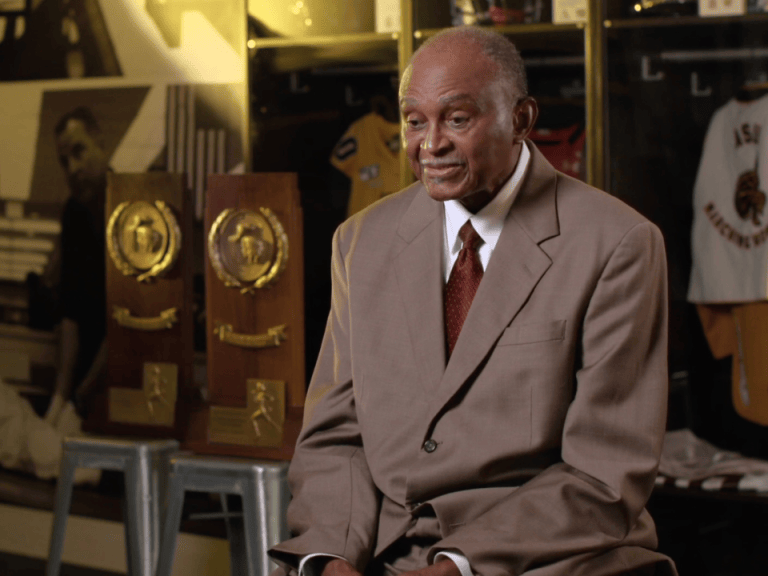
Henderson himself described what separated that group from other teams he had coached. “They were determined to win,” he said. “They had to do three jobs. They had to come in the top five in three events. They fought hard. I never had to get on them about their work. Anytime I got to the track, everything changed with them. They wanted to win, and when you get that deep down inside to win, that beats anything else you can put on the table.”
The program also won the NCAA Division II indoor national championship in 1992, completing a sweep of the season that confirmed Alabama A&M’s women were on a different level.
The Olympics Pipeline Continues
Jearl Miles Clark’s career became the longest expression of what Henderson started. After leaving Alabama A&M in 1989, she competed in four Olympic Games, winning silver in the 4×400 relay at the 1992 Barcelona Games, then gold at both the 1996 Atlanta Games and the 2000 Sydney Games.
At the World Championships, she accumulated nine medals, including the individual 400 meters gold in 1993. She was named World Indoor Champion in the 400 meters in 1997 and was inducted into the National Track and Field Hall of Fame in 2010. She later described Alabama A&M as a place where she had a chance to grow up and not get lost.
What It Meant
Joseph Henderson did not have the recruiting budget that major D1 programs do. But he had Huntsville, Alabama, a deep understanding of what sprinters could become with proper development, and the ability to find talent other coaches had already decided was not worth their time.
What he built produced an Olympic gold medalist, an Olympic silver medalist, a four-time Olympian with three relay medals, and back-to-back national championships, all out of a program that most of the country never gave a second thought.
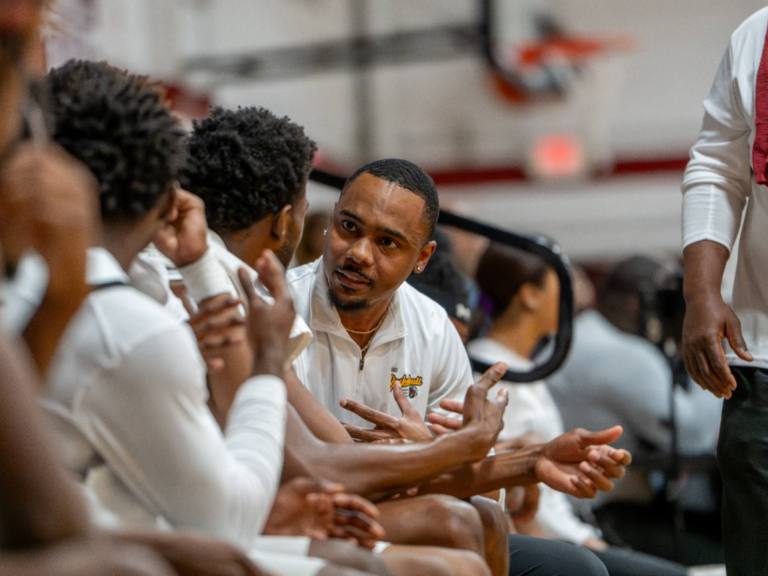
Winston-Salem State has found its next leader on the sidelines, and he brings both a championship pedigree and a personal connection to the role.
Jay Butler, a Virginia Union alum who spent the past 11 seasons building his alma mater into a CIAA powerhouse, was officially introduced as the new head coach of the Rams men’s basketball program.
Butler arrives in Winston-Salem after earning CIAA Coach of the Year honors and National Association of Basketball Coaches Atlantic Region Co-Coach of the Year recognition during his tenure.
For Butler, the decision to leave Virginia Union was not made lightly.
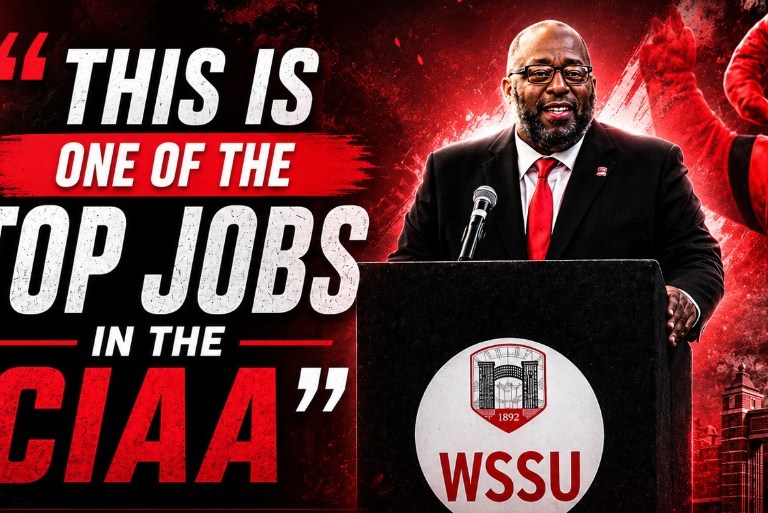
“It took a special place like WSSU for me to leave a place that means so much to me,” Butler said. “This is one of the top jobs in the CIAA, and I’m blessed for this opportunity.”
Butler to WSSU is a family affair
The move carries added significance for Butler and his family. His daughter, Lauren, has already committed to attend Winston-Salem State, making the transition feel even more personal.
“She is my why,” Butler said. “She committed here, and I was ecstatic about that.”
Butler takes over a program steeped in tradition and rich with history, and he made it clear he intends to honor that legacy while building toward sustained success. He pointed to the influence of Rams legends Clarence “Big House” Gaines, Earl “The Pearl” Monroe, and Cleo Hill as a guiding force.
“I want to continue that legacy and see the next pro come from here,” Butler said. “We want to win 20 games every year.”
Expectations are to compete for championships
While winning remains a priority, Butler emphasized a broader mission centered on developing student-athletes beyond basketball.
“We want to build young men,” he said. “I am committed to player development on and off the court, so they are prepared for life after basketball.”
He also stressed the importance of embracing the HBCU experience and strengthening ties within the Winston-Salem community.
“We will be invested in the community and committed to putting a product on the floor that you all will be proud of,” Butler said.
University officials believe Butler’s leadership will further elevate WSSU’s presence both on the court and in the community.
With a proven track record, a deep respect for tradition, and a vision for the future, Butler now takes the reins with the expectation of returning Rams basketball to championship form.
Wykevin Bazemore’s stint as Shaw University’s interim men’s basketball coach didn’t last long.
The university Thursday announced that Bazemore, a former Winston-Salem and CIAA standout, would be the permanent head coach moving forward.
“I’m honored and excited to accept this opportunity,” Bazemore said in a statement. “We will honor the tradition, raise the standard, and build a culture defined by accountability, unity, relentless effort, and a championship pedigree.”