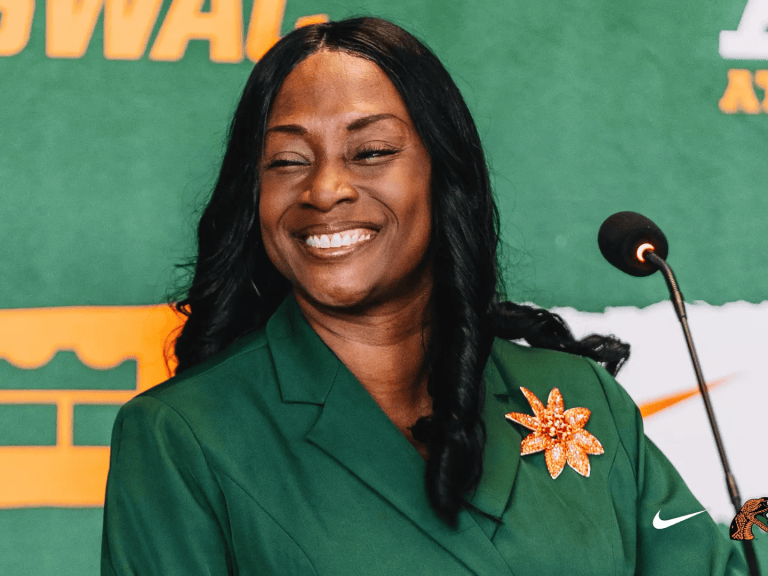
A Leon County Sheriff’s Office spokesperson told the station that Suggs faces warrants for alleged fraud and larceny following a Florida Department of Law Enforcement investigation.
Suggs was named athletic director last September. Suggs’ previous position was president and CEO of the Florida Sports Foundation. During her seven-year tenure, the foundation secured two Super Bowls (2020 and 2021) and a current three-year run of Pro Bowl games (2023, 2024, and 2025).
According to the Leon County Sheriff’s Office Website, Suggs charges are one count grand theft larceny of more than $20,000 and less than $100,000, one count fraud to swindle or obtain property under $20,000 and four counts of fraud for travel expense claims.
The investigation began in November 2024 after FDLE received a criminal referral from the Florida Department of Commerce’s Inspector General with an audit of Suggs’ FSF business credit card purchases and corresponding travel reimbursements. The FSF is a direct-support organization operating under the Florida Department of Commerce, according to the Florida Department of Law Enforcement.
“The investigation revealed that Suggs misused her FSF-issued credit card to make wire transfers and cash withdraws and personal purchases at casinos during business trips, totaling more than $24,000. She then falsified travel vouchers, coding the unauthorized charges as meals. When asked about the unauthorized charges, Suggs claimed some were for business meals and others were accidentally charged to the business card. She failed to fully repay FSF for her personal expenditures.”
Interim FAMU President Timothy Beard told the Tallahassee Democrat in a statement that he was “aware of the allegations involving our athletics director, Angela Suggs, while she was working with a former employer. While the matter is unrelated to her duties as an employee at FAMU, we are monitoring the situation and will respond in the future as appropriate.”
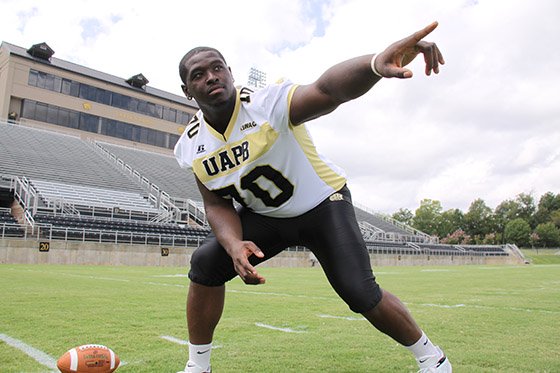
After 12 seasons of banging helmets and shoulder pads with the NFL’s best, the decision to retire was a simple one for Arkansas-Pine Bluff alum Terron Armstead.
“God blessed me with so many great moments, great years and a great career, but my injury history is extensive,” Armstead said on a recent edition of Shannon Sharpe and Chad Johnson’s Nightcap podcast. “The biggest part for me is my body. I still love this game; mentally, cerebrally, I could play this game forever. Physically, my body is slowing down.”
Johnson credited Armstead, who turns 34 in July, for having the self-awareness to know when to walk away, then asked him when he knew it was time to retire.
“I’ve been dealing with a knee issue since my third year in the league,” Armstead answered. “I didn’t see a practice field and that’s not because the Dolphins didn’t want me to or I wanted to rest; I couldn’t walk after games. I was only able to play under pain meds. I couldn’t put any pressure on my knee, so it was like ‘I can’t keep doing that to myself.'”
Armstead played offensive tackle for the New Orleans Saints from 2012 to 2021 before joining the Dolphins as a free agent. He played 135 games, starting 131. He was a second-team All-Pro selection for the Saints in 2018 and made five Pro Bowl appearances.
He was a three-time All-SWAC first team offensive lineman before being drafted in the third round of the 2013 draft, the highest HBCU draft pick in recent memory.
Armstead announced his retirement on social media in April, saying that “This was always more than a game to me! This has literally been my LIFE. I look back at my entire journey and I walk away grateful, proud, excited, and at peace, knowing I did it the right way!! Full investment to maximize the blessings God gave me!!”
Harris initially entered the transfer portal in April, reportedly receiving offers from Alabama State, Alabama A&M, UTEP, Youngstown State, and Jackson State.
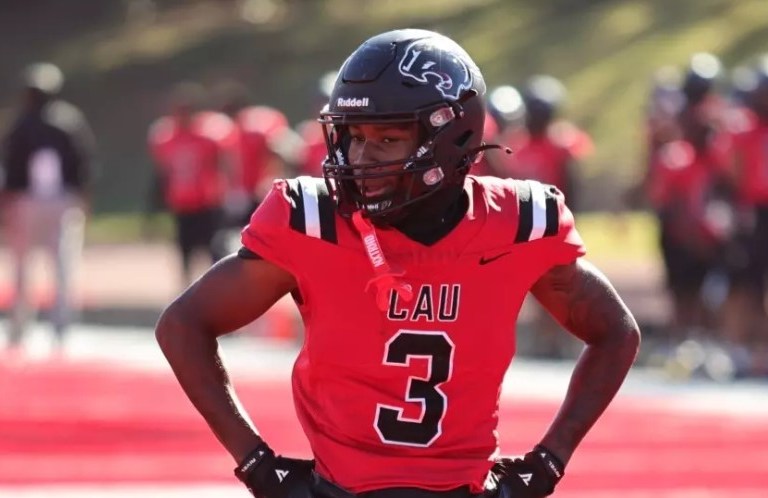
He played one season at Clark Atlanta after transferring from Allen, along with former head coach Teddy Keaton.
The Tampa native has accumulated 2,139 receiving yards on 153 receptions and 23 touchdowns in his college career thus far.
He was named to the All-SIAC First Team last season after leading the conference with 75 receptions for 1,004 yards and 14 touchdowns.
Harris joins a Johnson C. Smith team that finished the 2024 season with an 8-2 overall record, the most wins they’ve achieved in a year in over two decades.
He will be accompanied by fellow all-conference receiver Brevin Caldwell, who led the CIAA with 1,090 receiving yards last season.
The CIAA has reportedly committed to keeping its coveted basketball tournament in Baltimore.
CIAA Commissioner Jacqie McWilliams-Parker spoke with HBCU Sports publisher Kenn Rashad about where that process stands now and what the conference values in determining where its championships are played.
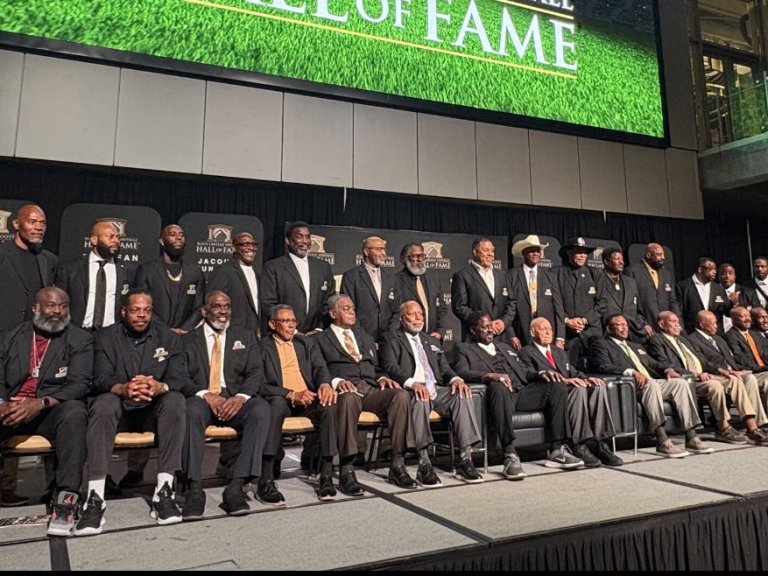
The Black College Football Hall of Fame in downtown Atlanta was abuzz with celebration and history on Saturday night during its 16th annual induction ceremony.
Honored was a new class of legends whose achievements have shaped the legacy of HBCU football.
A Night of Honors and Reflection
Hosted by NFL Network broadcaster and Howard University alumnus Steve Wyche, the event drew over 30 previous inductees, VIPs, and supporters from across the country, all gathered to recognize the contributions of Black college football’s finest.
Doug Williams, BCFHOF co-founder and 2011 inductee, captured the spirit of the night:
“What we have with the Class of 2025 is an incredible showcase of the talent that has come from Historically Black Colleges and Universities over the years. When the Black College Hall of Fame was established, its purpose was to do just this, elevating and recognizing the past, present, and future of Black College Football. Congratulations to the Class of 2025.”
Meet the Class of 2025
Six new members were enshrined, each representing a different chapter in HBCU football history:
Henry Dyer (Grambling State University): Grambling’s first 1,000-yard rusher, Dyer was a first-team All-SWAC selection from 1963-65 and led the nation in scoring with 110 points. He was drafted in the fourth round of the 1966 NFL Draft by the Los Angeles Rams.
Rashean Mathis (Bethune-Cookman University): A three-time All-MEAC First-Team honoree, Mathis excelled as a defensive back from 1999-2002 before a distinguished NFL career.
Jacquay Nunnally (Florida A&M University): Nunnally was a standout wide receiver for the Rattlers from 1997-2000, known for his record-setting catches and electrifying play.
Dominique Rodgers-Cromartie (Tennessee State University): Rodgers-Cromartie starred as a defensive back from 2004 to 2007 and later became a two-time NFL Pro Bowler.
Jay “Sky” Walker (Howard University): The dynamic quarterback led Howard to new heights in the early 1990s and remains a revered figure in Bison football history.
Coach Fred “Pop” Long (Wiley College): A coaching legend, Long’s career spanned over four decades (1921-1965), leaving a lasting impact on Wiley College and Black college football as a whole.
Tennessee State U legend and 12-year NFL vet Dominique Rodgers-Cromartie is among 6 greats to be enshrined into the Black College Football Hall of Fame tonight. DRC joined me on NFL Network to discuss that, the state of HBCU football and former NFL players coaching at HBCUs. pic.twitter.com/lj4D6jbJ01
The ceremony also spotlighted two outstanding modern stars:
Jada Byers (Virginia Union University) received the 2024 Black College Football Player of the Year award, earning the Deacon Jones Trophy for his remarkable season.
Cobie Durant (South Carolina State/Los Angeles Rams) was named the 2024 Black College Football Pro Player of the Year, an honor presented by the NFLPA.
Jackson State football was honored as the HBCU team of the year, and head coach T.C. Taylor was recognized as Coach of the Year.
A Legacy Preserved
Since its founding in 2009 by James Harris and Doug Williams, the BCFHOF has inducted over 100 players, coaches, and contributors, preserving the stories of HBCU football excellence. The Hall’s permanent exhibit at the Pro Football Hall of Fame in Canton, Ohio, continues to educate and inspire future generations.
As the Class of 2025 took their place among the greats, the ceremony reinforced the enduring influence of HBCU football and the individuals who have paved the way for today’s stars. The evening was not just a celebration of athletic achievement, but a powerful testament to the culture, history, and ongoing impact of Black college football
Schools can now directly compensate their athletes, ushering in a transformative era for college sports following Friday’s formal approval of a multibillion-dollar legal settlement.
U.S. District Judge Claudia Wilken gave the green light to the agreement reached between the NCAA, its leading conferences, and attorneys representing all Division I athletes. This House v. NCAA settlement resolves three federal antitrust lawsuits, alleging that the NCAA unlawfully restricted student-athletes’ ability to earn money.
Judge Wilken’s long-anticipated ruling comes just weeks before schools begin issuing payments to athletes, starting July 1.
The annual cap is expected to start at roughly $20.5 million per school in 2025-26 and increase yearly during the decade-long deal. These new payments are in addition to scholarships and other benefits the athletes already receive.
The settlement gives schools the power to create new rules designed to limit the influence of boosters and collectives. Starting this summer, any endorsement deal between a booster and an athlete will be vetted to ensure it is for a “valid business purpose” rather than a recruiting incentive.
The agreement will resonate in nearly every one of the NCAA’s 1,100 member schools, boasting nearly 500,000 athletes.
NCAA President Charlie Baker said the deal “opens a pathway to begin stabilizing college sports.”
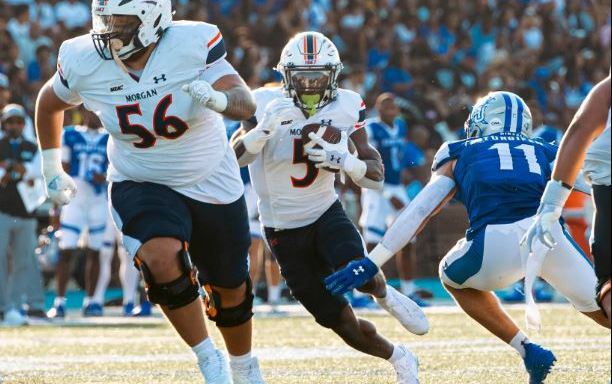
Multiple HBCUs, such as Morgan State, University of Maryland Eastern Shore, North Carolina A&T, and Hampton (through an association with the CAA) have agreed to opt in to the House settlement agreement.
What does opting in mean?
Institutions that opt in will also be subject to new roster limits and scholarship guidelines. This antitrust settlement, valued at over $2.8 billion, addresses past restrictions on student-athlete compensation and establishes a revenue-sharing framework.
While schools in the power conferences (SEC, Big Ten Big 12, ACC and Pac-12) will be automatically bound by the terms of the settlement, schools outside those conferences had the choice to opt in or out to the settlement. Schools that opt out will not be able to directly pay players through revenue sharing.
“The decision to opt in to the settlement allows for financial support and revenue sharing to give student-athletes a real opportunity to earn income while acknowledging the time, talent, and energy student-athletes bring to UMES,” Vice President of Athletics & Recreation Tara A. Owens said in a statement. “We continue to explore all avenues to establish and maintain competitive teams while providing an optimal collegiate experience for our student-athletes.
Owens said the decision “will not increase the financial investment the university makes” athletics.
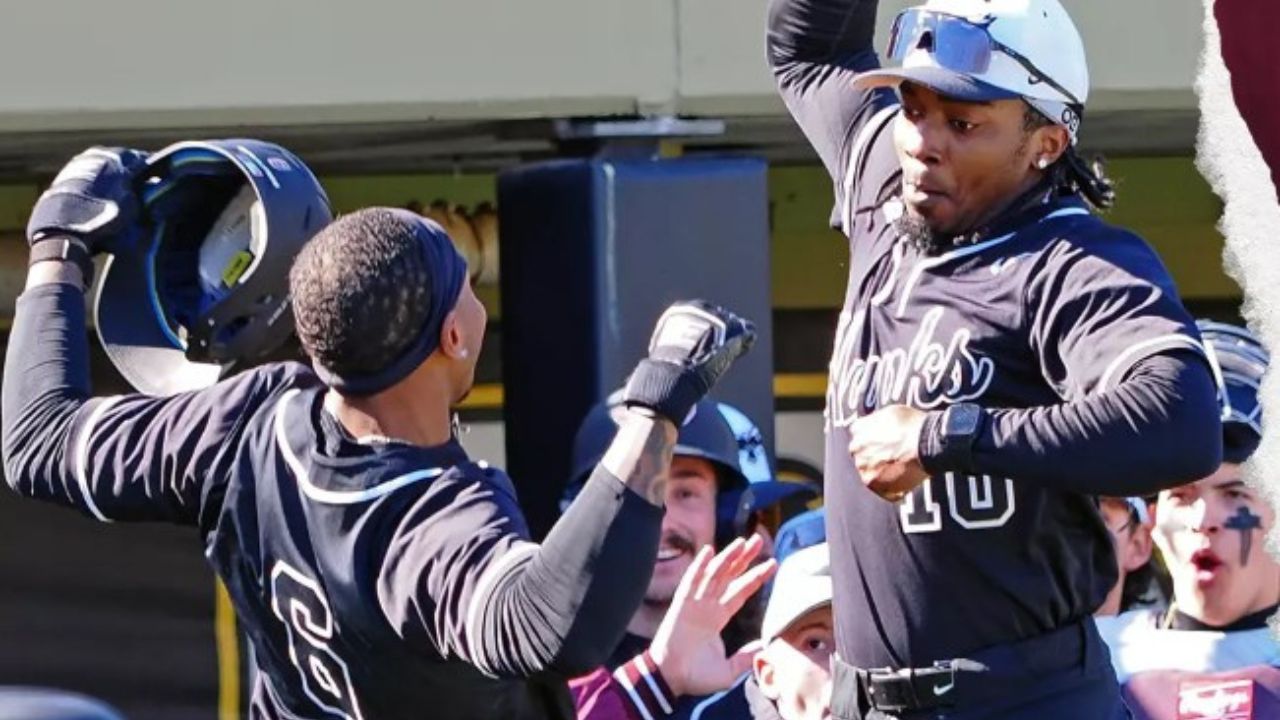
“UMES will utilize our department resources strategically and cultivate new pathways for student-athlete financial support,” Owens said. “We are excited about the new landscape of college athletics and the future of Hawk athletics.”
Morgan State is expected to contribute over $230,000 to the settlement fund and reduce football roster size to add Olympic sports to remain in compliance with Title IX.
Photo: UMES Athletics
What does the decision mean for NIL?
In specific reference to NIL, the settlement aims to create a more equitable model for college athletics, ensuring that student-athletes receive fair compensation and support.
Participating schools can now offer direct NIL payments and other financial benefits to student-athletes, potentially including scholarships above the NCAA’s previous limits. Schools can also engage in direct NIL contracts with student-athletes, such as licensing agreements, endorsement deals and brand promotion agreements.
“Furthermore, opting into the settlement aims to enhance the student-athlete experience, increase visibility and access, and ensure competitive recruitment and positioning within the MEAC and Northeast Conference,” the school said in the release.
For scholarship and roster management purposes, opting into the settlement allows schools, including HBCUs that opt in, to use a portion of their athletic revenue to directly benefit student-athletes, and scholarship limits may be eliminated.
“It is now allowable for institutions to directly give NIL money to their student-athletes. That means there’s going to be an influx of athletes that are looking for NIL payments,” he said in December. “You’re going to have to have some name image and likeness money set aside to compete.”
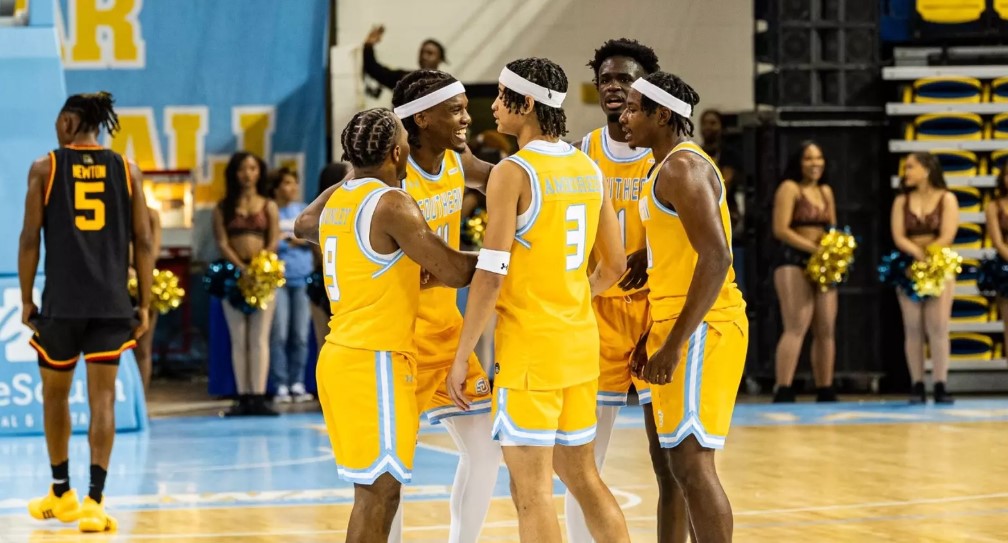
McClelland explained that the House settlement will impact the finances of every SWAC institution.
Photo: Southern Athletics
“The SWAC conference’s contribution to that [settlement] is $30 million. There’s going to be some challenging times from a financial standpoint.”
To counteract that, McClelland said that resources are being developed to help each school compete in this new era of college athletics.
“We’re going to develop a best practice document that we’ll give to all presidents and chancellors as a guide,” he said. “We are in a good spot from a revenue standpoint; we’re going to be just fine, but it will take some additional effort. We will need NIL dollars on the inside, and we will work with you to help develop that. We’re going to continue to stay on top.”
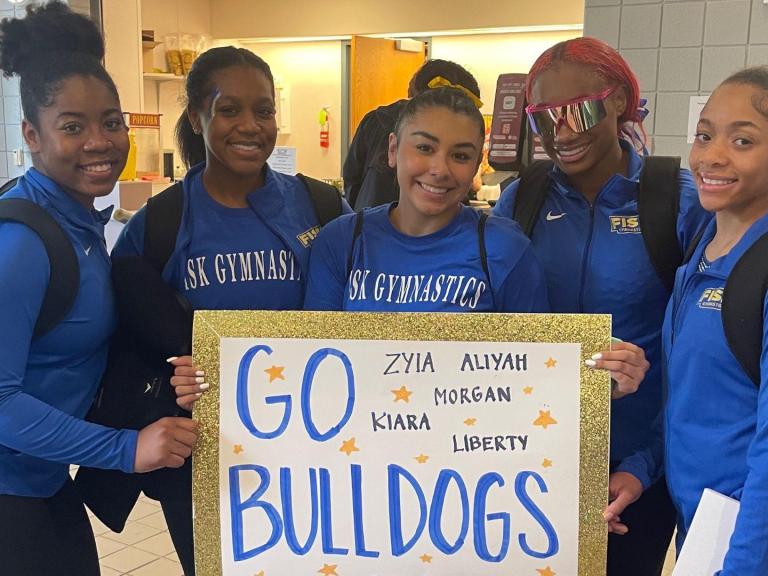
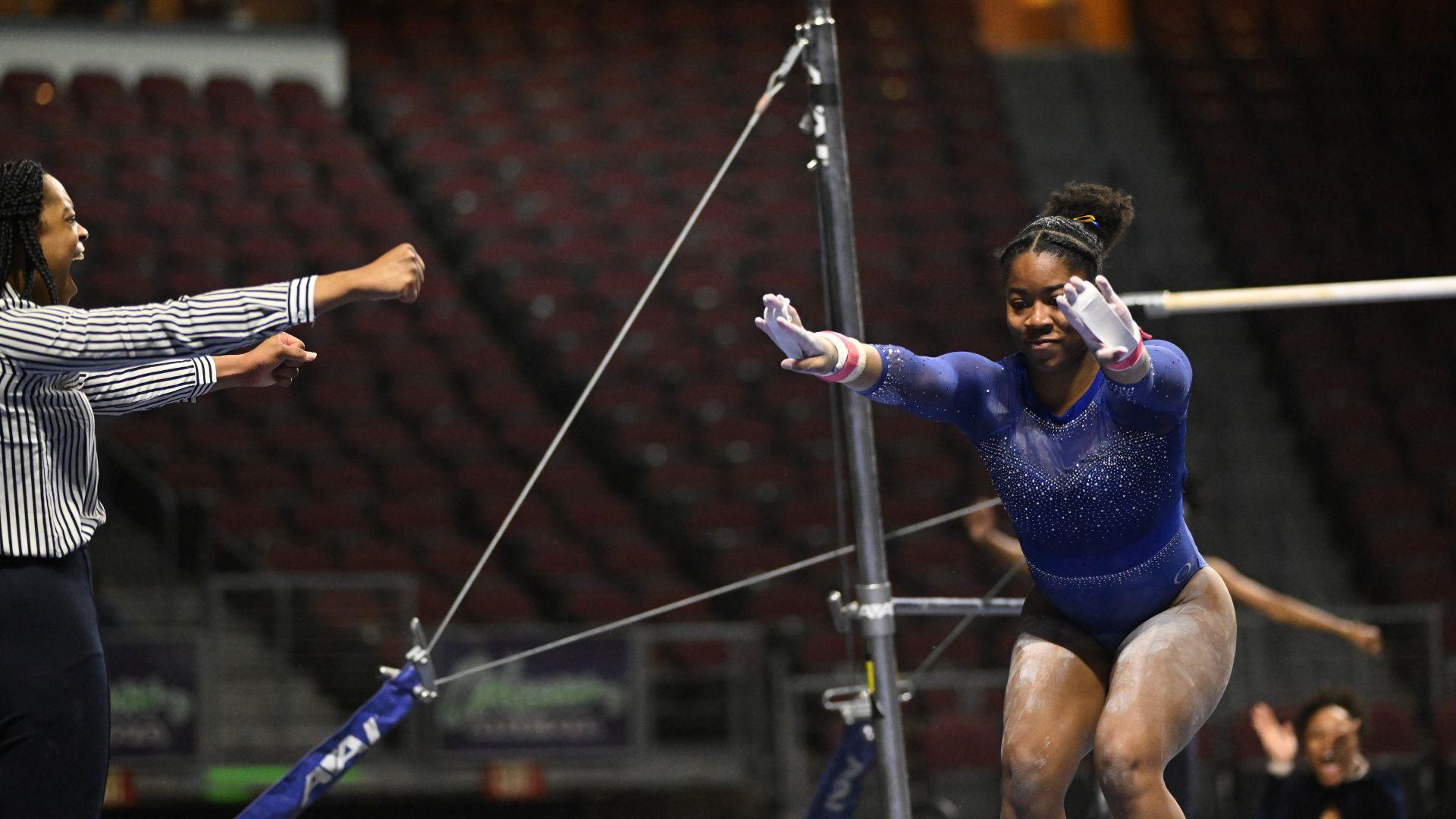
“While we are tremendously proud of the history our gymnastics team has made in just three years, we look forward to focusing on our conference-affiliated teams to strengthen our impact in the HBCU Athletic Conference,” said Fisk Director of Athletics Valencia Jordan. “Fisk is grateful for the hard work, dedication, and tenacity of its gymnasts, staff members, and coaches who made this program possible.”
Fisk was the first HBCU to announce a gymnastics program in 2023, followed by Talladega College and Wilberforce University.
Photo: Fisk University Athletics
Morgan Price, the 2024 HBCU Sports Female Athlete of the year, won a national championship at Fisk but has since transferred to the University of Arkansas for her final year of eligibility.
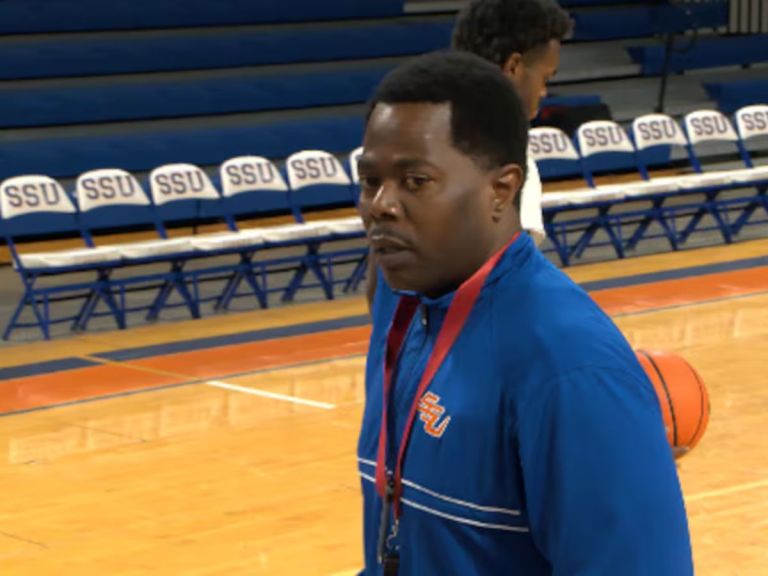
“We are pleased to officially announce Coach Thompson as the head coach of our men’s basketball program,” said Savannah State Athletic Director Opio Mashariki. “He has been an integral part of the team’s growth over the past couple of seasons and understands what it takes to build a winning culture. After leading the team to a championship last season, we are confident that he is the right person to lead our program forward.”
A graduate of Savannah State’s 2003 class, Thompson took over as interim Tigers coach on Jan. 6 after former coach Kevin Broadnax announced his retirement.
He led the team to a 13-6 record, eventually leading the Tigers to their second SIAC tournament championship in four years and a berth in the NCAA Division II Men’s Basketball Tournament.
Before taking over as interim head coach, Thompson had been an assistant with the team, joining the staff in 2023 in his first collegiate coaching job.
“I’m truly grateful for the opportunity to represent my alma mater, Savannah State University—a place that has played such a meaningful role in shaping the person I am today,” said Coach Thompson. “It’s an honor to give back to a community that has given so much to me.”
Savannah State is looking to become the first team to repeat as SIAC champions since Miles claimed back-to-back titles in 2018 and 2019.
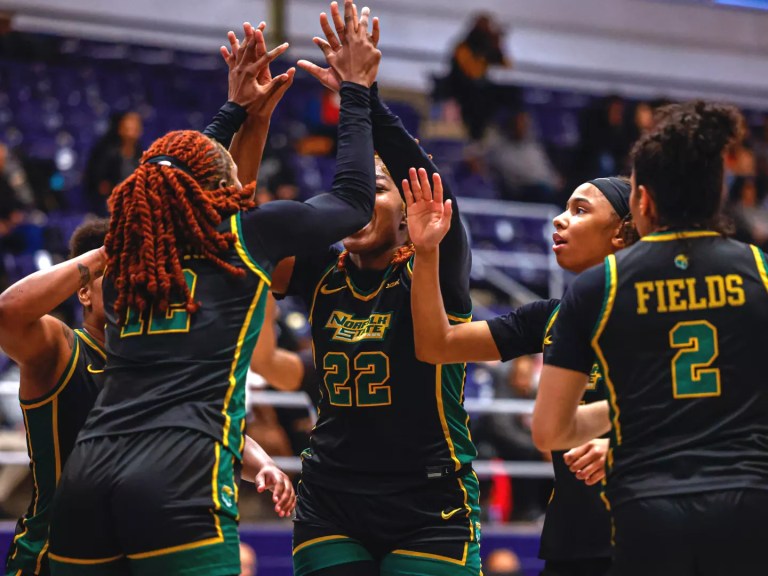
“I appreciate Coach Kara Lawson’s willingness to engage in a home-and-home series with our institution,” Norfolk State had coach Jermaine Woods said. “As we continue to strive for greater visibility for HBCU’s, collaborative agreements like this are instrumental in driving progress. Her return to Norfolk will yield numerous benefits to our university, community, and the city.”
Norfolk State, three-time defending MEAC champions, will face the Blue Devils at Cameron Indoor Stadium Nov. 12 this coming season, with Duke visiting Echols Hall during the 2026-27 season. Under former WNBA and Tennessee standout Kara Lawson, Duke reached the Elite Eight last season and finished the year ranked No. 7 in the country.
“This is a landmark moment not only for our women’s basketball program but for our university as a whole,” NSU athletic director Melody Webb said. “Bringing a nationally ranked program like Duke to Echols Hall reflects our continued commitment to elevating Norfolk State Athletics and providing our student-athletes with opportunities to compete at the highest level. It also gives our fans a chance to witness elite competition right here at home and be part of a historic event.”
The annual Celebration Bowl, now in its 10th year, will officially kick off bowl season again.
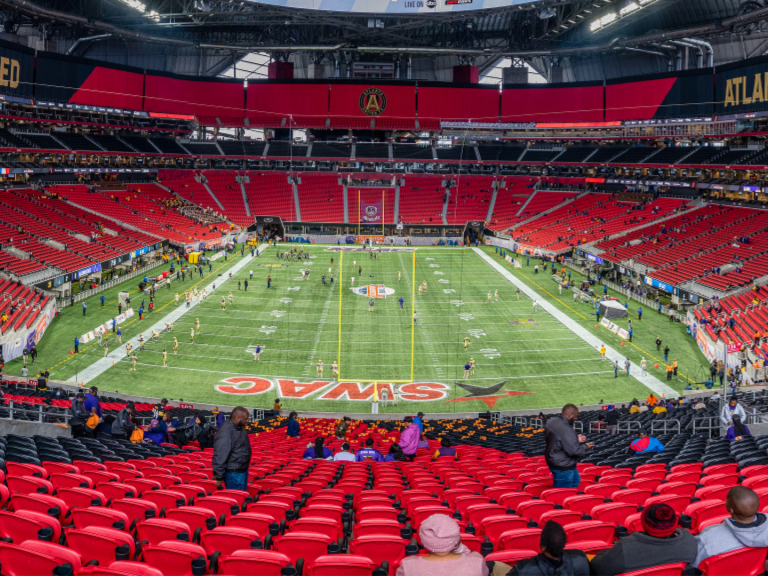
The HBCU national championship game between MEAC and SWAC champions will be played at noon EST on Saturday, Dec. 13, at Mercedes-Benz Stadium on ABC, according to ESPN.
The event will headline 17 bowl games to be televised on the ESPN family of networks through Jan. 2.
Photo: ESPN
Before last season’s Celebration Bowl, the date was moved from the third Saturday to the second weekend.
Though SWAC Commissioner Charles McClelland believed the change created a disadvantage for the conference champion, it was a move referred to as “a game-changer” by Celebration Bowl executive director John T. Grant.
“By aligning with the start of the college football bowl season and avoiding the expansion games of the college football playoffs and NFL, the Celebration Bowl has carved its own niche in the bowl season calendar.”