HBCU men’s basketball coach resigns to take NBA job

TENNESSEE STATE
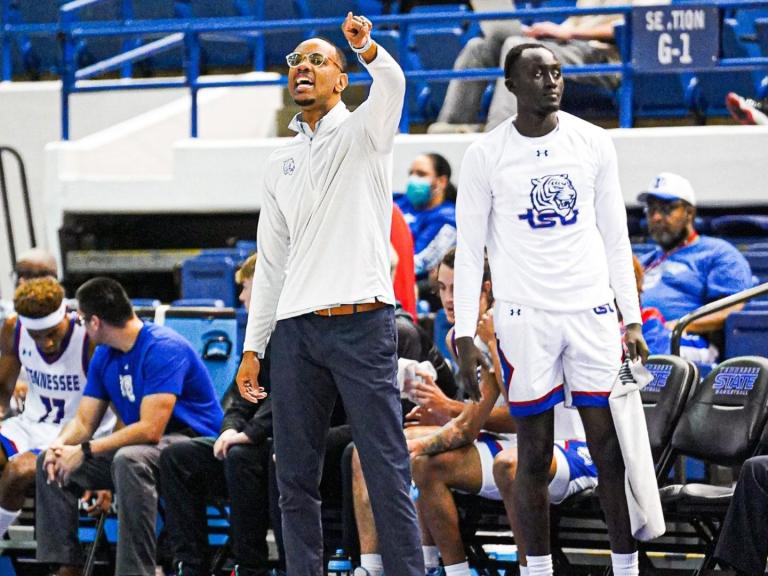
Tennessee State University head men’s basketball coach Brian “Penny” Collins has stepped down, effective immediately, to accept a coaching position in the NBA.

Assistant coach Erik Buggs will serve as interim head coach during the transition.

Where Collins will be coaching has not been disclosed.

Collins’ departure marks the end of a seven-year tenure that helped rebuild, reshape, and restore the tradition of excellence in TSU men’s basketball.

Under his leadership, the Tigers made consistent strides, culminating in a semifinal appearance in last season’s Ohio Valley Conference Tournament and finishing with a 17-16 overall record.

“On behalf of Tennessee State University, I wish Coach Collins and his family the very best as they begin this exciting new chapter,” said Director of Athletics Dr. Mikki Allen. “We are proud to congratulate Coach Collins on this significant opportunity, which reflects the meaningful work he has done here over the past seven years.”

“Coach Collins built a family-oriented culture and a competitive program that earned the respect of our conference and the broader basketball community. His impact on our student-athletes and the Tennessee State University family has been profound. His passion and unwavering commitment to developing young men and providing a first-class experience have been truly invaluable.”

Buggs joined TSU last season after spending three years at UT Martin, where he was instrumental in the Skyhawks’ 24-win campaign and Ohio Valley Conference regular season title in 2022-23.

“I extend my sincere gratitude to Coach Collins for his leadership and for guiding our student-athletes with integrity and purpose,” said Interim President Dwayne Tucker. “He has played a key role in bringing our men’s basketball program back to a competitive standing in the OVC.”

Courtesy: Tennessee State Athletics

Mississippi Valley State-FAMU in Atlanta is set. Here’s the kickoff time

Black Purple Teal And Leafy Green Classic Black Tier List 5 1140x815 1

Weeks after it was announced that Florida A&M would play Mississippi Valley State in Atlanta, a kickoff time has been declared.

The game, originally scheduled for Oct. 4 at Rice-Totten Stadium in Itta Bena, Mississippi, was moved to Mercedes-Benz Stadium in Atlanta.

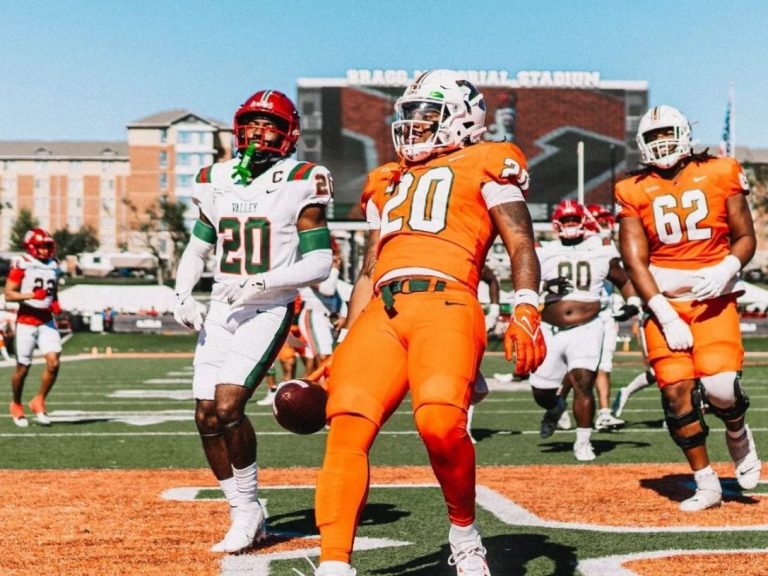
This significant move follows last season’s dramatic showdown at Bragg Memorial Stadium in Tallahassee, where the Delta Devils triumphed over the Rattlers by a score of 24–21, ending FAMU’s historic 23‑game home winning streak.

Angela Suggs, FAMU’s Vice President and Athletic Director, confirmed the move, stating, “They opted to come to FAMU, Georgia—commonly referred to as Atlanta. So, on October 4, we won’t be in Itta Bena, Mississippi. Instead, we will face Mississippi Valley State University at the Mercedes-Benz Stadium in Atlanta, Georgia.”

“It’s their own game. It was their choice. You know, we, you know, we were set to go out to it,” she said. “I don’t know where we were going to stay — Jackson, I guess. I know we were going to bring some people, because we travel well.”

MDS

The matchup will be played at 4 p.m. CST on Saturday, Oct. 4., according to Mississippi Valley State.

A Rematch With Added Stakes

This year’s matchup carries extra weight for the Rattlers, who are looking to avenge a stunning 24-21 defeat to the Delta Devils last season—a loss that snapped FAMU’s 23-game home winning streak at Bragg Memorial Stadium, a run that had lasted more than five years.

That win was MVSU’s lone victory in an otherwise difficult season, as the Delta Devils finished 1-11.

Both teams enter the 2025 contest with new leadership and renewed ambitions. FAMU, under second-year head coach James Colzie III, is coming off a 7-5 campaign. Mississippi Valley State, meanwhile, will be led by new head coach Terrell Buckley. Notably, both Colzie and Buckley are former Florida State cornerbacks, adding an intriguing subplot to the coaching matchup.

Game Details:

  • Opponent: Florida A&M University Rattlers
  • Date: Saturday, October 4, 2025
  • Venue: Mercedes‑Benz Stadium — Atlanta, GA
  • Kickoff Time: 4 p.m. CST

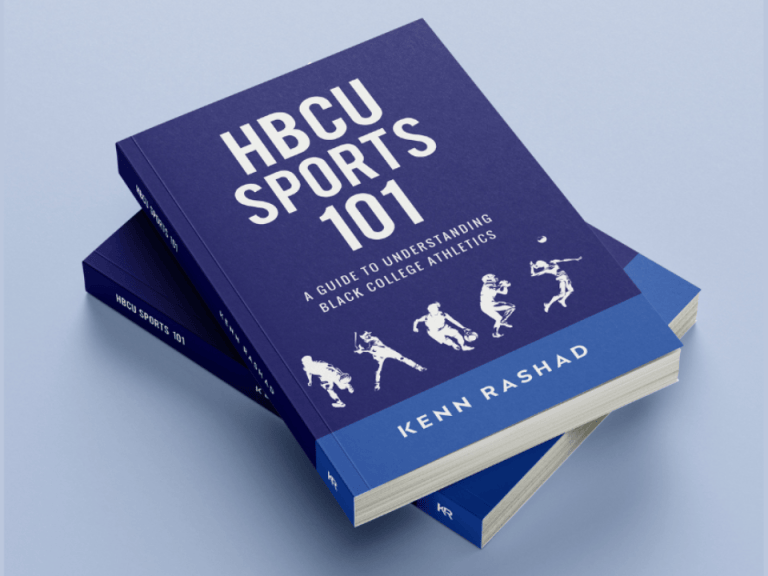
This is why I wrote ‘HBCU Sports 101: A Guide to Understanding Black College Athletics’

HBCU Sports 101 Book
After more than 30 years of covering HBCU athletics, I knew it was time.

There’s no shortage of content about HBCUs these days. You’ll find documentaries, media coverage, social media moments, and, yes, even books about the subject. But what really pushed me to write HBCU Sports 101: A Guide to Understanding Black College Athletics was the realization that so many of those narratives aren’t being told by people who actually lived the HBCU experience.

That, to me, is a kind of injustice.

And I say that with all due respect. But if the national media can recognize how special our institutions are, then it should be clear that the people who walked those campuses, sat in those classrooms, marched in those bands, and played on those fields are the ones best equipped to tell these stories. I felt responsible for making sure at least some of those stories were told with a different lens.

A Perspective Rooted in Experience

I’m not coming into this space as an outsider. I’m not here for a trend. I’m here because I’ve been in it for three decades. As a journalist, as a storyteller, and as a graduate of an HBCU.

When you spend that much time immersed in a culture that’s often misunderstood, you start to see the difference between how it’s portrayed and what it really is. People on the outside often see what HBCUs lack. But those of us on the inside? We see what they’ve built, with less and against the odds. That’s what this book is meant to reflect: not just our challenges but our strength.

Who This Book Is For

This book is for anybody who wants a real understanding of HBCU sports: students, parents, alumni, sports fans, and even people who just want to know what the hype is about. HBCU Sports 101 is for all of them.

It doesn’t shy away from the realities. The underfunding. The overlooked athletes. The media gaps. But it also shows how, despite all that, HBCUs continue to produce excellence. On the field. In the classroom. In the world.

What People Often Miss

HBCU sports have never been about trying to imitate mainstream college athletics. From day one, we’ve had to make our own way. Not because it was trendy but because it was necessary.

We created our own classics. Our own bowl games. Our own band culture. Our own style of play. Our own pride.

And we didn’t ask for approval. We just did it.

That independence — that creativity — is what makes HBCU sports so unique. And too often, it’s overlooked. I wrote this book to help change that.

The Real Takeaway

If you read this book cover to cover, I want you to walk away with one thing: HBCUs are still here, and they’re still doing the work they were built to do.

Yes, we’re still pushing through challenges, old and new. But that’s always been part of the story. What matters is that we keep pressing forward. That we don’t just survive but move forward on our own terms, and at our own pace.

HBCUs weren’t created to win championships. They were created to educate and empower Black minds. That’s the mission. And everything else, including our athletic traditions, flows from that.

Preorder HBCU Sports 101

If you care about Black culture and believe in the power of HBCUs, this book is for you.

HBCU Sports 101: A Guide to Understanding Black College Athletics tells the full story of Black college athletics. It covers the first games played, the greatest rivalries, the legendary coaches, and the traditions that turned our schools into national treasures. This is where culture and competition collide.

It’s more than a book. It’s a reminder of who we are and how far we have come.

The signed paperback + instant eBook bundle is available now at KennRashad.com

Roy Wood Jr. is telling the story of HBCU baseball. Here’s what he learned

HERE WE GO AGAIN 16
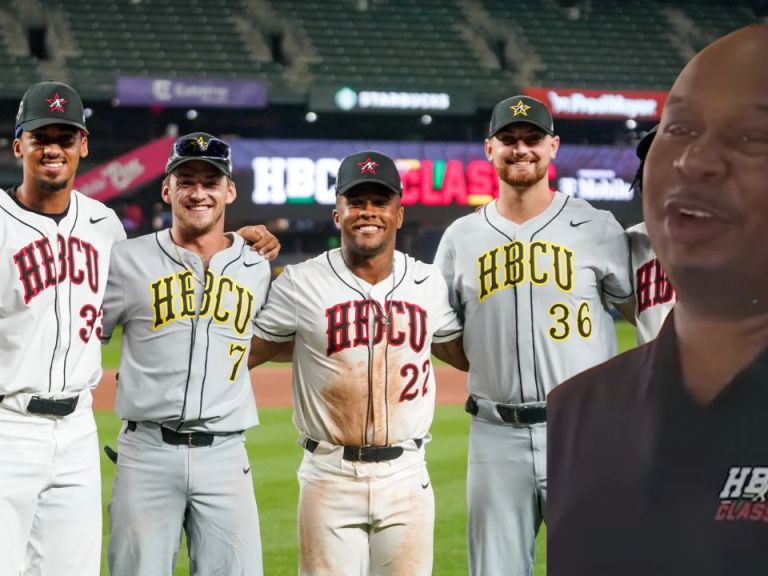
As an alum of an HBCU and a baseball fan, it’s no surprise that comedian and Have I Got News For You host Roy Wood Jr. would be all in for the HBCU Swingman Classic.

Wood, a graduate of Florida A&M’s famed journalism school, is conducting a series of interviews leading up to the game featuring HBCU baseball players.

The most recent appeared on his Facebook page on Friday afternoon, with Texas Southern grad student second baseman Jaden Jones, who participated in last year’s HBCU Swingman Classic.

Wood asked Jones why he chose Texas Southern, and Jones responded, “I’m a California kid, but I was ready to explore a bit. I wanted to have the culture of an HBCU and play baseball at one.”


View this post on Instagram


A post shared by Roy Wood Jr (@roywoodjr)

The key for Jones, who hit .347 with 4 homers and 46 RBIs this past spring, was immersing himself in Houston’s rich Black culture, along with a suggestion from Tigers head coach Michael Robertson.

“I came out here and Coach Rob told me to try this place called The Breakfast Club,” he said. “Chicken and waffles. Ate it, one of the best meals I’ve ever had. I knew that was going to be the spot.”

Wood asked if the food gave Jones an insight into the culture of Houston, and the Riverside, California native answered, “Exactly. Coach said he would develop me. I looked at those three aspects – food, culture, and development – and I knew this was going to be pretty special.”

The third annual HBCU Swingman Classic will be held on Friday, July 11, at Truist Park in Atlanta, Georgia.


Detroit Pistons give HBCU basketball player shot in NBA Summer League

Tj Madlock
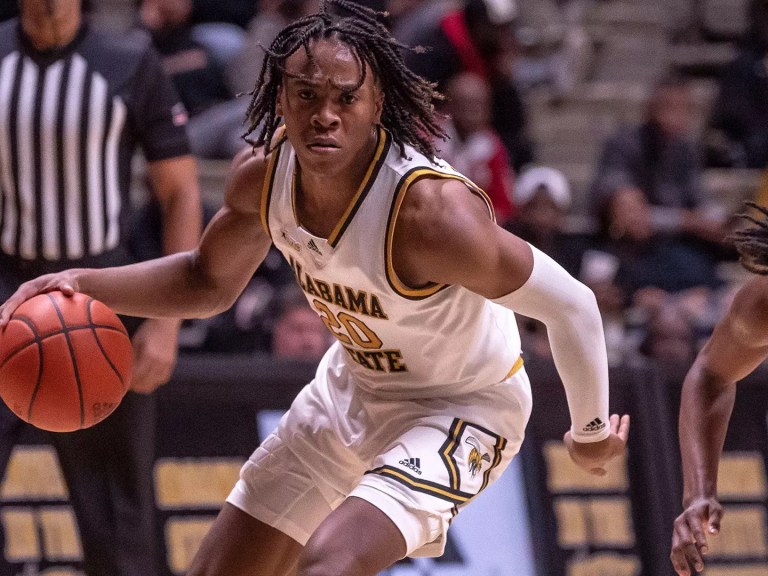
There will be an HBCU presence in this year’s NBA Summer League as former Alabama State All-SWAC guard TJ Madlock has been selected to play with the Detroit Pistons.

Madlock’s college career began at South Carolina State in 2021, being named to the All-MEAC team as a freshman after averaging 12.7 points, 5.6 rebounds, and 3.2 assists.

He transferred to Alabama State after his father, Tony Madlock, was hired to take over the team.

The star guard was named to the All-SWAC team in his final two seasons with the Hornets, putting up 14.1 points, 6.0 rebounds, and 1.4 steals in those years.

This past season, Madlock helped lead Alabama State to its first conference tournament championship since 2011, advancing to the NCAA Tournament.

He continued to help the Hornets make history in the postseason, beating Saint Francis (PA) in a dramatic First Four contest and gaining a spot in the Round of 64.

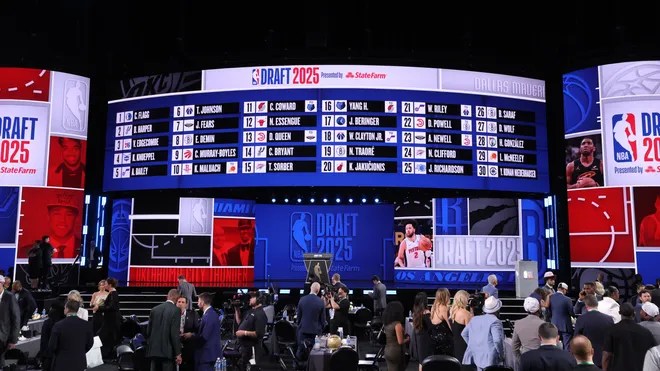
The 2025 NBA Draft passed without an HBCU player being selected for the 13th straight year. The last HBCU player to be featured on an NBA roster is former Tennessee State forward Robert Covington, playing for the Philadelphia 76ers in 2024.

The Detroit Pistons will begin the Summer League on July 11 to play the New York Knicks.

Beyonce makes six-figure donation to hometown HBCU band

Beyonce
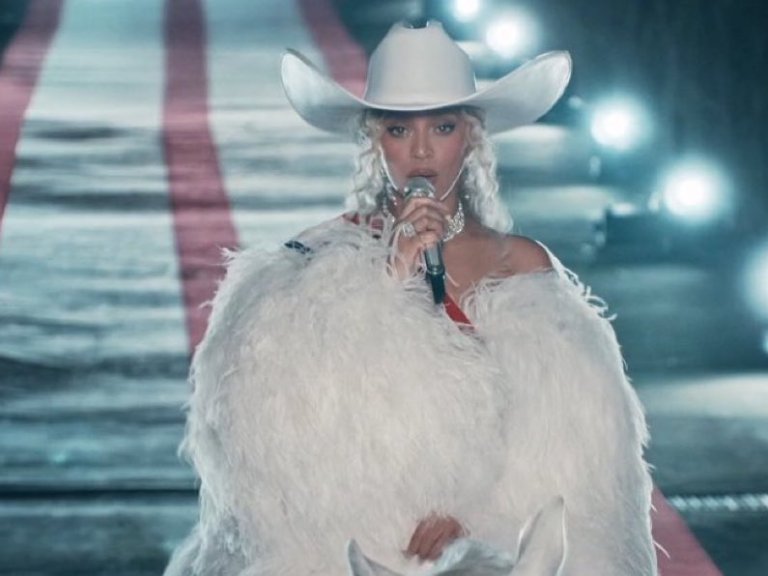
Houston native and global superstar Beyoncé Knowles-Carter has donated $100,000 to Texas Southern University’s renowned Ocean of Soul Marching Band.

The gift, made through her BeyGOOD Foundation, is aimed at supporting the band’s musical excellence and academic achievement, according to the Houston Chronicle.

The donation follows the Ocean of Soul’s high-profile collaboration with Beyoncé during the 2024 “Beyoncé Bowl” halftime performance at the Houston Texans-Baltimore Ravens NFL game, which was streamed on Netflix.

Over 200 band members took the field with Beyoncé, delivering a performance that celebrated Houston pride and showcased the band’s signature sound, precision, and choreography.

National Battle of the Bands
Photo: NBOTB

TSU officials say the funds will be used for scholarships, recruitment and retention efforts, and upgrades to the band’s infrastructure and technology.

“The BeyGOOD Foundation’s impactful investment affirms the powerful role that HBCUs play in shaping the next generation of artistic, academic, and cultural leaders,” said Charlie Coleman III, Senior Associate Vice President of Development & Alumni Engagement at TSU.

“This partnership does more than support the Ocean of Soul – it opens doors for our students to access the arts in life-changing ways, inspired by one of the most beloved artists of our time. It is a shining example of how philanthropy can uplift communities and ignite futures”.

The Ocean of Soul Marching Band, a cornerstone of TSU’s campus life and a fixture at major events, has long been recognized for its electrifying performances and rich tradition. Beyoncé’s contribution is expected to help ensure that the band continues to thrive and inspire future generations of musicians.

Tremaine Jackson makes no apologies for big talk. He expects Panthers to win now

Thumbnail Miniatura Para Youtube Psicologica Oscura Blanco Rojo 4 1
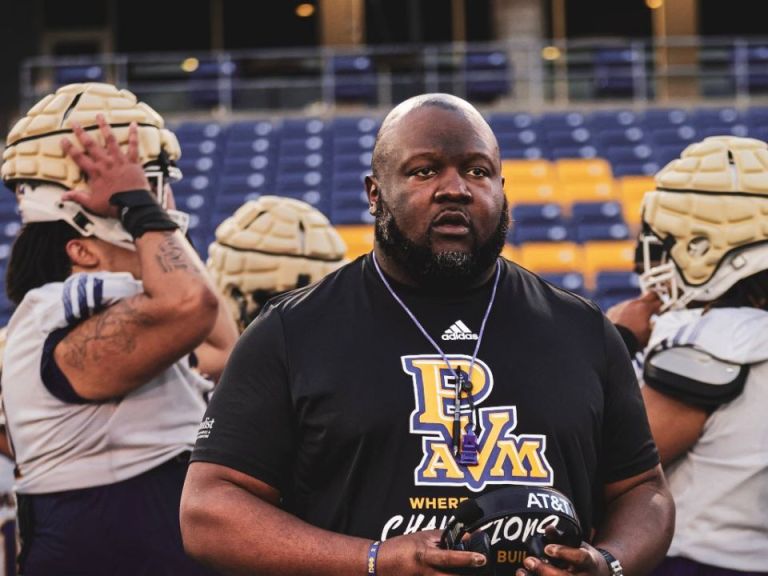
When Tremaine Jackson took the helm as Prairie View A&M’s head football coach, he didn’t just bring a playbook—he brought a manifesto.

On The SWAC Page Podcast, Jackson’s energy was unmistakable as he laid out his vision for the Panthers: “We’re not here to be an elite SWAC school,” he declared. “We’re here to be a premier, elite FCS program.”

Jackson’s approach is unapologetically ambitious.

“The SWAC West isn’t our goal. It’s the SWAC title; it’s getting to the FCS playoffs if, for some reason, we aren’t in the SWAC title game,” he said, making it clear that Prairie View’s aspirations stretch far beyond conference lines.

For Jackson, greatness is not a talking point—it’s a mandate.

The Houston native is known for his directness. “To be a Prairie View A&M Panther, we have a dogmatic mindset. We’re bringing a level of discipline, obedience, and grit that not only this place hasn’t seen, but a lot of people haven’t seen,” Jackson explained.

But his vision isn’t just about the players. “Everybody has to be more disciplined. It’s not just a player problem. It’s a bottom-up problem. The fans got to be more disciplined. The donors have to be more disciplined and not donate with the intent to control. So everybody has to be more disciplined,” he insisted.

No Apologies for Big Talk

Jackson’s confidence has drawn both admiration and skepticism. “I get accused of being cocky. It’s not my fault that I really believe what I believe,” he said. “We get so used to people lying, from car salesmen to politicians, that we begin to act like that. But we can’t differentiate when somebody’s genuine”. For Jackson, authenticity is non-negotiable, and so is his belief in Prairie View’s potential.

Jackson’s message to fans and alumni is simple: expect more.

“I’m not talking big,” he said. “I’m telling you what’s going to happen.” He promised SWAC championships and a program that commands respect nationally. “When we come off that hill, there’s going to be trouble,” Jackson said, a warning to opponents and a rallying cry for Prairie View.

As the Panthers prepare for a new era, Jackson’s challenge is clear: to turn bold words into wins, and to transform Prairie View A&M into a program that’s not just talked about in the SWAC but across the country. With his relentless drive and unfiltered honesty, Tremaine Jackson is determined to make Prairie View A&M a name synonymous with excellence.

HBCU basketball players shutout once again in NBA Draft. Why is it happening?

84364702007 Usatsi 26534530
Another NBA draft has come and gone, and 60 young men heard their names called, beginning what they hope will be a successful professional journey.

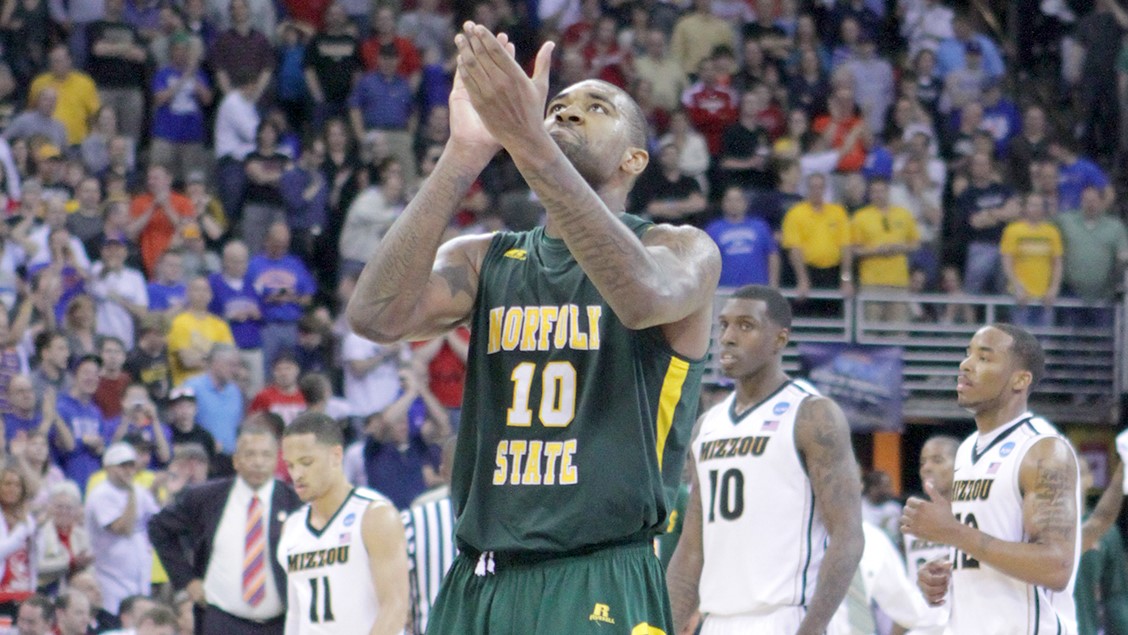
Unfortunately, none of those 60 came from an HBCU, and none have since Norfolk State big man Kyle O’Quinn was drafted by the New York Knicks in 2012.

Why have HBCU basketball players had a tough time fulfilling their NBA dreams? A lack of opportunities is the main culprit, but even that answer has some underlying issues.

No Black players were drafted when the NBA Draft began as the Basketball Association of America Draft in 1947. Still, three years later, more opportunities came about thanks to a merger with the National Basketball League. 

Earl Lloyd of West Virginia State became the first HBCU player drafted and went on to help the Syracuse Nationals win the 1955 NBA title. 

Opportunities for HBCU players were once plentiful 

Other HBCU legends would follow: Dick Barnett of Tennessee State was drafted No. 4 overall by Syracuse in 1959, Grambling’s Willis Reed was selected in the second round by the New York Knicks in 1964, and in 1967, Winston-Salem State’s Earl “The Pearl” Monroe became the highest HBCU selection to date, drafted 2nd overall by the Baltimore Bullets.

The 1960s and 1970s saw the NBA and the rival American Basketball Association battling for players, which led to the NBA having a draft last as long as 21 rounds in 1968 before settling on 10 rounds in 1974. 

HBCU players were drafted in later rounds, but not many had a chance to stick. Notable exceptions include Marvin Webster (Morgan State), Purvis Short (Jackson State), Larry Smith (Alcorn State), Rick Mahorn (Hampton) and Charles Oakley (Virginia Union).

Kyle O’Quinn was the last HBCU player to be selected in the NBA Draft, when the Orlando Magic selected him in 2012.

By the time the NBA went to a two-round draft in 1989, the reasoning was that undrafted free agents could sign wherever they wanted instead of having their rights held up by a particular team.

In the 36 years the NBA Draft has lasted two rounds, 20 HBCU players have been selected, leaving HBCU pro hoops hopefuls back where they started over 75 years ago. 

The same problem the NFL and Major League Baseball have with scouting HBCUs, the NBA has similar issues; the allure and reputation of Power 4 schools with one-and-done athletes ticketed for stardom will always be the first choice. International players are considered more lucrative talents than American-born players. 

It makes what Kyle O’Quinn and Tennessee State’s Robert Covington (an undrafted free agent) accomplished in recent years all the more remarkable.

The solution might be even harder to figure out

So now that we know the reason very few HBCU players are taken in the NBA Draft, what is the solution? That might be even harder to figure out.

Could the NBA create an HBCU combine similar to what the NFL does? Possibly. An HBCU All-Star game already exists for the NCAA basketball championships, and HBCU teams have been picked to play during NBA All-Star Weekend.

There are things in place, but much like the NFL and MLB player personnel folks have to want to scout HBCU players, the same applies to the NBA. Unfortunately, you can’t make anyone do anything they seemingly don’t want to do.

So it goes that while the name on the front of the jersey continues to matter, the HBCUs that helped shape pro sports in this country get left out in the cold, hoping for a chance to prove that their players are just as good as the ones seen on ESPN every week or overseas. 

The best college basketball player in Virginia plays at Norfolk State

Brian Moore
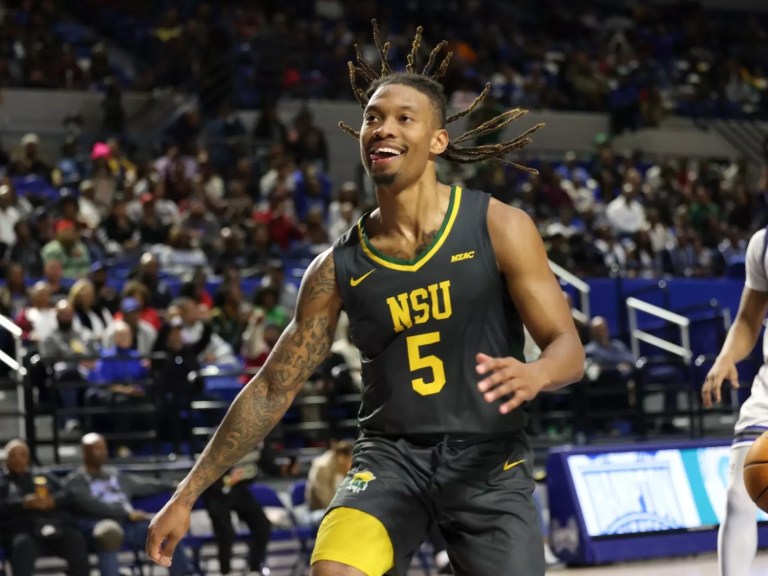
Brian Moore Jr.’s first season at Norfolk State has been transcendent, to say the least.

The Virginia Sports Information Directors (VaSID) have announced Moore as its Player of the Year, becoming the first Norfolk State player to win the award.

The VaSID Player of the Year award is given to Virginia’s top college basketball player. In addition to being named Player of the Year, Moore was also selected to the VaSID All-State First Team.

Transferring to Norfolk State from Murray State, the Spartans’ guard averaged 18.1 points, 3.7 rebounds, and 1.3 steals and was named to the All-MEAC First Team. He led the MEAC in total points (633) and shot an efficient 54% from the field.


After helping lead the Spartans to a share of the MEAC regular season title, Moore carried his production into the postseason, lifting NSU to its first tournament title since 2022.

He culminated the championship win with 15 points, seven rebounds, and four assists.

In addition to being named VaSID Player of the Year, Moore was named the Lou Henson Mid-Major Player of the Year, joining Kyle O’Quinn as the only HBCU player to win the award.

JCSU scores another offseason transfer portal difference maker

HERE WE GO AGAIN 15
As the start of the 2025 HBCU football season inches closer, Johnson C. Smith continues to have an incredible offseason.

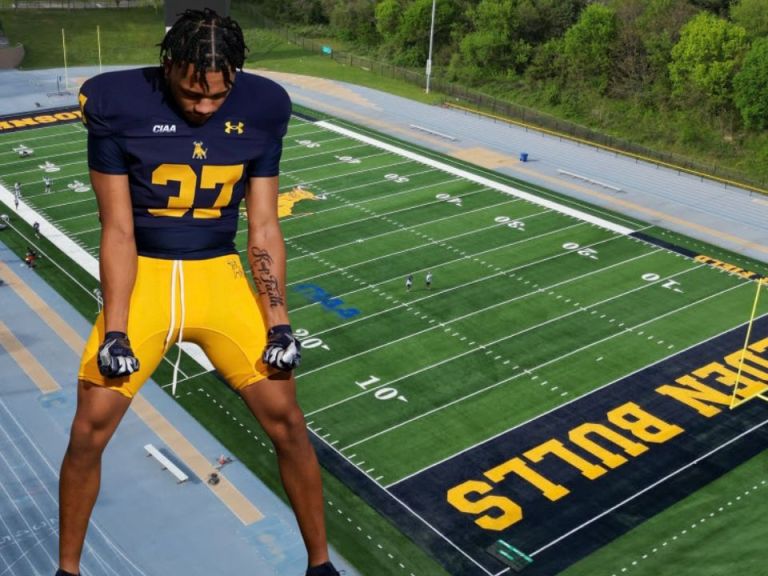
The Golden Bulls have added former Miles All-SIAC defensive back Cam Williams.

Williams is the third former All-SIAC selection Johnson C. Smith has added this offseason, joining former Fort Valley State quarterback Kelvin Durham and Clark Atlanta wide receiver Armone Harris.

The 2024 season was a breakout year for the former Golden Bears defender, being named to the All-SIAC Second Team.

In his sophomore season, Williams recorded 20 tackles, three interceptions, and 14 passes defended (tied for most in the SIAC).

He saved his best performance for the postseason, snagging two interceptions in Miles’ SIAC championship win over Clark Atlanta.

Johnson C. Smith enters the 2025 season as the overwhelming favorite to win the conference, looking to shake off a disappointing end to its 2024 campaign.

Despite finishing with an 8-2 overall record, the Golden Bulls’ final two losses eliminated them from CIAA championship contention and a potential berth in the NCAA Division II Football Championship tournament.

In what will be head coach Maurice Flowers’ fourth season with Johnson C. Smith, the team is seeking its first conference championship since 1969.