

This article is one in a series of features produced in partnership with the Southwestern Athletic Conference, exploring the history of the SWAC from its founding in 1920 to the present day. The series will run during the months of April and May.
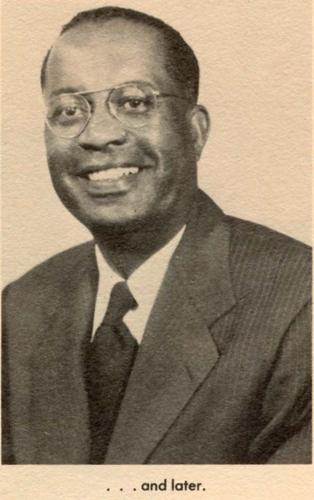
Ralph Waldo Emerson Jones took on more roles than most people could imagine. He served as the second president of Grambling State University and was also a championship-winning baseball coach.
He also hired the man who would become the winningest coach in college football history, and he managed all of this at the same school and at the same time for over 40 years. People called him “Prez,” and the name suited him well.
An accidental hire who became the school’s builder
Jones came to Grambling in 1926 due to a case of mistaken identity. Grambling founder Charles P. Adams had interviewed five men from Southern University’s 1925 graduating class, all of them star athletes.
He was the smallest of the group and joked that he was “the star scrub” who sat at the end of the bench. It was discovered that Adams mixed up his notes and hired Jones by mistake. And when the error was discovered, Adams decided to keep Jones on board.
Not only did Jones teach chemistry, math, and biology, but he also served as the college registrar and dean of men. He also started and coached the school’s baseball team and put together the school’s first football team.
And in 1926, with no budget and no instruments, he ordered a set of instruments out of a Sears catalog and founded what would become the “World-Famed Tiger Marching Band.” By the time he became president in 1936, he had already shaped more of Grambling’s identity than anyone else.
A coach who also happened to run the university
When Jones became president in 1936, he stepped back from most of his other roles. But baseball was the exception. He kept coaching, and he kept winning.
During his 41 seasons as the Tigers’ head coach, Jones had a record of 816 wins and 218 losses. His teams won six Midwest Athletic League titles and five SWAC championships. He led Grambling to four NAIA tournaments and finished as national runners-up in 1963 and 1964.
In 1967, he was named NAIA Coach of the Year. He coached 11 All-Americans, including Ralph Garr, who won the National League Batting Title with the Atlanta Braves in 1974. Jones ended his coaching career with a .789 winning percentage, all while serving as the school’s president.
The hire that changed college football
In 1941, a 22-year-old Eddie Robinson came to Grambling looking for a job coaching football. Jones was the person who interviewed Robinson, and Jones was the one who hired him.
Robinson spent 56 seasons at Grambling and finished with 408 wins, 17 SWAC championships, and 9 Black college national titles. He sent more than 200 players to the NFL and was inducted into the College Football Hall of Fame in 1997.
Building Grambling into a university
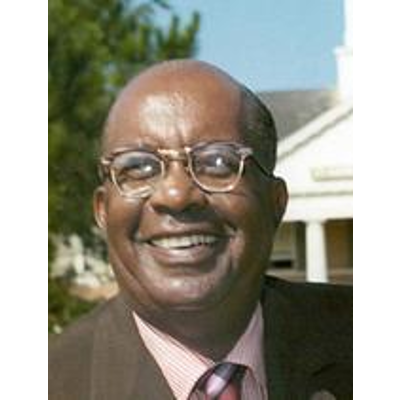
When Jones took over as president, Grambling (then known as the Louisiana Negro Normal and Industrial Institute) had 120 students and 17 faculty members. When he retired in 1977, enrollment had reached 4,000, and the faculty had grown to 500.
But there is a very unique story about how Jones managed to change the name of the Louisiana Negro Normal and Industrial Institute to Grambling.
According to Mildred G. Gallot’s A History of Grambling State University, Jones went before the Louisiana State Legislature to make his case for changing the school’s name. He sensed that lawmakers were not fully engaged in what he was saying. So he changed his approach, stating, “Besides all that, the name is too long, when we are playing football, and the other team has the ball on our five-yard line, the other team has already scored by the time our cheerleaders can say ‘hold that line, Louisiana Negro Normal and Industrial Institute.’” Those in attendance erupted with laughter, and as a result, legislation was passed to name the school Grambling College in 1946.
Jones also wrote the school’s alma mater and created the school’s motto, “Where Everybody is Somebody.”
His longtime assistant and successor as baseball coach, Wilbert Ellis, described him this way: “No matter what the color of the skin, he just wanted to reach out and help people. That’s what he came to Grambling to do.”
Jones’ legacy speaks for itself
Jones was inducted into the NAIA Hall of Fame in 1964, the SWAC Hall of Fame in 1992, and the National College Baseball Hall of Fame in 2011. Grambling included him in its inaugural Hall of Fame class in 2009.
The school’s baseball facility was renamed Wilbert Ellis Field at RWE Jones Park in 2011. R.W.E. Jones Drive remains one of the main roads on the Grambling campus.
Jones died on April 9, 1982. More than 2,000 people attended his memorial service at Grambling State. He was a president, a coach, a builder, and a founder, all at the same time and at the same school.