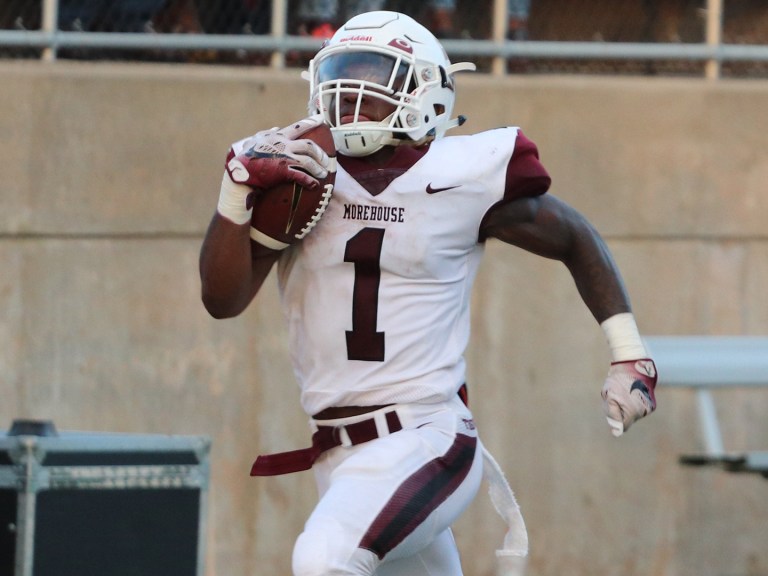
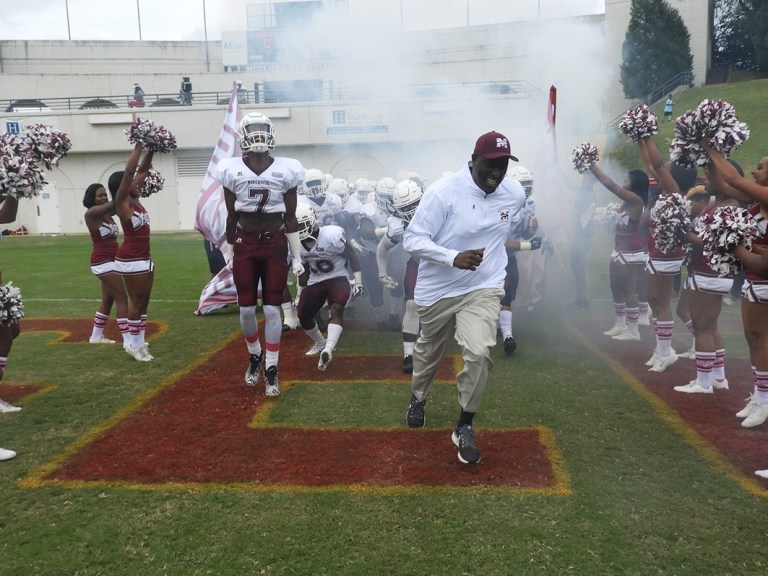
President David Thomas tells Sports Illustrated why Morehouse canceled its 2020 football season

Morehouse Fooball
David Thomas isn’t your normal academic. President of one of the nation’s most esteemed Black colleges, Thomas once played center and linebacker on the football field and, as a foreign-exchange student, competed overseas in basketball. He realizes the cultural significance of sports and understands its place in the world.

That’s why his decision to cancel Morehouse College’s 2020 football season is so jarring.

“We can’t,” answers Thomas in an interview this weekend with Sports Illustrated, “or at least I’m not smart enough to know how we can. Every president and athletic director needs to look at [the positive tests]. We’re only in the training portion, and we’re having these test results come back. How can we go forward with a season, given what we know about the virus, and think we won’t accelerate transmission?”

The immediate fate of college football has never felt so fragile. In the small-college ranks of the sport, many believe Morehouse has paved the way for other programs to do the same. Small universities and historically black colleges are seriously toying with the idea of scrapping the 2020 season.

In fact, Kenn Rashad, editor and publisher of HBCUSports.com, says a false narrative exists that the pandemic has so financially impacted Black colleges that they cannot function. It’s just not true. No HBCU has returned to voluntary workouts because of safety reasons, not financial. “Given the situation with the pandemic and we’re seeing an uptick in positive results, we still have institutions calling in these athletes and in some cases asking them to sign waivers,” says Rashad. “You don’t see HBCUs doing this. It’s a testament to them that they truly have in mind the safety of the student-athletes first and foremost.”

Read the rest at Sports Illustrated.

Jackson State announces partnership with Opendorse

Jsu Block Jstate 1
JACKSON, Miss. – Jackson State University and Opendorse, the leading athlete marketing platform that helps the biggest brands in sports share content on social, today announced a groundbreaking partnership that makes Jackson State the first Historically Black College & University (HBCU) to invest in building the brands of its players and partner universities on social media.

“We fully understand the power of the social space for all involved, and the high engagement opportunities presented by our coaches, administrators, student-athletes and alumni,” said JSU Vice President and Director of Athletics Ashley Robinson. “Opendorse is at the front of social space mobilization, and we are proud to create this landmark partnership.”

This first-ever partnership with Opendorse will allow JSU to share content on social with their entire athletic ecosystem —through the social channels of current student-athletes, athlete alumni, coaches, sports administrators, and university athletics accounts creating access and opportunities no other HBCU has been able to offer before.

“Jackson State is a proven leader in student-athlete development in college athletics,” said Blake Lawrence, Opendorse CEO. “As changes to Name, Image, and Likeness regulations near, programs that make the commitment to providing students with the best tools and technology will be in a strong position to win. We’re thrilled to welcome JSU as our first Historically Black College & University (HBCU) partner, and look forward to helping the program and its student-athletes maximize the power of their voice with social media.”

About Opendorse

Opendorse is an athlete marketing platform that helps the biggest brands in sports share content on social. Founded by two former major college athletes, Opendorse was built seeking to make it easy for athletes and brands to work together to engage their fans.

Courtesy: JSU Athletics

Opinion: Before the fall, can the MEAC save itself?

Morgan V Nccu
Proverbs 16:18: “Pride goes before destruction, a haughty spirit before a fall.”

That bible verse came to mind after hearing Mid-Eastern Athletic Conference Commissioner Dennis Thomas’ comments concerning the future of his conference during an interview with BLOCK Sports on June 16.

“Contrary to popular belief in some circles, the MEAC’s demise has been greatly exaggerated,” he said.

At that time, four programs — Florida A&M, Hampton, North Carolina A&T and Savannah State — had already left the MEAC over a two-year span.

One week later, Bethune-Cookman would announce that it would join cross-state rival Florida A&M in joining the Southwestern Athletic Conference in 2021, becoming the fifth institution to leave the conference.

“Greatly exaggerated,” Dr. Thomas?

A third of your conference will no longer be around in 2021, while conference charter member Delaware State has also been rumored to leave the MEAC for the Northeast Conference. Those institutions have won a combined 29 of the last 36 conference football championships, dating back to 1984.

Two of those programs — Florida A&M and North Carolina A&T — were the only MEAC teams ranked in the top 10 of the Football Championship Subdivision (FCS) home attendance leaders in 2019. The sports that support divisions (volleyball, tennis) will have to realign because the Southern Division will be down to two teams.

This type of uncertainty in college sports isn’t necessarily new to collegiate sports, or HBCU sports in particular.

Six schools — Delaware State, Howard, Maryland-Eastern Shore, Morgan State, North Carolina A&T and North Carolina Central — left the CIAA to start the MEAC in 1970. In 2013, the Big East, which had thirteen members, split into two conferences. The latter will be referred to later in this editorial.

Now, I cannot comprehend how this instability can be considered an exaggeration. Either Thomas is entirely obtuse for what is going on, or he knows something that apparently, we as HBCU sports fans and even the leadership of the conference’s member institutions don’t.

“All of our presidents and chancellors are concerned,” Thomas explained.
These university leaders wouldn’t be concerned if everything were OK.

Still, Thomas later stated that the MEAC has “implemented a strategy in terms of how we move forward as a conference. Part of that strategy is to ensure that we have a core group of institutions to ensure that we will not lose our (NCAA) Division I status. From maintaining our Division I status, we can do that with seven members that meet the NCAA requirements.”

“Some people forget — given this microwave mentality in our society,” said Thomas, “we were founded with seven members from Dover, Delaware to Orangeburg, South Carolina,” referring to the league’s creation in 1970.

Thomas is correct. According to NCAA rules, the MEAC only needs seven members that play men’s and women’s basketball and have played the required minimum number of sports (six men’s sports & six women’s sports) together for eight consecutive years to maintain its Division I status.

With a footprint that is almost exactly like it was in its inception, the MEAC has eight remaining full members, including six institutions that sponsor FCS-level football, and will retain its NCAA automatic qualification in nine sponsored sports.

Translation, yes, the MEAC can sponsor football with less than ten teams, like the Big South (7), Ivy League (8), Northeast Conference (9), Patriot League (7) and Southern Conference (9) did in 2019.

As for that strategy moving forward, Howard University President Dr. Wayne A.I. Frederick, the MEAC Council of Chief Executive Officers Chairperson, informed the media during a press conference Friday that the MEAC, along with the assistance of a consulting firm, will initiate a process for conference expansion, looking to complete Phase 1 of this process by mid-July. This search process will not be limited to HBCUs alone.

But, as Thomas has expressed recently, expansion is not a swift undertaking. “You can’t wave a magic wand, and people just come in. That’s not the way it works in Division I intercollegiate athletics. And that’s not going to happen with the MEAC,” said Thomas.

Again, the commissioner is correct. A search committee, which consists of the chancellors and presidents of MEAC member institutions, will need time to investigate and vet potential candidates.

Division II programs interested in moving to the Division I/FCS level will need a transitional period of no less than three years. They would also have to pay the NCAA’s $1.6 million membership fee, increase athletic scholarship funding for all its sponsored sports, and increase annual travel costs.

So, what are other potential expansion options for the MEAC?

Well, here’s an unconventional idea. How about combining the MEAC with another conference to form a multisport conference? Sounds crazy?

The Atlantic Sun Conference (ASUN) is looking to collaborate with another league to do precisely that. ASUN Conference Commissioner Ted Gumbart announced on Jan. 22 that their league membership has committed to a full exploration of multiple expansion opportunities.

In one of the future scenarios, the current ASUN members will partner with expansion members, theoretically with the Coastal Collegiate Sports Association, to form a new Division I multisport conference.

The ASUN would expand to 18-20 members. That expanded conference would then split, with these two conferences having a partnership and one of those conferences consisting of programs that primarily play football. These two “sister conferences” could then compete among themselves in Olympic sports (basketball, softball, baseball, volleyball, ETC.).

Has this been done before? The short answer to that is “yes.”

The Mountain West Conference was formed by eight institutions that withdrew from the Western Athletic Conference (WAC). The most recent case, executed under the current NCAA conference membership rules, was the Big East and “The Catholic Seven.”

In 2010, the Big East had 16 members. Seven of which, later dubbed “The Catholic Seven” (DePaul, Georgetown, Marquette, Providence, St. John’s, Seton Hall, Villanova), only played basketball. Eight played all sports, including football (Cincinnati, Connecticut, Syracuse, Louisville, Pittsburgh, Rutgers, South Florida, West Virginia). Notre Dame played all sports except that it remained independent in football.

In December 2012, “The Catholic Seven” chose to split from the football playing schools to focus on basketball. Syracuse, Louisville, and Pittsburgh joined the Atlantic Coast Conference, Rutgers became a member of the Big Ten, and West Virginia joined the Big XII.

In contrast, the remaining football-playing members of the old Big East and several other schools formed the American Athletic Conference.

To make this a possibility for the MEAC, it would have to find a partner conference, preferably one that shares a geographical imprint. An ideal candidate would be the Patriot League, which also has seven members that sponsor football.

Yes, combining with another conference, especially one whose members are primarily predominantly white institutions (PWIs), which will have potential opponents that MEAC fans may not be familiar with, will take some time to get used to.

This option, however, will have institutions in five of the top 25 media markets in the United States, with New York (1), Philadelphia (4), Washington, DC (6), Boston (9) and Raliegh-Durham (25). It would be huge, as it pertains to increased marketing and sponsorship possibilities along with improved multimedia rights.

OK, so what if the MEAC does not want to add new members? As I stated earlier, they could stay pat with the institutions that they currently have, barring a departure by Delaware State. If another MEAC football program decides to go elsewhere, the NCAA will give the MEAC a two-year grace period to maintain its Division I status.

But what if the MEAC can not find a suitable member outside of the conference? There is a chance they could add a football team from within the conference.

There has been discussion for years that Maryland-Eastern Shore could restore their illustrious football program. In 2006, UMES alumni formed a group called “Hawks for Football,” which engaged in a fundraising effort to reinstate intercollegiate football in Princess Anne. In 2013, then-President Juliette B. Bell accepted recommendations not to restore the sport because “the university is not currently in position, with either human or fiscal resources, to reinstate football at this time.”

Recently, I was informed by a member of “Hawks for Football” that the efforts to bring back the sport is still ongoing. The question is “when?”.

As a long-time fan, I agree with Thomas when he says, “there’s no better conference” than the MEAC. I would hate to see it collapse. Maybe, just maybe, all this premature conversation about the downfall of the MEAC IS greatly exaggerated. Perhaps he and Dr. Frederick’s plan for expansion just might work. But what if it doesn’t? How much longer can the MEAC rely on its prideful past?

Coronavirus concerns prompt Morehouse College to cancel fall sports season

Morehouse
The coronavirus has had a tremendous impact on American sports since the pandemic began in mid-March, and college athletics not been spared the brunt of it.

Morehouse College announced Friday that it is canceling all fall sports, including football because of COVID-19 concerns.

In a statement by Morehouse President David A. Thomas, called the decision “difficult” but one that had to be done out of health and safety concerns.

“It follows my intention to maintain a safe campus in hopes that our students will be able to return in August, Thomas said in a statement posted on the school’s website. “Our Maroon Tiger teams travel to other NCAA institutions and cannot compete without breaking from social distancing guidelines still maintained by the Centers for Disease Control and Prevention. Sporting events also invite individuals to our campus who will not be subject to the testing and monitoring that we plan to implement for our students, faculty, and staff.

I know this news will be most disappointing to our scholar-athletes, especially our seniors. I can only ask for your understanding and respect for the fact that the College is prioritizing your health and safety ahead of all else.”

Thomas said Friday’s decision will not impact the upcoming winter or spring sports seasons.

“Those decisions will be forthcoming later in the year,” he said.

The school, Thomas said, will still honor the athletic scholarships of athletes impacted by the cancellation of the fall sports season.

“In the last several weeks, we have had to make some hard decisions to cope with the exigencies of COVID-19,” Thomas said. “We will rise out of COVID-19 moment stronger and more focused on delivering our mission.”

Opinion: The time to get highly touted Black student-athletes back to HBCUs is now

PV Stadium 1
Since the murder of George Floyd in Minneapolis last month America has had an awakening unlike anything since the late 1960s. It has mobilized Black folks to think outside the box and to contemplate, what if?

What if we start doing things differently? What if we took control of our multitude of resources and began to set the narrative ourselves?

One of those “what ifs” has started making the rounds. What if the immense talents of the thousands of uber-talented high school football, basketball, and others began to look at HBCU’s to attend and become student-athletes instead of matriculating to historically white universities?

What if that five-star running backs, instead of going to Alabama, went to Alabama State?

Or the four-star linebacker from Charlotte decided instead of Clemson; he would attend North Carolina A&T?

It is quite fascinating to consider the ramifications this would have on college athletics all across the board.

I have always contended if you are talented enough, they will find you, whether, in Tuscaloosa or Orangeburg; talent still prevails.

Once upon a time, there were powerful football programs throughout the south, and I don’t mean in Athens or Auburn. I mean in Grambling, Jackson, Pine Bluff, and Huntsville. These were the robust college football programs that sent 29 men to the NFL Football Hall of Fame and hundreds of others onto successful and outstanding careers.

So, what if we do it again? It is a movement that seems to be gaining steam, and HBCU grads — especially parents — coaches, and mentors of these student-athletes need to keep the information pipeline going into these young people’s minds.

However, there will always be some who’d argue that things will never change.

Chauncey Gardner-Johnson, known as “CJ” is a current member of the NFL’s New Orleans Saints. Gardner-Johnson, who attended the University of Florida, was a four-star prospect and 42nd ranked player in the nation (according to 247 Sports) coming out of high school in Cocoa, Florida.

On Thursday CJ tweeted, “I respect and love every part of HBCU’s but ima going to be real , these kids not going to settle! They want to win and be seen they like attention that’s why that said that”.

Black Twitter let him have it, especially his use of the word “settle.”

His teammate on the Saints, Justin Hardee, a former Ohio State student-athlete tweeted, “It definitely would change the game up! We in control of our own destiny I’m excited to see it happen if it does!”.

So, if a black student-athlete today attends an HBCU, is he or she settling?

We are all aware of the disparities between the programs, especially the facilities, including weight rooms, study-hall, and stadiums.

Still, again I go back to my earlier statement, if you are talented enough, you will be found. The NFL, CFL, or whatever the next incarnation for professional football looks like, the players at HBCU’s, if talented enough and coached well enough, will be located by scouts with ease.

It’s up to us, as black folks, as HBCU alums, supporters, and fans to make sure the information gets to our young people and allow them to make a decision that works best for them.

Let them know the history of the Gramblings, Florida A&Ms, Jackson States, and other HBCU programs, and how they were just as dominant as the Alabamas, LSUs, and Texas athletic programs.

Let’s continue to encourage our premium high school student-athletes to attend our historically significant institutions, instead of the traditionally white institutions that wouldn’t even give them a first look just a few decades ago.

MEAC releases statement on Bethune-Cookman’s decision to leave conference 2021

MEAC Logo
NORFOLK, Va., – The Mid-Eastern Athletic Conference (MEAC) acknowledges that Bethune-Cookman University has decided to leave the conference after June 30, 2021, but is also determined to continue its mission of being a viable NCAA Division I conference.

With eight remaining full members, including six institutions that sponsor football championship subdivision (FCS)-level football, the MEAC will retain its NCAA automatic qualification (AQ) in nine sponsored sports.

Bethune-Cookman will be leaving after 40 years in the MEAC; however, institutions make decisions based upon what they consider is in their best interest.

As with many challenges intercollegiate athletics faces, it also provides opportunities for new conference expansion. The MEAC is celebrating its 50th anniversary in 2020-21, highlighting a proud history and legacy including NFL and NBA Hall of Famers, as well as Olympic medalists.

The MEAC has been a transformative and dynamic conference in its nearly 50 years, and we look forward to an even brighter future.

Courtesy: MEAC

Bethune-Cookman will become full member of the SWAC beginning 2021

BCU To SWAC
BIRMINGHAM, Ala.- The Southwestern Athletic Conference (SWAC) has announced the addition Bethune-Cookman University as a full member effective with the 2021-22 academic year. The decision was reached during the executive meeting of the SWAC Council of Presidents and Chancellors.

“We’re extremely excited to welcome Bethune-Cookman University to the Southwestern Athletic Conference,” said SWAC Commissioner Dr. Charles McClelland. “The Wildcats undoubtedly align with our core principles and strategic plan; and they also align with our overall vision and forward movement within our strategic plan. The addition also brings to our league an institution with academic prowess, a world-renowned marching band, along with an enthusiastic base of alumni, fans and supporters.”

The Wildcats sponsor 17 varsity sports at the Division I level, with all 17 of those sports sponsored by the Southwestern Athletic Conference: football, men’s and women’s basketball, men’s and women’s cross country, men’s and women’s tennis, men’s and women’s track & field, baseball, softball, men’s and women’s golf, women’s volleyball and women’s bowling.

“Bethune-Cookman’s alliance with the Southwestern Athletic Conference from a competitive standpoint made perfect sense and strengthens us in all of the sports in which the Wildcats sponsor,” said McClelland. “Many of our member institutions have competed against BCU for decades and will now have that opportunity on a yearly basis. Bethune-Cookman’s addition to the Southwestern Athletic Conference ultimately puts us in a great position to expand our brand in a manner that will bring a high level of value to our league and membership.”

Bethune-Cookman’s athletic history can be traced as far back as the 1910s, when the Jacksonville-based Cookman Institute baseball team produced Negro League All-Star Dick Lundy. Cookman Institute merged with Dr. Mary McLeod Bethune’s Daytona Normal and Industrial Institute in 1923, with the institution’s first football game recorded that year.

Bethune-Cookman was a member of the Southeastern Athletic Conference before joining the Southern Intercollegiate Athletic Conference in 1950 and then the Mid-Eastern Athletic Conference in 1979. As it blazes a new path as a member of the Southwestern Athletic Conference, it brings a history of established athletic relationships with several SWAC members.

Those include rivalries with Alabama A&M and Alabama State from the Division II days in the SIAC Conference and longtime matchups with Grambling State, Jackson State, Southern University and Mississippi Valley State, that date back over forty-five years – the early days in college football.

B-CU Athletics has become widely known for its comprehensive success. To date, B-CU has won 64 MEAC team championships including winning the MEAC’s Talmadge Hill Men’s All Sports Championship in four of the past six seasons and finishing in the top three in the women’s race. During the same time span, B-CU Football also became known as one of the top programs in America in the Football Championship Subdivision.

Recently STATS Perform recognized Wildcat Football as one of the most successful HBCU programs of the past 10 years with 80 total victories, including two FBS road wins, and a win total which ranked overall at eighth nationally among all FCS institutions and first among Division I HBCUs. The ‘Cats have won four Black College Football National Championships, the last in 2013, and made four FCS playoff appearances. The Wildcats have also won three MEAC/SWAC Football Challenges while members of the MEAC.

Other athletic highlights include the baseball team’s 16 NCAA Regional appearances, including taking eventual national champion Florida to a deciding seventh game in the 2017 Gainesville Regional, becoming the only HBCU to ever reach an NCAA Division I Regional Baseball Final. Another historic HBCU milestone was earned when the 2005 BCU softball team became the first HBCU to win an NCAA regional championship by winning the Gainesville Regional for a berth in the Super Regionals at Texas; they have gone on to earn a total of 11 NCAA Regional Championship appearances.

B-CU Bowling became the first HBCU to earn an NCAA Bowling Tournament Appearance in 2005, finishing fourth. Wildcat Ronnie Ash won the 2009 NCAA 60 meters indoor and 110 men’s hurdles outdoor national championship and the 2019 women’s basketball team earned their first NCAA tournament appearance and third consecutive MEAC Basketball crown.

The Wildcat track program also won three straight MEAC Men’s Outdoor crowns in the past five seasons. On the links The Wildcats captured a record seventh-straight—and 15th overall—Women’s crown in collegiate golf’s most culturally significant Championship in 2019. Meanwhile, the Men’s team notched their third-consecutive PGA Minority Collegiate Championship and 10th title overall in the same year.

In terms of leadership, the Wildcat Athletics seasoned management team ranks among the best in the nation. Bethune-Cookman’s Vice President for Intercollegiate Athletics, Lynn W. Thompson, the longest tenured and one of the most celebrated athletic directors in the nation, was named a NACDA 2019-20 Under Armour AD of the Year. Thompson also previously made history by becoming the first African-American to serve as Chair of the NCAA Baseball Rules Committee.

Management team members, Senior Associate Directors of Athletics Sandra Booker and Reginald Thomas, have each become nationally respected athletic administrators with Booker serving previously on the NCAA Women’s Basketball Committee and Thomas completing the prestigious NCAA Charles Whitcomb Leadership Institute. Senior Associate Director of Athletics Robert “Tony” O’Neal currently serves as the Chair of the NCAA Division I Bowling Committee and was recently named the new Director of Athletics at Claflin University.

Notable B-CU athletic alumni total over 40 NFL players including: Hall of Famer Larry Little, Pro Bowlers: Nick Collins (Green Bay Packers Hall of Fame), Eric Weems (Atlanta Falcons), Jack “Cy” McClairen (Pittsburgh Steelers), Lee Williams (San Diego Chargers), Rashean Mathis (Jacksonville Jaguars), the 2002 NCAA Buck Buchanan Award winner for FCS Defensive Player of The Year; 1973 AFC Rookie of the Year Charles “Boobie” Clark

Olympians: Ronnie Ash, Joel Redhead and Eric Cray

NABC Hall of Fame College Basketball Coaches: John Chaney, Head Coach, Temple University

NBA Officials: Eric Lewis

Major League Baseball Players: Stanley Jefferson Mark Woodyard, Hiram Burgos, Peter O’Brien, Montana Durapau

With the addition of Bethune-Cookman, the Southwestern Athletic Conference will now have three members based in Mississippi (Alcorn State, Jackson State, Mississippi Valley State), two in Alabama (Alabama A&M, Alabama State), two in Louisiana (Grambling State, Southern), two in Texas (Prairie View A&M, Texas Southern), one in Arkansas (Arkansas-Pine Bluff), and two in Florida (Florida A&M, Bethune-Cookman). The league will begin exploring adjustments to future scheduling and championship formats with Bethune Cookman’s addition in the 2021-22 academic year.

Courtesy: SWAC

Delaware State, NEC won’t confirm or deny rumors of future membership affiliation

Del State Football
Editor’s Note: This story has been updated with a statement from Steve Newton, to correct the timeline of BOT discussions, and to accurately report the number of football members in the Northeast Conference.

As the steady erosion of the MEAC continues with Hampton, North Carolina A&T, Florida A&M, and most recently Bethune-Cookman choosing to leave the conference, rumors are surfacing that yet another MEAC institution is looking for an exit door.

One of the conference’s charter members, Delaware State, has people talking on social media that it too may be looking to leave the MEAC for the Northeast Conference.

The rumors began to surface as early as March when the school’s board of trustees met. It’s been speculated that during the meeting, the board addressed a possible move to the Northeast Conference from the MEAC.

“Delaware State University is a proud charter member of the MEAC, said Delaware State President Dr. Tony Allen to HBCU Sports via email when asked if there was any truth to the rumors. “Our University community is involved at every level, including our Athletic Director, who holds leadership roles within the MEAC and our Faculty Athletics Representative, Dr. Charlie Wilson, who will serve as the MEAC President for the next two years. Our goal is to strengthen a rich and honored legacy for new and emerging realities.”

Within that same email, Allen stated that any additional questions should be directed to Steve Newton, the university’s head of media relations.

HBCU Sports emailed Newton Tuesday, asking if he could confirm if Delaware State had any discussions with the NEC or any other conferences regarding membership since North Carolina A&T announced it was leaving the conference in February.

“President Allen’s response encapsulates the Delaware State University response,” Newton said in his reply. “We have no further statement to make at this time.”

Officials from the Northeast Conference aren’t saying much either. HBCU Sports asked NEC commissioner Noreen Norris about a possible future affiliation. “Our policy is not to comment on any questions relative to conference membership discussions,” she told HBCU Sports via email.

Last week Robert Morris announced that it was leaving the Northeast Conference to join the Horizon League in 2021 and the Big South Conference as an associate member for football in 2021.

RMU’s move leaves the NEC with eight football members and the possibility of Delaware State joining the conference would allow the NEC to remain a nine-member football league.

Florida A&M replaces Southern with Jackson State on 2020 football schedule

FAMU V JSU
TALLAHASSEE, Fla. – The Florida A&M University football program was set for its showdown in Baton Rouge, La. against Southern University, but that game was canceled last week due to issues surrounding COVID-19. However, the Rattlers didn’t have to wait long to fill that vacant spot in the schedule.

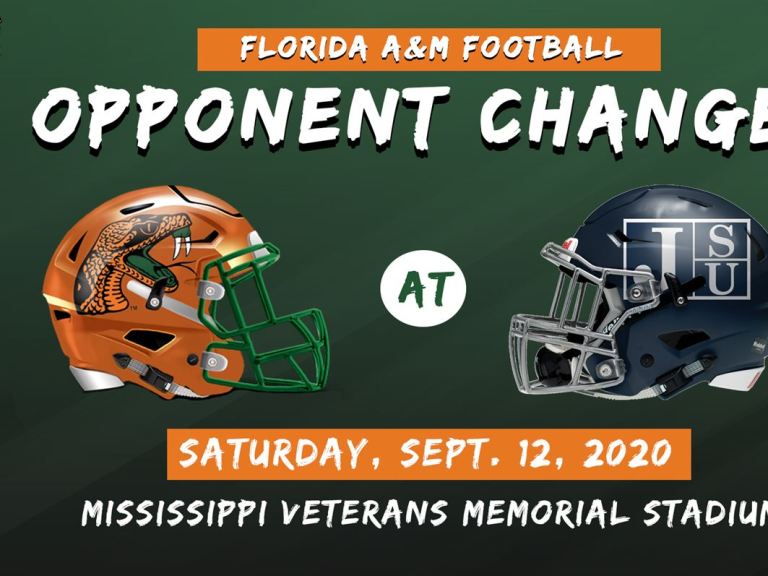
Florida A&M’s new opponent on Sept. 12 is another marquee rivalry game and will be an early preview as the Rattlers prepare to move to the Southwestern Athletic Conference (SWAC) in 2021. That new opponent – Jackson State University.

The Rattlers will make the trip to Jackson, Miss. to face the Tigers on Sept. 12 at Mississippi Veterans Memorial Stadium.

“We are excited that we were able to replace the game quickly once the game with Southern was canceled,” FAMU VP/Director of Athletics Kortne Gosha said. “This will be a nice trip for our fans to still make a trip into SWAC Country. Thanks to Jackson State Vice President/Director of Athletics Ashley Robinson for working with us to make the game happen.”

Florida A&M and Jackson State have met 19 times in the series, with the Tigers holding a 10-7-2 record, including a thrilling 18-16 victory at Bragg Memorial Stadium in 2018. The Rattlers’ last win the series came in 2003, a 28-14 victory.

“We are very excited about the decision to replace the Southern game with Jackson State,” Rattler head football coach Willie Simmons said. “Obviously the last time we played them left a bad taste in all of our mouths and I’m anxious to go into their backyard with an opportunity for some redemption against my former boss.”

Florida A&M will open the 2020 season in the Orange Blossom Classic against Albany State. Kickoff against the Golden Rams is set for 7 p.m. from Hard Rock Stadium in Miami Gardens, Fla.

Courtesy: FAMU Athletics

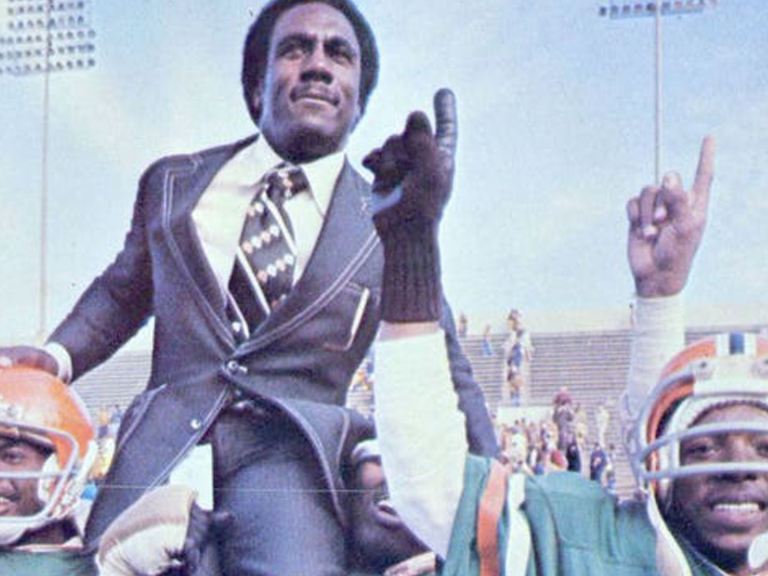
Former FAMU coach Rudy Hubbard says it’s ‘disturbing’ he didn’t get call from school about his HOF nomination

FAMU Rudy Hubbard 1
Former Florida A&M head football coach Rudy Hubbard was again named to the 2021 College Football Hall of Fame ballot last week by the National Football Foundation.

He holds the distinct honor of being the only HBCU head coach to win an NCAA Division 1-AA National Championship when his Rattlers won the inaugural title in 1978.

Hubbard didn’t mince words during an interview on “The HBCU Report with Rob Calloway” when asked about his thoughts on receiving the call to inform him he was on the ballot. “Well, I really didn’t get the phone call to be honest with you,” Hubbard said. “Which is disturbing.”

Because he won a national championship as a head coach, Hubbard said he learned that he would automatically be added to the ballot every year until inducted. He’s been on the ballot since 2014.

Indicating that his nomination was solely for his work as head coach at FAMU and nothing to do with his previous stint as an assistant coach at Ohio State, Hubbard said he learned of his first-year nomination from someone at Ohio State.

“My first year, it was the people from Ohio State that told me I was on it. I wasn’t still coaching at Florida A&M, but my people at Florida A&M didn’t even know it,” Hubbard said. “The same thing happened this year. It was actually my daughter who went to Grambling who sent me the article just the other day. I’ve not talked with anybody at Florida A&M about being back on the ballot, and they’ve not talked to me.”

Hubbard did mention that having relatively new people in certain positions such as sports information director, athletic director, and president on the Florida A&M campus is likely why the school has not been “in tuned” as much as he’d like for them to be. He thinks more communication with the school could help in him eventually being inducted.

“I’m not hearing a whole lot from Florida A&M people. That’s the point,” he said. “I think for me to get over, I’ve got to get some kind of push from Florida A&M people or the MEAC to really get in.”

You can listen to the entire interview below.