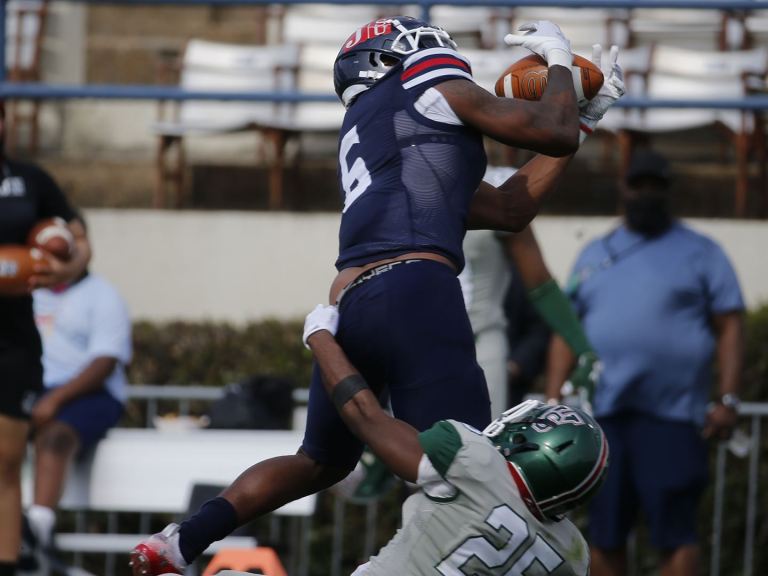
“I have learned so much from JSU while also having fun and enjoying my college experience, but God has something different in place for me,” Baldwin wrote on Instagram. “It’s always love JSU.”
Named SWAC Newcomer of the Year and voted First Team All-SWAC, Baldwin began his collegiate career at Morgan State before transferring to JSU.
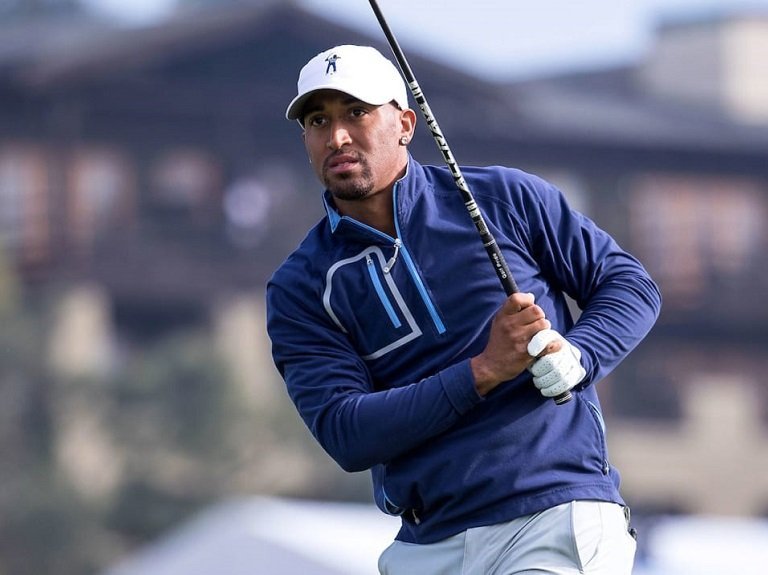
Inclement weather pushed Willie Mack III to an actual Saturday at the BMW Charity presented by Synnex Corporation Korn Ferry Tour event this weekend in Greer, S.C.
A breakthrough kept the Bethune-Cookman alum around the rest of the event.
After missing the cut at two PGA Tour events and one Korn Ferry event earlier this year, Mack made his first cut Saturday and made a strong push before finishing with a 72-hole total of 265 (Nine under par) and a T-62 finish.
Mack was on the borderline Friday when play stopped. He was at five under – the cut line – and had seven holes to stay alive.
He did it with a birdie on 15 to advance to the third round, where he shined on the final nine holes and posted the eighth-best score in the field for Saturday.
Mack registered four birdies in a five-hole sequence and finished with a 66 (Five under par) that put him within range of the top 30 before Sunday’s two-over round of 73.
“I’ve been hitting the ball well,” Mack said. “I just had some bad putting weeks. I got fitted for a new putter and it feels good. This week, it came down to making some putts. It definitely gives me some confidence going into the Rocket Mortgage Classic and the John Deere.”
Mack will continue to practice near his residence in Orlando as he prepares for the Rocket Mortgage Classic July 1-4 at Detroit Golf Club near his hometown and the John Deere Classic at TPC Deere Run July 8-11 in Silvis, Illinois.
He will then continue his season on the APGA Tour, which is playing its ninth tournament of the year at TPC Deere Run July 18-20. Mack is in fifth place in the Lexus Cup Points Standings, the season-long bonus pool competition of the APGA Tour.
North Carolina A&T showed the country this week — and quite frankly all season — that it’s more than an FCS football power.
The Aggies stole the show during the NCAA Outdoor Track and Field Championships on Friday and Saturday.
The group finished the weekend with four top-four placements in both the women’s and men’s championships — the only program in the nation to pull off the trick at the event.
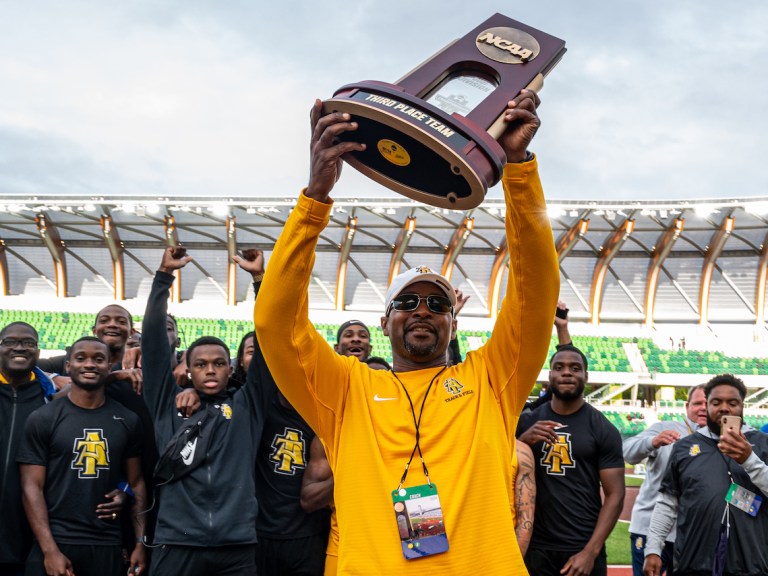
Former Olympian and head coach Duane Ross led the men to a third-place finish, the highest ever for a D1 HBCU, and the women to a fourth-place finish.
After it was over, the social media world showered North Carolina A&T with enormous praise.
EAST GREENSBORO – North Carolina A&T is an up-and-coming team. North Carolina A&T is on the come-up in track and field. North Carolina A&T is the best historically black college or university (HBCU) track and field program in the nation.
Duane Ross, N.C. A&T’s director of track and field programs appreciates all the compliments. But the compliments seem a little backhanded at this point.
On the final day of the 2021 NCAA Outdoor Track and Field Championships at the newly renovated Hayward Field at the University of Oregon, the Aggies added to their pile of evidence that their men’s and women’s track and field teams have arrived.
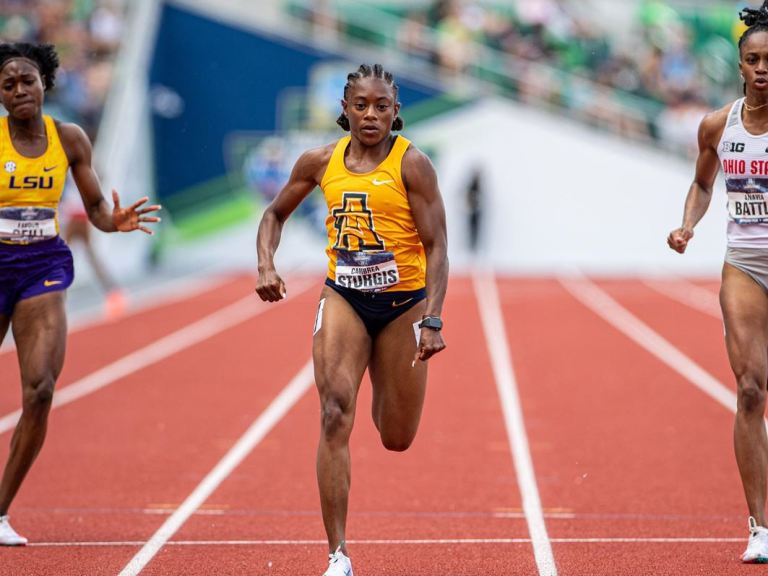
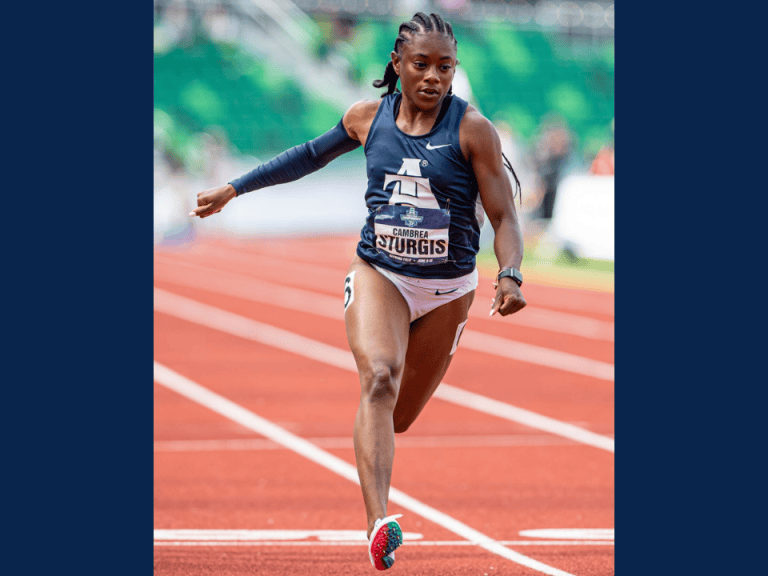
A day after the Aggie men finished third nationally, sophomore sprinter Cambrea Sturgis led the women to a fourth-place finish by winning national titles in the women’s 100 and 200 meters and having a third-place finish in the 4×100-meter relay.
The Aggies were the only school at the NCAA championships to have their men and women finish in the top-4 this week.
“We are an HBCU. We will always be an HBCU. That is who we are, that is our history, and we’re proud of that,” said Ross. “But that acronym needs to be retired if people are going to continue to misuse it. It’s almost like they are saying you guys are good for an HBCU. No, we’re good, period.
These young people are great because they decided to attend an HBCU, and they understand the importance of what they are accomplishing. They are not great in spite of.”
Great is the proper word to describe Sturgis’s Saturday afternoon in Eugene. After helping sophomore Kamaya Debose-Epps, freshman Jonah Ross and junior Symone Darius run a 43.03 in the 4×100, Sturgis entered track and field cream of the crop status.
Sturgis is the fastest woman in the NCAA after running the fastest all-weather time in NCAA history, a 10.74. It is the 11th-fastest time for a woman in world history.
“I was a little bit nervous,” said Sturgis as she described how she felt before the starter pistol went off for the 100m race. “Even though there were other good competitors, I knew I was just as good as them. I just went out there and ran my race.”
Sturgis then turned her attention to the 200m. She and High Point, N.C. native and University of Alabama sprinter Tamara Clark battle to the end. Sturgis pulled away slightly over the final 30 meters of the race and leaned forward to record a time of 22.12. Clark crossed in 22.17.
Sturgis’s 200m time on Saturday is the fourth-fastest time in NCAA history. Saturday marked the 13th time in NCAA history a women’s sprinter has won the national championship in the 100 and 200m. Sturgis is the first female athlete to win both since Oregon’s Ariana Washington did it in 2016.
“It just shows NCAT can be an elite school, and we can run with the best,” said Sturgis.
The Aggie women also had two participants in the 100-meter hurdles and one in the high jump. Senior Madeleine Akobundu finished fifth with a 12.90. Unfortunately, senior TeJyrica Robinson tripped over the final hurdle, but Ross complimented her because she got up and finished the race, which allowed the Aggies to finish fourth.
In the high jump, sophomore Kenady Wilson’s best jump was 5-feet, 10-inches to finish 20th.
“I think some of our competition is still struggling with the fact that we are better,” said Ross. “They should have been paying attention when I claimed it before it happened. We take what we do over here seriously like everybody else. We’re passionate about our track and field program. Our kids are passionate about what they do. This is nothing new for us. I know a lot of people are surprised about what we did this weekend, but they shouldn’t be.”
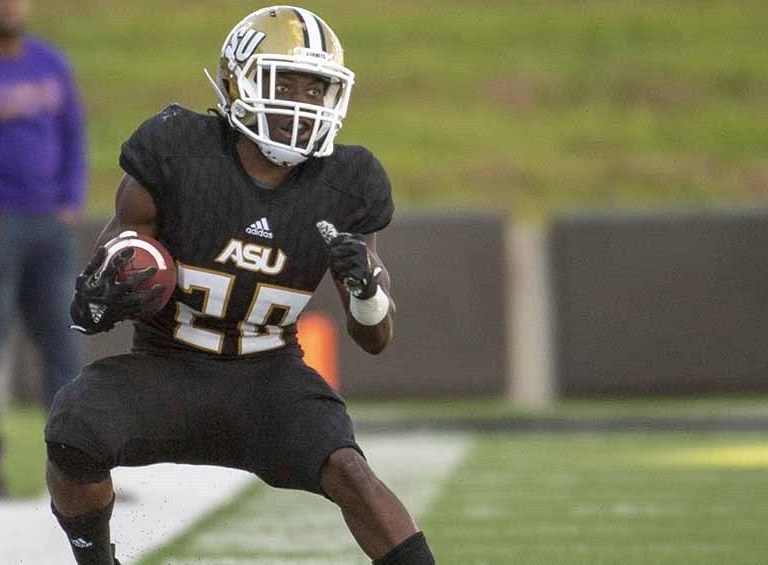
CLEVELAND, Ohio – Alabama State running Ezra Gray added another academic honor this week as he was one of 54 individuals named to the Football Championship Subdivision Athletics Director Association (FCS ADA) 23rd annual Academic All-Star Team.
The honor was the second in as many days for Gray as he was named CoSIDA Academic All-District for the second consecutive year.
He was named to the FCS ADA Academic All-Star Team a year ago and was also chosen as the co-FCS ADA Scholar-Athlete of the Year.
Gray was named a First Team CoSIDA Academic All-America last season, has been a two-time selection as the Magic City Classic Scholar-Athlete, named a finalist for the William V. Campbell Trophy Award – considered the Academic Heisman, and was a finalist for the Doris Robinson Scholar-Athlete of the Year award.
On the field, he is a two-time All-SWAC selection as a running back including a First Team selection in the spring 2021, and is also a two-time All-SWAC selection as a return specialist.
This past season, Gray led the SWAC in rushing and was named a First Team BOXTOROW All-American as a running back and will return in the fall for his final season of eligibility due to COVID-19.
During his career, Gray has rushed for 1,808 yards, a number that is inside the top-10 all-time at Alabama State and has scored nine touchdowns. He has also hauled in 47 receptions for 265 yards and a touchdown, while also averaging 22.9 yards per kick return over his career.
EUGENE, Ore. – When asked what his strategy was in running his NCAA national championship-winning 400-meter race, freshman Randolph Ross Jr. mistakenly gave the world a small glimpse into one of track and field’s most important and extraordinary relationships.
“Me and my dad,” Ross Jr., said referring to his father and North Carolina A&T’s director of track field and field programs, Duane Ross.
“Well, me and my coach, sorry,” Ross Jr. said as he quickly changed Ross’s title. “We’ve been working on the first 350 (meters) because we know I’m strong.
We’ve been training for this all year. We knew if I got to 350 first, the rest would be easy.”
The relationship between father and son is close, and neither man shied away from it Friday night. Ross Jr. won the 400m NCAA national championship Friday at the NCAA Outdoor Track and Field Championships at the newly renovated Hayward Field with a time of 43.85. It was the fastest time ran in the world this season, the second-fastest time ever ran at an NCAA championship meet and the third-fastest time in collegiate history.
Ross Jr. won the school’s first-ever national championship in an outdoor event. He is the first Mid-Eastern Athletic Conference (MEAC) athlete to win a national title since Bethune-Cookman’s Ron Ash won the 110-meter hurdles in 2009.
And he wasn’t done.
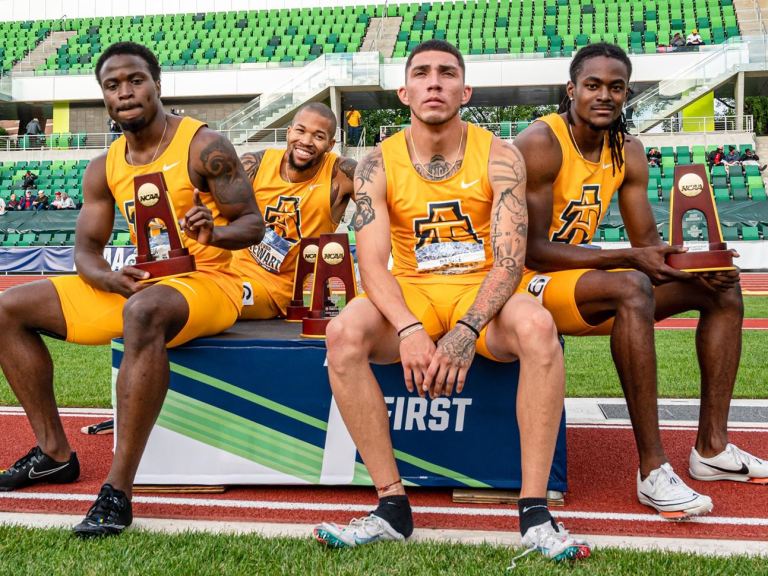
Later in the evening, he helped the Aggies capture the 4×400-meter relay national championship as he joined junior Daniel Stokes and seniors Akeem Sirleaf and Trevor Stewart to run a 3:00.92 race.
The Aggies also had a fourth-place finish in the 4×100 and a ninth-place finish in the 200m. Ross Jr.’s performances in the 4×100, 4×400 and 400m helped the Aggies finish third nationally with 35 points, the highest finish ever for a Division I historically black college or university.
“This young man is special,” said Ross. “He’s nowhere near his full potential. I’m so proud of him and his national championships as a father and a coach.”
In March, the NCAA conducted two different 400m races for the national championship. Ross Jr. went out first and set the pace, running a 44.99. LSU’s Noah Williams ran in the second race and was able to catch up to Ross Jr.’s pace by winning the indoor 400m national championship in 44.71.
On Friday, there was one race. And this time, when Ross Jr. set the pace, there was no catching him.
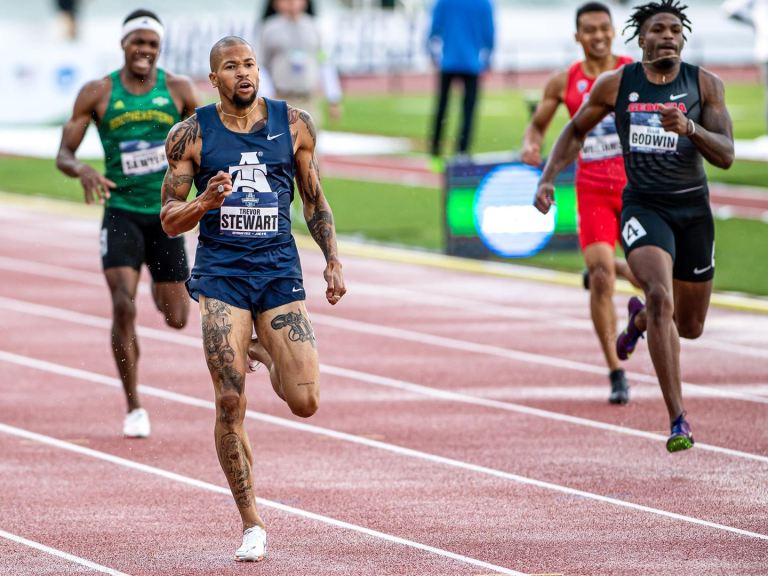
When the runners came off the curve, Ross Jr. and Stewart, his teammate, went down the stretch 1,2. But even Stewart, who trains with Ross Jr. on a routine basis, seemed a bit thrown off by the pace set by Ross Jr.
Over the final 50 meters of the race, Ross Jr. sprinted out to a big lead as the two other viable national championship contenders in Williams of LSU and Stewart faded. Texas A&M’s Bryce Deadmon finished second (44.44), followed by Williams (44.93) and Stewart (44.96).
“I used to look at the TV and the Olympics and see runners run a ’43’,” said Ross Jr. “It’s crazy to look up and see yourself doing it. It’s a blessing.”
Ross Jr.’s 400m performance set social media on fire, and he did not let it simmer. Twitter caught ablaze again in the 4×400 when Ross Jr. took the baton on the second leg and took the Aggies from sixth place to first place in a matter of seconds. Once Ross Jr. gave N.C. A&T the lead, Sirleaf and Stewart grew the lead as the Aggies completed the 4×400 indoor and outdoor 2021 national championship sweep.
They were the best 4×400 team in the nation all season.
“We made an error early on in the relay that put us behind, but I never doubted these young men,” said Ross. “They wanted that championship too much. This relay is a part of them. It’s what we do.”
The Aggies now have four national championships, all under Ross’s leadership. Kayla White won the indoor women’s 200m title in 2019 to go along with the 4×400 sweep of 2021 and Ross Jr.’s outstanding 400m performance on Friday.
That is enough to make any dad, sorry, any coach proud.
EUGENE, Ore. – North Carolina A&T sophomore Cambrea Sturgis will be a first-team All-American in three different track events when the 2021 NCAA Track and Field Championships at the new Hayward Field on the campus of the University of Oregon is over.
Therefore, the mission on Saturday will be to win three national championships in those events. On the second day of the NCAA nationals, the N.C. A&T women’s outdoor track and field team had six Aggies qualify for the finals in four events.
N.C. A&T will compete in five finals on Saturday as sophomore Kenady Wilson competes in the high jump at 5:30 p.m., eastern standard time giving them a total of seven participants on Saturday.
Sturgis will compete in three of those events, including the 100 meters, the 200m and the 4×100-meter relay. She qualified for the finals in each event by finishing in the top-2. Top-2 finishes in lane events automatically qualify a runner for the final.
In the 200m, Sturgis won her heat in 22.55 by rallying from behind like she did last week at the NCAA Division I East Preliminary Round in Jacksonville, Fla., to outlast Southern Cal’s Anglerne Annelus. Annelus had the lead when the runners went into the curve, but Sturgis accelerated over the last 80 meters to win.
The 4×100 team comprised of Sturgis, freshman Jonah Ross, sophomore Kamaya Debose-Epps and junior Symone Darius finished second in their heat at 43.17 behind the Oregon Ducks, who ran a season-best 42.86.
Sturgis also finished second her 100m heat as she faced a harsh wind to finish in 11.20. She finished behind Oregon’s Kemba Nelson in the heat. Two years ago at NCAAs, Sturgis finished third nationally in the 200m and sixth in the 4×100. She is now a first-team All-American five times over.
Sturgis’s first event on Saturday will take place at 6:02 p.m. EST in the 4×100. At 6:52 p.m., Sturgis will attempt to win a national championship in the 100m before closing out her day in the 200m final at 7:37 p.m.
Two out of the three 100-meter hurdlers who entered Thursday’s semifinal round for the Aggies advanced to the final in seniors TeJyrica Robinson and Madeleine Akobundu. Robinson posted the sixth-fastest time at 12.90 and was an automatic qualifier by finishing second in her heat behind Baylor’s Ackera Nugent (12.84).
Akobundu qualified based on the next fastest time. She ran a 12.93 to earn the eighth and final spot into the final. The 100mh final is scheduled for 6:42 p.m., Saturday.
Junior Paula Salmon had a 14th-place finish in the semis on Thursday to earn second-team All-American accolades. Debose-Epps placed 13th in the 100m semifinal to earn a second-team All-American distinction.
Ross will earn second-team All-American honors in the 200m after finishing 15th. Debose-Epps and Ross will have first-team All-American accolades in the 4×100 along with Darius.
The men get underway on Friday as they battle for national championships. Five Aggies will compete in four different events highlighted by freshman Randolph Ross Jr. and senior Trevor Stewart, going for a national title in the 400m at 9:02 p.m., Friday.
The duo will team up with junior Daniel Stokes and senior Akeem Sirleaf to go after the 4×400 relay national title at 10:21 p.m. Stokes, Ross Jr., Stewart and senior Elijah Young won the indoor 4×400 national title in March.
N.C. A&T will attempt to bring home both relay national titles as the 4×100 team of freshman Javonte Harding, Ross Jr., Stokes and Sirleaf hit the track at 8:02 p.m. Harding will seek the 200m title at 9:37 p.m.
All five men come into Friday’s events as first-team All-Americans.
EUGENE, Ore. – North Carolina A&T senior Trevor Stewart and freshman Randolph Ross Jr. came as advertised on Wednesday night at the 2021 NCAA Division I Track and Field Championships at the new Hayward Field at the University of Oregon.
The men’s portion of the semifinals took place on Wednesday, and Stewart and Ross Jr. made it look easy.
Both men won their respective 400-meter heats with ease. Ross Jr. went first and led from start to finish as he crossed the line in 45.24 in the second heat.
In the following heat, Stewart trailed early before doing his familiar kick over the final 200 meters of the race. Once Stewart kicked in, he coasted toward the end and finished in 45.86.
The two teammates will battle for a 400m national title Friday night at 9:02 eastern time. It will be their third matchup this season. Stewart beat Ross at the Aggie Invitational at N.C. A&T’s Irwin Belk Track on April 10 as Stewart ran a 45.43 and Ross Jr. ran a 45.71.
Ross Jr. exacted his revenge at the 2021 Mid-Eastern Athletic Conference (MEAC) Track and Field Championships at Irwin Belk Track on May 8. Ross Jr. held off a Stewart rally to run a spectacular 44.60, one of the best times in the world.
By making the 400m final, Ross Jr. and Stewart will be named first-team All-Americans in the event. The Aggies duo will also grapple with Ohio State’s Tyler Johnson, who had the second-fastest qualifying time on Wednesday at 45.33.
Stewart and Ross Jr. will also appear in the 4×400-meter final. They will join senior Akeem Sirleaf and junior Daniel Stokes in Friday’s final. The foursome ran a 3:03.23 for Wednesday’s fastest qualifying time. The Aggies 4×400 indoor team won the national championships in March.
N.C. A&T had others qualify on Wednesday, including freshman 200m runner Javonte Harding. Harding had the sixth-fastest qualifying time on Wednesday, finishing in 20.28 to reach Friday’s final set to begin at 9:37 p.m. Harding did miss qualifying for the 100m final by finishing outside of the top 8 with the 10th-fastest time at 10.22.
Harding also qualified along with Ross Jr., Strokes and Sirleaf in the men’s 4×100 meters with the fourth-fastest qualifying time of 39-seconds flat.
Off the track, the Aggies saw junior Brandon Hicklin finished fourth nationally in the long jump with a personal-best 25-feet, 11 ½-inches. Hicklin’s best jump on Wednesday was astounding, considering he won the MEAC long jump championship with a leap of 23-feet, 7 ½-inches. He measured at 24-feet, 5 ½-inches at the Aggie Classic Twilight a week later.
Two weeks later, at the NCAA Division I East Preliminary Round, Hicklin jumped 24-feet, 11 ½-inches, before nearly jumping 26 feet at nationals to earn first-team All-American honors.
There were some Aggies who failed to qualify in the 400-meter hurdles, the 110mh and the 800m. Fifth-year senior Abbas Abbkar finished in the top-16 with his time of 1:48.92 to earn second-team All-American honors. Poole also finished in the top-16 in the 110mh, finishing in 13.75 to earn second-team All-American accolades.
Harding will also earn second-team All-American honors in the 100m. The women will get started Thursday for their semifinal round at Hayward Field.
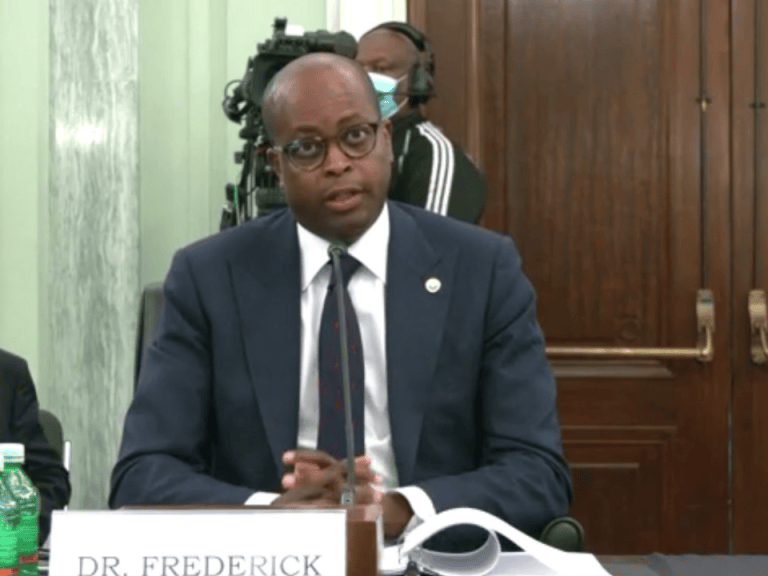
Howard University President Wayne Frederick supports college athletes receiving some form of compensation from endorsement and advertisement deals as part of legislation that would approve of name, image and likeness rights.
But that is made complicated because Howard — like all HBCUs — isn’t necessarily in a financial position to abide by the changing policies within college athletics.
During a Wednesday hearing before members of the Senate Commerce Committee, Frederick expressed some trepidation that requiring all schools to supplement long-term healthcare for athletes or offer lifetime scholarships under an expanded NIL proposal pushed by Democrat lawmakers could leave schools desolate or result in non-revenue sports being lost.
“As a representative of the MEAC and HBCUs, I have tremendous concerns about many of the proposals that would create tremendous burdens on smaller colleges and universities, particularly those historically Black institutions that do not have the same resources as some of our wealthier and more privileged peers,” he said. “It is important to recognize that, out of 1,100 college athletic programs in the NCAA, only 25 programs (2.27 percent) are profitable.”
Frederick suggested that schools receive funding either from the NCAA or the federal government to alleviate what would be a heavy burden.
“If college sports were professionalized, this would mitigate the ability for students to walk on and play on teams,” he said. “It would also cause undue harm on the ability of smaller universities to recruit top athletes to come to their schools, further restricting equality across NCAA divisions and schools, which would undermine the level of competitive play in college athletics.”
NCAA President Mark Emmert, who also testified Wednesday, said that he recommends the approval of NIL rights by at least July 1.
New laws permitting NCAA athletes to profit off their name, image, and likeness will take effect in Alabama, Arizona, Florida, Georgia, Mississippi, and New Mexico in July.
Frederick, however, speaking on behalf of small schools, said any NIL discussion must consider that individual states already apply them differently, which could create possible competitive gaps and legal challenges.
“We cannot have legislation that privileges the already privileged institutions
while placing further burdens on colleges and universities that are already struggling to bear our heavy loads,” he said. “In addition, we have to consider the additional expenses that will arise for institutions as we seek to comply with these new federal or NCAA rules and regulations.”
Emmert, asked by Sen. Maria Cantwell, D-Wash., how the NCAA could help low-resourced schools facilitate medical care and lifetime scholarships, said it’s possible for schools that have a desire to do so. But those operating at Division II and Division III levels would have to overcome inherent hurdles.
Comprehensive national laws, said Frederick, “would level the playing field as states compete with each other in recruiting top athletes” and ensure greater parity across the NCAA.
“While increasing student-athlete rights would certainly benefit many of our students, we must consider expanding their rights without sacrificing the needs of other student-athletes and the institutions that work so hard to support them,” he said.
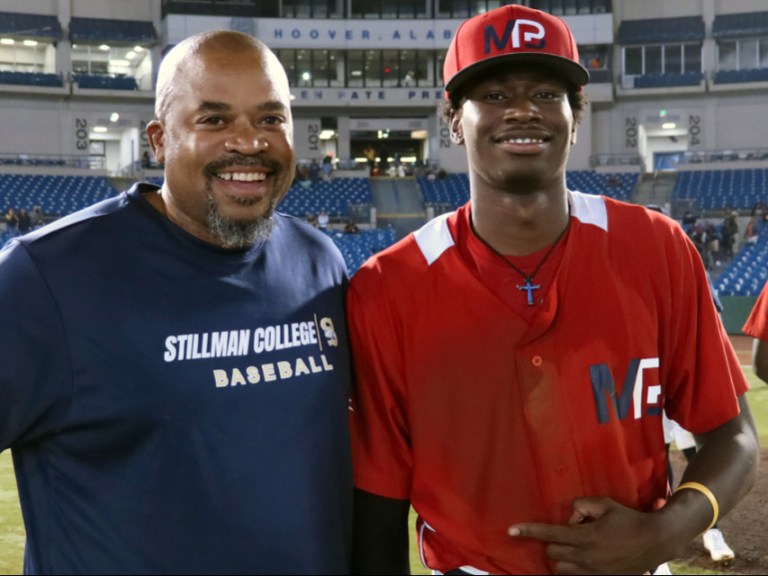
HOOVER, Ala. – Stillman College’s Kelvin Reese was the offensive star of the show in the inaugural HBCU All-Star Game, presented by Minority Baseball Prospects Tuesday at Hoover Met Stadium.
“It felt so surreal to be out here and to be able to perform to the best of my abilities and go out and get in it,” Reese said. “It’s been amazing. Being out here with these guys, being able to be on the field, it’s a blessing. To God the glory. Thank God for everything. Without Him, I wouldn’t be able to do this.”
Reese earned a starting spot in center field for the home team and rotated every other inning in the field defensively. In the bottom of the second inning, Team Jennings drew a pair of walks before Kay Higgins Jr. of Arkansas Pine Bluff doubled to right-center to plate the first run. Reese followed with a two-RBI double down the left-field line off Clafflin’s Charles Jackson to give Team Jennings a 3-0 lead. It proved to be the winning hit in a 3-1 victory. Reese went on to still third in the inning but was left stranded. He finished 1-for-2 in the game.
Team Weeks added a run in the top of the ninth inning on a bases-loaded walk, but Tyler Laux (Prarie View A&M) pitched out of the jam. Playing 10 innings, Alabama State’s Breon Pooler closed the 10th.
Stillman head coach Terrance Whittle was in attendance to support Reese.
“I’m so proud of Kelvin and what he’s done and how his season went. He was real deserving of this opportunity,” Whittle said. “I wasn’t surprised at all by his performance. I knew he was going to come out here and play hard and be a team guy, which is what he is. I’m so excited for him and Stillman College.”
The Montgomery, Alabama native was one of six Alabama natives appearing in the event. He hit .278 for Stillman College during his debut season in 2021 with 20 hits in 26 games. He had eight doubles and 11 RBI during the spring season for the Tigers.
In addition to the All-Star Game, Reese participated in a combine and youth clinic Monday, June 7, as well as tour the Birmingham Negro Southern League Museum at Regions Field.
More than 50 student-athletes from 26 HBCUs across NAIA, NCAA Division II and NCAA Division I competed in the game. The two teams for the All-Star Game were sponsored by former Tampa Bay Rays Rickie Weeks and Desmond Jennings, a Birmingham native.