HBCU moves on from controversial commencement speaker after student protests

SCSU
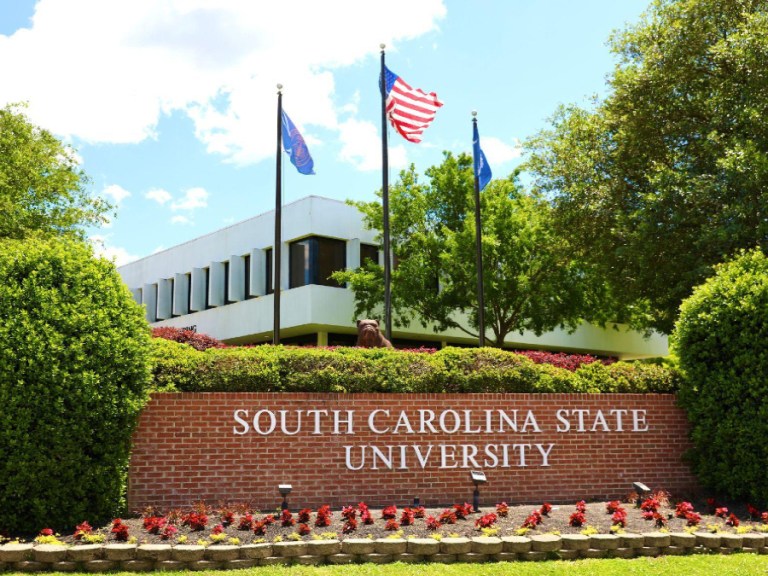
South Carolina State University will move in a different direction for its upcoming commencement speaker after days of student protests over the selection of Lt. Gov. Pamela Evette.

President Alexander Conyers, in a press conference on Wednesday, said the school will change course out of “abundance of caution.”

Conyers said the HBCU’s original invitation to Evette was based on her background as a business leader and entrepreneur.

“From the outset, our decision to invite Lt. Gov. Pamela Evette as our Spring 2026 Commencement speaker was rooted in her record as a business leader and entrepreneur. As the founder and former CEO of a company that grew from a startup into a billion-dollar enterprise, she represents the kind of innovation, resilience and real-world achievement that aligns with the aspirations of our graduates.

We are grateful to Lt. Gov. Evette for her willingness to engage with our students and for her time and consideration in accepting the invitation.

Our intent was to provide students with a speaker whose professional journey could offer practical insight and inspiration as they prepare to enter the workforce.

Out of an abundance of caution for safety and with careful consideration, the university has decided to move in a different direction for this Spring Commencement.”

Conyers said SC State will welcome Evette to campus at a later date for a more constructive conversation with students, faculty and staff outside the setting of commencement.

Lieutenant Governor Pamela Evette/LinkedIn

The decision follows several days of protest on campus, where students voiced opposition to Evette’s planned appearance as graduation speaker.

“Our students have exercised their rights in a manner that reflects the importance of civic engagement and respectful discourse within a university community,” Conyers said. He added that SC State must remain a place where ideas are exchanged freely and constructively, and said student voices are an important part of the academic experience.

In response to the school’s decision, Evette released a statement on social media suggesting the developments validate her fight to end DEI initiatives on college campuses.

“The fact that a speech had to be canceled for credible safety threats is exactly why we cannot give up the fight to end indoctrination and DEI on campuses once and for all,” she said in a Facebook post. The root problem is professors who gin up feigned outrage at the detriment of their students, who they should be teaching to think critically. End tenure now.”

South Carolina State graduation speaker claims Trump has ‘done more for HBCUs’ than any president

Lieutenant Governor Pamela Evette Trump
The clash over a South Carolina State University’s commencement speaker comes as the state official at the center of campus protests makes a sweeping claim: that President Donald Trump has done more for HBCUs than any other president.

Lt. Gov. Pamela Evette, a staunch conservative and Trump supporter, was picked as a commencement speaker.

After learning of the invitation, students marched across campus, carried signs, and chanted against Evette’s planned appearance, saying they wanted a speaker who better reflected the values of the graduating class.

An online petition also began circulating, calling for a different commencement speaker and arguing that Evette does not represent the student body or HBCUs.

“Pamela Evette’s political positions and affiliations have raised significant controversy in South Carolina, especially among communities who feel marginalized by current state policies,” the petition says. “Many students, families and alumni are concerned that her presence at one of our most significant events does not reflect the values we collectively hold dear.”

Evette defends her appearance

Evette responded on social media by saying, “facts trump feelings in the real world,” and arguing that Trump and conservatives have done more for HBCUs than any administration in history.

“I’m ending DEI on campuses once and for all. Stay tuned. I’m going to have a lot more to say about this later,” Evette said. “In the meantime, I look forward to celebrating commencement with the students and faculty at S.C. State.”

She said she still plans to speak at the graduation ceremony.

Her comments tied the campus dispute to a national debate over Trump’s HBCU record. That framing put the university protest in direct conversation with a claim that has become a talking point for Trump allies and a point of dispute among HBCU advocates.

Did Donald Trump really do more for HBCUs?

Trump’s record includes signing the FUTURE Act in 2019, which permanently extended $255 million in annual mandatory funding for minority-serving institutions, including $85 million a year for HBCUs. He also signed the HBCU PARTNERS Act in 2020, requiring federal agencies to improve access to grants for HBCUs and report on their efforts.

“The only words the president contributed were his signature, ‘Donald J. Trump,’” Rep. Alma Adams, D-N.C., an original sponsor of the bill, previously told Inside Higher Ed.

HBCUs received funding under the same program during President Barack Obama’s time in the White House, according to PolitiFact.

Photo: South Carolina State University

In 2025, the Trump White House also said it was relocating the HBCU Initiative back to the White House and promoting a new executive order aimed at strengthening institutional development, workforce preparation and private-sector partnerships.

But saying he did more than any other president is harder to prove, because much of the funding came through bipartisan congressional action, and other administrations also made major investments in HBCUs.

The Biden administration said in 2024 that it had committed a total of roughly $16 billion to HBCUs from fiscal year 2021 to 2024.

Inside Higher Ed described Trump’s record as a “mixed bag,” noting that his administration did deliver notable gains but that the result was not solely the product of presidential action.

Why it matters at SC State

For students, the issue is not just Trump’s record but whether Evette belongs on a stage that symbolizes academic achievement and institutional identity. Their protest suggests that commencement at SC State has become a test of how closely the university’s public choices match its mission and student values.

Bigger NCAA tournament could mean bigger gap for HBCUs

Pv
The NCAA tournament is about to get bigger.

More teams. More sites. More First Four games.

According to Yahoo Sports college reporter Ross Dellenger, “the NCAA is expected to finalize an expansion of the men’s and women’s tournaments to 76 teams.”

Though the NCAA hasn’t finalized an agreement, all signs point to it happening.

So, what does that mean for HBCUs?

Likely nothing will change.

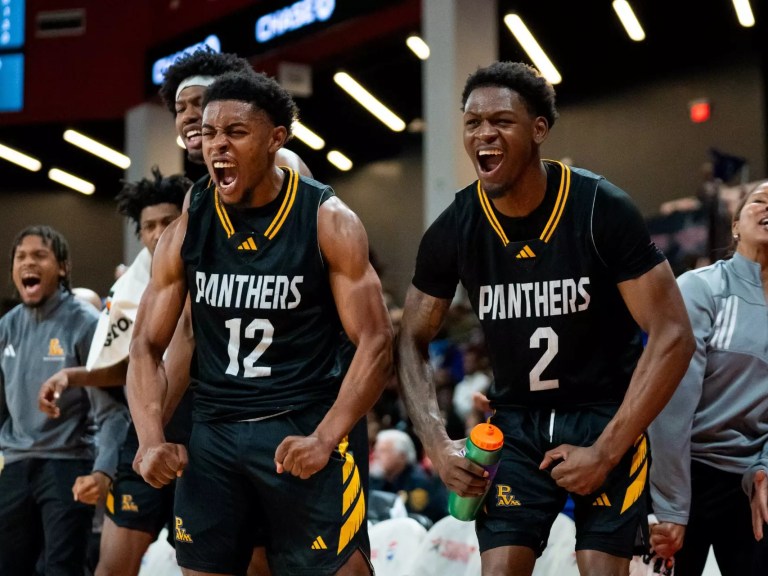
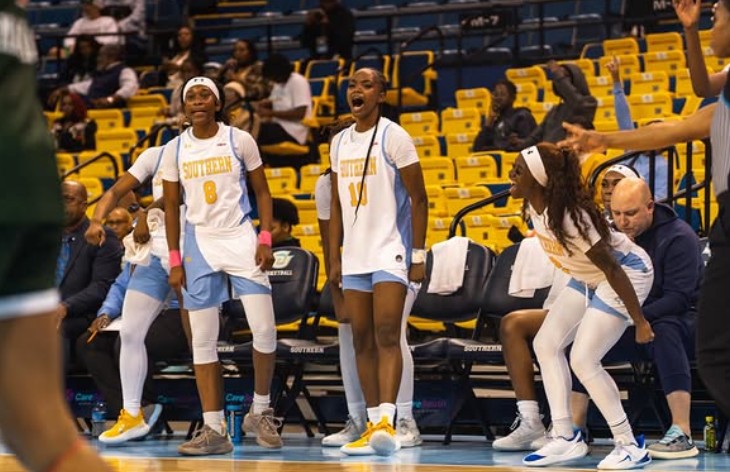
Despite the impressive March Madness runs of Howard and Prairie View on the men’s side and Southern in the women’s field, the MEAC and SWAC will still be one-bid leagues unless the strength of those conferences improves dramatically.

That’s because the entire motivation of tournament expansion is to get more Power Four and select high mid-majors in.

You know, the bubble teams like Auburn, Oklahoma, and Indiana, which all had losing conference records in the SEC and Big Ten, respectively.

Under the new format, they all would have been included, not, for example, SWAC men’s regular season champions Bethune-Cookman or women’s winner Alabama A&M.

Why the extra spots may not help

The biggest issue is selection bias. Multiple reports say the expansion would create more at-large opportunities and move some teams into a larger opening-round setup, which tends to favor the power conference teams.

HBCU teams generally do not have the same volume of Quad 1 wins or the same margin for error when it come to advanced metrics like NET rating, so a bigger bracket does not automatically mean a bigger lane for them.

Photo: Southern Athletics/Instagram

HBCUs remain one-bid dependent

Historically, HBCU men’s and women’s basketball have been locked into a one-bid league reality.

That structure has not changed in the current expansion talk, and nothing in the reported 76-team model suggests more automatic access for HBCU conferences.

What to watch next

If the NCAA finalizes 76 teams, the key question for HBCUs will not be whether the bracket got bigger, but whether the committee changes how it values champion teams from smaller leagues.

Photo: MEAC/Instagram

To combat the human bias and the analytics, HBCU leagues simply need to be better. SWAC Commissioner Charles McClellan, who was once vice chair of the men’s Division 1 Basketball Committee, suggested that teams schedule smarter. Not so many Power Four games. Bolster their academic and athletic support systems as well as funding capabilities.

But smart scheduling, he said, would be necessary as it relates to creating competitive balance.

Ultimately, the NCAA and the power conferences that run it don’t want socialism. They want absolute power for themselves.

In other words, the door may widen, but the schools most often stuck outside may still be the same ones.

HBCU files for bankruptcy in effort to reorganize

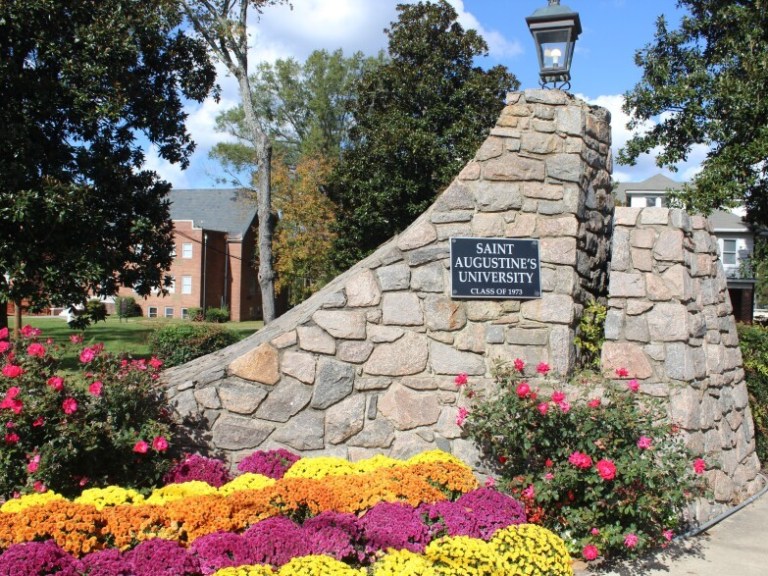
SAU CAMPUS
The financial woes of one HBCU continue to mount, and as a result, it is taking extraordinary steps to stay alive.

St. Augustine’s University, once a longtime member of the CIAA, announced they’re filing for bankruptcy as a part of a larger restructuring plan to save the school.

On SAU’s official blog, the Raleigh, NC-based school announced they “will initiate a voluntary Chapter 11 restructuring process. This structured, court-supervised process will enable SAU to organize its financial affairs in an orderly and transparent manner. The decision, made by the University’s Board of Trustees, reflects a deliberate and strategic step to advance the University’s long-term sustainability while addressing current financial realities.”

“Chapter 11 provides a comprehensive path to address our financial challenges and move forward with a stronger foundation,” the SAU Board of Trustees announced.

According to the Triangle Business Journal, St. Aug’s debts are now at upwards of $50 million, causing the school to cancel a legal pursuit of their accreditation status, which expires May 15.

“After careful evaluation, the Board determined that continuing litigation would not be a prudent use of resources,” the SAU blog stated. The school plans to “focus on supporting students through teach-out agreements, developing non-degree certificates and apprenticeship programs, and building a pathway toward reaccreditation. The institution reached this conclusion in cooperation with its accreditor, SACSCOC, to ensure impacted students were able to graduate from an accredited institution.”

A leadership change was also announced as Verjanis A. Peoples will replace Jennie Ward-Robinson as Interim President.

“These steps position the University to move forward with clarity and purpose, continuing its mission of preparing students academically, socially, and spiritually for leadership in a complex, diverse, and rapidly changing world,” St. Augustine’s said.


SWAC History: Mississippi Valley State softball’s unlikely dynasty made conference history

Mvsu2004 Softball 0
This article is one in a series of features produced in partnership with the Southwestern Athletic Conference, exploring the history of the SWAC from its founding in 1920 to the present day. The series will run during the months of April and May.

The SWAC has a proud history in several sports, and over 20 years ago, one unlikely softball team, at the beginning of an unlikely dynasty, added to that proud tradition.

From No-Hit to Making History

The Mississippi Valley State University softball team entered the 2004 season on a mission after being no-hit by Southern in the SWAC championship game the previous year.

Softball was still a fairly new sport for the SWAC at the time, holding its first conference championship in 1997. Valley, compared to most HBCUs, was still in its infant stages, opening its doors in 1950 as Mississippi Vocational College before becoming Mississippi Valley State College in 1964.

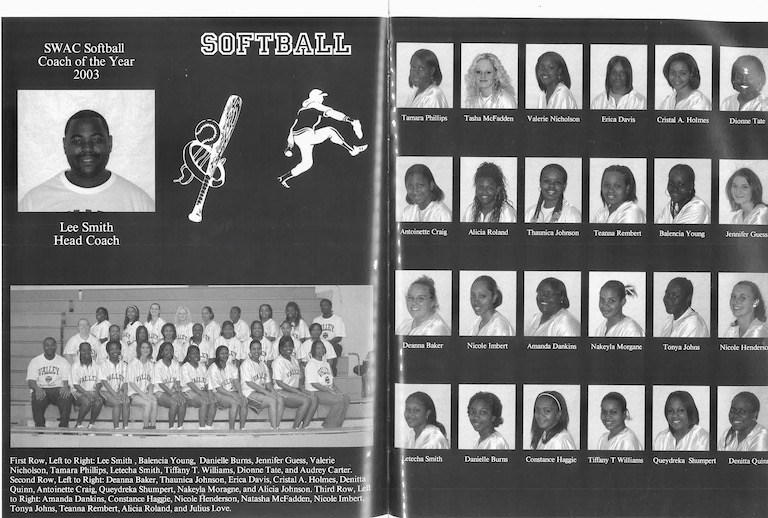
Leading the way was a coach who began his career as a student assistant, then graduated to the program’s field general, Lee Smith. Smith learned his craft under the program’s first head coach, Bernita Alexander, beginning in 1996, then assuming head coaching duties in time for the 2002 season.

Smith, who retired in 2021, began to assemble a team that would become the SWAC’s first softball dynasty and the first to make a bit of history.

Beginning with their first regular season SWAC title and continuing into the SWAC tournament, the Delta Devilettes earned the program’s first NCAA tournament appearance the hard way.

Facing the same Southern team that dominated them in the ‘03 title game, Valley scratched out enough offense for a 3-2 win. Not bad for a team that went 1-33 just two years earlier.

Valley drew a tough assignment in their regional bracket when they opened against top-seeded UCLA, one of the true gold standards of NCAA softball at that time.

“The experience of being the first SWAC team to not only play in an NCAA tournament but win two games will forever be one of my most memorable college experiences,” first baseman Cristal Holmes told the MVSU sports website later. “When we first made our appearance, all we heard was, ‘Who sent their high school team here by mistake?’ The chitter-chatter was only fuel to our fire. We were a young team full of bulls. We ate, breathed, and slept softball.”

“We’re looking to win a game on a regional level,” Smith told the Greenwood Commonwealth newspaper, “but also we want to have fun and enjoy the experience.”

That first experience didn’t go so well as the Bruins got a perfect game performance from pitcher Keira Goerl in an 8-0 UCLA victory that dropped the Devilettes into the losers’ bracket against Missouri the next day.

That is where SWAC softball history was made.

A Moment That Changed SWAC Softball Forever

Trailing 3-1 in the bottom of the sixth inning, Mississippi Valley State put two runners on, and catcher Natasha McFadden came to the plate with the hopes of a school and a conference on her shoulders.

Against reliever Erin Kalka, McFadden drilled a three-run homer to left field to give Valley a 4-3 lead that would stand up. The win was the first for the SWAC in the NCAA softball tournament.

Valley wasn’t finished yet, as they had another elimination game later that day against Ivy League champion Cornell.

There were no late-inning dramatics required as MVSU scored five runs in the first two innings and held off a brief Big Red rally for a 6-3 win to advance to the losers’ bracket championship game with a spot in the regional title game on the line.

“The majority of our team was from Mississippi and Arkansas, so going to California was huge for us,” Smith would say years later. “Our players love playing on the big stage, and they wanted to prove to the world that we know how to play softball at MVSU and in the south.”

Though they lost the bracket final 5-0 to Long Beach State, Mississippi Valley State had proven its point.

“Facing elite softball players was one of the best feelings in the world. Walking onto the field knowing we were representing the SWAC and having our swag about it was indescribable,” Outfielder Balencia Young-Ellington said.

“We already knew and felt like we were the best and would go toe to toe with any team. We didn’t care who they were. After the first win, I believe we shocked many people, but we expected it because we knew our team was exceptional. The second win allowed us a chance to show that this little team from Itta Bena, Mississippi, was something special.”

The Dynasty That Followed

For the next nine seasons, that little team from Itta Bena would dominate the SWAC softball scene, winning eight division titles and seven conference championships. The Devilettes picked up another NCAA tournament regional win in 2009, as well.

Lee Smith has since retired as Valley’s softball coach, but still serves as associate athletic director. He is also the school’s record holder for wins by a coach in any sport with 414.

And that 2004 Devilette team that made school and SWAC history will never be forgotten.

“It’s the little things like flying to Los Angeles, California, and playing the nation’s second-ranked team. The same team that had just played for the National Championship a year before,” he said. “The experience was unbelievable, and to coach that 2004 team is something that any coach would dream of.”

Curtis Allen, reigning Deacon Jones trophy winner, receives NFL minicamp invites

HBpiNM4WIAIfh0f
Former Virginia Union running back Curtis Allen, the reigning Black College Football Player of the Year, will get his opportunity to make an impact in the pros, receiving a pair of NFL rookie minicamp offers.

According to Sean Robertson of CBS Sports, Allen fielded invites from the reigning Super Bowl champion Seattle Seahawks and the Atlanta Falcons.

The former Panther is coming off a historic 2025 season, in which he racked up several postseason awards in his lone year as his full-time starting running back.

He came into the year filling in for Jada Byers, who had a storied career for Virginia Union, rewriting the school record books in multiple rushing categories.

Curtis Allen rewrote the Virginia Union record books

Allen broke a pair of those records set by Byers in his transcendent campaign, including rushing yards in a season (2,409), rushing touchdowns in a season (30), and rushing yards in a game (369).

Claiming the Deacon Jones trophy meant Virginia Union was the first team to win the award in consecutive seasons with two different players.

Allen also made history by becoming the first HBCU player to win the Harlon Hill trophy, Division II football’s equivalent to the Heisman.

Curtis Allen Virginia Union HBCU Black College Football
Photo: Virginia Union Athletics

The dynamic running back will now shift his attention to competing for an undrafted free agent contract, looking to become the first Panther to make it onto a 53-man roster since 2006.

On the Seattle Seahawks, he will compete with another former Division II running back, Emanuel Wilson, who signed with the team after spending the past three years with the Green Bay Packers.

Jackson State quarterback JaCobian Morgan gets CFL shot

Black And Red Dynamic Bold World Affairs And News YouTube Thumbnail 11
Jackson State quarterback JaCobian Morgan has signed with the Hamilton Tiger-Cats of the Canadian Football League, adding another former HBCU standout to the pro ranks.

Morgan’s move gives Hamilton a young, athletic quarterback with experience as both a passer and runner at the college level.

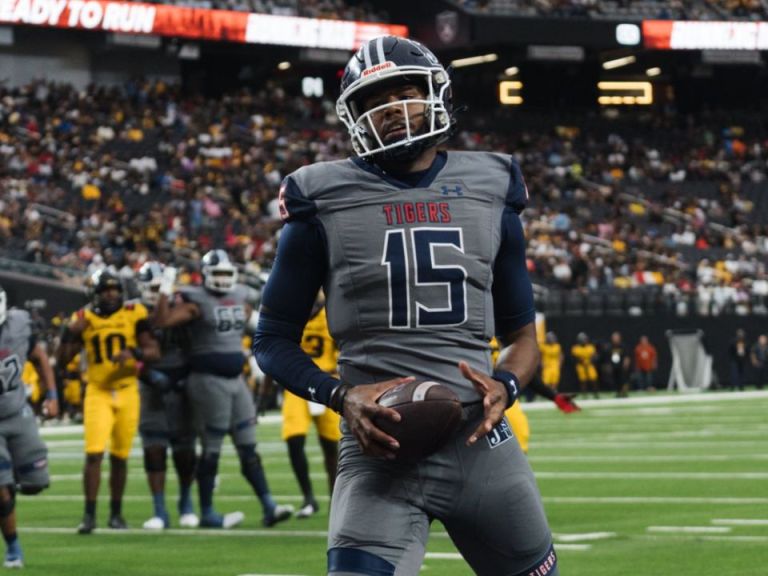
Morgan played three seasons at Jackson State after beginning his career at Syracuse, and he developed into one of the Tigers’ most productive offensive players.

Over 26 games at Jackson State, he completed 63.7% of his passes for 4,080 yards, 40 touchdowns and 11 interceptions, while also rushing for 668 yards and 13 touchdowns.

Morgan leaves championship legacy at Jackson State

In 2025, Morgan appeared in seven games for Jackson State and threw for 1,187 yards and 11 touchdowns against two interceptions. He also added 293 rushing yards and three scores in leading the Tigers to consecutive SWAC East titles.

Photo: Mandela Jones/HBCU Sports

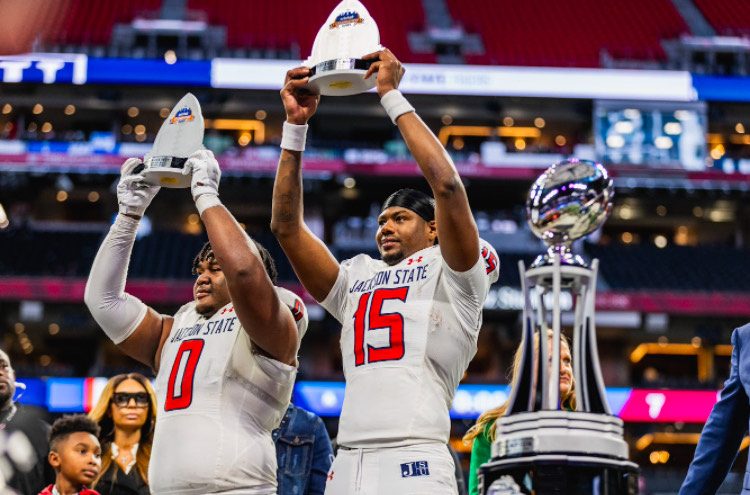
Morgan’s college career included a championship run at Jackson State, where he helped lead the Tigers to a Celebration Bowl title over South Carolina State and earned Offensive MVP honors in the game in 2024.

The Tiger-Cats added Morgan to their negotiation list earlier this spring before the signing was finalized. The addition gives Hamilton another option as it prepares for the upcoming CFL season.

Why DeSean Jackson says Delaware State is ‘rebuilding’ after 8-win season

KNOCKED DOWN 14
Delaware State wrapped up spring football practice on a positive note Saturday, with second-year head coach DeSean Jackson expressing optimism about the program’s progress despite an ongoing rebuilding effort.

“We finished on a high note,” he said following the Blue-Red game. “I’ve seen a lot of positives from our team today. There’s been a lot of growth through spring ball, and we’re trending in the right direction.”

The Hornets, coming off an 8-4 season, are still reshaping their roster after offseason losses to graduation and the transfer portal. Jackson estimated the team is “about 80%” complete and expects to add several more players in the coming weeks and into the summer.

“It’s the era of college football,” he said. “You’re constantly building year in and year out. We feel good about where we are, but there’s still work to do.”

Quarterback competition remains wide open

A recent recruiting weekend brought in multiple commitments, and the staff continues to target a handful of additional players to round out the roster.

Competition remains open at quarterback, where no starter has been named. Several players are vying for the job, and the team could still add another option.

“We haven’t identified a definite starter right now,” Jackson said. “We’re looking for someone who can lead, command the huddle, and understand the game at a high level.”

Returners Jayden Sauray and Mikal Davis are in the mix at quarterback, as well as Marqui Adams, who missed all of last season with a knee injury, and William & Mary transfer Noah Brannock figures to compete for the spot as well.

Spring practice concluded with a competitive intrasquad scrimmage, a sign of improved depth compared to last season.

“I don’t think we could’ve done that last year,” he said. “It just shows we’ve brought in more depth and competition.”

While pleased with the intensity, the coach noted concern over a hard sideline hit during the scrimmage, emphasizing that live contact for quarterbacks is “not ideal.”

Entering Year 2, the focus has shifted from establishing culture to refining it. Jackson said last season’s ups and downs provided valuable lessons, particularly in discipline and situational execution.

“In every game we lost, there was something we could point to and correct,” he noted. “Those are teaching moments we’ll carry into this year.”

Hornets want to determine identity

Offensively, Delaware State is still determining its identity after losing key contributors in the running game that was the best in all of FCS last season.

Jackson expressed confidence in the current group of running backs but suggested the offense could evolve.

“I don’t think we’ll drop off,” he said. “But who knows — maybe we’ll be the top passing team this year.”

NyGhee Lolley Delaware State
Photo credit: Delaware State Football Instagram

Defensively, the secondary — a perceived weakness last season — has been reinforced with new additions (Gio Fabian) and returning players (Wayne Favors III) expected to make an impact.

“We wanted playmakers back there,” Jackson explained. “Hungry, physical guys who can change games.”

The Hornets also face a more challenging schedule in 2026, featuring three Coastal Athletic Association opponents and FBS team South Florida, but Jackson remains confident.

“I like us against anybody,” he said. “It’s about focusing on what we do and continuing to get better.”

With spring practice complete, attention now turns to roster additions and offseason development as Delaware State prepares for the fall.

Fort Valley State men’s volleyball team returns to NCAA tournament for third straight year

2026 Siac Fvsu Champs Mvb Tournament
The Fort Valley State men’s volleyball team will have another chance to test themselves against the country’s best teams.

The Wildcats will face Pepperdine University in NCAA tournament regional action Friday May 1 at the Arena at Innovation Mile in Noblesville, Indiana.

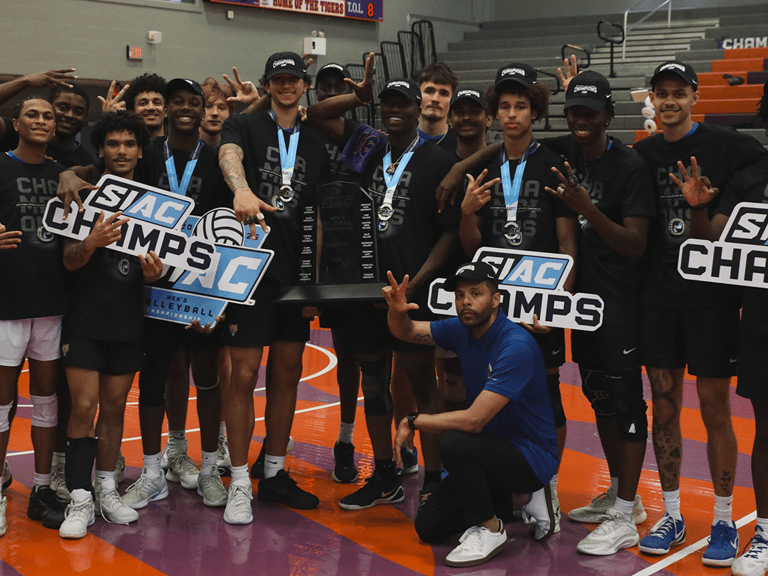
Fort Valley State won their third consecutive SIAC championship by sweeping Central State 3-0 in the tournament final after beating host Edward Waters in a five-set thriller in the semifinals.


View this post on Instagram


A post shared by The SIAC (@thesiac)


12 men’s volleyball teams make the NCAA tournament, with seven conference champions and five at-large teams making up the field.  The four regional winners will advance to the Final Four, played at UCLA’s Pauley Pavilion.

Fort Valley State will be looking for their first NCAA tournament win after losses to UCLA in 2024 and Long Beach State last season.


SWAC History: Billy Nicks and Prairie View’s dynasty the world forgot

Billy Nicks Prairie View SWAC
This article is one in a series of features produced in partnership with the Southwestern Athletic Conference, exploring the history of the SWAC from its founding in 1920 to the present day. The series will run during the months of April and May.

After Prairie View A&M won the 2025 SWAC football championship before falling to South Carolina State in the Celebration Bowl, most conversations about Panther football in recent decades began and ended in the same place, an NCAA-record 80-game losing streak that became the program’s most recognizable footnote in the national sports conversation.

But long before that losing streak became the story, there was another story. One that most people outside of HBCU circles never knew, and one that even some Prairie View faithful had to be reminded of. It is the story of a man named William J. “Billy” Nicks, a coach who built one of the most dominant programs in Black college football history, back when Prairie View was not a punchline but a powerhouse.

His name is not mentioned in the same breath as Eddie Robinson or Grambling when casual fans talk about HBCU football legends. But by every measure that matters, wins, championships, winning percentage, and the players he developed, Billy Nicks belongs in that conversation.

From Griffin, Georgia, to the sidelines

Billy Nicks
Photo: Prairie View Athletics

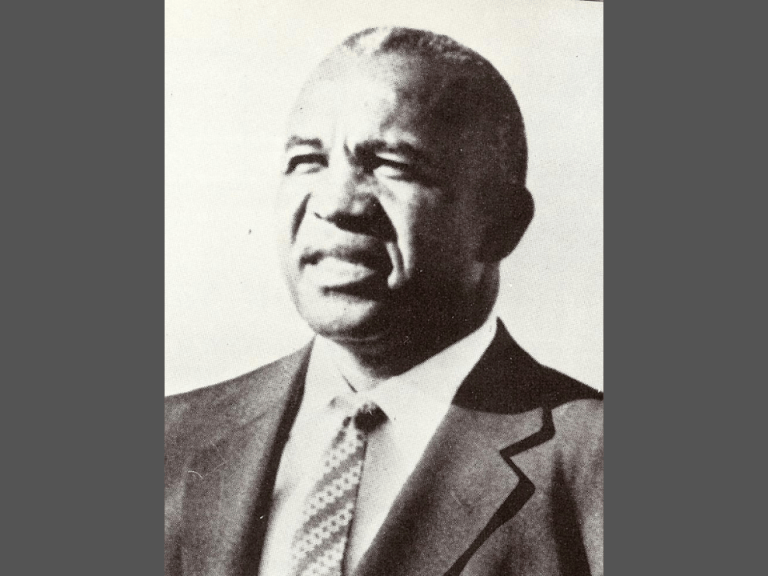
William James Nicks was born on August 2, 1905, in Griffin, Georgia. He attended Morris Brown High School and Morris Brown College in Atlanta, where he was not just a football player but a four-sport athlete, competing in football, basketball, baseball, and track. On the football field, he played defensive end and halfback and served as the team’s punter.

After graduating from Morris Brown, Nicks went back to where he came from and started building something. He took his first head coaching position at Morris Brown in 1930, beginning what would become one of the most decorated careers in the history of Black college football.

During his time at Morris Brown, Nicks compiled a record of 66-22-13. His 1941 Morris Brown team went 10-1, won the Southern Intercollegiate Athletic Conference (SIAC) championship, and was named Black College National Champion by the Pittsburgh Courier. He was already a national championship coach before he ever set foot on Prairie View’s campus.

A dynasty built at Prairie View

Nicks arrived at Prairie View in 1945 and immediately began building a program. His first stint, from 1945 to 1947, was a foundation-laying period. He then served as an assistant from 1948 to 1951 before returning as head coach in 1952, when the dynasty truly began.

Nicks led Prairie View to seven SWAC championships and six black college national titles. It includes a 1953 team that went a perfect 12-0, which defeated Florida A&M in the Orange Blossom Classic and defeated Texas Southern in the Prairie View Bowl to claim a national title. His 1964 team went a perfect 9-0, outscored opponents 303 to 110, and was named national champion by the Pittsburgh Courier. At the end of that season, Nicks was named the NAIA Coach of the Year.

By the time his career at Prairie View was done, his record there stood at 128-39-8. His overall career record across 28 years of coaching was 193-61-21. His career winning percentage of .787 was slightly higher than Bear Bryant’s .780. It has been widely reported that even Eddie Robinson, the legendary coach at Grambling who built his own dynasty across the SWAC, found game days against Nicks and Prairie View to be among the most challenging on his schedule.

The network that made it all possible

The results of what Nicks built spoke loudly in the professional ranks. Fifteen players he coached at Prairie View were eventually drafted by AFL or NFL clubs. Among them were two of the most recognizable names to come out of the SWAC in that era. They are Kenny Houston, who was inducted into the Pro Football Hall of Fame, and Otis Taylor, the wide receiver who won a Super Bowl with the Kansas City Chiefs in 1970.

A legacy that outlasted the game

Nicks retired from coaching at Prairie View in 1965. After stepping down as the head football coach, he continued to serve the university in administrative roles, including as the Director of Athletics and later as a special assistant to the university president until 1973.

Morris Brown College celebrated Billy Nicks Day in 1964, while he was still actively coaching at PV. The city of Atlanta recognized him in 1982. In 1988, Prairie View A&M named its athletic complex in his honor. In 1999, he was inducted into the College Football Hall of Fame. Nicks died that same year, on November 2 in Houston, at the age of 94.