Petition To Change Lynch Street to Bell Street


MightyDog

Well-Known Member
Since my efforts were not successful in renaming Lynch Street to Bell Street, during Black History Week, I am starting this petition to rename Lynch Street to Bell Street which leads into the JSU Campus. It has been said many times that MD and 99.9% of the Dawgpound hate JSU, therefore, I would like to do something to bring this school on our level before Mar 4, 2010. I need 100 signatures to petition the Governor to make the change. If I do not get the required signatures by March 3, 2010, I will asked those JSU Alums that will be in attendance at the JSU Whipping on the Beautiful Campus of AAMU March 4, 2010 to sign the petition. If I do not get the required signatures I will extend the deadline until April 1, 2010.

Please join me in signing this petition.
 
MD, J.R. Lynch is a very important figure in MS History. I know that in Alabama, yall are not used to folks giving yall credit for anything. Yall don't even give your own selves credit (look at what Bama South did to Joe Reed). But in MS, we like to honor those who have made the way for the Bennie Thompsons and Maxine Waters of today. So think about this little history lesson before you sign that petition:

http://bioguide.congress.gov/scripts/biodisplay.pl?index=L000533

LYNCH, John Roy, a Representative from Mississippi; born near Vidalia, Concordia Parish, La., September 10, 1847; after his father’s death moved with his mother to Natchez, Miss., in 1863, where they were held as slaves; after emancipation engaged in photography and attended evening school; appointed by Governor Ames as a justice of the peace in 1869; member of the State house of representatives 1869-1873 and served the last term as speaker; delegate to the Republican National Conventions in 1872, 1884, 1888, 1892, and 1900; elected as a Republican to the Forty-third and Forty-fourth Congresses (March 4, 1873-March 3, 1877); unsuccessful candidate for reelection in 1876 to the Forty-fifth Congress; successfully contested the election of James R. Chalmers to the Forty-seventh Congress and served from April 29, 1882, to March 3, 1883; unsuccessful candidate for reelection in 1882 to the Forty-eighth Congress; returned to his plantation in Adams County, Miss., and engaged in agricultural pursuits; chairman of the Republican State executive committee 1881-1889; member of the Republican National Committee for the State of Mississippi 1884-1889; temporary chairman of the Republican National Convention at Chicago in 1884; Fourth Auditor of the Treasury for the Navy Department under President Harrison 1889-1893; studied law; was admitted to the Mississippi bar in 1896; returned to Washington, D.C., in 1897, where he practiced his profession until 1898, when he was appointed a major and additional paymaster of Volunteers during the Spanish-American War by President William McKinley; was appointed by President McKinley as a paymaster in the Regular Army with the rank of captain in 1901; was promoted to major in 1906; retired from the Regular Army in 1911; moved to Chicago, Ill., in 1912 and continued the practice of his profession until his death in that city on November 2, 1939; interment in Arlington National Cemetery


BTW, good luck finding 100 folks who can sign that petition for you. Because according to some of your own alumni, a lot of you can't even write your own names.

Try to spend more time helping Bama do away with poll taxes and literacy tests. You should march on down to Selma and tell the Black folks there that we don't do those anymore.

:tup:
 
School em LS. They dont know about guys like Hiram Revels and Medger Evers. They look at Lynch St and think its a joke. A lot of history and blood shed on that street. It means a lot, not just a name of a street.
 
MD, J.R. Lynch is a very important figure in MS History. I know that in Alabama, yall are not used to folks giving yall credit for anything. Yall don't even give your own selves credit (look at what Bama South did to Joe Reed). But in MS, we like to honor those who have made the way for the Bennie Thompsons and Maxine Waters of today. So think about this little history lesson before you sign that petition:

http://bioguide.congress.gov/scripts/biodisplay.pl?index=L000533

LYNCH, John Roy, a Representative from Mississippi; born near Vidalia, Concordia Parish, La., September 10, 1847; after his father’s death moved with his mother to Natchez, Miss., in 1863, where they were held as slaves; after emancipation engaged in photography and attended evening school; appointed by Governor Ames as a justice of the peace in 1869; member of the State house of representatives 1869-1873 and served the last term as speaker; delegate to the Republican National Conventions in 1872, 1884, 1888, 1892, and 1900; elected as a Republican to the Forty-third and Forty-fourth Congresses (March 4, 1873-March 3, 1877); unsuccessful candidate for reelection in 1876 to the Forty-fifth Congress; successfully contested the election of James R. Chalmers to the Forty-seventh Congress and served from April 29, 1882, to March 3, 1883; unsuccessful candidate for reelection in 1882 to the Forty-eighth Congress; returned to his plantation in Adams County, Miss., and engaged in agricultural pursuits; chairman of the Republican State executive committee 1881-1889; member of the Republican National Committee for the State of Mississippi 1884-1889; temporary chairman of the Republican National Convention at Chicago in 1884; Fourth Auditor of the Treasury for the Navy Department under President Harrison 1889-1893; studied law; was admitted to the Mississippi bar in 1896; returned to Washington, D.C., in 1897, where he practiced his profession until 1898, when he was appointed a major and additional paymaster of Volunteers during the Spanish-American War by President William McKinley; was appointed by President McKinley as a paymaster in the Regular Army with the rank of captain in 1901; was promoted to major in 1906; retired from the Regular Army in 1911; moved to Chicago, Ill., in 1912 and continued the practice of his profession until his death in that city on November 2, 1939; interment in Arlington National Cemetery

VI-Lou! :D
 
Very good answer, now where is the documentation where the Street was named for John Roy Lynch.

This date marks the birth of John Roy Lync, a black politician, in 1847. Born a slave in Concordia Parish, LA., Lynch was freed during the American Civil War and settled in Natchez ...
 
Last edited:
Let me make sure I understand what you JSU Folks are trying to tell me.

1. Street is named for John Lynch
2. He was a politicial
3. He was born in Concordia Parish, LA
4. He settled in Natchez
5. He moved to Chicago

Is it safe to say that he was French/Creole and had nothing in common with Jackson, MS?
 
Let me make sure I understand what you JSU Folks are trying to tell me.

1. Street is named for John Lynch
2. He was a politicial
3. He was born in Concordia Parish, LA
4. He settled in Natchez
5. He moved to Chicago

Is it safe to say that he was French/Creole and had nothing in common with Jackson, MS?

:confused: Do that work for Martin Luther King and Medgar Evers too?


banner.jpg


John Roy Lynch (September 10, 1847 - November 2, 1939) was the first African-American Speaker of the House in Mississippi. He was also one of the first African-Americans elected to the U.S House of Representatives during Reconstruction, the period in United States history after the Civil War


Very good answer, now where is the documentation where the Street was named for John Roy Lynch.

This date marks the birth of John Roy Lync, a black politician, in 1847. Born a slave in Concordia Parish, LA., Lynch was freed during the American Civil War and settled in Natchez ...


John Roy Lynch Street.

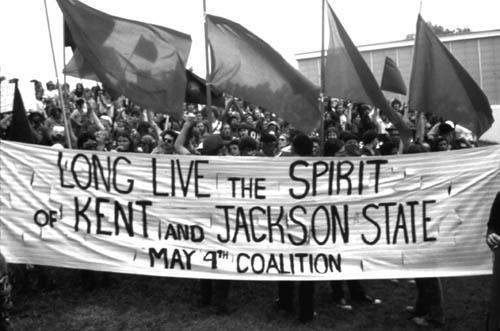
Without a doubt, the spring of 1970 was a tense and hot season for American college students. Protests and riots flared up over the escalation of the war in Vietnam, the sending of US troops to Cambodia, the environment, civil rights, and the inclusion of women into many formerly all-male universities and colleges. Certainly Kenyon College was experiencing just such a difficult transitional period. At Jackson State University in Jackson, Mississippi, tensions were particularly high in regards to racism and civil rights.

Since its establishment as a teacher's college in the late 1800s, Jackson State had been subject to racism. The school moved from its original location because it was too close to an all-white area, and established a new campus in an entirely black neighborhood. Lynch Street, named for Mississippi's first black congressman, bisected the new campus and linked west Jackson, a white suburb, to the downtown area.
 
Since my efforts were not successful in renaming Lynch Street to Bell Street, during Black History Week, I am starting this petition to rename Lynch Street to Bell Street which leads into the JSU Campus. It has been said many times that MD and 99.9% of the Dawgpound hate JSU, therefore, I would like to do something to bring this school on our level before Mar 4, 2010. I need 100 signatures to petition the Governor to make the change. If I do not get the required signatures by March 3, 2010, I will asked those JSU Alums that will be in attendance at the JSU Whipping on the Beautiful Campus of AAMU March 4, 2010 to sign the petition. If I do not get the required signatures I will extend the deadline until April 1, 2010.

Please join me in signing this petition.

I'm surprised at you Mighty.
We grew up in the same era and shared the same hardships now you want to take my honor away from me.:shame:
160px-John_R._Lynch.jpg

:lol::lol::lol:​
 
I'm surprised at you Mighty.
We grew up in the same era and shared the same hardships now you want to take my honor away from me.:shame:
160px-John_R._Lynch.jpg

:lol::lol::lol:​


When the American Baptist Home Mission Society withdrew its support from the institution in 1934, A new board of trustees was organized that kept the school open. On May 30, 1938, control of the Board of Trustees was transferred to Jackson College, Incorporated.
In 1940, the school was transferred from the private control of the church to the state education system and renamed Mississippi Negro Training School. Initially, the school had been specifically designated by the state to train rural and elementary teachers. In 1942, the Board of Trustees expanded the curriculum to a full four-year teacher education program, culminating in the Bachelor of Science Degree in Education. In May 1944, the first four-year graduating class under state support received their degrees. In 1944, Mississippi Negro Training School was renamed Jackson College for Negro Teachers

Still trying to understand what you all are trying to tell me because there seems to be a disconnect with renaming the street. Bell is in your History. Since you have aTower in his Honor, we can easily change the name of the Street.
 
When the American Baptist Home Mission Society withdrew its support from the institution in 1934, A new board of trustees was organized that kept the school open. On May 30, 1938, control of the Board of Trustees was transferred to Jackson College, Incorporated.
In 1940, the school was transferred from the private control of the church to the state education system and renamed Mississippi Negro Training School. Initially, the school had been specifically designated by the state to train rural and elementary teachers. In 1942, the Board of Trustees expanded the curriculum to a full four-year teacher education program, culminating in the Bachelor of Science Degree in Education. In May 1944, the first four-year graduating class under state support received their degrees. In 1944, Mississippi Negro Training School was renamed Jackson College for Negro Teachers

Still trying to understand what you all are trying to tell me because there seems to be a disconnect with renaming the street. Bell is in your History. Since you have aTower in his Honor, we can easily change the name of the Street.

:confused: MD, why change a street that is not ours? It's the City of Jackson's street. Our school just sits on it. We dont own that street.
 
We already have a Bell Street, but thank ya for thinking about us, hea? :D


Cool Papa send help.... :cool:

I have heard that he was one of the fastest cats to ever play the game. Probably one reason they called him "Cool," along with the way he made difficult plays look easy.
 
Back
Top